PART 1 — THE WILL THAT DESTROYED MY WORLD
After 67 years of marriage, I thought I knew every secret my husband had ever kept from me. I was wrong.
My name is Eleanor Whitmore, and I was 86 years old when my husband, Richard, passed away.
We had met at a university dance when I was just 19. He was a shy young man with kind eyes, a crooked smile, and only a few dollars in his pocket. He promised me that one day he would build a life where I would never have to worry about anything.
He kept that promise.
We raised four children, welcomed six grandchildren, and spent nearly seven decades building a home filled with laughter, arguments, forgiveness, and love.
Richard wasn’t a perfect husband, but he was the man who warmed my hands between his whenever they grew cold. He was the man who brought me tea when I was sick and kissed my forehead every morning before leaving for work.
Even when his hair turned white and his hands began to tremble, he still called me his beautiful girl.
Then, at 89, he became seriously ill.
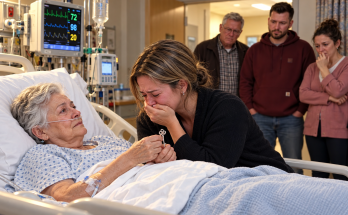
For eleven months, I sat beside his hospital bed, holding his hand and praying that God would give us just a little more time.
One evening, he looked at me with tired eyes.
“Eleanor,” he whispered, “if anything happens to me, promise you’ll be brave.”
I squeezed his hand.
“Don’t talk like that. You’re coming home with me.”
He smiled sadly.
“There are things you don’t know, my love. Things I should have told you years ago.”
Before I could ask what he meant, he closed his eyes. The medication had made him sleepy, and I assumed he was simply confused.
Three days later, Richard died.
I thought losing him was the worst pain I would ever experience.
I had no idea that the reading of his will would break my heart in an entirely different way.
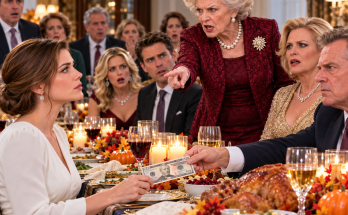
Two weeks after the funeral, our four children gathered at the office of Richard’s longtime attorney, Mr. Bennett.
My eldest son, Thomas, sat beside his wife. My daughter, Catherine, kept wiping her eyes. Our younger children, James and Rebecca, sat across from me.
Everyone expected the estate to be divided fairly.
Richard had spent years building a successful furniture business. We owned our family home, a small lakeside cottage, and several investments.
I wasn’t expecting to become wealthy. After 67 years together, I simply believed that whatever Richard had left would belong to the family we had built together.
Mr. Bennett adjusted his glasses and began reading.
“To my eldest son, Thomas, I leave the lakeside cottage.”
Thomas looked surprised.
“To my daughter, Catherine, I leave the sum of four hundred thousand dollars.”
Catherine covered her mouth.
“To my son, James, I leave my remaining business shares, to be managed according to the attached agreement.”
James nodded slowly.
“To my youngest daughter, Rebecca, I leave the sum of four hundred thousand dollars.”
Then the lawyer paused.
He looked down at the paper, removed his glasses, and took a deep breath.
“To my beloved wife, Eleanor Whitmore, I leave no property, no investments, and no money under this will.”
For several seconds, I couldn’t understand the words.
I turned toward Mr. Bennett.
“I’m sorry. Could you read that again?”
He did.
Every word sounded worse the second time.
My children stared at one another. Catherine reached for my hand, but I gently pulled away.
I had stood beside Richard when his business nearly collapsed. I had sold my wedding jewelry to help him pay his employees. I had raised our children while he worked sixteen-hour days.
When he suffered a heart attack at 61, I slept in a chair beside his hospital bed for two weeks.
And now, after 67 years of marriage, he had apparently left me nothing.
Thomas finally spoke.
“Mother, this has to be some kind of mistake.”
James shook his head.
“Maybe Dad thought you already had enough money.”
Enough money?
I had never cared about money. But I couldn’t understand how the man who had promised never to let me face the world alone could make such a decision.
When the meeting ended, my children left one by one.
I remained seated, staring at the empty chair where Richard should have been.
Mr. Bennett quietly closed the office door.
“Mrs. Whitmore, there’s something else.”
I looked up.
He reached into his briefcase and removed a sealed envelope. My name was written across it in Richard’s familiar handwriting.
My hands began to shake.
“Your husband instructed me to give you this letter only after everyone else had heard the will.”
“Why?” I whispered.
“I believe he wanted you to read it alone.”
I broke the seal.
The first sentence made my heart pound.
My dearest Eleanor, if you are reading this, then my plan has worked. Everyone now believes I left you nothing. But there is something I have hidden from you for forty-three years, and before you judge me, you must hear the whole truth.
I stopped reading.
Forty-three years?
What could Richard possibly have hidden from me for that long?
Then I reached the next paragraph.
First, do not sign any document your children bring you. Second, do not allow my sister, Margaret, to enter the blue room in our house.
My face went cold.
Margaret was Richard’s younger sister. She had always been polite to me, but over the years, I had noticed that Richard became strangely quiet whenever she visited.
The letter continued.
The truth is buried where we began our marriage. Go there tomorrow morning. Take the small brass key hidden inside my old pocket watch. You will understand why I had to leave you nothing.
I looked at Mr. Bennett.
“Where is the blue room?”
He lowered his eyes.
“Your husband asked me not to answer any questions until you found what he left for you.”
I clutched the letter against my chest.
For the first time since Richard’s death, I felt something other than grief.
I felt fear.
Because the man I had loved for 67 years had apparently been living with a secret so enormous that he had taken it to his grave.
And tomorrow, I was going to discover what it was.
PART 2 — THE ROOM MY HUSBAND FORBADE ME TO ENTER
That night, I didn’t sleep.
I sat at the kitchen table with Richard’s letter beside my cup of untouched tea. Every memory of our marriage seemed to carry a new question.
Why had he mentioned his sister?
Why had he chosen to leave me nothing?
And what had happened forty-three years earlier?
At seven the next morning, I walked into Richard’s study.
His old pocket watch sat inside a wooden box on the bookshelf. He had received it from his father before our wedding, and he rarely let anyone touch it.
I opened the back.
Inside, beneath a small piece of faded velvet, lay a brass key.
My fingers trembled as I closed the watch.
Then I remembered something.
Forty-three years earlier, Richard had purchased an old house on the outskirts of town. It was the first house we had ever owned, the place where we brought our children home from the hospital and celebrated our tenth wedding anniversary.
We sold it when his business expanded.
Or at least, I thought we had.
I drove to the address, expecting to find strangers living there.
Instead, I found the same white wooden house, standing behind a row of overgrown roses. The paint had faded, and the porch sagged slightly, but the old oak tree was still there.
A young caretaker opened the door.
“Mrs. Whitmore?” he asked.
I froze.
“You know me?”
He nodded.
“Mr. Whitmore told me you might come one day. He asked me to keep the house exactly as it was until you arrived.”
My knees nearly gave way.
Richard had planned this.
The caretaker led me through the hallway, past the living room where we had once danced to the radio, and toward a narrow staircase.
At the end of the corridor was a blue door.
I had never seen it before.
“What’s inside?” I asked.
“I’m not allowed to know, ma’am.”
I inserted the brass key.
The lock turned.
Inside was a small room filled with old photographs, filing cabinets, and boxes stacked against the walls. Dust floated through the sunlight coming from a single window.
On the desk sat another envelope.
Beneath it lay a photograph of Richard standing beside a young woman I didn’t recognize.
The woman was holding a baby.
On the back, Richard had written:
October 12, 1983. The day everything changed.
I sank into the chair.
In October 1983, Richard had told me he was traveling to Chicago for a business conference. He was gone for four days.
When he returned, he brought me a pearl necklace and kissed me as though he had missed me terribly.
I had never questioned that trip.
With trembling hands, I opened the second letter.
My dearest Eleanor,
The woman in this photograph is named Anna. The baby in her arms is a little boy named Michael.
Michael is my son.
I gasped.
The letter slipped from my fingers.
I read the sentence again and again, hoping the words would somehow change.
Richard had another child?
For forty-three years?
I forced myself to continue.
I met Anna during the most difficult period of my business. She worked in our accounting department. We became close during a time when I was selfish, frightened, and too proud to admit that I was losing control of my life.
I made a terrible mistake. I betrayed your trust, and I will regret it until my last breath.
Tears blurred the page.
Richard had cheated on me.
The thought was almost unbearable. But the next paragraph hurt even more.
Anna became pregnant. I wanted to tell you everything, but I was afraid of destroying our family. I paid for Michael’s upbringing and education. I visited him when I could, always keeping my distance from your life.
When he was six, Anna became seriously ill. Before she died, she made me promise that Michael would never be abandoned. I promised her he would always have a home and that one day he would learn the truth about his father.
I pressed my hand against my mouth.
For decades, I had believed Richard’s business trips, late nights, and quiet moods were simply part of the sacrifices he made for our family.
Now I wondered how many of those nights had been spent with a son I had never known existed.
The letter continued.
I know you may never forgive me. I am not asking you to excuse what I did. But Michael has never been responsible for my mistakes.
My sister Margaret knows about him. She has known since the beginning.
My heart began to race.
Margaret?
Richard’s sister had been at our house every Christmas. She had held our grandchildren. She had sat beside me when Richard underwent surgery.
And she had known.
I opened a drawer and found dozens of documents. There were school photographs of Michael, birthday cards Richard had written but never sent, and bank records showing payments made over decades.
Then I found a legal folder marked:
THE WHITMORE FAMILY TRUST — CONFIDENTIAL
Inside was a document stating that Richard had transferred ownership of the old house, along with a substantial investment portfolio, into a trust in my name several years earlier.
The assets were legally protected and separate from the estate described in his will.
I stared at the figures.
The trust was worth several million dollars.
But that wasn’t the only surprise.
A second document showed that Richard’s furniture company had been sold to a private buyer six months before his death.
The proceeds had been placed into a separate charitable foundation, with instructions to fund housing and education for abandoned children.
At the bottom of the document was Richard’s signature.
He had not simply left me out of his will.
He had arranged his entire estate around a secret life, a promise to a dying woman, and a desperate attempt to make things right.
Then I found a final envelope.
This one was addressed to me in different handwriting.
The writing was neat, delicate, and unfamiliar.
Inside was a short note.
Mrs. Whitmore, my name is Michael Whitmore. I have known about you my entire life, but my father asked me never to approach you. I respected his wishes because I did not want to hurt you.
I am not writing to ask for money. I only want you to know that, despite everything, your husband tried to be a father to me in the only way he knew how.
There is one thing you should know about Margaret, however. She has been telling people that your husband promised her ownership of this house. She has recently hired an attorney to challenge the trust.
Please be careful.
I dropped the letter onto the desk.
Suddenly, the warning in Richard’s first letter made sense.
Don’t trust my sister.
A car door slammed outside.
I turned toward the window.
Margaret was stepping out of a black sedan.
She looked up at the house, spotted my car, and hurried toward the front door.
I heard her footsteps in the hallway.
Then the blue door swung open.
Margaret stood in the doorway, her face pale with anger.
“What are you doing here, Eleanor?”
I rose slowly.
“I could ask you the same question.”
Her eyes darted toward the documents on the desk.
Then she did something I had never seen her do in all the years I had known her.
She began to cry.
“Please,” she whispered. “You don’t understand what your husband did.”
She stepped into the room and closed the door behind her.
“Richard didn’t leave you nothing because he stopped loving you. He did it because he was trying to hide something much worse than an affair.”
I stared at her.
“What could possibly be worse?”
Margaret looked at the photograph of Michael.
Then she whispered six words that changed everything.
“That boy isn’t the only secret.”
PART 3 — THE FINAL LETTER THAT CHANGED EVERYTHING
For a long moment, neither of us spoke.
Margaret stood beside the blue door, twisting her wedding ring around her finger. I had seen her angry, impatient, and even cruel, but I had never seen her frightened.
“What do you mean he’s not the only secret?” I asked.
She swallowed hard.
“Richard wasn’t the only person who made a mistake in 1983.”
I felt the room tilt around me.
“Stop speaking in riddles. Tell me the truth.”
Margaret looked at the photograph again.
“Michael’s mother, Anna, was my closest friend. Before she worked for Richard, she worked for me. I introduced them.”
The words landed like stones.
“You introduced your own brother to the woman he had an affair with?”
She began to cry harder.
“I didn’t know what would happen. Richard was struggling with the business, and Anna was helping him organize his accounts. They spent too much time together. By the time I realized what was happening, she was pregnant.”
I turned away from her.
“Why didn’t you tell me?”
“Because I was afraid.”
“Of what?”
“Of losing my brother. Of losing the family. Of everyone discovering how much I had helped him hide.”
I looked at her with disbelief.
“You let me spend forty-three years believing I knew my husband.”
Margaret lowered her head.
“Yes.”
The room felt smaller with every breath.
Then she reached into her handbag and removed a folded document.
“Richard asked me to keep this safe. I was supposed to give it to you only after he died.”
I stared at the paper.
“Another letter?”
“No. A medical report.”
My fingers went cold.
Margaret placed it on the desk.
It was dated twenty-eight years earlier.
The report described a serious illness Richard had suffered, one that had required surgery and several weeks of treatment. At the bottom was a note written by his doctor.
I read it twice.
Then I looked at Margaret.
“Why did Richard hide this from me?”
She shook her head.
“He didn’t want you to know how serious it was. He thought he would recover, and he did. But during that time, he became convinced he might die before he could make things right with Michael.”
I sat down.
For the first time, the story began to come together. Richard’s secret had not been one single lie. It had been a series of choices, each one made to avoid the consequences of the last.
He had betrayed me.
He had hidden a child.
He had asked his sister to help him maintain the deception.
And eventually, he had tried to build a future that would protect everyone except the truth itself.
But there was still one question I couldn’t answer.
“Why leave me nothing in the will if he had already protected me through the trust?”
Margaret wiped her cheeks.
“Because he wanted everyone to believe the trust was all you had. He was afraid someone would challenge it if they knew how much it contained.”
“Someone?”
She hesitated.
Then she finally admitted it.
“Me.”
I stared at her.
“You tried to take my house?”
“I told myself it was partly mine. I helped Richard manage the business when he was young. I believed he owed me something.”
“You already inherited money from him.”
“Not enough.”
The honesty of her answer shocked me more than any excuse could have.
For decades, I had treated Margaret as a sister. I had welcomed her into my home, trusted her with my children, and comforted her whenever she was lonely.
Yet she had been prepared to take the home my husband had secretly secured for me.
I stood up and gathered the documents.
“Get out, Margaret.”
She looked at me desperately.
“Eleanor, please. I know I’ve done terrible things, but Richard was my brother.”
“And I was his wife.”
She opened her mouth, then closed it.
For once, she had nothing to say.
After she left, I remained in the blue room until sunset. I read every letter, examined every document, and studied every photograph.
There were pictures of Michael as a child, as a teenager, and as a young man graduating from university.
In one photograph, he was standing beside Richard at a small restaurant. Richard’s hand rested awkwardly on the young man’s shoulder.
Both of them were smiling.
On the back, Richard had written:
The son I could never bring home.
I cried until I could barely see.
I wasn’t only grieving my husband anymore. I was grieving the truth about the man I had loved, the years we had lost to his silence, and the son who had grown up without knowing the warmth of an ordinary family.
The next morning, I called Mr. Bennett.
I told him everything.
He confirmed that the trust was valid and that Margaret had no legal claim to the house or its assets. He also arranged a meeting with Michael.
I almost canceled it three times.
What could I possibly say to the child my husband had hidden from me?
But on Saturday afternoon, a silver car pulled into my driveway.
A man in his early forties stepped out. He had dark hair, kind eyes, and the same crooked smile I had fallen in love with when I was nineteen.
For a moment, I couldn’t breathe.
He stood at the front door holding a small wooden box.
“Mrs. Whitmore?” he asked.
I nodded.
“I’m Michael.”
I invited him inside.
We sat in the living room where Richard and I had celebrated our golden wedding anniversary. Michael looked around quietly, as though he was entering a museum dedicated to a life he had never been allowed to share.
“I’m sorry,” he said. “I know my presence must be painful.”
I studied his face.
“Did you know about me?”
“Yes. My mother told me about you when I was little. She said my father had a wife and children, and that I must never blame them for his choices.”
He opened the wooden box.
Inside was a collection of letters.
“My father wrote to me every birthday,” he explained. “Sometimes he visited me. Sometimes he sent gifts. But he always left before anyone could see us together.”
He looked down.
“I used to think I wasn’t good enough to be part of his family.”
My heart broke.
“No child should ever have to feel that way.”
Michael’s eyes filled with tears.
“I never wanted to take anything from you. I don’t want the house or the money. I only wanted to know whether he was ever ashamed of me.”
I reached across the table and took his hand.
“Michael, I can’t answer for every decision your father made. Some of those decisions hurt me deeply, and I won’t pretend they didn’t. But I have seen the letters. I have seen the photographs.”
I paused.
“He was wrong to hide you. But I don’t believe he was ashamed of you.”
Michael began to cry.
And then, to my surprise, so did I.
We sat together for a long time, two strangers connected by a man who had loved us both but had been too afraid to bring our lives together.
Before Michael left, he handed me one final envelope.
“My father asked me to give you this if we ever met.”
I opened it after he had gone.
The letter was short.
My dearest Eleanor,
If you have met Michael, then you have done something I was never brave enough to do. You have faced the truth.
I know I cannot ask you to forgive me. I gave you sixty-seven years of love, but I also gave you a secret that may change how you remember every one of them.
I need you to understand something. I did not leave you nothing because you meant nothing to me. I arranged the trust because I wanted you to have a home and a future that no one could take away from you.
The will was meant to keep the estate simple and prevent arguments over the business and the trust. I thought I could protect you from the conflict. I see now that I only created another kind of pain.
I should have trusted you with the truth while I was alive.
You were always stronger than I gave you credit for.
If there is one thing I ask of you, it is this: do not spend the rest of your life carrying my mistakes. You have loved me faithfully. You do not owe my memory your silence.
You owe yourself the truth.
Forever yours,
Richard.
I folded the letter and pressed it against my chest.
For weeks, I had searched for a reason to hate my husband. Then I searched for a reason to forgive him.
Neither came easily.
The truth was more complicated than either emotion.
Richard had been the love of my life, but he had also been a man who had made terrible choices. His kindness did not erase his betrayal, and his betrayal did not erase every beautiful memory we had shared.
I couldn’t change the past.
But I could choose what happened next.
I invited Michael to dinner the following Sunday.
Then I invited him again.
Eventually, he began bringing his wife and their two children. The first time his little granddaughter called me “Grandma Eleanor,” I had to leave the table because I couldn’t stop crying.
I also made sure Margaret could never challenge the trust. Through our lawyers, we settled the matter legally, and I established a portion of my own estate for the grandchildren and for the children’s charity Richard had created.
Not because Richard had asked me to.
Because it was what I wanted to do.
One year after his death, I returned to the old house where the blue room was hidden. I planted white roses beside the porch, just as I had always wanted to do when we lived there.
Then I placed Richard’s final letter inside the wooden box with Michael’s photographs.
I no longer read it every night.
I no longer wondered whether our marriage had been a lie.
It hadn’t been a lie.
It had been a life filled with love, mistakes, sacrifice, and a secret that should never have been kept.
And I finally understood something I wish I had known when I was younger.
Sometimes, the person who loves you most can still hurt you deeply. And sometimes, forgiveness doesn’t mean pretending the hurt never happened. It means refusing to let someone else’s mistakes steal the rest of your life.
I had lost my husband.
I had discovered a son I never knew existed.
And at 87 years old, I had learned that even after nearly seven decades, there could still be room in a heart for a truth that changed everything.
But there was one thing Richard had been right about from the beginning.
I was stronger than he thought.
And for the first time in a very long time, I was ready to live the life that remained—not as the widow who had been left with nothing, but as the woman who had finally reclaimed her own story.
THE END.