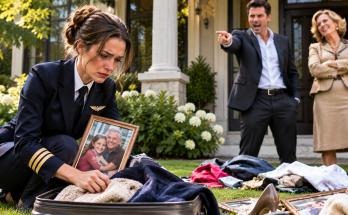
My Fiancé Demanded That I Put My Orphaned Twin Brothers in Foster Care or Lose Him Forever—So I Let Him Plan Our Wedding, Then Revealed the One Thing He Never Expected
When my fiancé told me to choose between marrying him and raising my five-year-old twin brothers, I smiled and said, “You’re right, Elliott. We need to talk about our future.” He thought I was finally agreeing to send the boys away. He even called his mother to celebrate. But three days before our wedding, he walked into the venue, saw who was waiting for him, and realized that the woman he thought he could control had already made her decision.
Part 1 — The Man I Thought I Knew
My name is Hannah Brooks, and until I was twenty-two, I believed I knew exactly how my life would unfold.
I would marry my high school sweetheart, Elliott, buy a little house with a white fence, have children someday, and build the kind of family my parents had given me.
Elliott had been part of my life for nearly seven years. He was handsome, ambitious, and charming whenever other people were watching. He knew how to make my parents laugh, remembered birthdays, and brought flowers to my mother on Mother’s Day.
My father used to clap him on the shoulder and say, “You’re a good young man. Take care of my daughter.”
Elliott would smile and promise that he would.
I believed those promises.
After college, he proposed at the restaurant where we had celebrated our first anniversary. He got down on one knee while a violinist played in the corner, and everyone nearby applauded when I said yes.
My parents cried happy tears.
My little brothers, Noah and Nathan, who were only four at the time, spent the entire evening asking when they would get to wear matching suits.
“They’ll be our ring bearers,” Elliott said, laughing as he ruffled their hair.
The boys adored him. They followed him around whenever he visited, begged him to play superheroes, and insisted he was the strongest man in the world.
I never imagined that the same man would one day look at those children and call them a burden.
Everything changed on a rainy Thursday evening.
I was at home reviewing wedding invitations when my phone rang. A police officer introduced himself and asked whether I was Hannah Brooks, the daughter of Daniel and Rebecca Brooks.
The moment I heard his serious voice, my stomach tightened.
“I’m afraid your parents have been involved in a serious car accident,” he said. “You need to come to the hospital immediately.”
I don’t remember how I got there.
I remember the smell of disinfectant, the sound of hurried footsteps, and a nurse who gently guided me into a small consultation room.
My parents had died before the ambulance reached the hospital.
My five-year-old brothers had been in the back seat. Both had suffered serious injuries, and doctors were treating them.
For hours, I sat outside the pediatric intensive care unit, praying to a God I had barely spoken to since childhood.
I promised my parents that I would protect their boys.
I promised Noah and Nathan that I wouldn’t leave them.
When a doctor finally came out and told me both children were expected to survive, I collapsed into a chair and sobbed until I could barely breathe.
But surviving the accident was only the beginning.
The boys woke up confused and frightened. Noah kept asking when Mommy was coming back. Nathan refused to sleep unless I held his hand.
I had to explain that our parents weren’t coming home.
I did it with a social worker beside me, my voice trembling as I tried to find words gentle enough for two little boys whose entire world had disappeared.
Noah cried until he fell asleep against my chest.
Nathan looked up at me and whispered, “You won’t go away too, will you?”
I kissed his forehead.
“Never, sweetheart. I’m right here.”
I filed for legal guardianship as soon as I could. I was young, but I had a steady job, a small apartment, and savings my parents had helped me build. I attended every meeting, completed every assessment, and rearranged my life around the boys’ needs.
When the court finalized the guardianship, I took Noah and Nathan for ice cream.
They sat across from me in a booth, their little legs swinging beneath the table.
“So you’re our mom now?” Nathan asked.
I swallowed the lump in my throat.
“I’m still your big sister,” I told him. “But I’ll take care of you like a mom, too.”
Noah reached across the table and took my hand.
“Then we’re never going to be alone again.”
I smiled at him, even though my heart was breaking.
That evening, I called Elliott and expected comfort.
Instead, he was silent for several seconds.
“So this is permanent?” he finally asked.
“What do you mean?”
“The guardianship. You’re actually keeping them?”
“They’re my brothers, Elliott.”
“I know that. But we’re supposed to get married in a few months. We had plans.”
I was exhausted, grieving, and still trying to understand how to become responsible for two little children overnight.
“I know our plans have changed,” I said. “But we’ll figure it out together.”
He promised we would.
For the first few weeks, I wanted to believe him.
He visited occasionally and brought the boys toys. He even helped me assemble a set of bunk beds. But little things began to change.
When Noah woke up crying from a nightmare, Elliott complained that the noise was keeping him awake.
When Nathan spilled juice on the living-room rug, Elliott muttered that I was letting the boys get away with everything.
And whenever I talked about daycare, school schedules, or the cost of raising two children, he checked his phone and changed the subject.
I tried to be patient.
We were both adjusting, I told myself.
Then, one Saturday afternoon, Elliott arrived at my apartment while the boys were watching cartoons.
He stood in the kitchen with his arms folded.
“We need to talk.”
I put down the lunch dishes.
“What’s wrong?”
He glanced toward the living room to make sure the boys couldn’t hear us.
“This guardianship thing is only temporary, right? You’re going to find somewhere else for them eventually?”
I stared at him.
“Somewhere else?”
“Foster care, adoption, whatever. There are people who do this professionally. You don’t have to sacrifice your entire future.”
For a moment, I honestly thought he was joking.
“Elliott, they’re five years old. Our parents are dead. I’m their family.”
He sighed impatiently.
“I’m not raising someone else’s kids.”
The words hit me so hard that I couldn’t answer immediately.
“They’re my brothers.”
“And I’m supposed to be your husband! I didn’t agree to become a father to two children before we’re even married.”
I looked toward the living room. Nathan was laughing at something on the television, and Noah was arranging his toy cars in a neat line.
“They don’t have anyone else,” I whispered.
“Then put them in foster care, or the wedding is off.”
I felt something inside me go completely still.
He wasn’t asking for time to adjust. He wasn’t suggesting counseling or a conversation about finances. He was demanding that I abandon two grieving children who trusted me because their existence inconvenienced him.
I took a slow breath.
“You would really end our relationship if I kept them?”
“Yes,” he answered without hesitation. “I’m not ruining my life for someone else’s kids. We had a future planned, Hannah. I want my own family, not a charity case.”
I wanted to throw him out.
I wanted to remind him that my parents had welcomed him into their home, paid for dinners, celebrated his achievements, and trusted him with their daughter.
But shouting would not change what I had just learned.
I looked at the man I had loved since high school and realized I had spent seven years loving the person I thought he was.
Not the person standing in front of me.
So I did something Elliott never expected.
I smiled.
“You’re right,” I said quietly. “We need to talk seriously about our future.”
His expression softened immediately.
“I’m glad you’re finally being reasonable.”
He kissed my forehead before leaving.
That evening, he sent me a message saying he loved me and couldn’t wait to start our life together.
Then he called his mother, Patricia, and told her that I was finally considering “other arrangements” for the boys.
Patricia called me the following morning.
“Elliott tells me you’ve realized that raising two children isn’t practical,” she said. “I’m relieved. A marriage requires sacrifices, but you can’t let every family tragedy dictate your future.”
I gripped the phone.
“I haven’t agreed to put them in foster care.”
“Well, you need to think about your husband-to-be. Elliott has worked hard to build his career. He deserves a peaceful home.”
I looked at Noah and Nathan, who were sitting on the floor building a cardboard castle.
“What about what they deserve?” I asked.
Patricia sighed.
“Don’t make this emotional, Hannah. Children are resilient. They’ll adjust.”
Then she hung up.
I stood in the kitchen for a long time, staring at the wedding calendar hanging on the refrigerator.
Our wedding was only six weeks away.
The venue was booked. The invitations had been sent. Elliott had already ordered his suit, and his mother had chosen the flowers.
Everyone expected me to walk down the aisle.
But I knew something Elliott didn’t.
My parents had left more than memories behind. They had also left a carefully prepared estate plan, a life-insurance policy, and a trust intended to help raise Noah and Nathan. My parents had named me as the boys’ preferred guardian, and the estate attorney had recently finished explaining the financial arrangements to me.
The money was not a prize. It was meant to provide stability for the children.
It meant I could afford their care without asking Elliott to support them.
I had never planned to use that money to make a point. I simply wanted my brothers to have a safe home.
But Elliott had made one thing clear: he wanted a marriage in which I would obey his wishes, even if doing so meant abandoning the people I loved most.
And I was done pretending I hadn’t heard him.
The next morning, I called my parents’ estate attorney, Mr. Collins.
“I need your help,” I said. “And I need to make sure my brothers’ future is protected before I make a decision about my wedding.”
He listened carefully.
Then he asked, “Hannah, are you certain you want to move forward with this?”
I looked at the boys.
Noah was helping Nathan put a blanket over his stuffed bear.
“Yes,” I said. “I’m absolutely certain.”
That afternoon, I called Elliott.
“I’ve been thinking about what you said,” I told him. “I think we should have one final meeting about the wedding.”
He sounded delighted.
“Finally. I knew you’d understand.”
“Bring your mother, too,” I added. “There are some things everyone needs to hear.”
He laughed.
“Of course. Whatever makes you comfortable.”
He had no idea that the wedding he was so eager to protect was about to become the last thing he would ever use to control me.
Part 2 — The Wedding Plans He Thought He Had Won
Over the next several days, Elliott became the most affectionate version of himself I had seen in months.
He brought flowers to my apartment. He took the boys to a toy store and bought them matching superhero pajamas. He even told Noah that he would teach him how to ride a bicycle when the weather warmed up.
Noah was thrilled.
“See?” he whispered to me that night. “Elliott is going to be our dad.”
I had to turn away so he wouldn’t see the tears in my eyes.
I didn’t tell the boys about the argument. They had already lost enough. They didn’t need to carry the weight of an adult’s cruelty.
Instead, I told them that the grown-ups were working through some decisions and that they were safe with me.
Meanwhile, Elliott began planning our future as though nothing had happened.
He emailed the wedding planner about changing the seating arrangement. He asked me whether I wanted a larger honeymoon suite. His mother called twice to discuss the rehearsal dinner.
Not once did he ask whether I had actually agreed to send my brothers away.
He simply assumed I would eventually do what he wanted.
That assumption told me more than any apology could have.
My meeting with Mr. Collins took place on Tuesday morning. He reviewed the guardianship paperwork, the trust documents, and the arrangements my parents had made for the boys’ care.
He also helped me prepare a list of practical steps to protect their future: updating beneficiary information where appropriate, organizing the children’s medical records, setting up a household budget, and ensuring that any funds intended for them would remain separate from my personal wedding expenses.
Then he asked me a question I hadn’t expected.
“Do you want to marry Elliott?”
I stared at the documents in front of me.
For years, the answer would have been immediate.
Now, I thought about the way Elliott had looked at my brothers. I remembered the disgust in his voice when he called them someone else’s children.
“No,” I finally said. “Not if marrying him means betraying them.”
Mr. Collins nodded.
“Then make your decision because it is right for you and the children—not because you want to punish him.”
His words stayed with me.
I had initially imagined exposing Elliott in front of everyone at the wedding. I wanted him to experience the humiliation he had tried to make me feel.
But the more I thought about it, the clearer my purpose became.
I didn’t need to destroy him.
I needed to end the relationship, protect my brothers, and make sure he understood that his ultimatum had consequences.
So I called the wedding planner and asked for a private meeting.
I explained that I would not be going ahead with the wedding and that I wanted to handle the cancellations professionally. We reviewed the contracts, the deposits, and the deadlines. Where refunds were available, I requested them. Where fees were unavoidable, I accepted them as the cost of ending a commitment I no longer wanted.
I did not use my parents’ estate or the children’s trust to pay for any wedding expenses.
Those funds belonged to their intended purpose: Noah and Nathan’s future.
I also contacted the officiant and the vendors who needed to know about the cancellation. I asked the planner not to announce anything publicly until I had spoken to Elliott and his mother.
I wanted one conversation.
One clear ending.
No games, no rumors, and no more pretending.
But Elliott made it difficult to have that conversation.
When I told him I wanted to meet at the venue on Friday to discuss our plans, he said he was busy.
“Just tell me now,” he insisted. “Have you found a solution for the boys?”
“Yes,” I replied. “I’ve made a decision about all of us.”
“Good. I knew you would.”
He sounded so satisfied that I almost felt sorry for him.
Almost.
On Thursday evening, Patricia arrived at my apartment carrying a box of wedding favors.
She placed it on the kitchen counter and looked around.
“It’s a little crowded here,” she observed. “I hope you understand why Elliott wants a proper home without the boys taking over everything.”
I said nothing.
She continued as if my silence were agreement.
“Once they’re placed with another family, we can focus on the wedding. Elliott has been under a great deal of stress. He’s worried you won’t be the same woman he fell in love with.”
I looked at her.
“Perhaps I’m not.”
She blinked.
“What does that mean?”
“It means that losing my parents changed my life. Becoming my brothers’ guardian changed my responsibilities. And hearing your son demand that I abandon them changed how I see him.”
Her mouth tightened.
“Don’t be dramatic. Elliott is simply being honest about what he wants.”
“Then I should be honest, too.”
Before I could say more, Noah came running into the kitchen holding a drawing.
“Look, Hannah! I drew our family!”
The picture showed four people holding hands beneath a yellow sun. Noah had drawn himself and Nathan beside me, with Elliott standing on my other side.
Patricia glanced at it.
“That’s sweet, darling,” she said automatically.
Then she turned back to me.
“Think carefully before you throw away your future.”
I picked up Noah’s drawing and held it against my chest.
“I am thinking carefully.”
After Patricia left, I sat beside the boys and asked if they wanted to help me decorate their bedroom.
They cheered.
We spent the evening hanging their drawings on the wall, arranging their books, and making a special shelf for the toys they had received from our parents. When Nathan became tired, he climbed into my lap.
“Are you sad because Mommy and Daddy aren’t here?” he asked.
“Yes,” I admitted.
“Me too.”
He wrapped his arms around me.
“But we’re still a family.”
I kissed the top of his head.
“Yes, sweetheart. We are.”
That night, I made the final arrangements for Friday.
Elliott expected a discussion about foster care. Patricia expected me to agree to her son’s demands. The wedding planner expected me to confirm the final details.
Instead, I prepared a simple folder containing the cancellation confirmations, the revised plans for the venue, and a short letter explaining my decision.
I invited Elliott and Patricia to meet me at the wedding venue, not because I needed an audience, but because it was the place where we had promised to build a future together.
I wanted to end that promise where it had begun.
I also asked the wedding planner to have the venue manager present so there would be no confusion about the bookings or the remaining contractual obligations.
I did not invite the guests. I did not plan a public spectacle.
I wanted the truth to be heard by the people who needed to hear it.
On Friday afternoon, I dressed carefully, placed the folder in my bag, and kissed the boys goodbye before leaving them with a trusted family friend.
Noah held up his drawing.
“Will you show Elliott this later?”
I paused.
“I’ll keep it safe,” I promised.
When I arrived at the venue, the staff were removing the final wedding decorations from the entrance. The flowers had been delivered but not arranged. The seating chart was still standing near the door, with our names printed in elegant gold letters.
I looked at it for a moment.
Then I turned it around.
At exactly four o’clock, Elliott’s car pulled into the parking lot.
He stepped out smiling, followed by Patricia.
“Where is everyone?” he asked as he approached.
I held the folder against my chest.
“There is no everyone.”
His smile faded.
“What are you talking about?”
I opened the door and gestured toward the small room where we had agreed to meet.
“Come inside. It’s time we discussed our future.”
He glanced at his mother, then followed me.
Neither of them knew that the wedding was already canceled.
Neither knew that the venue had been informed.
And neither seemed to understand that the decision Elliott had forced me to make was not about whether I would keep my brothers.
That decision had never been in doubt.
It was about whether I would keep him.
Part 3 — The Lesson He Never Expected
Elliott sat down and loosened his tie.
“Okay,” he said impatiently. “Let’s get this over with. Did you speak to someone about placing the boys?”
I placed the folder on the table.
“Yes.”
His face brightened.
“Great. When can it happen?”
I looked directly at him.
“Never.”
The smile disappeared.
“What?”
“My brothers are staying with me. They’re my family, and I will raise them for as long as they need me.”
Elliott stood up so quickly that his chair scraped across the floor.
“Then why did you ask me to come here?”
“Because you deserve to hear the rest of what I have to say in person.”
Patricia folded her arms.
“Hannah, this is ridiculous. Elliott has been patient with you. He has given you time to make the right decision.”
I opened the folder and slid the first document across the table.
It was the wedding cancellation confirmation.
Elliott stared at it.
“What is this?”
“The wedding is canceled.”
He looked up at me as if I had spoken another language.
“You can’t be serious.”
“I am.”
He picked up the paper, scanned it, and then looked at the venue manager, who was standing near the door.
“Is this real?”
“Yes,” the manager replied calmly. “The cancellation was submitted according to the contract. We have already processed the relevant arrangements.”
Elliott turned back to me.
“You canceled our wedding without telling me?”
“I asked you to meet so we could discuss our future. You assumed I had agreed to abandon my brothers. You never asked what I had actually decided.”
“You’ve thrown away seven years!”
“No, Elliott. I finally stopped throwing away the rest of my life trying to preserve seven years.”
His face reddened.
“You’re doing this because I said something in anger.”
“No. I’m doing this because you meant it.”
He opened his mouth, but I continued.
“You looked me in the eye and told me to put two grieving five-year-olds into foster care or lose you. You called my brothers a charity case. You told me that loving them would ruin your life.”
“They’re not my responsibility!” he shouted.
The words echoed through the small room.
I nodded slowly.
“You’re right. They aren’t your responsibility. They’re mine. I accepted that responsibility willingly because I love them.”
I paused.
“And now I understand that you are not the person I want beside me while I raise them.”
Patricia stood.
“You’ll regret this. You’re twenty-two years old. Do you understand what you’re giving up? A marriage, a future, a stable home?”
I met her eyes.
“I understand exactly what I’m giving up. A future with a man who thinks love is conditional on whether the people I love are convenient.”
Elliott shook his head.
“You can’t expect me to suddenly become a father to two children.”
“I never asked you to become their father overnight. I asked you to stand beside me while I became their guardian. You were the one who turned that request into an ultimatum.”
He stared at the folder.
For a moment, I saw uncertainty cross his face.
Then he tried a different approach.
“Hannah, listen. We can work this out. I was stressed. I didn’t realize how serious you were about keeping them.”
I felt a strange calm settle over me.
“You knew I was serious. You just believed I would choose you anyway.”
He had no answer.
I took a breath and continued.
“I’ve arranged the cancellation according to the venue’s policies. I’ll handle the commitments that are legally mine, and I’ll return any personal items that belong to you. I’m not asking you for money, and I’m not going to use this situation to embarrass you publicly.”
He looked almost confused.
“Then what do you want?”
“I want you to understand that you don’t get to threaten someone into abandoning the people they love and then expect them to thank you for staying.”
I pushed the final page toward him.
It was a short statement confirming that I was ending our engagement and would no longer make wedding arrangements with him.
There was no insult, no dramatic accusation, and no attempt to turn the meeting into a public punishment.
Just a decision.
Elliott read it twice.
“You’re really choosing them over me.”
I shook my head.
“I’m choosing a life where I don’t have to prove my love by betraying someone else.”
Patricia grabbed her purse.
“You’ve made a terrible mistake,” she declared.
Perhaps she expected me to cry, apologize, or ask her to help persuade Elliott to stay.
I did none of those things.
I stood, picked up my bag, and walked to the door.
Elliott followed me into the hallway.
“Hannah, wait!”
I stopped but did not turn around.
“You can’t just end everything like this. What am I supposed to tell people?”
For the first time that afternoon, I almost smiled.
“Tell them the truth. Tell them you asked me to put my brothers in foster care, and I refused.”
He went quiet.
Then he said, more softly, “I didn’t think you’d actually leave me.”
I finally turned to face him.
“That was the problem, Elliott. You thought loving you meant I would always surrender.”
I walked out.
The next few weeks were painful in ways I hadn’t expected. Ending an engagement is difficult even when you know it is the right decision. I had to cancel plans, answer questions, and explain to friends why the wedding would not take place.
Some people believed Elliott’s version of events at first. He told them I had become overwhelmed by my new responsibilities and had acted impulsively.
I didn’t argue with everyone.
When someone asked me directly, I told them the truth without exaggerating it.
I explained that my brothers had lost their parents and needed a permanent, loving home. I explained that Elliott had demanded I choose between them and the wedding.
People were free to decide what they thought.
I was no longer willing to sacrifice my peace trying to manage everyone else’s opinions.
Elliott sent me messages for several weeks.
At first, they were angry.
Then they became apologetic.
He said he had been afraid of losing the life he had imagined. He promised he would change. He even offered to attend counseling and learn how to support a family with children.
I read the messages carefully.
I didn’t believe that people could never change. I believed that change had to be demonstrated over time, not promised in the aftermath of a consequence.
And I knew that I could not risk my brothers’ emotional security by returning to a relationship in which their place in my life had already been treated as negotiable.
I replied once.
“I hope you learn from this, Elliott. But I will not return to the relationship. My decision is final.”
Then I stopped responding.
Patricia never apologized.
She told a few relatives that I had ruined her son’s future, but most of the people who knew us well eventually understood why I had walked away.
Months passed.
Noah and Nathan started school. We established a routine of breakfast together, homework at the kitchen table, bedtime stories, and weekend trips to the park.
There were difficult days. I had to learn how to comfort a child having a nightmare while preparing for an important meeting at work. I had to attend parent-teacher conferences and make decisions I had never imagined facing at twenty-two.
Sometimes I felt exhausted.
Sometimes I missed the life I had expected to have.
But whenever I saw my brothers laughing in the living room, or felt Nathan’s little hand slip into mine while we crossed the street, I remembered why I had made my choice.
They weren’t obstacles standing between me and happiness.
They were part of the family I had promised to protect.
One evening, almost a year after the accident, Noah came home from school holding a sheet of paper.
It was a drawing of our family.
This time, there were three people holding hands beneath a bright yellow sun. He had drawn himself, Nathan, and me in front of our little home.
At the bottom, in careful, uneven letters, he had written:
“We are safe because we stay together.”
I hugged him so tightly that he giggled.
Nathan came running over and wrapped his arms around both of us.
“Family hug!”
And standing there in the middle of our living room, I understood something I had struggled to accept for months.
I hadn’t lost my future when I canceled the wedding.
I had made room for one that was honest.
I eventually built a stable home for the boys, with help from the relatives and friends who genuinely wanted us to succeed. I learned to ask for help instead of trying to carry every burden alone. I returned to the goals I had put aside, advanced in my career, and slowly began to feel like myself again.
I did not need a fiancé to make our family complete.
I needed love, patience, stability, and the courage to keep my promises.
As for Elliott, I heard through mutual friends that he eventually admitted he had been wrong to give me that ultimatum. Whether he truly understood the damage he had caused was something I could never know for certain.
I no longer needed to know.
I hadn’t ended our engagement to make him suffer. I had ended it because I finally understood that a marriage built on the condition that I abandon my brothers would never be the marriage I wanted.
The lesson Elliott learned was simple.
He could decide what kind of life he wanted.
But he could not decide which people I was allowed to love.
And the lesson I learned was even more important: the right person will not ask you to prove your love by abandoning someone who depends on you.
My brothers never needed me to be perfect. They needed me to show up, to keep my word, and to remind them that losing their parents did not mean losing their place in the world.
So I did.
I became their guardian, their safe place, and the person who would stand beside them through every new beginning.
And when I look back on the day Elliott gave me his ultimatum, I don’t remember it as the day my dream wedding ended.
I remember it as the day I discovered what my real priorities were.
I didn’t teach Elliott a lesson by humiliating him.
I taught him by refusing to abandon the people who trusted me.
And I gave my brothers something far more valuable than a perfect wedding or a picture-book future.
I gave them a promise they could believe.
No matter how much life changes, they will never have to wonder whether their big sister will choose them.