PART 1: “Today Is Your Sister’s Birthday. We Can’t Come.”
The morning my husband and two children died, I learned something more painful than grief itself.
I learned that the people who were supposed to love me unconditionally could abandon me when I needed them most.
My name is Claire Bennett. I was thirty-eight years old when a drunk truck driver crossed the highway median outside Richmond, Virginia, and destroyed the car carrying my husband, Daniel, and our two children.
My daughter, Sophie, was seven. My son, Oliver, was four.
That morning, Daniel had kissed my forehead before leaving the house.
“Save me some coffee,” he had joked. “I’ll be home before dinner.”
Those were the last words he ever said to me.
By noon, all three were gone.
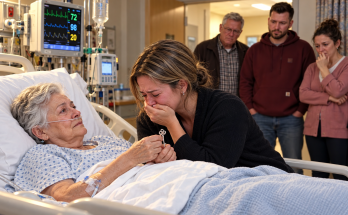
I remember sitting in a hospital chapel, staring at the wooden cross on the wall while a nurse explained what would happen next. My hands trembled so badly that I could barely hold my phone.
I called my mother first.
She answered over the sound of cheerful music.
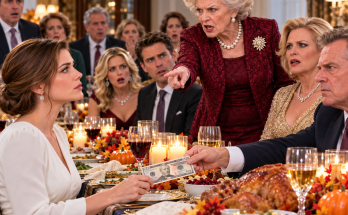
“Claire, can you call back? We’re in the middle of Melissa’s birthday celebration.”
“Mom,” I whispered, “there’s been an accident.”
Her voice immediately changed.
“What kind of accident?”
“Daniel is dead.”
Silence.
Then I forced myself to say the words that shattered my entire world.
“Sophie and Oliver are dead too.”
For several seconds, I heard nothing but the music playing in the background.
Finally, my father took the phone.
“What happened?”
I explained everything between sobs. I told him the funeral would be on Friday and that I couldn’t imagine standing beside three coffins without my own parents beside me.
“Dad, please,” I begged. “I need you. I don’t know how I’m supposed to survive this.”
He sighed.
“Claire, Friday is your sister’s birthday dinner. We’ve had everything arranged for weeks.”
I thought I had misunderstood him.
“Dad, my children are dead.”
“I know this is terrible,” he replied. “But today is your sister’s birthday. We can’t come.”
Then he hung up.
I stared at the phone, waiting for it to ring again.
It never did.
At the funeral, three coffins rested beneath a canopy of white flowers. One was for my husband. The other two were so small that I couldn’t bear to look at them for more than a few seconds.
My husband’s parents held me between them as I cried.
My mother-in-law, Helen, kept whispering, “You’re not alone, sweetheart. We’re right here.”
But every time I looked toward the empty seats reserved for my family, something inside me broke a little more.
My parents weren’t there.
My sister wasn’t there.
Not one cousin from my side of the family came.
Only my elderly Aunt Rebecca arrived after driving nearly five hours through the rain.
She wrapped her arms around me and held me until my knees stopped shaking.
Three days later, my mother finally sent a message.
I hope you’re holding up. Melissa feels terrible that you couldn’t call her on her birthday.
I read that sentence over and over.
Not I’m sorry.
Not How are you surviving?
Not even We should have been there.
My sister felt terrible because I hadn’t called her.
That night, I walked into my children’s bedroom. Oliver’s stuffed dinosaur lay on his pillow. Sophie’s pink backpack sat beside her desk, exactly where she’d dropped it after school.
I sat on the floor between their beds and cried until the sun came up.
And sometime before dawn, I made a promise to myself.
I would never beg anyone to love me again.
Not even my own family.
What I didn’t know was that six months later, the same people who had refused to attend my family’s funeral would be standing outside my door, desperately asking for something they had never offered me.
And the reason would be printed across the front page of a national newspaper.
PART 2: The Six Months They Forgot I Existed
The first month after the funeral passed in a blur of paperwork, unanswered questions, and unbearable silence.
I had to identify belongings from the wreckage. I had to sign documents confirming the deaths of my husband and children. I had to explain to insurance companies why I could no longer provide the information they wanted without breaking down.
Everywhere I looked, I found reminders of them.
Daniel’s coffee mug remained beside the kitchen sink.
Sophie’s drawings were still taped to the refrigerator.
Oliver’s tiny shoes sat beneath the bench near the front door.
I couldn’t bring myself to move any of it.
My husband’s parents helped when they could, but they were grieving too. We often sat together at the kitchen table without speaking, each of us trying to understand how three people could disappear from our lives in a single morning.
Meanwhile, my parents continued living as though nothing extraordinary had happened.
They posted photographs from restaurants, birthday parties, and weekend trips.
Melissa uploaded pictures of her new engagement ring.
My mother commented beneath one photograph:
My beautiful girl deserves the world.
I stared at those words for a long time.
Apparently, one daughter deserved the world.
The other could bury her entire family alone.
Two months after the accident, I called my mother.
I don’t know why. Perhaps some part of me still hoped she would finally ask how I was doing.
She answered brightly.
“Claire! What a surprise.”
“Mom, I haven’t heard from you in weeks.”
“We’ve been busy, sweetheart. Melissa is planning her wedding, and your father has been working overtime.”
I looked around my empty living room.
“I’m still sleeping on the couch because I can’t bear to enter my bedroom without Daniel.”
She paused briefly.
Then she said, “You need to start moving forward. You can’t stay sad forever.”
I closed my eyes.
“Do you ever think about Sophie and Oliver?”
“Of course I do.”
“Then why haven’t you asked me how I’m coping?”
My mother became defensive.
“Claire, everything is always about your pain lately. We have our own lives, you know.”
I ended the call before she could say anything else.
That was the last time I called her.
Three months later, an attorney contacted me about the accident.
The trucking company had discovered that its driver had violated safety regulations and falsified his rest records. Investigators had also uncovered evidence that the company had ignored previous complaints about dangerous scheduling practices.
Daniel had been an architect. He had designed schools, community centers, and affordable housing projects.
Before his death, he had been working on a proposal for a children’s rehabilitation center.
During the legal proceedings, I discovered that Daniel had quietly arranged for a portion of his future earnings to support child safety programs. He had also left detailed notes about the community project he wanted to build someday.
Reading his handwriting nearly destroyed me.
One sentence appeared at the bottom of a page:
If anything ever happens to me, I hope Claire finds a way to make our children’s lives mean something beyond the time we had with them.
I pressed the paper against my chest.
For the first time in months, my grief felt like something I could carry rather than something that was crushing me.
I worked with Daniel’s former colleagues, child-safety advocates, and a legal team to establish the Sophie and Oliver Foundation.
We planned to help families affected by preventable road accidents and support research into safer commercial transportation.
The legal settlement took months to negotiate.
When the final agreement was reached, the amount was $18.7 million.
It was a staggering sum.
But every dollar reminded me of what it had cost.
No money could buy another bedtime story with Sophie.
No settlement could bring Oliver running into my arms.
And no amount of wealth could make Daniel walk through our front door again.
I decided that most of the money would fund the foundation’s long-term work.
I would keep enough to rebuild a stable life, but I had no intention of turning my tragedy into a display of wealth.
Then, six months after the funeral, a journalist published a story about the foundation.
The headline appeared on news websites across the country:
WIDOW OF FATAL I-95 CRASH WINS $18.7 MILLION SETTLEMENT AND LAUNCHES FOUNDATION IN HER CHILDREN’S NAMES.
By lunchtime, my phone was ringing constantly.
My father called twelve times.
My mother left four voicemails.
Melissa sent a message that began with three heart emojis.
Claire, sweetheart! We just saw the wonderful news. We are SO proud of you! We need to talk.
I didn’t answer.
That evening, a car pulled into my driveway.
Then another.
Through the front window, I watched my parents step out, followed by Melissa and her fiancé.
My father walked straight to the front door and knocked.
When I opened it, he wore the same expression he used whenever he expected a conversation to go his way.
“Claire,” he said, smiling as if the previous six months had never happened. “Why haven’t you answered our calls?”
I looked at the four people standing on my doorstep.
Six months earlier, I had begged them to stand beside three coffins.
Now they had come running because a newspaper had printed a number beside my name.
My father glanced past me into the house.
“We need to discuss something important.”
I folded my arms.
“Then you should probably tell me why it couldn’t wait until after your daughter’s birthday.”
His smile disappeared.
And for the first time in my life, my father had absolutely nothing to say.
PART 3: The Secret That Made Them Beg
My mother stepped forward first.
“Claire, please don’t start this way. We’re your family.”
I almost laughed.
“My family?”
Melissa crossed her arms.
“We know things have been difficult, but you can’t punish everyone forever.”
I looked directly at her.
“Do you remember what I was doing on your birthday?”
She rolled her eyes.
“Not this again.”
“I was sitting in a hospital chapel, learning that my husband and both my children were dead. I called Dad and begged him to come to their funeral.”
Nobody spoke.
I continued.
“He told me your birthday dinner was more important.”
My father’s jaw tightened.
“We’ve already explained that situation.”
“No,” I replied. “You explained your schedule. You never explained why you thought I didn’t deserve my parents when my entire world had collapsed.”
My mother began crying.
“We didn’t know how to handle something so terrible.”
“You didn’t have to know how to handle it. You only had to show up.”
Melissa’s fiancé shifted uncomfortably beside her.
Then my father cleared his throat.
“Claire, whatever happened in the past, we need to think about the future.”
There it was.
The real reason for their visit.
He explained that Melissa and her fiancé had found a property they wanted to purchase before their wedding. They had also accumulated debts from the wedding arrangements and a failed business venture.
My father had promised to help them.
But his own finances had become strained.
He believed that, now that I had received the settlement, I could solve the problem.
“How much?” I asked.
He hesitated.
“About $600,000.”
For a moment, I wondered whether grief had made me hear him incorrectly.
“Six hundred thousand dollars?”
“It would be a loan,” he said quickly. “Family helps family.”
I looked at my mother.
Then at Melissa.
Finally, I looked at the man who had refused to attend his grandchildren’s funeral because he had a birthday dinner to attend.
“You drove here because you want six hundred thousand dollars.”
“We came because we love you,” my mother whispered.
I shook my head.
“If you loved me, you would have come when I had nothing left except three graves to visit.”
Melissa’s expression hardened.
“You’re being cruel. You’re sitting on millions of dollars while your own sister is struggling.”
I felt something settle inside me.
Not anger.
Clarity.
“The settlement isn’t a lottery prize,” I told her. “It is compensation for three lives that can never be replaced. Most of it belongs to a foundation created to help families who have suffered preventable tragedies.”
My father waved his hand dismissively.
“You can always donate more later. We’re talking about your sister’s future.”
“No,” I said. “You’re talking about the future you want me to finance.”
He stepped closer.
“Listen carefully. We raised you. We paid for your education. We supported you for years. You owe this family something.”
I stared at him.
“Did you support me when I buried my children?”
He said nothing.
“Did you sit beside me when I couldn’t sleep? Did you help me sort through their clothes? Did you ask whether I had eaten? Did you call on Christmas when I sat alone in a house that still smelled like my husband?”
My mother’s crying grew louder.
But I wasn’t finished.
“You didn’t even ask whether I was still alive inside that house. You only remembered me when a newspaper told you I had money.”
Melissa suddenly snapped.
“You’ve always thought you were better than us!”
“No,” I replied quietly. “I spent my entire life trying to earn your love. That was my mistake.”
I walked to the hallway and returned with a folder.
Inside were documents from the foundation, including its mission statement and initial funding commitments.
I placed them on the table.
“This is what the money is for. We’re funding emergency assistance for families whose lives are destroyed by fatal road accidents. We’re helping parents who suddenly have medical bills, funeral expenses, and children who need support.”
My father glanced at the papers without picking them up.
“Are you saying you won’t help us?”
“I’m saying I won’t give you six hundred thousand dollars.”
His face turned red.
“You’ll regret turning your back on your own parents.”
I looked at him for a long moment.
“Dad, I learned how it feels to be abandoned by my family on the day I buried my husband and children. You don’t have to threaten me with something I’ve already survived.”
Then I opened the front door.
My mother stood there crying.
Melissa called me selfish.
My father muttered something about lawyers and family obligations.
But none of them apologized for the funeral.
None of them asked to see photographs of Sophie and Oliver.
None of them said their names.
As they walked toward their cars, my mother turned around.
“Claire, please. Can’t we start over?”
I wanted to believe her.
A younger version of me would have opened my arms and begged her to come inside.
But I was no longer that woman.
“You can start by understanding that I’m not an emergency bank account,” I said. “And you can start by admitting what you did without asking me for anything in return.”
Then I closed the door.
For weeks, relatives sent messages accusing me of being heartless. Some claimed I had allowed money to change me. Others insisted that parents deserved forgiveness simply because they were parents.
I stopped defending myself.
I didn’t need the world to understand my grief.
I needed to build something that could help other families survive theirs.
One year after the accident, the Sophie and Oliver Foundation opened its first family support center. Daniel’s former colleagues helped us establish a road-safety program in his name.
At the opening ceremony, I stood before a room filled with parents, volunteers, and children whose lives had been touched by the foundation.
On the wall behind me were two photographs: Sophie smiling with a missing front tooth, and Oliver holding his beloved stuffed dinosaur.
I placed my hand against the podium.
“My children were here for too little time,” I said. “But their lives mattered. They still matter. And if we can prevent even one family from experiencing what we experienced, then their names will continue to do good in this world.”
When the ceremony ended, Helen, my late husband’s mother, embraced me.
“You know what Daniel would say?” she whispered.
I shook my head.
“He’d tell you that he’s proud of you.”
For the first time that day, I cried.
Not because I had been abandoned.
But because someone had remembered that I was still a person who needed love.
My parents eventually sent a letter. It contained explanations, justifications, and a request to reconnect.
It also contained one sentence that I had waited months to hear.
We were wrong not to come to the funeral.
I read it several times.
I didn’t immediately forgive them. I didn’t send them money. And I didn’t pretend that one apology could erase the day they had chosen a birthday dinner over their own grandchildren.
But I left the possibility of a conversation open—one that would begin with honesty rather than entitlement.
Because I had finally understood something important.
Forgiveness is not the same as giving someone permission to hurt you again.
My family had believed that money would bring me back under their control.
Instead, losing everything I loved had taught me how to stand on my own.
I still visit the cemetery every Friday.
I bring white roses for Daniel, yellow daisies for Sophie, and a little toy dinosaur for Oliver.
I tell them about the families we’ve helped, the children we’ve protected, and the work that continues in their names.
Then I sit quietly until I’m ready to leave.
I cannot change the morning they died.
I cannot change the funeral my parents missed.
But I can choose what happens next.
And every time the foundation helps another grieving family, I feel that the love I had for my husband and children is still moving through the world.
My parents missed the day I needed them most.
Six months later, they came looking for the woman they thought had become wealthy.
They never understood that the woman who opened that door was no longer desperate for their approval.
She was a mother who had lost everything—and had finally discovered that her worth had never depended on whether her family chose to show up.
THE END