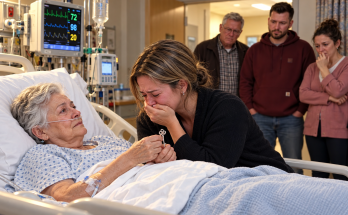
PART 1: They Celebrated My Sister’s Son While My Daughter Waited for Them
My younger sister and I gave birth on the same day, in the same hospital, just two rooms apart. My parents spent nine hours celebrating her newborn son, showering him with gifts, taking photographs, and welcoming relatives, while my newborn daughter lay peacefully in her bassinet without a single visit from her grandparents.
When I finally called my father, hoping he would at least ask how I was feeling, he snapped, “We’re exhausted! Do you have any idea how tiring today has been?”
I quietly ended the call, wiped my tears, and promised myself I would stop begging people to love me.
But I had no idea that a nurse would soon uncover something disturbing about my family’s plans, or that my husband would return from the cafeteria with information that would change the way I saw my parents forever.
My name is Odalie Bennett, and for most of my thirty-two years, I believed that being the responsible daughter was the same thing as being loved.
My younger sister, Medelli, had always been the favorite.
She was charming, beautiful, and knew exactly how to make people feel sorry for her whenever life didn’t go according to plan.
If she lost a job, my parents said her employer had failed to recognize her talent.
If she overspent her money, they called it a temporary setback.
If she argued with someone, they insisted she had simply been misunderstood.
I, on the other hand, was expected to solve my own problems quietly.
When I earned a scholarship to university, my parents congratulated me before reminding me that Medelli needed help paying for her car.
When I accepted a demanding research position overseas, Dad said he was proud of me but immediately asked whether I could contribute more toward their mortgage.
I did.
For nearly four years, I transferred $1,200 into their account every month.
I never complained because I believed family was supposed to help one another.
When Medelli married Kyle, my parents spent thousands of dollars on the wedding.
When Ben and I married two years later, we paid for almost everything ourselves.
Still, I told myself these differences didn’t matter.
I had Ben, a husband who loved me without conditions, and I had built a peaceful life far away from the constant competition that seemed to define my childhood.
Then I became pregnant with our first child.
For months, Ben and I prepared for the arrival of our baby.
We painted the nursery a soft cream color, assembled a white wooden crib, and carefully folded tiny clothes into drawers.
Ben spent an entire Saturday installing shelves because I wanted a special place for the children’s books we hoped to collect over the years.
We didn’t know whether we were having a boy or a girl until the birth.
My parents seemed excited when we announced the pregnancy, although most of their questions concerned Medelli’s pregnancy, which had been announced only three weeks after mine.
Mom repeatedly compared our due dates.
“Imagine if you two delivered on the same day!” she exclaimed during one family dinner. “Wouldn’t that be wonderful?”
Medelli laughed.
“If mine is a boy and hers is a girl, we’ll have the perfect pair.”
Dad raised his glass and said he would finally have a grandson to carry on the family name.
I remember smiling politely.
At the time, I didn’t realize how much that one sentence would explain everything that happened later.
Our babies arrived on a Thursday afternoon in October.
Medelli delivered a healthy boy shortly after one o’clock.
I delivered my daughter, Eleanor, at 2:17 p.m., following twenty-two exhausting hours of labor.
When the doctor placed Eleanor against my chest, I forgot every uncomfortable moment that had come before.
She was tiny, warm, and wonderfully real.
Her little fingers curled around mine, and I began crying before I could even tell Ben that she was beautiful.
“Hello, Eleanor,” I whispered. “I’ve been waiting for you.”
Ben kissed my forehead, his eyes shining.
“You did it,” he said. “She’s perfect.”
For a little while, nothing else mattered.
Then my phone began lighting up with photographs from Medelli’s room.
Mom had brought blue balloons, a large bouquet of flowers, a cake decorated with the words WELCOME, LITTLE PRINCE, and several bags of gifts.
Dad was standing beside Medelli’s bed in one photograph, grinning proudly while holding his grandson.
In another picture, my mother was kissing the baby’s forehead.
I smiled when I saw the pictures. I genuinely did.
But as the afternoon passed, I kept checking the hallway.
Surely, I thought, they would visit me next.
Our rooms were on the same maternity floor.
They didn’t need to drive anywhere or even take an elevator.
They only had to walk down a short corridor.
At four o’clock, I heard laughter outside Medelli’s room.
At five, I received a photograph of Dad holding his grandson while relatives crowded around him.
At six, Mom posted a family picture with the caption, “Our family is finally complete.”
I stared at that sentence for a long time.
Finally complete.
I looked at Eleanor sleeping beside me.
Wasn’t she part of the family too?
Ben noticed my expression and gently took my phone from my hand.
“Maybe they’re planning a surprise,” he suggested.
I wanted to believe him.
By 6:15 p.m., however, the disappointment had become impossible to ignore.
I called Mom.
She answered cheerfully, and I could hear people laughing behind her.
“Hello, sweetheart!”
“Hi, Mom. How’s the baby?”
“Wonderful! He’s absolutely perfect. Your father has been taking pictures all afternoon.”
“I’m glad he’s doing well,” I replied.
Then I gathered my courage.
“I was wondering if you and Dad were coming to meet Eleanor.”
The laughter in the background faded.
Mom sighed.
“Oh, Odalie, we’re completely exhausted. We’ve been here since early this morning.”
I looked at the hospital clock.
“I understand, but I’ve been here all day too.”
“Well, your sister needed us. She had a difficult delivery, and Kyle has been running around trying to organize everything.”
I swallowed hard.
“My delivery lasted twenty-two hours, Mom.”
“Yes, darling, but you’ve always been strong.”
There it was again.
The familiar excuse that had followed me through every important moment of my life.
I was strong, so I could manage without help.
I was responsible, so I could pay for things.
I was independent, so I didn’t need affection.
“Could you please come for just five minutes?” I asked. “I’d really like you to meet your granddaughter.”
Before Mom could answer, I heard Dad in the background.
“Tell her we’re tired! We’ve been sitting in these hospital chairs for nine hours!”
Then he took the phone.
“Odalie, enough. Your sister has had a major life event, and we’re trying to support her. Do you have any idea how exhausting today has been?”
I stared at Eleanor’s tiny face.
“Dad, I had a baby today too.”
“And we’re happy for you,” he replied impatiently. “But you’ve always been the independent one. You don’t need us hovering over you.”
I felt something inside me go quiet.
For years, I’d waited for my parents to recognize how much I had done for them.
I had believed that if I worked hard enough, helped enough, and asked for little enough, eventually they would treat me with the same tenderness they gave my sister.
But there I was, recovering from childbirth, asking my own father to walk down a hallway.
“I understand,” I whispered.
I ended the call before he could say anything else.
Then I cried.
Not loudly. I didn’t want to wake Eleanor.
The tears simply slipped down my face while I watched my daughter breathe, her tiny chest rising and falling beneath the pink blanket.
Ben returned from the bathroom and immediately understood.
He sat beside me, wrapped an arm around my shoulders, and let me cry without asking me to explain.
“They’ll regret missing this,” he said quietly.
I shook my head.
“I don’t want them to regret it. I just wanted them to care.”
A few minutes later, our nurse, Denise, entered the room to check my blood pressure and make sure Eleanor was feeding properly.
She was in her late forties, with kind eyes and a calm manner that made the hospital feel less frightening.
She noticed my swollen eyes.
“Are you in pain?”
“Not exactly.”
“Family trouble?”
I gave a small, embarrassed laugh.
“Is it that obvious?”
Denise adjusted the blanket around Eleanor.
“Sometimes the people who are supposed to support us are the ones who disappoint us most.”
I looked at her.
“My parents have been visiting my sister all day. Her room is only two doors away, but they haven’t come to see my daughter.”
Denise’s expression softened.
“Then they’re missing something beautiful.”
She looked down at Eleanor and smiled.
“Hello, little one. Your mother has been waiting a long time to meet you.”
After Denise left, Ben said he was going to the cafeteria to get us something to eat.
He kissed Eleanor’s forehead and promised to return quickly.
I closed my eyes, exhausted, and tried to rest.
Twenty minutes passed.
Then thirty.
I was beginning to worry when the door finally opened.
Ben stepped inside carrying no food.
His face was pale, and he closed the door carefully behind him.
“What’s wrong?” I asked.
He pulled the visitor chair beside my bed and sat down.
“Odalie, I heard something in your sister’s room.”
My stomach tightened.
“What?”
He glanced toward Eleanor’s bassinet.
“Your parents weren’t just celebrating the baby. They were talking about our house.”
I frowned.
“Our house?”
He nodded slowly.
“And I don’t think they intended for us to find out.”
PART 2: The Secret Plan My Parents Had Made Behind My Back
Ben took my hand before continuing.
“On my way back from the cafeteria, I passed your sister’s room. The door was open, and your father was talking about how Medelli and Kyle needed more space.”
I stared at him.
“They’re renting that little apartment near Kyle’s office. What does that have to do with us?”
“Apparently, your mother thinks our house would be perfect for them.”
For a moment, I thought I’d misunderstood.
Our home was a four-bedroom house in a quiet neighborhood.
Ben and I had bought it three years earlier after saving for almost a decade.
We had chosen it because it had a small garden, a safe street, and enough room for the family we hoped to build.
Our daughter’s nursery was ready upstairs.
Our bedroom was next to hers.
Every room had been arranged with care.
“Did they ask us?” I said.
“No.”
“Did Medelli ask us?”
Ben hesitated.
“Your sister was part of the conversation.”
My heart began pounding.
“What exactly did they say?”
Ben explained that Dad had been discussing the possibility of Medelli and Kyle moving some of their belongings into our house.
Mom had apparently suggested that Ben and I had more space than we needed and that I might eventually accept another overseas research assignment.
According to Ben, my mother had even said, “Odalie never objects when we explain what needs to be done. Once she understands that her sister needs help, she’ll agree.”
I felt sick.
They had turned my willingness to help into an assumption that they could make decisions for me.
“And what did Medelli say?”
“She asked whether the spare room could be converted into a nursery for her son.”
I stared at him.
The spare room was directly across from Eleanor’s nursery.
We had planned to use it as a playroom when she grew older.
“They’re planning to move into our house while I’m still recovering from childbirth?”
“That’s what it sounded like.”
I wanted to call my mother immediately, but Ben wasn’t finished.
“There’s something else. Your father said they still have the spare key and the garage access code.”
My mouth went dry.
Years earlier, I had given my parents a spare key because they sometimes watered our plants while we traveled.
I had also shared the garage code for emergencies.
I had trusted them.
“Did they say when they planned to do this?”
Ben shook his head.
“Your mother mentioned that a moving company could bring the first boxes over this weekend.”
This weekend.
I was still wearing a hospital bracelet.
My daughter was less than five hours old, and my parents were already discussing how to rearrange her home without asking her parents.
I pressed my fingers against my forehead.
“Ben, what am I supposed to do?”
He moved closer.
“First, we’re going to make sure you and Eleanor are safe and comfortable. Then we’ll deal with the house. You don’t owe anyone permission to take over your home.”
Before I could answer, there was a knock at the door.
Denise entered carrying a clipboard.
She looked more serious than she had earlier.
“Odalie, I need to clarify something about Eleanor’s discharge arrangements.”
I immediately sat up straighter.
“Is something wrong with my daughter?”
“No, sweetheart. Eleanor is doing well. This is an administrative matter.”
Denise explained that someone claiming to be a close family member had asked the maternity staff about arranging transportation for the newborn and obtaining information about the expected discharge time.
The staff had explained that the baby’s parents were responsible for authorizing those arrangements.
“Could you confirm who is permitted to make decisions or arrangements for Eleanor?” Denise asked.
“Only Ben and me.”
“Thank you. I’ll document that clearly.”
I exchanged a glance with Ben.
“Who asked about the discharge?” I asked.
Denise paused.
“I can’t share information that isn’t appropriate for me to disclose, but I can tell you that we wanted to make sure your wishes were clear.”
That answer frightened me more than a direct accusation would have.
“Did someone try to take her?”
“No,” Denise replied immediately. “Eleanor is safe, and no one has removed her from your care. We’re simply confirming the authorization.”
I took a breath.
“Could you please make sure nobody receives information about her discharge unless Ben or I approve it?”
“Absolutely.”
When Denise left, I looked at my husband.
“I think we need to change the locks.”
Ben nodded.
“And the garage code.”
“And we need to call the hospital security desk and make sure our visitor preferences are documented.”
“Agreed.”
I had never imagined that welcoming a child would force me to establish boundaries with my own parents.
Yet something had changed inside me.
For the first time, I wasn’t thinking about how to avoid upsetting them.
I was thinking about protecting my daughter.
I asked Denise to invite Mom to my room.
I wanted to hear the truth directly from her.
Less than fifteen minutes later, hurried footsteps approached.
My mother appeared in the doorway.
She wasn’t carrying flowers or a gift for Eleanor.
She wasn’t smiling.
Instead, she looked directly at me and demanded, “Odalie, what exactly have you been telling the hospital staff?”
I stared at her.
“Hello to you too, Mom.”
“Don’t be sarcastic. Someone told me the nurses are asking questions about who can arrange your baby’s discharge.”
“I asked them to make sure only Ben and I can make decisions for Eleanor.”
Mom’s face tightened.
“Why would you do that? We’re her grandparents!”
“And we’re her parents.”
She looked past me toward Ben.
“Is this your idea? Have you been filling her head with nonsense?”
Ben stood up.
“Don’t blame me for decisions Odalie has made herself.”
Mom ignored him.
“Odalie, you know how difficult things have been for Medelli. Kyle’s apartment is too small, the baby needs a proper room, and your house has plenty of space.”
I couldn’t believe what I was hearing.
“Have you asked me whether I want them living in my house?”
“Families help each other.”
“I’ve helped you for years. I send you money every month. I’ve paid bills when you were struggling. I’ve never refused to help Medelli when she genuinely needed it. But you cannot simply decide that my home belongs to her.”
Mom folded her arms.
“We’re not saying it belongs to her. We’re saying it makes sense for her to stay there temporarily.”
“Without asking me?”
“You would have agreed if we’d explained it properly.”
I stared at her.
That was the moment I finally understood how my family saw me.
They didn’t view my kindness as something I freely offered.
They viewed it as a resource they were entitled to use.
“Did you bring a moving company into this?” I asked.
Mom’s eyes flickered.
“We were only discussing possibilities.”
“Did you arrange for them to come this weekend?”
She looked away.
“Your sister needs help.”
“And what about Eleanor?”
Mom’s expression hardened.
“Don’t turn this into a competition between the babies.”
“I didn’t. You did that when you spent nine hours celebrating Medelli’s son and refused to walk down the hallway to meet your granddaughter.”
Mom opened her mouth, but no words came.
For a brief moment, I thought she might apologize.
Instead, she said, “You have always been jealous of your sister.”
The accusation landed like a slap.
I looked at Eleanor, sleeping peacefully in her bassinet.
“No, Mom. I wanted you to love both of us. And now I want you to respect my family.”
She scoffed.
“Your family? We’re your family.”
“Ben and Eleanor are my family too. And this is our home.”
Mom’s eyes narrowed.
“You’re making a terrible mistake. When you need us, don’t expect us to come running.”
I felt tears rising again, but I refused to let them control my voice.
“I asked you to visit your granddaughter. You told me you were too exhausted. Then I learned you had enough energy to plan a move into my house.”
She turned toward the door.
“Fine. If that’s how you want to treat us, perhaps we should leave you alone.”
“That’s your choice.”
She stopped.
I had never spoken to her like that before.
For a second, her face showed genuine surprise.
Then she walked out without looking at Eleanor.
Ben sat beside me again.
I thought the worst part was over.
I was wrong.
A few minutes later, my phone began vibrating repeatedly.
First, a message from Dad.
Your mother says you’ve embarrassed her in front of hospital staff. Call us immediately.
Then one from Medelli.
I don’t understand why you’re making such a big deal about the house. Mom said you were already okay with helping us.
I stared at the message.
I had never agreed to anything.
Before I could reply, another message arrived.
This one came from an unfamiliar number.
Hello, Ms. Bennett. This is Martin from Northstar Moving Services. Your mother provided your address and told us your family had approved a move scheduled for Saturday. We need to confirm the access arrangements before we proceed.
I read it twice.
Then I showed Ben.
He immediately took a screenshot and replied that we had not authorized any move and that the company must not enter our property or accept further instructions from anyone claiming to speak on our behalf.
The reply came almost instantly.
Understood. We’ll place the booking on hold until we receive confirmation from the property owners.
My hands were shaking.
This wasn’t just an idea my parents had casually discussed.
They had already contacted a moving company and provided our address.
I called the number.
A representative confirmed that someone had requested a Saturday move and listed my parents as the family members coordinating the arrangements.
The company had not entered our property, and no move had occurred, but the booking was real.
I thanked the representative and ended the call.
Ben looked furious.
“They actually tried to organize this.”
I nodded.
Then I opened my banking app.
For four years, I had sent my parents $1,200 each month.
I had never asked them to repay me or explain how they used it.
I had believed that helping them would make their lives easier.
Instead, they seemed to believe that helping them meant surrendering my own life whenever they demanded it.
I stopped the recurring transfer.
Then I called a locksmith and arranged for the locks and garage code to be changed after we returned home.
I also emailed our property manager, explaining that no one besides Ben and me was authorized to request access or changes on our behalf.
I wasn’t doing this to punish my parents.
I was doing it because I finally understood that trust without boundaries could become an invitation for someone else to take control.
That evening, Denise returned with my discharge paperwork.
Before she left, she hesitated beside the door.
“Odalie, there’s one more thing I think you should know.”
My stomach tightened again.
“What is it?”
She explained that when the maternity staff were clarifying the family arrangements, a member of the hospital’s administrative team had noticed something unusual about the contact information supplied during an earlier inquiry.
A name associated with the inquiry matched the name of someone who had been listed as an emergency contact on my original registration form.
I looked at Ben.
“Who?”
Denise kept her voice gentle.
“Your father.”
I felt cold.
Dad had been listed as an emergency contact years ago, before Ben and I married.
I had never thought to update every old form.
“Does that mean he could make decisions for Eleanor?”
“No,” Denise said firmly. “Being listed as an emergency contact does not automatically make someone a legal guardian or give them parental authority. We simply wanted to ensure that your current wishes were documented.”
She explained that the hospital would follow its policies and the applicable authorization requirements.
Ben and I could update the relevant contact information before discharge.
I thanked her.
When the door closed, Ben squeezed my hand.
“Tomorrow, we go home together. You, me, and Eleanor. Nobody else gets to decide what happens to our family.”
I nodded.
But as I watched my daughter’s sleeping face, another question troubled me.
If my parents had been willing to make plans for our home without permission, what else had they decided they were entitled to?
I didn’t have to wait long for the answer.
At 8:42 p.m., my father called.
I almost ignored it.
Then I answered because I wanted to hear what he would say when he could no longer pretend that I didn’t know about the moving company.
His voice was sharp.
“Your mother says you’ve canceled everything.”
“I canceled nothing that you had permission to arrange.”
“You’re being unreasonable.”
“You contacted a moving company about my house without asking me.”
“We were trying to help your sister!”
“Then help her find a home. Don’t try to take over mine.”
Dad went silent for a moment.
Then he said something I will never forget.
“You should be grateful we even considered letting Medelli stay with you. Your house is too big for a couple and one baby.”
I closed my eyes.
That was when I realized my parents didn’t merely expect me to help.
They believed my life should always be rearranged to accommodate my sister’s.
And they had no intention of stopping unless I made it impossible.
PART 3: The Truth That Finally Ended Their Control Over My Life
The following morning, Ben helped me prepare to leave the hospital.
Eleanor slept in her bassinet while I signed the final paperwork and listened to Denise explain the newborn care instructions.
I was exhausted, sore, and frightened about the days ahead, but I also felt something I hadn’t felt in a long time.
Clarity.
My daughter deserved to grow up in a home where love wasn’t measured by who demanded the most attention.
She deserved parents who could say no without apologizing for protecting their family.
And I deserved to stop confusing sacrifice with love.
Before we left, I updated the emergency contacts and confirmed that only Ben and I were authorized to make arrangements for Eleanor.
The hospital followed its normal discharge procedures, and Ben carried our daughter to the car while I walked slowly beside him.
When we arrived home, the locksmith was already waiting.
He changed the exterior locks, reset the garage access code, and checked the doors to make sure everything worked properly.
Then Ben carried Eleanor into her nursery.
The sunlight fell across the little white crib.
Her folded blankets were waiting on the shelf, and the tiny stuffed rabbit Ben had bought weeks earlier sat beside the rocking chair.
I stood in the doorway and began to cry again.
But these were different tears.
For the first time since Eleanor’s birth, I felt that we were home.
That afternoon, my parents began calling.
I didn’t answer.
Medelli sent a long message accusing me of humiliating her and making her feel unwelcome in the family.
I read the entire message before replying.
I love you, and I want you and your son to have a safe, comfortable home. But our home is not available for you to move into. You and Mom should have discussed this with Ben and me before contacting a moving company. I will help you look at other options if you want, but I will not be pressured into giving up our privacy.
She responded with a single sentence.
Mom said you already agreed.
I wrote back:
Mom was mistaken. I never agreed.
Then I put my phone away and focused on Eleanor.
For the next two days, Ben and I settled into our new routine.
We learned how to soothe our daughter when she cried, how to change her clothes without waking her, and how to survive on very little sleep.
My parents continued sending messages.
Some were angry.
Others were unexpectedly sweet.
Mom wrote that she missed me.
Dad said he hoped I wasn’t making a permanent decision based on one misunderstanding.
But neither of them asked how Eleanor was doing.
Neither asked whether I was recovering well.
Neither apologized for missing her birth or for the plans they had made behind our backs.
On Sunday morning, I received a message from my aunt, Lorraine.
She was my mother’s older sister and one of the few people in our extended family who had always treated Medelli and me equally.
Odalie, I heard there was some confusion about your house. Are you all right? Your mother says you suddenly refused to help your sister.
I took a deep breath and called her.
I explained what had happened, from the nine-hour celebration to the moving company booking.
Aunt Lorraine listened without interrupting.
When I finished, she was quiet for several seconds.
Then she said, “Odalie, I need to tell you something. Your mother called me last week.”
My heart began beating faster.
“What did she say?”
“She asked whether I thought you would agree to let Medelli move into your house. I told her she needed to ask you directly. She said she didn’t want to upset you before the baby arrived.”
I felt a chill run through me.
“Before the baby arrived?”
“Yes. She said your house was the most convenient option because you and Ben had enough space, and she believed you would eventually agree if the family presented it as a temporary arrangement.”
I sat down at the kitchen table.
This plan hadn’t started in the hospital.
My parents had been discussing it before Eleanor was born.
Aunt Lorraine continued.
“Your mother also said something else. She said you had always been willing to make sacrifices for the family, so she didn’t understand why this would be different.”
I stared out the window at the small garden Ben and I had planted the previous spring.
Because I had always said yes, they had stopped believing I was allowed to say no.
“Thank you for telling me,” I whispered.
“I’m sorry, sweetheart. I should have told you sooner.”
After we ended the call, I sat in silence for a long time.
Then I opened my banking records.
I began adding up the money I had sent my parents over the past four years.
The monthly mortgage contributions alone totaled more than $57,000.
There were additional payments for emergency repairs, medical bills, and expenses they said they couldn’t cover.
I wasn’t calculating the total because I wanted repayment.
I was trying to understand how a relationship could become so one-sided without my fully recognizing it.
I had helped them because I loved them.
But somewhere along the way, they had begun treating my help as an obligation.
That afternoon, Ben and I agreed to establish a new rule.
We would no longer provide automatic financial support.
If my parents ever faced a genuine emergency, we could consider the situation together.
But there would be no more recurring payments made out of guilt, fear, or habit.
We also agreed that any future family visit would need to be arranged in advance and that no one would receive a key to our home unless we both agreed.
I thought these boundaries might finally make my parents understand how serious the situation had become.
Instead, they reacted as though I had betrayed them.
On Monday evening, Dad arrived at our front door.
The new lock held.
He rang the bell repeatedly until Ben answered through the doorbell camera.
“Open the door,” Dad demanded. “We need to talk.”
Ben stepped outside but kept the door closed behind him.
Dad looked past him, trying to see inside.
“Where’s Odalie?”
“She and Eleanor are resting.”
“I need to speak to my daughter.”
“Then you can speak respectfully, and you can arrange a visit with us.”
Dad’s face reddened.
“This is ridiculous. I’m her grandfather.”
“And I’m her father,” Ben replied calmly. “That doesn’t mean either of us gets to ignore the mother’s wishes.”
Dad stared at him.
Then he lowered his voice.
“Your wife is turning this family against itself.”
Ben didn’t raise his voice.
“No. We’re simply deciding what happens in our own home.”
Dad stood there for several seconds before turning away.
He left without seeing Eleanor.
I watched the recording later, after Ben told me what had happened.
It hurt more than I expected.
Not because Dad had been refused entry, but because he had stood at our door and argued for access to our house without once asking how his daughter or granddaughter was doing.
That night, I finally sent my parents a message.
I told them I needed space and would contact them when I was ready to talk.
I explained that any future relationship would have to include respect for my marriage, my home, and my role as Eleanor’s mother.
I also made one final request.
If they wanted to meet their granddaughter, they could arrange a short visit with us, apologize for what had happened, and come because they wanted to know her—not because they expected something from us.
My mother replied the next morning.
You are making us beg to see our own grandchild.
I read the message twice.
Then I put my phone down.
I wasn’t making anyone beg.
I was asking them to treat us like people whose choices mattered.
Three weeks passed.
Eleanor grew stronger, and the sleepless nights gradually became easier.
Ben learned to calm her by walking slowly around the living room, while I discovered that she fell asleep fastest when I hummed softly beside her crib.
We began building our life around her little routines.
For the first time in years, I stopped checking my phone every few minutes to see whether my parents needed something.
I stopped feeling guilty when I spent money on our own family.
I stopped wondering whether I was selfish for wanting peace.
Then, one rainy afternoon, my doorbell rang.
It was Medelli.
She stood on the porch holding her baby boy, looking exhausted.
Her hair was tied back carelessly, and there were dark circles beneath her eyes.
For a moment, neither of us spoke.
Then she said, “Can I come in?”
I hesitated before opening the door wider.
“Ben is home. We can talk in the living room.”
She nodded.
Once we were seated, she looked around at the house.
Her gaze lingered on the staircase and the framed photographs on the wall.
“I didn’t realize how much this place meant to you,” she said quietly.
I waited.
She looked down at her son.
“Mom told me you’d already agreed to let us move in. She said you and Ben had discussed it before the birth, and that we only needed to arrange the details.”
My chest tightened.
“We never discussed it.”
“I know that now.”
She explained that she and Kyle had been arguing about money for months.
Their apartment was expensive, and Kyle’s work hours had been reduced.
My parents had offered to help them find a larger place, but the conversation had somehow shifted toward our house.
Mom had told Medelli that I wouldn’t mind.
Dad had said it was only fair because I had a better job and a bigger home.
Medelli had believed them.
“I should have asked you,” she whispered. “Instead, I assumed Mom had already handled everything.”
I looked at my sister.
For most of our lives, I had blamed her for accepting the special treatment our parents gave her.
Sometimes that resentment had been justified.
But sitting across from her, I realized she had also been taught that our parents would solve her problems, even when doing so meant expecting someone else to sacrifice.
That didn’t excuse what she had done.
But it helped me understand how the situation had grown.
“Why did you come today?” I asked.
Medelli’s eyes filled with tears.
“Because Mom told me you were refusing to let them see Eleanor. She said you were punishing the whole family.”
I felt the familiar pressure of guilt rise inside me.
Then Medelli continued.
“But I realized I hadn’t even asked how you were doing after giving birth. I spent the entire day celebrating my son. I knew you were nearby, and I never thought to walk down the hallway either.”
She began crying.
“I was so caught up in everything that I didn’t think about how lonely you must have felt.”
For the first time, my sister wasn’t asking me to solve a problem.
She was acknowledging that she had hurt me.
I didn’t immediately forgive her.
Instead, I told her the truth.
“I don’t expect you to give up the help you need. I don’t expect you to feel guilty for having a son or for celebrating his birth. I just need you to understand that Eleanor’s arrival mattered too. And my home isn’t something Mom and Dad can offer on my behalf.”
Medelli nodded.
“I understand.”
We sat quietly for a while, our babies sleeping in our arms.
Then she asked, “Would you let me bring my son back sometime so the cousins can meet properly?”
I looked at Eleanor.
“Yes,” I said. “We can arrange that.”
It wasn’t a complete reconciliation.
It was a beginning.
My parents, however, were not ready to accept that they had done anything wrong.
When Medelli told them she had visited us, Mom called me that evening.
“Your sister says you’re willing to see her but not us.”
“Medelli came to apologize.”
“She’s your sister. She should be helping us bring this family back together, not taking sides.”
“Mom, this isn’t about sides. It’s about what happened.”
“We were trying to help.”
“Then why didn’t you ask me?”
She fell silent.
I continued before she could interrupt.
“You spent nine hours celebrating one grandchild and refused to visit the other. You planned to move Medelli into our home without our permission. You contacted a moving company before we had agreed to anything. And when I asked you to respect our decisions, you accused me of being jealous.”
My voice shook, but I kept speaking.
“I love you, Mom. But I won’t pretend none of this happened just to make you comfortable.”
She began crying.
For one painful second, I wanted to take back every word and comfort her the way I had done since childhood.
Then I remembered the hospital room.
I remembered holding Eleanor while waiting for a visit that never came.
And I remembered how my mother had looked at me only when she feared losing access to my home.
I could love her without surrendering my boundaries.
“I hope we can have a better relationship someday,” I said. “But it has to begin with honesty.”
I ended the call gently.
Months later, my parents still hadn’t offered the apology I had hoped for.
They occasionally sent messages asking about Eleanor, and I answered when I felt comfortable.
I didn’t block them or demand that they disappear from our lives forever.
But I no longer allowed their disappointment to dictate my decisions.
On Eleanor’s first birthday, Ben and I held a small celebration in our garden.
We invited a few close friends, Aunt Lorraine, and Medelli with her husband and son.
The cousins played together on a blanket while we watched them discover the world with the uncomplicated curiosity only children seem to possess.
Medelli brought Eleanor a little wooden music box.
Inside the lid, she had written a note.
For Eleanor, who deserved to be celebrated from the very beginning.
I read it twice before hugging my sister.
It wasn’t a grand gesture.
But it was sincere.
Later that evening, after everyone had left, I carried Eleanor upstairs and tucked her into bed.
She wrapped her tiny fingers around mine, just as she had done on the day she was born.
I kissed her forehead and whispered, “You will never have to earn your place in this family, sweetheart. You will never have to be the easy child to deserve love.”
Ben stood in the doorway, listening.
When I turned toward him, he smiled and held out his arms.
I rested my head against his shoulder, finally understanding something that had taken me thirty-two years to learn.
Being independent does not mean you don’t need love.
Being strong does not mean you cannot be hurt.
And being family does not give anyone the right to control your home, your choices, or your future.
My parents had spent years believing that I would always sacrifice whatever they asked because I was the daughter who never caused trouble.
They were wrong.
I could be generous without being used.
I could forgive without pretending.
And I could love my family while protecting the little family I had built.
The day my daughter was born, I thought my parents’ refusal to visit was the most painful part of the story.
It wasn’t.
The real turning point came when I stopped asking why I wasn’t important enough for them to show up—and started building a life in which my daughter would never have to ask that question about herself.
Because Eleanor deserved more than a family that remembered her only when it was convenient.
She deserved a home where love was freely given, where boundaries were respected, and where nobody had to surrender their happiness to prove they belonged.
And that was the legacy I chose to give her.
My Parents Ignored My Newborn Daughter for Nine Hours—Then I Discovered They Had Already Made Plans for My House
PART 1: They Celebrated My Sister’s Son While My Daughter Waited for Them
My younger sister and I welcomed our babies on the same day, in the same hospital, just two rooms apart. My parents spent nine hours celebrating her newborn son, showering him with gifts, taking photographs, and welcoming relatives, while my newborn daughter lay peacefully in her bassinet without a single visit from her grandparents.
When I finally called my father, hoping he would at least ask how I was feeling, he snapped, “We’re exhausted! Do you have any idea how tiring today has been?”
I quietly ended the call, wiped my tears, and promised myself I would stop begging people to love me.
But I had no idea that a nurse would soon uncover something disturbing about my family’s plans, or that my husband would return from the cafeteria with information that would change the way I saw my parents forever.
My name is Odalie Bennett, and for most of my thirty-two years, I believed that being the responsible daughter was the same thing as being loved.
My younger sister, Medelli, had always been the favorite.
She was charming, beautiful, and knew exactly how to make people feel sorry for her whenever life didn’t go according to plan.
If she lost a job, my parents said her employer had failed to recognize her talent.
If she overspent her money, they called it a temporary setback.
If she argued with someone, they insisted she had simply been misunderstood.
I, on the other hand, was expected to solve my own problems quietly.
When I earned a scholarship to university, my parents congratulated me before reminding me that Medelli needed help paying for her car.
When I accepted a demanding research position overseas, Dad said he was proud of me but immediately asked whether I could contribute more toward their mortgage.
I did.
For nearly four years, I transferred $1,200 into their account every month.
I never complained because I believed family was supposed to help one another.
When Medelli married Kyle, my parents spent thousands of dollars on the wedding.
When Ben and I married two years later, we paid for almost everything ourselves.
Still, I told myself these differences didn’t matter.
I had Ben, a husband who loved me without conditions, and I had built a peaceful life far away from the constant competition that seemed to define my childhood.
Then I became pregnant with our first child.
For months, Ben and I prepared for the arrival of our baby.
We painted the nursery a soft cream color, assembled a white wooden crib, and carefully folded tiny clothes into drawers.
Ben spent an entire Saturday installing shelves because I wanted a special place for the children’s books we hoped to collect over the years.
We didn’t know whether we were having a boy or a girl until the birth.
My parents seemed excited when we announced the pregnancy, although most of their questions concerned Medelli’s pregnancy, which had been announced only three weeks after mine.
Mom repeatedly compared our due dates.
“Imagine if you two delivered on the same day!” she exclaimed during one family dinner. “Wouldn’t that be wonderful?”
Medelli laughed.
“If mine is a boy and hers is a girl, we’ll have the perfect pair.”
Dad raised his glass and said he would finally have a grandson to carry on the family name.
I remember smiling politely.
At the time, I didn’t realize how much that one sentence would explain everything that happened later.
Our babies arrived on a Thursday afternoon in October.
Medelli delivered a healthy boy shortly after one o’clock.
I delivered my daughter, Eleanor, at 2:17 p.m., following twenty-two exhausting hours of labor.
When the doctor placed Eleanor against my chest, I forgot every uncomfortable moment that had come before.
She was tiny, warm, and wonderfully real.
Her little fingers curled around mine, and I began crying before I could even tell Ben that she was beautiful.
“Hello, Eleanor,” I whispered. “I’ve been waiting for you.”
Ben kissed my forehead, his eyes shining.
“You did it,” he said. “She’s perfect.”
For a little while, nothing else mattered.
Then my phone began lighting up with photographs from Medelli’s room.
Mom had brought blue balloons, a large bouquet of flowers, a cake decorated with the words WELCOME, LITTLE PRINCE, and several bags of gifts.
Dad was standing beside Medelli’s bed in one photograph, grinning proudly while holding his grandson.
In another picture, my mother was kissing the baby’s forehead.
I smiled when I saw the pictures. I genuinely did.
But as the afternoon passed, I kept checking the hallway.
Surely, I thought, they would visit me next.
Our rooms were on the same maternity floor.
They didn’t need to drive anywhere or even take an elevator.
They only had to walk down a short corridor.
At four o’clock, I heard laughter outside Medelli’s room.
At five, I received a photograph of Dad holding his grandson while relatives crowded around him.
At six, Mom posted a family picture with the caption, “Our family is finally complete.”
I stared at that sentence for a long time.
Finally complete.
I looked at Eleanor sleeping beside me.
Wasn’t she part of the family too?
Ben noticed my expression and gently took my phone from my hand.
“Maybe they’re planning a surprise,” he suggested.
I wanted to believe him.
By 6:15 p.m., however, the disappointment had become impossible to ignore.
I called Mom.
She answered cheerfully, and I could hear people laughing behind her.
“Hello, sweetheart!”
“Hi, Mom. How’s the baby?”
“Wonderful! He’s absolutely perfect. Your father has been taking pictures all afternoon.”
“I’m glad he’s doing well,” I replied.
Then I gathered my courage.
“I was wondering if you and Dad were coming to meet Eleanor.”
The laughter in the background faded.
Mom sighed.
“Oh, Odalie, we’re completely exhausted. We’ve been here since early this morning.”
I looked at the hospital clock.
“I understand, but I’ve been here all day too.”
“Well, your sister needed us. She had a difficult delivery, and Kyle has been running around trying to organize everything.”
I swallowed hard.
“My delivery lasted twenty-two hours, Mom.”
“Yes, darling, but you’ve always been strong.”
There it was again.
The familiar excuse that had followed me through every important moment of my life.
I was strong, so I could manage without help.
I was responsible, so I could pay for things.
I was independent, so I didn’t need affection.
“Could you please come for just five minutes?” I asked. “I’d really like you to meet your granddaughter.”
Before Mom could answer, I heard Dad in the background.
“Tell her we’re tired! We’ve been sitting in these hospital chairs for nine hours!”
Then he took the phone.
“Odalie, enough. Your sister has had a major life event, and we’re trying to support her. Do you have any idea how exhausting today has been?”
I stared at Eleanor’s tiny face.
“Dad, I had a baby today too.”
“And we’re happy for you,” he replied impatiently. “But you’ve always been the independent one. You don’t need us hovering over you.”
I felt something inside me go quiet.
For years, I’d waited for my parents to recognize how much I had done for them.
I had believed that if I worked hard enough, helped enough, and asked for little enough, eventually they would treat me with the same tenderness they gave my sister.
But there I was, recovering from childbirth, asking my own father to walk down a hallway.
“I understand,” I whispered.
I ended the call before he could say anything else.
Then I cried.
Not loudly. I didn’t want to wake Eleanor.
The tears simply slipped down my face while I watched my daughter breathe, her tiny chest rising and falling beneath the pink blanket.
Ben returned from the bathroom and immediately understood.
He sat beside me, wrapped an arm around my shoulders, and let me cry without asking me to explain.
“They’ll regret missing this,” he said quietly.
I shook my head.
“I don’t want them to regret it. I just wanted them to care.”
A few minutes later, our nurse, Denise, entered the room to check my blood pressure and make sure Eleanor was feeding properly.
She was in her late forties, with kind eyes and a calm manner that made the hospital feel less frightening.
She noticed my swollen eyes.
“Are you in pain?”
“Not exactly.”
“Family trouble?”
I gave a small, embarrassed laugh.
“Is it that obvious?”
Denise adjusted the blanket around Eleanor.
“Sometimes the people who are supposed to support us are the ones who disappoint us most.”
I looked at her.
“My parents have been visiting my sister all day. Her room is only two doors away, but they haven’t come to see my daughter.”
Denise’s expression softened.
“Then they’re missing something beautiful.”
She looked down at Eleanor and smiled.
“Hello, little one. Your mother has been waiting a long time to meet you.”
After Denise left, Ben said he was going to the cafeteria to get us something to eat.
He kissed Eleanor’s forehead and promised to return quickly.
I closed my eyes, exhausted, and tried to rest.
Twenty minutes passed.
Then thirty.
I was beginning to worry when the door finally opened.
Ben stepped inside carrying no food.
His face was pale, and he closed the door carefully behind him.
“What’s wrong?” I asked.
He pulled the visitor chair beside my bed and sat down.
“Odalie, I heard something in your sister’s room.”
My stomach tightened.
“What?”
He glanced toward Eleanor’s bassinet.
“Your parents weren’t just celebrating the baby. They were talking about our house.”
I frowned.
“Our house?”
He nodded slowly.
“And I don’t think they intended for us to find out.”
PART 2: The Secret Plan My Parents Had Made Behind My Back
Ben took my hand before continuing.
“On my way back from the cafeteria, I passed your sister’s room. The door was open, and your father was talking about how Medelli and Kyle needed more space.”
I stared at him.
“They’re renting that little apartment near Kyle’s office. What does that have to do with us?”
“Apparently, your mother thinks our house would be perfect for them.”
For a moment, I thought I’d misunderstood.
Our home was a four-bedroom house in a quiet neighborhood.
Ben and I had bought it three years earlier after saving for almost a decade.
We had chosen it because it had a small garden, a safe street, and enough room for the family we hoped to build.
Our daughter’s nursery was ready upstairs.
Our bedroom was next to hers.
Every room had been arranged with care.
“Did they ask us?” I said.
“No.”
“Did Medelli ask us?”
Ben hesitated.
“Your sister was part of the conversation.”
My heart began pounding.
“What exactly did they say?”
Ben explained that Dad had been discussing the possibility of Medelli and Kyle moving some of their belongings into our house.
Mom had apparently suggested that Ben and I had more space than we needed and that I might eventually accept another overseas research assignment.
According to Ben, my mother had even said, “Odalie never objects when we explain what needs to be done. Once she understands that her sister needs help, she’ll agree.”
I felt sick.
They had turned my willingness to help into an assumption that they could make decisions for me.
“And what did Medelli say?”
“She asked whether the spare room could be converted into a nursery for her son.”
I stared at him.
The spare room was directly across from Eleanor’s nursery.
We had planned to use it as a playroom when she grew older.
“They’re planning to move into our house while I’m still recovering from childbirth?”
“That’s what it sounded like.”
I wanted to call my mother immediately, but Ben wasn’t finished.
“There’s something else. Your father said they still have the spare key and the garage access code.”
My mouth went dry.
Years earlier, I had given my parents a spare key because they sometimes watered our plants while we traveled.
I had also shared the garage code for emergencies.
I had trusted them.
“Did they say when they planned to do this?”
Ben shook his head.
“Your mother mentioned that a moving company could bring the first boxes over this weekend.”
This weekend.
I was still wearing a hospital bracelet.
My daughter was less than five hours old, and my parents were already discussing how to rearrange her home without asking her parents.
I pressed my fingers against my forehead.
“Ben, what am I supposed to do?”
He moved closer.
“First, we’re going to make sure you and Eleanor are safe and comfortable. Then we’ll deal with the house. You don’t owe anyone permission to take over your home.”
Before I could answer, there was a knock at the door.
Denise entered carrying a clipboard.
She looked more serious than she had earlier.
“Odalie, I need to clarify something about Eleanor’s discharge arrangements.”
I immediately sat up straighter.
“Is something wrong with my daughter?”
“No, sweetheart. Eleanor is doing well. This is an administrative matter.”
Denise explained that someone claiming to be a close family member had asked the maternity staff about arranging transportation for the newborn and obtaining information about the expected discharge time.
The staff had explained that the baby’s parents were responsible for authorizing those arrangements.
“Could you confirm who is permitted to make decisions or arrangements for Eleanor?” Denise asked.
“Only Ben and me.”
“Thank you. I’ll document that clearly.”
I exchanged a glance with Ben.
“Who asked about the discharge?” I asked.
Denise paused.
“I can’t share information that isn’t appropriate for me to disclose, but I can tell you that we wanted to make sure your wishes were clear.”
That answer frightened me more than a direct accusation would have.
“Did someone try to take her?”
“No,” Denise replied immediately. “Eleanor is safe, and no one has removed her from your care. We’re simply confirming the authorization.”
I took a breath.
“Could you please make sure nobody receives information about her discharge unless Ben or I approve it?”
“Absolutely.”
When Denise left, I looked at my husband.
“I think we need to change the locks.”
Ben nodded.
“And the garage code.”
“And we need to call the hospital security desk and make sure our visitor preferences are documented.”
“Agreed.”
I had never imagined that welcoming a child would force me to establish boundaries with my own parents.
Yet something had changed inside me.
For the first time, I wasn’t thinking about how to avoid upsetting them.
I was thinking about protecting my daughter.
I asked Denise to invite Mom to my room.
I wanted to hear the truth directly from her.
Less than fifteen minutes later, hurried footsteps approached.
My mother appeared in the doorway.
She wasn’t carrying flowers or a gift for Eleanor.
She wasn’t smiling.
Instead, she looked directly at me and demanded, “Odalie, what exactly have you been telling the hospital staff?”
I stared at her.
“Hello to you too, Mom.”
“Don’t be sarcastic. Someone told me the nurses are asking questions about who can arrange your baby’s discharge.”
“I asked them to make sure only Ben and I can make decisions for Eleanor.”
Mom’s face tightened.
“Why would you do that? We’re her grandparents!”
“And we’re her parents.”
She looked past me toward Ben.
“Is this your idea? Have you been filling her head with nonsense?”
Ben stood up.
“Don’t blame me for decisions Odalie has made herself.”
Mom ignored him.
“Odalie, you know how difficult things have been for Medelli. Kyle’s apartment is too small, the baby needs a proper room, and your house has plenty of space.”
I couldn’t believe what I was hearing.
“Have you asked me whether I want them living in my house?”
“Families help each other.”
“I’ve helped you for years. I send you money every month. I’ve paid bills when you were struggling. I’ve never refused to help Medelli when she genuinely needed it. But you cannot simply decide that my home belongs to her.”
Mom folded her arms.
“We’re not saying it belongs to her. We’re saying it makes sense for her to stay there temporarily.”
“Without asking me?”
“You would have agreed if we’d explained it properly.”
I stared at her.
That was the moment I finally understood how my family saw me.
They didn’t view my kindness as something I freely offered.
They viewed it as a resource they were entitled to use.
“Did you bring a moving company into this?” I asked.
Mom’s eyes flickered.
“We were only discussing possibilities.”
“Did you arrange for them to come this weekend?”
She looked away.
“Your sister needs help.”
“And what about Eleanor?”
Mom’s expression hardened.
“Don’t turn this into a competition between the babies.”
“I didn’t. You did that when you spent nine hours celebrating Medelli’s son and refused to walk down the hallway to meet your granddaughter.”
Mom opened her mouth, but no words came.
For a brief moment, I thought she might apologize.
Instead, she said, “You have always been jealous of your sister.”
The accusation landed like a slap.
I looked at Eleanor, sleeping peacefully in her bassinet.
“No, Mom. I wanted you to love both of us. And now I want you to respect my family.”
She scoffed.
“Your family? We’re your family.”
“Ben and Eleanor are my family too. And this is our home.”
Mom’s eyes narrowed.
“You’re making a terrible mistake. When you need us, don’t expect us to come running.”
I felt tears rising again, but I refused to let them control my voice.
“I asked you to visit your granddaughter. You told me you were too exhausted. Then I learned you had enough energy to plan a move into my house.”
She turned toward the door.
“Fine. If that’s how you want to treat us, perhaps we should leave you alone.”
“That’s your choice.”
She stopped.
I had never spoken to her like that before.
For a second, her face showed genuine surprise.
Then she walked out without looking at Eleanor.
Ben sat beside me again.
I thought the worst part was over.
I was wrong.
A few minutes later, my phone began vibrating repeatedly.
First, a message from Dad.
Your mother says you’ve embarrassed her in front of hospital staff. Call us immediately.
Then one from Medelli.
I don’t understand why you’re making such a big deal about the house. Mom said you were already okay with helping us.
I stared at the message.
I had never agreed to anything.
Before I could reply, another message arrived.
This one came from an unfamiliar number.
Hello, Ms. Bennett. This is Martin from Northstar Moving Services. Your mother provided your address and told us your family had approved a move scheduled for Saturday. We need to confirm the access arrangements before we proceed.
I read it twice.
Then I showed Ben.
He immediately took a screenshot and replied that we had not authorized any move and that the company must not enter our property or accept further instructions from anyone claiming to speak on our behalf.
The reply came almost instantly.
Understood. We’ll place the booking on hold until we receive confirmation from the property owners.
My hands were shaking.
This wasn’t just an idea my parents had casually discussed.
They had already contacted a moving company and provided our address.
I called the number.
A representative confirmed that someone had requested a Saturday move and listed my parents as the family members coordinating the arrangements.
The company had not entered our property, and no move had occurred, but the booking was real.
I thanked the representative and ended the call.
Ben looked furious.
“They actually tried to organize this.”
I nodded.
Then I opened my banking app.
For four years, I had sent my parents $1,200 each month.
I had never asked them to repay me or explain how they used it.
I had believed that helping them would make their lives easier.
Instead, they seemed to believe that helping them meant surrendering my own life whenever they demanded it.
I stopped the recurring transfer.
Then I called a locksmith and arranged for the locks and garage code to be changed after we returned home.
I also emailed our property manager, explaining that no one besides Ben and me was authorized to request access or changes on our behalf.
I wasn’t doing this to punish my parents.
I was doing it because I finally understood that trust without boundaries could become an invitation for someone else to take control.
That evening, Denise returned with my discharge paperwork.
Before she left, she hesitated beside the door.
“Odalie, there’s one more thing I think you should know.”
My stomach tightened again.
“What is it?”
She explained that when the maternity staff were clarifying the family arrangements, a member of the hospital’s administrative team had noticed something unusual about the contact information supplied during an earlier inquiry.
A name associated with the inquiry matched the name of someone who had been listed as an emergency contact on my original registration form.
I looked at Ben.
“Who?”
Denise kept her voice gentle.
“Your father.”
I felt cold.
Dad had been listed as an emergency contact years ago, before Ben and I married.
I had never thought to update every old form.
“Does that mean he could make decisions for Eleanor?”
“No,” Denise said firmly. “Being listed as an emergency contact does not automatically make someone a legal guardian or give them parental authority. We simply wanted to ensure that your current wishes were documented.”
She explained that the hospital would follow its policies and the applicable authorization requirements.
Ben and I could update the relevant contact information before discharge.
I thanked her.
When the door closed, Ben squeezed my hand.
“Tomorrow, we go home together. You, me, and Eleanor. Nobody else gets to decide what happens to our family.”
I nodded.
But as I watched my daughter’s sleeping face, another question troubled me.
If my parents had been willing to make plans for our home without permission, what else had they decided they were entitled to?
I didn’t have to wait long for the answer.
At 8:42 p.m., my father called.
I almost ignored it.
Then I answered because I wanted to hear what he would say when he could no longer pretend that I didn’t know about the moving company.
His voice was sharp.
“Your mother says you’ve canceled everything.”
“I canceled nothing that you had permission to arrange.”
“You’re being unreasonable.”
“You contacted a moving company about my house without asking me.”
“We were trying to help your sister!”
“Then help her find a home. Don’t try to take over mine.”
Dad went silent for a moment.
Then he said something I will never forget.
“You should be grateful we even considered letting Medelli stay with you. Your house is too big for a couple and one baby.”
I closed my eyes.
That was when I realized my parents didn’t merely expect me to help.
They believed my life should always be rearranged to accommodate my sister’s.
And they had no intention of stopping unless I made it impossible.
PART 3: The Truth That Finally Ended Their Control Over My Life
The following morning, Ben helped me prepare to leave the hospital.
Eleanor slept in her bassinet while I signed the final paperwork and listened to Denise explain the newborn care instructions.
I was exhausted, sore, and frightened about the days ahead, but I also felt something I hadn’t felt in a long time.
Clarity.
My daughter deserved to grow up in a home where love wasn’t measured by who demanded the most attention.
She deserved parents who could say no without apologizing for protecting their family.
And I deserved to stop confusing sacrifice with love.
Before we left, I updated the emergency contacts and confirmed that only Ben and I were authorized to make arrangements for Eleanor.
The hospital followed its normal discharge procedures, and Ben carried our daughter to the car while I walked slowly beside him.
When we arrived home, the locksmith was already waiting.
He changed the exterior locks, reset the garage access code, and checked the doors to make sure everything worked properly.
Then Ben carried Eleanor into her nursery.
The sunlight fell across the little white crib.
Her folded blankets were waiting on the shelf, and the tiny stuffed rabbit Ben had bought weeks earlier sat beside the rocking chair.
I stood in the doorway and began to cry again.
But these were different tears.
For the first time since Eleanor’s birth, I felt that we were home.
That afternoon, my parents began calling.
I didn’t answer.
Medelli sent a long message accusing me of humiliating her and making her feel unwelcome in the family.
I read the entire message before replying.
I love you, and I want you and your son to have a safe, comfortable home. But our home is not available for you to move into. You and Mom should have discussed this with Ben and me before contacting a moving company. I will help you look at other options if you want, but I will not be pressured into giving up our privacy.
She responded with a single sentence.
Mom said you already agreed.
I wrote back:
Mom was mistaken. I never agreed.
Then I put my phone away and focused on Eleanor.
For the next two days, Ben and I settled into our new routine.
We learned how to soothe our daughter when she cried, how to change her clothes without waking her, and how to survive on very little sleep.
My parents continued sending messages.
Some were angry.
Others were unexpectedly sweet.
Mom wrote that she missed me.
Dad said he hoped I wasn’t making a permanent decision based on one misunderstanding.
But neither of them asked how Eleanor was doing.
Neither asked whether I was recovering well.
Neither apologized for missing her birth or for the plans they had made behind our backs.
On Sunday morning, I received a message from my aunt, Lorraine.
She was my mother’s older sister and one of the few people in our extended family who had always treated Medelli and me equally.
Odalie, I heard there was some confusion about your house. Are you all right? Your mother says you suddenly refused to help your sister.
I took a deep breath and called her.
I explained what had happened, from the nine-hour celebration to the moving company booking.
Aunt Lorraine listened without interrupting.
When I finished, she was quiet for several seconds.
Then she said, “Odalie, I need to tell you something. Your mother called me last week.”
My heart began beating faster.
“What did she say?”
“She asked whether I thought you would agree to let Medelli move into your house. I told her she needed to ask you directly. She said she didn’t want to upset you before the baby arrived.”
I felt a chill run through me.
“Before the baby arrived?”
“Yes. She said your house was the most convenient option because you and Ben had enough space, and she believed you would eventually agree if the family presented it as a temporary arrangement.”
I sat down at the kitchen table.
This plan hadn’t started in the hospital.
My parents had been discussing it before Eleanor was born.
Aunt Lorraine continued.
“Your mother also said something else. She said you had always been willing to make sacrifices for the family, so she didn’t understand why this would be different.”
I stared out the window at the small garden Ben and I had planted the previous spring.
Because I had always said yes, they had stopped believing I was allowed to say no.
“Thank you for telling me,” I whispered.
“I’m sorry, sweetheart. I should have told you sooner.”
After we ended the call, I sat in silence for a long time.
Then I opened my banking records.
I began adding up the money I had sent my parents over the past four years.
The monthly mortgage contributions alone totaled more than $57,000.
There were additional payments for emergency repairs, medical bills, and expenses they said they couldn’t cover.
I wasn’t calculating the total because I wanted repayment.
I was trying to understand how a relationship could become so one-sided without my fully recognizing it.
I had helped them because I loved them.
But somewhere along the way, they had begun treating my help as an obligation.
That afternoon, Ben and I agreed to establish a new rule.
We would no longer provide automatic financial support.
If my parents ever faced a genuine emergency, we could consider the situation together.
But there would be no more recurring payments made out of guilt, fear, or habit.
We also agreed that any future family visit would need to be arranged in advance and that no one would receive a key to our home unless we both agreed.
I thought these boundaries might finally make my parents understand how serious the situation had become.
Instead, they reacted as though I had betrayed them.
On Monday evening, Dad arrived at our front door.
The new lock held.
He rang the bell repeatedly until Ben answered through the doorbell camera.
“Open the door,” Dad demanded. “We need to talk.”
Ben stepped outside but kept the door closed behind him.
Dad looked past him, trying to see inside.
“Where’s Odalie?”
“She and Eleanor are resting.”
“I need to speak to my daughter.”
“Then you can speak respectfully, and you can arrange a visit with us.”
Dad’s face reddened.
“This is ridiculous. I’m her grandfather.”
“And I’m her father,” Ben replied calmly. “That doesn’t mean either of us gets to ignore the mother’s wishes.”
Dad stared at him.
Then he lowered his voice.
“Your wife is turning this family against itself.”
Ben didn’t raise his voice.
“No. We’re simply deciding what happens in our own home.”
Dad stood there for several seconds before turning away.
He left without seeing Eleanor.
I watched the recording later, after Ben told me what had happened.
It hurt more than I expected.
Not because Dad had been refused entry, but because he had stood at our door and argued for access to our house without once asking how his daughter or granddaughter was doing.
That night, I finally sent my parents a message.
I told them I needed space and would contact them when I was ready to talk.
I explained that any future relationship would have to include respect for my marriage, my home, and my role as Eleanor’s mother.
I also made one final request.
If they wanted to meet their granddaughter, they could arrange a short visit with us, apologize for what had happened, and come because they wanted to know her—not because they expected something from us.
My mother replied the next morning.
You are making us beg to see our own grandchild.
I read the message twice.
Then I put my phone down.
I wasn’t making anyone beg.
I was asking them to treat us like people whose choices mattered.
Three weeks passed.
Eleanor grew stronger, and the sleepless nights gradually became easier.
Ben learned to calm her by walking slowly around the living room, while I discovered that she fell asleep fastest when I hummed softly beside her crib.
We began building our life around her little routines.
For the first time in years, I stopped checking my phone every few minutes to see whether my parents needed something.
I stopped feeling guilty when I spent money on our own family.
I stopped wondering whether I was selfish for wanting peace.
Then, one rainy afternoon, my doorbell rang.
It was Medelli.
She stood on the porch holding her baby boy, looking exhausted.
Her hair was tied back carelessly, and there were dark circles beneath her eyes.
For a moment, neither of us spoke.
Then she said, “Can I come in?”
I hesitated before opening the door wider.
“Ben is home. We can talk in the living room.”
She nodded.
Once we were seated, she looked around at the house.
Her gaze lingered on the staircase and the framed photographs on the wall.
“I didn’t realize how much this place meant to you,” she said quietly.
I waited.
She looked down at her son.
“Mom told me you’d already agreed to let us move in. She said you and Ben had discussed it before the birth, and that we only needed to arrange the details.”
My chest tightened.
“We never discussed it.”
“I know that now.”
She explained that she and Kyle had been arguing about money for months.
Their apartment was expensive, and Kyle’s work hours had been reduced.
My parents had offered to help them find a larger place, but the conversation had somehow shifted toward our house.
Mom had told Medelli that I wouldn’t mind.
Dad had said it was only fair because I had a better job and a bigger home.
Medelli had believed them.
“I should have asked you,” she whispered. “Instead, I assumed Mom had already handled everything.”
I looked at my sister.
For most of our lives, I had blamed her for accepting the special treatment our parents gave her.
Sometimes that resentment had been justified.
But sitting across from her, I realized she had also been taught that our parents would solve her problems, even when doing so meant expecting someone else to sacrifice.
That didn’t excuse what she had done.
But it helped me understand how the situation had grown.
“Why did you come today?” I asked.
Medelli’s eyes filled with tears.
“Because Mom told me you were refusing to let them see Eleanor. She said you were punishing the whole family.”
I felt the familiar pressure of guilt rise inside me.
Then Medelli continued.
“But I realized I hadn’t even asked how you were doing after giving birth. I spent the entire day celebrating my son. I knew you were nearby, and I never thought to walk down the hallway either.”
She began crying.
“I was so caught up in everything that I didn’t think about how lonely you must have felt.”
For the first time, my sister wasn’t asking me to solve a problem.
She was acknowledging that she had hurt me.
I didn’t immediately forgive her.
Instead, I told her the truth.
“I don’t expect you to give up the help you need. I don’t expect you to feel guilty for having a son or for celebrating his birth. I just need you to understand that Eleanor’s arrival mattered too. And my home isn’t something Mom and Dad can offer on my behalf.”
Medelli nodded.
“I understand.”
We sat quietly for a while, our babies sleeping in our arms.
Then she asked, “Would you let me bring my son back sometime so the cousins can meet properly?”
I looked at Eleanor.
“Yes,” I said. “We can arrange that.”
It wasn’t a complete reconciliation.
It was a beginning.
My parents, however, were not ready to accept that they had done anything wrong.
When Medelli told them she had visited us, Mom called me that evening.
“Your sister says you’re willing to see her but not us.”
“Medelli came to apologize.”
“She’s your sister. She should be helping us bring this family back together, not taking sides.”
“Mom, this isn’t about sides. It’s about what happened.”
“We were trying to help.”
“Then why didn’t you ask me?”
She fell silent.
I continued before she could interrupt.
“You spent nine hours celebrating one grandchild and refused to visit the other. You planned to move Medelli into our home without our permission. You contacted a moving company before we had agreed to anything. And when I asked you to respect our decisions, you accused me of being jealous.”
My voice shook, but I kept speaking.
“I love you, Mom. But I won’t pretend none of this happened just to make you comfortable.”
She began crying.
For one painful second, I wanted to take back every word and comfort her the way I had done since childhood.
Then I remembered the hospital room.
I remembered holding Eleanor while waiting for a visit that never came.
And I remembered how my mother had looked at me only when she feared losing access to my home.
I could love her without surrendering my boundaries.
“I hope we can have a better relationship someday,” I said. “But it has to begin with honesty.”
I ended the call gently.
Months later, my parents still hadn’t offered the apology I had hoped for.
They occasionally sent messages asking about Eleanor, and I answered when I felt comfortable.
I didn’t block them or demand that they disappear from our lives forever.
But I no longer allowed their disappointment to dictate my decisions.
On Eleanor’s first birthday, Ben and I held a small celebration in our garden.
We invited a few close friends, Aunt Lorraine, and Medelli with her husband and son.
The cousins played together on a blanket while we watched them discover the world with the uncomplicated curiosity only children seem to possess.
Medelli brought Eleanor a little wooden music box.
Inside the lid, she had written a note.
For Eleanor, who deserved to be celebrated from the very beginning.
I read it twice before hugging my sister.
It wasn’t a grand gesture.
But it was sincere.
Later that evening, after everyone had left, I carried Eleanor upstairs and tucked her into bed.
She wrapped her tiny fingers around mine, just as she had done on the day she was born.
I kissed her forehead and whispered, “You will never have to earn your place in this family, sweetheart. You will never have to be the easy child to deserve love.”
Ben stood in the doorway, listening.
When I turned toward him, he smiled and held out his arms.
I rested my head against his shoulder, finally understanding something that had taken me thirty-two years to learn.
Being independent does not mean you don’t need love.
Being strong does not mean you cannot be hurt.
And being family does not give anyone the right to control your home, your choices, or your future.
My parents had spent years believing that I would always sacrifice whatever they asked because I was the daughter who never caused trouble.
They were wrong.
I could be generous without being used.
I could forgive without pretending.
And I could love my family while protecting the little family I had built.
The day my daughter was born, I thought my parents’ refusal to visit was the most painful part of the story.
It wasn’t.
The real turning point came when I stopped asking why I wasn’t important enough for them to show up—and started building a life in which my daughter would never have to ask that question about herself.
Because Eleanor deserved more than a family that remembered her only when it was convenient.
She deserved a home where love was freely given, where boundaries were respected, and where nobody had to surrender their happiness to prove they belonged.
And that was the legacy I chose to give her.