PART 1: The Cruelest Thing My Sister Ever Said
Two years ago, my ten-year-old daughter, Lily, was the happiest little girl in the world.
She loved dancing in the kitchen, racing me to the front door, and pretending that one day she would wear a beautiful white wedding dress and walk down the aisle while everyone smiled at her.
Then one winter afternoon, everything changed.
Our car skidded across an icy road and collided with another vehicle. I escaped with a few broken bones and bruises, but Lily suffered a spinal injury that left her unable to walk.
The doctors told us that her recovery would be uncertain.
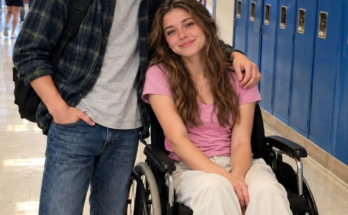
For months, Lily barely spoke. She refused to look at photographs of herself and covered her wheelchair whenever visitors came to our home.
One evening, I found her staring at an old picture of herself wearing a princess dress.
“Mom,” she whispered, “do you think anyone will ever want to marry a girl who can’t walk?”
My heart shattered.
I held her close and kissed her forehead.
“Lily, the right person will love your heart, your laughter, your dreams, and everything that makes you who you are. Your wheelchair doesn’t take any of that away.”
She nodded, but I could tell she didn’t believe me yet.
Then my cousin Emily announced her wedding.
Lily was thrilled.
She spent days choosing a lavender dress embroidered with tiny flowers. She asked me to curl her hair and carefully placed little white flowers behind her ears.
For the first time in months, I heard her laugh without forcing it.
Emily adored Lily and had secretly planned something special.
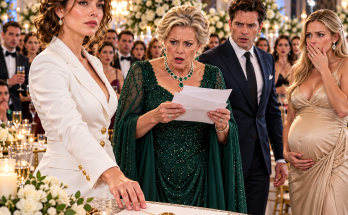
During the reception, the DJ announced the traditional bouquet toss.
“All the single ladies, come on up!”
Lily looked at me nervously.
“Do you think I should join them, Mom?”
“Only if you want to, sweetheart.”
She rolled her wheelchair toward the group, her cheeks glowing with excitement.
Emily turned around, smiled directly at Lily, and tossed the bouquet over her shoulder.
The flowers landed perfectly in Lily’s lap.
The ballroom erupted in laughter and applause.
Lily hugged the bouquet against her chest.
“I caught it, Mommy! I really caught it!”
Then my older sister, Vanessa, came rushing forward.
Before anyone could react, she snatched the bouquet from Lily’s hands.
“Sorry, sweetheart,” Vanessa announced, lifting the flowers above her head. “These are meant for someone who actually has a chance of getting married.”
I stared at her, certain I had misunderstood.
Then she shoved past Lily’s wheelchair, nearly knocking it sideways.
I grabbed the handles just in time.
“Vanessa! What on earth are you doing?”
She smirked.
“What? I’m saving everyone from pretending this is some kind of fairy tale.”
Lily’s smile vanished.
Vanessa looked down at my daughter and delivered the words that would haunt me for years.
“Be realistic, Lily. You’ll never walk down the aisle. What man would want to marry someone who needs a wheelchair for the rest of her life?”
The entire ballroom fell silent.
Emily covered her mouth.
My hands began to shake.
I stepped toward my sister, ready to tell her exactly what I thought of her.
But Lily gently touched my wrist.
“Mommy, please.”
I turned toward her.
She was crying, but something in her expression had changed.
Instead of asking for the bouquet back, she wiped her cheeks, straightened the skirt of her lavender dress, and rolled her wheelchair toward the DJ.
“Excuse me,” she said quietly. “May I borrow your microphone?”
The DJ looked at me, then at Lily, before handing it over.
My ten-year-old daughter turned to face nearly two hundred guests.
Then she looked directly at her aunt.
“Dear Aunt Vanessa,” Lily began, her voice trembling, “you just told everyone that I’ll never get married.”
Vanessa folded her arms, looking almost amused.
Lily took a deep breath.
“But there’s something you don’t know about me.”
And what she said next made Vanessa’s smile disappear.
PART 2: The Ten-Year-Old Girl Who Taught the Ballroom a Lesson
Lily held the microphone with both hands.
“I used to think my wheelchair meant my life was over,” she continued. “When I first came home from the hospital, I cried because I couldn’t run anymore. I cried because I couldn’t dance. And sometimes, I cried because I was afraid nobody would ever see me as a normal girl again.”
I felt tears running down my face.
Nobody in the room moved.
“But my mommy told me that my legs don’t decide how much I deserve to be loved. She said I can still have dreams, fall in love, have a family, and be happy.”
Lily glanced at the bouquet in Vanessa’s hand.
“So when Aunt Vanessa took those flowers away, it hurt. Not because I needed them to get married someday, but because she wanted everyone here to believe that my life is worth less than hers.”
A woman near the front began crying.
Lily continued.
“Aunt Vanessa, you said no man would ever want me because I use a wheelchair. But how do you know that? Have you met every man in the world?”
A few guests let out surprised laughs.
Even the DJ lowered his head, trying to hide a smile.
Vanessa’s face reddened.
“Lily, stop embarrassing yourself,” she snapped.
But Lily wasn’t finished.
“You know what else, Aunt Vanessa? You said these flowers belong to someone who has a chance of getting married.”
She paused and looked around the ballroom.
“But I thought a wedding was supposed to be about love. I thought it was about choosing someone because you care about them, not because their body is perfect.”
Her voice grew stronger.
“If someone ever tells me they don’t want to marry me because I use a wheelchair, then I won’t beg them to love me. I’ll find someone who sees me as a person, not a problem.”
The first clap came from Emily, the bride.
She stood up, her wedding dress sweeping across the floor.
Then she clapped louder.
A second guest joined her.
Then another.
Within seconds, the entire ballroom was applauding.
Some guests rose from their chairs. Others wiped their eyes. Even the older relatives who had spent the evening quietly watching the drama were on their feet.
Lily looked startled.
She had expected embarrassment, perhaps even more cruelty.
Instead, she saw hundreds of people smiling at her.
Emily walked over and knelt beside Lily’s wheelchair.
“Sweetheart,” she said, taking her hands, “those flowers were meant for you. And nobody has the right to make you feel otherwise.”
She turned toward Vanessa.
“Please give them back.”
Vanessa tightened her grip.
“You’re all acting ridiculous! It’s just a bouquet!”
“No,” Emily replied firmly. “It stopped being just a bouquet when you used it to humiliate a child.”
The bride’s words echoed through the room.
Vanessa looked around, apparently expecting someone to defend her.
Nobody did.
Then Lily surprised us all again.
She raised her microphone and said, “Actually, Aunt Vanessa, you can keep the flowers.”
The applause faded into confused silence.
I stared at my daughter.
“Lily, honey, you don’t have to—”
She smiled gently at me.
“It’s okay, Mommy. I don’t want something beautiful to become a reason for everyone to fight.”
Then she turned toward Emily.
“But could I ask for one thing instead?”
Emily nodded immediately.
“Anything.”
Lily took a breath.
“When I get older, if I ever have a wedding, will you promise to dance with me? Even if I can’t stand up?”
Emily burst into tears.
She wrapped her arms around Lily and whispered, “I promise. And if you want, we’ll make sure the whole room dances with you.”
The guests began applauding again.
But while everyone was celebrating Lily’s courage, I noticed Vanessa standing alone beside the bridal table.
For the first time that evening, she looked uncertain.
Then the groom, Daniel, approached her.
He had been watching everything from the other side of the ballroom.
“Vanessa,” he said quietly, “there’s something you need to understand.”
She turned toward him.
And when he explained why he could no longer stay silent about her behavior, her face went completely white.
PART 3: The Truth That Made My Sister Lower Her Head
Daniel stood beside Emily, his expression serious.
“I’ve known your family for years,” he told Vanessa. “I’ve watched Lily fight through things most adults couldn’t imagine. I’ve seen her work harder than anyone just to regain a little independence.”
Vanessa rolled her eyes.
“I’m sure she’s had a difficult time, but—”
“But nothing,” Daniel interrupted. “You didn’t just take a bouquet. You deliberately attacked a little girl’s hope because you wanted to feel superior to her.”
Nobody spoke.
Daniel continued.
“And the saddest part is that you did it at a wedding, a celebration of love, while telling a child she was unworthy of it.”
Vanessa’s eyes darted around the room.
“You’re making me sound like a monster!”
“No,” Daniel replied. “Your own words did that.”
My sister opened her mouth, but nothing came out.
Then Emily stepped forward.
“Vanessa, I need you to apologize to Lily. Not because everyone is watching, and not because you’re embarrassed. You need to apologize because what you said was cruel.”
Vanessa looked at Lily.
My daughter sat quietly in her wheelchair, still holding the microphone.
For a moment, I thought my sister might finally understand.
Instead, she muttered, “Fine. I’m sorry you got upset.”
Lily shook her head.
“That’s not really an apology, Aunt Vanessa.”
The room fell silent again.
Lily continued gently.
“I’m not asking you to feel sorry for me. I just want you to understand that people can get hurt by words, even when you think you’re joking.”
Vanessa stared at her.
“And I hope,” Lily added, “that if you ever have a bad day and someone makes you feel like you’re not good enough, they’ll remember to be kinder to you than you were to me.”
That was the moment my sister finally broke.
Her shoulders dropped, and tears filled her eyes.
For years, Vanessa had measured her happiness against everyone else’s. She compared relationships, appearances, money, and achievements. She had spent so much time fearing that she wasn’t good enough that she had tried to make my daughter feel even smaller.
But now a ten-year-old girl in a lavender dress had shown her what real strength looked like.
Vanessa slowly lowered the bouquet.
“Lily,” she whispered, “I’m sorry. I was cruel, and you didn’t deserve any of it. I shouldn’t have said those things to you.”
Lily watched her carefully.
Then she nodded.
“Thank you for apologizing.”
She didn’t hug Vanessa immediately. She didn’t pretend that the words hadn’t hurt.
And I was proud of her for that, too.
Forgiveness didn’t mean she had to forget what happened.
Emily took the bouquet from Vanessa and placed it back in Lily’s lap.
“This belongs to you, sweetheart,” she said.
Lily looked down at the roses and white lilies.
Then she smiled.
“Can we share them?”
Emily blinked.
“Share them?”
Lily nodded toward the other children attending the wedding.
“I think every girl here should get a flower. That way, nobody has to fight over who deserves one.”
A few guests laughed through their tears.
Emily carefully removed the flowers one by one, and Lily helped distribute them to the little girls around the ballroom.
Soon, children in colorful dresses were walking around with roses tucked behind their ears and lilies held against their chests.
The DJ changed the music.
Emily and Daniel stepped onto the dance floor.
Then Emily rolled Lily toward the center of the room and began dancing beside her wheelchair, moving in time with the music.
Other guests joined them.
I watched my daughter laugh as people danced around her, their hands waving and their feet moving beneath the golden chandeliers.
For the first time in two years, she wasn’t hiding her wheelchair.
She wasn’t looking at the floor.
She was looking at everyone around her, smiling as if she had finally realized that she belonged in the world just as much as anyone else.
Later that night, as I helped her out of her dress, she carefully placed one of the roses in a glass of water beside her bed.
“Mommy?” she asked.
“Yes, sweetheart?”
“Do you think I’ll really get married someday?”
I sat beside her and brushed a strand of hair away from her face.
“I don’t know what your future will look like, Lily. Nobody does. But I know this: you never have to prove that you’re worthy of love. You already are.”
She smiled and leaned against me.
“And if I do get married, I want a purple dress again.”
I laughed through my tears.
“Then a purple dress it will be.”
She closed her eyes, still smiling.
And I realized something that night.
My sister had tried to take away a bouquet because she believed those flowers represented a future my daughter could never have.
But Lily had shown the entire room that a person’s future isn’t determined by what they can or cannot do with their legs.
It’s shaped by their courage, their kindness, and the way they choose to treat others.
The bouquet was beautiful. The applause was unforgettable. But the greatest gift my daughter received that night was discovering that she never needed anyone’s permission to dream.
And if I could leave every parent with one message, it would be this:
Never teach a child to measure their worth by the things that make them different. Teach them that the right people will never ask them to become someone else just to deserve love.