PART 1 — The Daughter Her Mother Was Ashamed Of
My mother had spent twenty years convincing the world that she was the perfect parent.
She donated money to children’s hospitals, hosted expensive charity dinners, and proudly displayed photographs of her two favorite daughters in the entrance hall of our mansion.
But there was one photograph she never displayed.
Mine.
My name is Olivia Bennett. I was twenty-eight years old, and on the morning of my wedding, I finally understood why my mother had spent my entire life treating me like a mistake.
I was standing in the bridal suite of Saint Catherine’s Church, wearing a beautiful pale-blue wedding gown embroidered with delicate silver flowers. My bouquet was filled with white roses and soft blue hydrangeas. Outside, hundreds of guests waited for the ceremony to begin.
I should have been the happiest woman in the world.
Instead, I was staring at my mother, Victoria Bennett, as she adjusted a diamond necklace in the mirror.
“Mom,” I said nervously, “the music will begin in five minutes. Are you ready?”
She didn’t turn around.
“I won’t be walking you down the aisle.”
I laughed quietly because I thought she was joking.
“You walked Sophie and Charlotte.”
“That was different.”
“How?”
She finally faced me. Her expression was colder than anything I had ever seen.
“Because your sisters made this family proud. You have spent your entire life embarrassing us.”
My hands tightened around my bouquet.
“I graduated with honors. I built my own business. I never asked you for anything.”
“And yet you chose to marry a man who repairs heating systems for a living.”
My fiancé, Ethan, owned a small heating and plumbing company. He had built it from nothing, worked through freezing winters, and treated every customer with honesty. He had never been ashamed of his work.
My mother considered him beneath us.
“He loves me,” I whispered.
Victoria gave a bitter laugh.
“Love doesn’t improve your family’s reputation.”
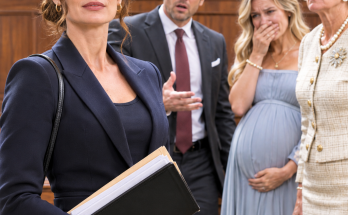
Behind her, my older sister Sophie covered a smile with her hand. Charlotte, my younger sister, was recording something on her phone until our mother gave her an approving glance.
Then my father entered the room.
I looked at him desperately.
“Dad, please tell her this isn’t happening.”
He straightened his expensive cuff links.
“Your mother has made her decision, Olivia. Don’t turn your wedding into another one of your dramatic episodes.”
I felt something break inside me.
For years, I had tried to earn their affection. I had worked harder, asked for less, and swallowed every insult. When my sisters received luxury cars, I was told to save my own money. When they traveled abroad, I was reminded that successful people didn’t need help.
And whenever I asked why, my mother repeated the same sentence.
“You should be grateful we raised you.”
But there was something else my family never discussed.
When I was ten, my grandfather, Henry Bennett, had promised to pay for my education and establish a small trust in my name. He had told me the money would give me the freedom to build a life of my own.
A few years later, I asked about it.
My father said the trust had been lost during a business downturn.
I believed him until I was twenty-four, when I found an old bank statement in a box of documents my grandfather had left with me.
The account had not disappeared.
It had been emptied.
And the signature authorizing the transfer belonged to my father.
I began asking questions. Suddenly, my parents stopped letting me visit Grandpa alone. My letters went unanswered. My mother claimed he was becoming confused, and my father warned me that pursuing the matter would destroy the family.
Then, six months before my wedding, I received a letter in unfamiliar handwriting.
It contained only one sentence.
Olivia, if your parents tell you I am too sick to attend your wedding, do not believe them.
It was signed by my grandfather.
I tried calling him, but his caretaker told me he was staying somewhere outside the city and would contact me when he could.
I had no idea whether he would make it to the ceremony.
Now, as my mother stood before me, refusing to walk me down the aisle, I felt more alone than ever.
“Fine,” I whispered. “I’ll walk by myself.”
My mother smiled.
“Perhaps that’s what you deserve.”
The bridal suite door suddenly opened.
An elderly man stood in the doorway, leaning on a polished black cane. His silver hair was neatly combed, and although he moved slowly, his eyes were sharp.
It was my grandfather.
“Nobody,” he announced, “is going to let my granddaughter walk alone today.”
Tears filled my eyes.
“Grandpa!”
He embraced me gently, then turned toward my mother.
“Victoria, I heard what you said.”
She immediately changed her expression.
“Henry, you’re tired. You shouldn’t be here.”
“Strange. I’m not tired enough to recognize cruelty.”
My father stepped between them.
“This is a private family matter.”
Grandpa tapped his cane against the floor.
“Then perhaps you should have behaved like a family.”
He offered me his arm.
I took it.
Together, we walked toward the church doors.
The organ began to play, and hundreds of guests stood.
Halfway down the aisle, however, Grandpa stopped.
He looked directly at my parents in the front pew.
Then he raised his cane.
“Before this ceremony continues,” he said, “there is something every person in this church needs to know.”
My mother suddenly stood.
“Henry, don’t!”
Grandpa reached inside his jacket and removed a thick brown envelope.
“Twenty years ago, my son-in-law told me that Olivia had stolen money from our family. That lie cost her the inheritance I had established for her.”
The entire church fell silent.
“But that wasn’t the worst thing he did.”
Grandpa opened the envelope.
“Because the money wasn’t lost. It was transferred into an account controlled by my own daughter.”
My mother’s face turned white.
And when Grandpa read the account holder’s name aloud, my father sat down as though his legs could no longer support him.
It was not my name.
It was my mother’s.
And that was only the beginning.
PART 2 — The Secret Hidden Behind Twenty Years of Lies
For several seconds, nobody moved.
My mother stood beside the front pew, gripping its wooden edge so tightly that her knuckles turned white.
My father shook his head.
“This is ridiculous. Henry has been confused for years.”
Grandpa didn’t even look at him.
“Then you won’t mind explaining these documents.”
He handed the envelope to a woman sitting near the aisle. She was a silver-haired attorney wearing a charcoal suit. I recognized her immediately.
Margaret Collins.
She had handled my grandfather’s legal affairs for more than thirty years.
She stood and addressed the congregation.
“I was instructed to attend this wedding as a witness. Mr. Bennett asked me to bring certified copies of the financial records relating to his granddaughter’s trust.”
My mother let out a nervous laugh.
“You’re seriously going to discuss money at a wedding? Have you all lost your minds?”
Grandpa turned toward her.
“You had no problem discussing Olivia’s supposed failures in front of everyone. Now you can listen while the truth is discussed.”
He took a breath.
“Twenty years ago, I established a trust worth $680,000 for Olivia’s education and future. When she turned eighteen, the money should have been transferred to her.”
I stared at him.
Six hundred and eighty thousand dollars.
I had spent years working double shifts to pay my university tuition. I had taken out loans, rented tiny apartments, and sometimes skipped meals to cover my bills.
Meanwhile, my parents had told me that my education was my responsibility.
Grandpa continued.
“My son-in-law convinced me that Olivia had become irresponsible. He showed me fabricated messages suggesting that she was using drugs and stealing from relatives. I refused to release the funds until I could verify the allegations.”
He paused.
“I later discovered that those messages were forged.”
My father jumped to his feet.
“Enough!”
Two security guards near the entrance turned toward him.
Grandpa remained calm.
“No, Richard. Not enough. Not nearly enough.”
Margaret opened a second folder.
“The trust’s funds were moved through several accounts. The final transfer went to an account registered under Victoria Bennett’s name. The money was subsequently used to purchase investment properties and cover personal expenses.”
A wave of whispers moved through the church.
My mother looked around desperately, searching for someone who would defend her.
My sisters stared at the floor.
Then Grandpa revealed something I had never imagined.
“Your mother didn’t merely take your money, Olivia. She also spent years preventing you from contacting me.”
My heart pounded.
“What?”
He looked at me with tears in his eyes.
“She intercepted your letters. She told me you wanted nothing to do with me. She even returned the birthday cards I sent you.”
I remembered those birthdays.
The empty mailbox.
The unanswered phone calls.
The feeling that the one person who had made me feel loved had simply forgotten me.
I covered my mouth.
“Grandpa, I thought you stopped caring.”
His face crumpled.
“I never stopped, sweetheart. Not for a single day.”
He reached into the envelope again and handed me a bundle of letters tied with a blue ribbon.
My name was written across every envelope in his familiar handwriting.
Twenty years of birthdays.
Twenty years of Christmases.
Twenty years of messages I had never received.
I began to cry.
My mother suddenly rushed toward us.
“Give those to me!”
Grandpa moved the letters behind his back.
“No.”
“You don’t understand what happened!”
“Then explain it.”
She opened her mouth but said nothing.
My father finally spoke.
“We used the money to protect this family. The properties were investments. Everything was done for a reason.”
I looked at him.
“For whose benefit?”
He avoided my eyes.
Grandpa answered for him.
“Your sisters’ futures. Their homes. Their businesses. Their comfortable lives.”
I turned toward Sophie and Charlotte.
Sophie had received a luxury apartment after her marriage. Charlotte had been given a large sum to open a boutique.
Both had claimed they had earned everything themselves.
“Did you know?” I asked.
Sophie began crying.
“I didn’t know it was your money.”
Charlotte shook her head.
“Mom said Grandpa had given us the money as gifts.”
I wanted to believe them. But their silence, their laughter in the bridal suite, and their years of looking down on me had left wounds deeper than either could understand.
Then Margaret revealed the final document.
It was a notarized statement from my grandfather, accompanied by a recent financial audit.
The audit showed that my parents’ charitable foundation had received donations from wealthy families, businesses, and local organizations. Some of the money had been used appropriately. But other transfers had been routed through private accounts without proper authorization.
Several transactions appeared to benefit companies connected to my father.
My mother grabbed the back of a pew.
“You’re going to destroy everything we’ve built!”
Grandpa’s expression hardened.
“No, Victoria. You built your reputation on the belief that nobody would ever look behind the curtain.”
He turned to me.
“Olivia, I need you to understand something. I didn’t come here to ruin your wedding. I came because I finally have the evidence necessary to correct what was done to you.”
I looked at the documents in Margaret’s hands.
For years, I had believed that my family considered me worthless.
Now I understood that they had feared something entirely different.
They feared that I would discover the truth.
My father looked at me with sudden desperation.
“Olivia, you’re a reasonable woman. Think about your future. Think about your husband. Do you really want to drag everyone through a scandal?”
I wiped my tears.
“You had twenty years to think about my future.”
He said nothing.
I turned toward my grandfather.
“Is the money still recoverable?”
Margaret answered carefully.
“Some of it may be. That will depend on the legal proceedings and the tracing of the remaining assets.”
I nodded.
“Then let the lawyers do their jobs.”
My mother stared at me as though she were seeing a stranger.
Perhaps she was.
Because the daughter who once begged for her approval had finally stopped asking for permission to defend herself.
Grandpa offered me his arm again.
“Shall we finish your wedding, sweetheart?”
I looked toward the altar.
Ethan stood waiting, tears in his eyes.
“Yes,” I whispered. “Let’s finish it.”
But as we began walking again, my father made one final announcement.
“If those documents are made public, you’ll learn that your grandfather isn’t the only person who has secrets.”
He looked directly at me.
“Ask him why he never told you who your real father was.”
The church erupted in shocked whispers.
My grandfather froze.
And for the first time that afternoon, the old man’s face revealed genuine fear.
PART 3 — The Truth That Changed My Name Forever
I stopped walking.
My wedding bouquet trembled in my hands.
“What did he just say?” I whispered.
Grandpa closed his eyes.
My father straightened his jacket, looking almost relieved to have regained control of the room.
“Go on, Henry. Tell her. Tell everyone.”
I turned toward my grandfather.
“Grandpa, what is he talking about?”
He held my hand.
“Olivia, there are things I should have told you a long time ago.”
My heart sank.
“Is Dad telling the truth?”
My grandfather looked toward the altar, then back at me.
“Your mother was married before she met Richard. She had a daughter who died shortly after birth. After that, she became terrified of losing another child.”
I frowned.
“I know about the baby. Mom told me once.”
“What she didn’t tell you,” he continued, “was that when you were born, there were serious medical complications. Your biological father, Daniel Hayes, was a young doctor who helped save your life. He and your mother had been separated before your birth, and he left the country shortly afterward.”
My mother began sobbing.
“Please stop.”
Grandpa’s voice softened.
“Daniel tried to contact you when you were a child. I helped him arrange it. But your mother and Richard refused. They told him you were better off without him.”
I could barely breathe.
“Is he alive?”
“Yes.”
Grandpa reached into the envelope one final time and removed a photograph.
It showed a middle-aged man standing outside a medical clinic, his arm around a little girl who looked remarkably like me.
On the back was a handwritten message.
To Olivia, when the time is right. I have never forgotten you.
“He has been living overseas,” Grandpa said. “He learned about your wedding several weeks ago. He wanted to attend, but he was afraid his presence would cause you pain. He asked me to give you this photograph and let you decide whether you wanted to meet him.”
I stared at the photograph.
All my life, I had wondered why I never resembled my father. Why my mother became angry whenever I asked about my childhood. Why certain family photographs had mysteriously disappeared.
Now I understood that my history had been carefully edited by the very people who claimed to love me.
I looked at my mother.
“Why?”
She wiped her cheeks.
“Because Richard raised you. He was your father in every way that mattered.”
“No,” I said quietly. “He raised me while making me believe I was unworthy of love.”
My father stepped forward.
“Everything I did was for this family!”
“Then why did you steal my inheritance?”
He had no answer.
“Why did you let Mom humiliate me today?”
Still nothing.
“Why did you tell me Grandpa had forgotten me when he was sending me letters?”
My voice broke.
“Why did you make me spend my entire childhood believing something was wrong with me?”
My father looked away.
And that was when I finally understood that I would never receive the apology I had spent my life waiting for.
My mother reached for my hand.
“Olivia, please. You’re my daughter.”
I stepped back.
“You had the chance to be my mother today.”
Her hand fell.
“But you chose your pride.”
For the first time, she seemed to understand that something irreversible had happened.
The church remained silent.
Then Ethan walked down from the altar.
He approached me slowly and took my free hand.
“Olivia,” he said, “we can leave right now if you want. We can get married somewhere else, with nobody watching and nobody judging you.”
I looked into his eyes.
He wasn’t embarrassed by me.
He wasn’t worried about the family’s reputation.
He simply wanted me to be happy.
I smiled through my tears.
“No. I want to marry you here.”
He squeezed my hand.
“Then let’s get married.”
Grandpa straightened his shoulders.
“That sounds like the best decision I’ve heard all day.”
A few guests began to clap.
Then more joined them.
Soon, the entire church was filled with applause—not for my parents, not for their wealth, but for the quiet decision of a woman who had finally chosen her own future.
Grandpa walked me the rest of the way down the aisle.
When we reached the altar, he kissed my forehead.
“You were never a regret, Olivia,” he whispered. “You were the child I worried about most because you were the one who kept searching for the truth.”
I hugged him tightly.
Then I married Ethan.
It wasn’t the ceremony my mother had planned. It wasn’t the perfect family photograph she had imagined.
It was something better.
It was honest.
Three months later, the financial investigation was underway. My parents’ accounts and property transfers were being examined by independent professionals, and my grandfather’s attorneys were pursuing the recovery of the money taken from my trust.
The charitable foundation appointed new independent oversight. My parents withdrew from its leadership while the allegations were reviewed.
I refused to make public accusations beyond what the evidence supported. I didn’t need revenge. I needed the truth to be established properly.
Sophie eventually apologized for laughing at me. Charlotte admitted she had ignored warning signs because accepting the truth would have meant questioning the life our parents had given her.
I accepted their apologies, but I didn’t pretend that everything was suddenly repaired.
Forgiveness, I learned, didn’t require handing someone the keys to your life again.
My grandfather recovered most of the remaining trust assets through the legal process. The recovered money helped me pay off my university loans and establish a scholarship for young adults who had been denied educational opportunities because of family circumstances.
Months later, I received a letter from Daniel Hayes, the man who had once tried to contact me.
I didn’t rush to call him.
I read the letter twice, placed it in a drawer, and waited until I felt ready.
When we finally spoke, he didn’t ask me to call him Dad.
He simply said, “I’m sorry I wasn’t there when you needed someone.”
And for the first time, a parent apologized to me without making excuses.
I began getting to know him slowly.
Not because a photograph had changed my life overnight, but because I had finally learned that trust was something people earned.
One year after my wedding, Ethan and I invited Grandpa to dinner at our little house.
He arrived carrying his old black cane and a small velvet box.
Inside was a silver pendant that had belonged to my grandmother.
“She wanted you to have this someday,” he told me. “She always said you had the kindest heart in the family.”
I held the pendant against my chest.
For years, I had thought my greatest tragedy was being rejected by my mother.
But sitting there with my husband and grandfather, I realized the truth.
My greatest tragedy would have been spending the rest of my life trying to become someone my family could approve of.
I had lost money, years of trust, and the illusion of a perfect family.
But I had gained something far more valuable.
The freedom to choose the people who belonged in my life.
And on the anniversary of the day my mother refused to walk me down the aisle, I placed a new photograph in the center of our living room.
It showed me in my pale-blue wedding dress, holding Ethan’s hand, with my grandfather standing proudly beside us.
There was no photograph of my mother.
There was no carefully arranged smile.
Just three people who had chosen to stand together when it mattered most.
And underneath the photograph, I placed a small handwritten note:
“Family isn’t the name you’re born into. It’s the love that stays when the truth comes out.”