PART 1: THE DAUGHTER THEY LEFT TO DIE
My parents flew to Paris for 68 days to celebrate my younger brother’s graduation. They left me trapped in a locked laundry room, without water, electricity, or the medication that kept me alive.
Before leaving, my mother looked me straight in the eyes and said, “Perhaps when we return, you’ll finally stop pretending to be sick.”
She had no idea that those words would become the biggest mistake of her life.
My name is Elena Barrett. I was thirty-eight years old, and for most of my life, I had made the mistake of believing that being a good daughter meant enduring whatever my family demanded of me.
I was born into a wealthy Louisiana family. My father, Richard Barrett, owned several commercial properties, while my mother, Margaret, spent her days managing our social reputation. My younger brother, Nathan, was the child they adored.
He was charming, handsome, and endlessly irresponsible.
I was the one who paid his debts, rescued his failed business ventures, and quietly covered the expenses my parents refused to discuss publicly.
When I developed a rare neurological disorder that gradually weakened my legs, everything changed.
Doctors warned that missing my medication could cause severe complications. I needed regular treatment, carefully managed supplies, and help during periods when I couldn’t stand.
My family knew all of this.
They simply decided that my illness was inconvenient.
Nathan’s graduation from a prestigious European business program became the most important event in our household. My parents booked an extravagant Paris vacation, complete with a luxury hotel, private tours, and reservations at restaurants that required months of planning.
They paid for everything with money I had transferred into the family investment account.
I had been recovering in my bedroom when I overheard my mother discussing their departure with Maria, our longtime housekeeper.
“Take Elena’s medication out of the refrigerator,” Margaret instructed. “Dispose of it. Empty the emergency water containers, too.”
Maria sounded horrified.
“But, Mrs. Barrett, the doctor said she needs those injections. She can barely walk without them.”
My mother gave a contemptuous laugh.
“She has been manipulating this family for years. Nathan deserves one occasion when everything isn’t about his pathetic condition.”
I tried to call out, but the weakness in my body made my voice barely audible.
Then my mother added the words that made my blood run cold.
“Put her in the back laundry room. Lock the door. Turn off the power to that section of the house. No one is to let her out until we return.”
I couldn’t believe what I was hearing.
My father entered the room a moment later. I hoped he would object.
Instead, he adjusted his expensive watch.
“It’s only a couple of months,” he said. “She’ll survive. She always finds a way to make everything about herself.”
I looked at him, waiting for some sign that he understood what he was doing.
He wouldn’t meet my eyes.
That afternoon, Maria reluctantly helped me into the laundry room at the back of the house. It had concrete walls, a small ventilation grille, an old washing machine, and no windows. The air was already hot and heavy.
My mother stood in the doorway.
“You have food in the cupboards,” she lied. “If you want to stop behaving like a helpless child, perhaps this will teach you some independence.”
Then she walked away.
I heard the deadbolt slide into place.
The lights went out.
A few seconds later, the water stopped running.
I dragged myself toward the door and struck it with my fist.
“Mom! Please! I need my medication!”
No answer came.
Through the wall, I heard the distant sound of suitcases rolling across the foyer. Car doors slammed outside. My brother laughed at something my father said.
Then the family car pulled away.
They were gone.
I had a phone, but the battery was nearly dead. My mother had already arranged for the house’s old internal communication system to be disconnected, and the thick walls blocked what little signal I could get.
I called emergency services once, but the call dropped before I could explain my location clearly.
The screen went black.
I was alone in the darkness.
Hours passed. My body grew weaker, and the heat made it difficult to think clearly. I tried to ration the few sips of water remaining in a forgotten bottle, but I knew it wouldn’t last.
I was terrified.
Not because I thought my family hated me.
Because I finally understood that they knew exactly what could happen to me and had chosen to leave anyway.
On the second day, I discovered something strange.
Behind the washing machine, a loose concrete panel concealed a narrow opening. Inside it was an old metal box, rusted around the edges.
I pulled it free with trembling hands.
There was a small key inside, along with a folded envelope bearing my grandmother’s handwriting.
My grandmother, Evelyn, had died three years earlier. She had been the only person in my family who treated me as though my life mattered.
I unfolded the letter.
My darling Elena,
If you are reading this, someone has finally forced you into a corner where you can no longer afford to trust appearances.
There is something your parents have hidden from you. Something that belongs to you alone.
Do not sign anything they place in front of you. Do not let Richard or Margaret convince you that you owe them your inheritance.
And whatever happens, remember this: the Barrett estate was never theirs to control.
My hands began to shake.
I read the letter again.
Then I turned it over and found a telephone number and the name of a law firm in New Orleans.
Beneath it, my grandmother had written one final sentence.
If your family ever turns against you, call the man who witnessed my final signature.
I didn’t yet understand what she meant.
But I understood one thing.
My grandmother had anticipated this.
And somewhere outside that locked room, someone knew the truth about my family.
I tucked the letter into the lining of my blouse and kept searching the metal box.
At the bottom, beneath a layer of dust, I found a small brass key attached to a tag.
Written on it were four words:
PRIVATE TRUST — ORIGINAL RECORDS.
I closed my fingers around it.
For the first time since the door had locked, I stopped crying.
I didn’t know how I would escape. I didn’t know how long I could endure the heat or the growing weakness in my body.
But I knew that my parents had made one terrible mistake.
They had left me with the one thing they could never take away.
The truth.
And when I finally found a way out, I was going to discover why my grandmother had been so determined to keep it hidden from them.
End of Part 1.
PART 2: THE SECRET MY GRANDMOTHER LEFT BEHIND
By the fourth day, I had stopped expecting my family to return.
My body was exhausted, my throat was painfully dry, and the weakness in my legs had spread until even shifting my position required enormous effort.
I knew I needed medical help.
The letter and key were precious, but neither could save me if I remained trapped.
I crawled back toward the metal box and searched it again, hoping I had missed something useful.
That was when I discovered a second envelope hidden beneath the cardboard lining.
It contained a photograph of my grandmother standing outside an old brick building in New Orleans. Beside her was a distinguished-looking man holding a leather briefcase.
On the back, she had written:
Samuel Whitmore. My attorney. He knows where everything is.
I remembered the name.
Samuel Whitmore had represented my grandmother for decades. My parents always described him as a bitter old lawyer who had tried to interfere with the family after her death.
They had forbidden me from contacting him.
At the time, I assumed they were simply protecting me from legal complications.
Now, sitting in the darkness, I wondered what they had been so afraid of.
I searched the laundry room for anything that might help me reach the outside world. Behind an old utility cabinet, I found a narrow maintenance hatch leading into the adjoining storage area.
It was rusted and difficult to move, but after several attempts, I managed to push it open.
The opening was barely large enough for me to squeeze through.
I pulled myself across the floor, inch by inch, until I reached a side corridor near the garage.
The back door had an electronic lock, but the garage itself contained an old landline telephone mounted beside a workbench.
I lifted the receiver.
Nothing.
Then, after several attempts, I heard a faint dial tone.
My heart began to pound.
I dialed the number from my grandmother’s letter.
A woman answered.
“Whitmore and Associates.”
“My name is Elena Barrett,” I whispered. “I need Samuel Whitmore. My grandmother was Evelyn Barrett.”
There was a long silence.
Then the woman spoke in a different tone.
“Ms. Barrett, please don’t hang up. Mr. Whitmore has been trying to locate you for weeks.”
I closed my eyes.
For weeks?
“What do you mean?”
“Your parents informed us that you were receiving treatment at a private rehabilitation facility. Mr. Whitmore became concerned when you failed to respond to several letters.”
I could barely believe it.
“My parents locked me in a room,” I said. “They took my medication and left the country.”
The woman stopped typing.
“Are you in immediate danger?”
“Yes.”
“Can you tell me your address?”
I gave it to her.
She promised to contact emergency services and Mr. Whitmore immediately.
I remained near the telephone until I heard vehicles approaching the property.
When the emergency responders finally entered the house, I was barely conscious.
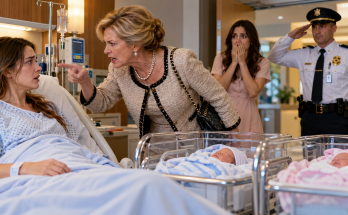
They found me dehydrated, severely weakened, and in urgent need of medical attention. An ambulance took me to the hospital, where doctors began treating me and contacted the appropriate authorities.
For the first time in four days, I was given water and medical care without having to beg for it.
I woke the following morning to find a silver-haired man sitting beside my hospital bed.
He wore a dark suit and held a leather folder across his knees.
“Ms. Barrett,” he said gently. “My name is Samuel Whitmore. Your grandmother asked me to protect you if this day ever came.”
I looked at the folder.
“What did she leave me?”
He opened it.
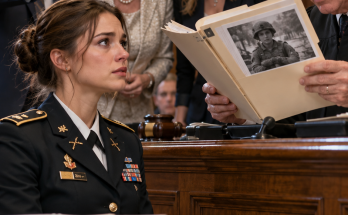
Inside were copies of property deeds, corporate records, trust documents, and a sealed legal statement signed by my grandmother shortly before her death.
Samuel explained that my grandmother had established a private family trust decades earlier. Its principal assets included commercial buildings, investment holdings, and controlling interests in several companies.
My parents had spent years presenting themselves as the owners of the Barrett fortune.
They were not.
They had been managing portions of the estate under specific conditions, while my grandmother had retained control through a separate trust.
After her death, the controlling beneficial interest had passed to me.
The estimated value of the assets was more than $86 million.
I stared at him.
“That can’t be right. My parents told me Grandma left everything to the family.”
“They told you what suited them,” Samuel replied. “The original trust documents say otherwise.”
He turned to another page.
There was a clause requiring an independent review if anyone attempted to transfer assets, falsify records, or improperly exercise authority over the trust’s beneficiary.
Samuel explained that he had begun reviewing the family’s financial records after discovering several irregular transfers.
Then he revealed something even more disturbing.
“My office received documents bearing what appeared to be your signature,” he said. “They authorized changes to the management of several trust-owned properties.”
I shook my head.
“I never signed those documents.”
“I know. We compared them with verified signatures in your medical and legal records. There are serious discrepancies.”
My stomach tightened.
“Who submitted them?”
Samuel closed the folder.
“Your father. Your mother witnessed several of the transactions. And your brother was listed as the proposed recipient of a substantial transfer.”
I remembered the countless times Nathan had asked me to sign papers without explaining what they contained.
The family businesses I had helped finance.
The accounts I had covered.
The documents my father had insisted were merely administrative.
Had they been building a case to take control of my inheritance all along?
Samuel wasn’t finished.
“Your grandmother anticipated that your parents might attempt to challenge her estate plan. She arranged for the original documents to be held independently and left instructions that we should contact you directly if any suspicious activity occurred.”
“Why didn’t you find me sooner?”
“We tried. Your parents told us you were unavailable. When we learned you had been hospitalized in the past, we requested confirmation of your whereabouts. They refused to cooperate.”
He looked at me with an expression I couldn’t quite interpret.
“Your grandmother also left you a personal message. She instructed me to deliver it only when you were safe.”
He removed a small envelope from the folder.
My name was written across the front in my grandmother’s familiar handwriting.
Inside was a single page.
Elena,
You have spent your life believing that keeping the family together is your responsibility.
It isn’t.
Love does not require you to finance cruelty. Loyalty does not require you to accept abuse. And forgiveness does not require you to give dangerous people another opportunity to hurt you.
If the day comes when you must choose between protecting your family name and protecting yourself, choose yourself.
The truth will do the rest.
I pressed the letter to my chest.
For years, I had wondered why my grandmother had been so protective of me and so distrustful of my parents.
Now I understood.
She had seen something in them that I had refused to see.
But as I lay in that hospital bed, another thought took hold.
My parents were scheduled to return from Paris in sixty-four days.
They believed I was helpless, dependent, and incapable of challenging them.
They expected me to be grateful when they finally opened the door.
They expected me to apologize for making their vacation inconvenient.
They expected everything to return to normal.
Samuel gathered the documents.
“What would you like to do?” he asked.
I looked out the hospital window.
For the first time in years, I wasn’t thinking about how to make my parents happy.
I was thinking about how to protect myself.
“I want the truth documented,” I said. “Every transfer. Every forged signature. Every instruction they gave Maria. Everything.”
Samuel nodded.
“And I want them to know that I survived,” I continued. “But not until we’re ready.”
He studied me for a moment.
Then he closed the folder.
“Your grandmother would have been proud of you.”
I didn’t answer.
Because I wasn’t ready to feel proud.
I was ready to find out how far my family had gone.
And I was ready to make sure they could never do it again.
End of Part 2.
PART 3: THE DAY THEY CAME HOME
Sixty-eight days after my parents left Louisiana, their private car rolled through the gates of the Barrett estate.
My mother stepped out first, wearing a cream-colored designer suit and carrying a shopping bag from a luxury Paris boutique.
My father followed, speaking loudly into his phone about a business meeting.
Nathan emerged last, still wearing the expensive watch he had received as a graduation gift.
They were laughing.
They had spent nearly ten weeks dining in elegant restaurants, visiting museums, and sharing photographs of their perfect family vacation.
Not one of them had called to ask whether I was alive.
As they entered the foyer, my mother set her bags on the marble floor.
“Maria!” she called. “Why is the house so quiet?”
No one answered.
She frowned and walked toward the laundry room.
The door was open.
The room had been cleaned, the broken utility equipment removed, and the walls repaired. A new light shone from the ceiling.
But on the floor sat a single metal box.
Beside it lay a copy of my grandmother’s letter.
My mother picked it up.
As she read the first few lines, the color drained from her face.
“What is this?” she whispered.
My father snatched the paper from her hands.
Nathan leaned over his shoulder.
Then they heard footsteps behind them.
I stood at the end of the corridor.
I was thinner than before, and I still needed a walking aid while recovering from the damage caused by those days without proper care. My left hand trembled slightly, and my legs were not yet strong enough to carry me for long distances.
But I was alive.
Behind me stood Samuel Whitmore, two other attorneys, and a woman representing the authorities investigating the circumstances of my confinement.
My mother stared at me.
“Elena?”
Her voice cracked.
For one brief moment, I saw something that looked like fear.
Then her expression hardened.
“What is the meaning of this ridiculous display? We were told you were receiving treatment.”
I looked directly at her.
“You were told nothing of the kind. You knew exactly where I was.”
My father stepped forward.
“Now, let’s not become emotional. Whatever happened, it was a misunderstanding.”
“A misunderstanding?” I repeated.
“You left me without medication. You emptied my water containers. You locked me in a room without electricity. I was unable to walk, and you left me there.”
My mother folded her arms.
“You were exaggerating your condition. We thought you needed to learn independence.”
Samuel opened his folder.
“Mrs. Barrett, I strongly advise you not to make further statements about the circumstances of Ms. Barrett’s confinement without legal counsel.”
My father turned toward him.
“You have no authority in my house.”
Samuel remained calm.
“This property is held by the Barrett family trust. Your management authority has been suspended pending an independent review. And the documents purporting to transfer trust assets are now under investigation.”
Nathan let out a short, disbelieving laugh.
“That’s impossible. Dad told me the properties were already mine.”
I looked at my brother.
“You told me you needed help paying your tuition. You told me your business had failed because of bad luck. You told me every document I signed was routine.”
He looked away.
I continued.
“I trusted you because you were my brother. And you used that trust to help yourself.”
My father raised his voice.
“Enough! You have no idea what it takes to manage this family. We sacrificed everything for you.”
I almost laughed.
They had spent years teaching me that family loyalty meant silence. They had taught me to accept blame whenever they were embarrassed, to pay whatever they owed, and to apologize whenever I demanded basic respect.
But the woman standing before them now was no longer willing to play that role.
“No,” I said quietly. “You sacrificed me.”
I motioned toward Samuel.
He placed a thick stack of documents on the foyer table.
The first contained the original trust agreement.
The second showed the chain of ownership for the estate’s major properties.
The third contained a preliminary accounting of suspicious transactions.
My father flipped through the pages, becoming increasingly agitated.
“These figures are wrong.”
“An independent forensic accountant is reviewing them,” Samuel replied. “The final report will be submitted to the appropriate authorities.”
My mother grabbed the trust agreement.
“This is a family matter!”
“It became a legal matter when you attempted to exercise authority you did not possess,” Samuel said.
Nathan stared at the documents.
“So what happens now?”
I answered him.
“You will have to explain your role in the transfers. You will have to account for the money you received. And you will have to do it without using my name or my money to protect yourself.”
His face turned red.
“You can’t do this to us!”
I looked at him for a long moment.
“I didn’t do this to you, Nathan. You did it to yourselves.”
My mother began crying.
It was the first time I had seen her cry in years.
But even then, she didn’t apologize.
Instead, she reached for my arm.
“Elena, darling. We can work this out. You know how much stress your father has been under. Nathan was graduating. We all made mistakes.”
I gently stepped away.
“You made a choice.”
Her mouth opened, but no words came out.
“I needed medicine,” I continued. “I needed water. I needed someone to open a door. You had the power to help me, and you chose not to.”
My father lowered himself onto a chair.
For the first time in my life, he looked old.
“What do you want?” he asked.
It was the question I had waited years to hear.
Not what was wrong with me.
Not why I couldn’t be more like Nathan.
Not why I had to make everything difficult.
What did I want?
I took a breath.
“I want my medical expenses covered from the funds you diverted. I want an independent trustee appointed to protect the estate. I want every suspicious transaction investigated. And I want you to stay away from me unless communication is necessary through my attorneys.”
My mother shook her head.
“You would destroy your own family?”
I met her eyes.
“You destroyed the family you keep pretending we are. I’m simply refusing to let you destroy me with it.”
The authorities continued their investigation. The trust’s management was restructured, and an independent audit examined the disputed transfers and the documents submitted in my name.
The findings would determine what further legal action was appropriate.
My parents could no longer use the family accounts as though they were their personal property. Nathan’s proposed transfer was frozen, and he was required to provide records concerning the funds he had received.
Nothing was settled overnight.
There were interviews, hearings, difficult medical appointments, and days when the memories of that dark room returned so vividly that I struggled to sleep.
Recovery took months.
But I no longer had to ask my family for permission to receive medical care.
I moved into a smaller house near the coast, where the rooms were bright, the windows opened to the sea, and every door had a lock that belonged to me.
I hired a nurse to assist me during difficult periods. I returned to managing my own investments under independent supervision, and I began using a portion of my resources to help people who had been abandoned by relatives while dealing with serious illnesses.
I didn’t do it to punish my parents.
I did it because I knew what it felt like to be trapped, frightened, and convinced that nobody would come.
Six months after the confrontation, a letter arrived from my mother.
It was several pages long.
She wrote about the family’s reputation, the humiliation of the investigation, and the financial consequences of losing control over the estate.
Near the end, she wrote:
I hope someday you can forgive us and allow us to return to the way things were.
I read that sentence several times.
Then I placed the letter in a drawer.
Because the truth was simple.
I didn’t want things to return to the way they were.
The old way had required me to confuse obedience with love and suffering with loyalty.
The old way had allowed my family to believe that my life was something they could control.
I had survived the darkness, but surviving wasn’t the same as winning.
Winning meant building a life in which I never had to beg those people to treat me as human again.
A year later, I visited my grandmother’s grave.
I placed fresh white roses beside her headstone and held the letter she had left me.
“Thank you,” I whispered. “You knew I would need the truth.”
The wind moved gently through the trees.
For the first time in a long while, I felt peaceful.
My parents had gone to Paris believing they could erase me from their lives without consequence.
They returned expecting to find the same frightened daughter they had abandoned.
Instead, they found a woman who knew her worth, understood her rights, and had finally stopped asking for permission to exist.
They thought locking me away would break me.
They were wrong.
The door they closed became the door through which I finally escaped them.
And the greatest revenge I ever took was not watching my family lose control of their fortune.
It was discovering that I could live without their love—and still be whole.
THE END.