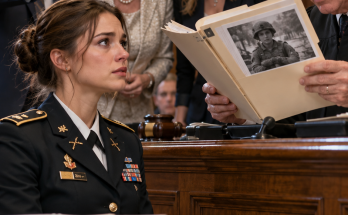
PART 1 — The Morning I Finally Said No
At 5:07 a.m., my husband dragged the blanket off me and ordered me to prepare breakfast for his mother.
“Get downstairs, Emily. Mom wants eggs, toast, and coffee. And don’t make her wait.”
I was exhausted, my wrist still aching from the argument we’d had the night before, and my heart was beating so hard I could barely breathe.
Beside the bedroom door stood Lorraine, my mother-in-law, wearing my favorite silk robe as if she owned everything in the house.
“Honestly, Daniel,” she said with a cruel little smile, “you married a wife, not a princess.”
Daniel grabbed my wrist.
“Did you hear what I said?”
Pain shot through my arm.
“Let go of me,” I whispered.
He tightened his grip.
“Maybe you should learn some respect.”
Lorraine laughed.
And something inside me finally broke—not my wrist, not my heart, but the last fragile piece of hope that had kept me in that marriage for seven years.
I looked directly at my husband.
“No.”
The room went silent.
Daniel blinked as though he’d never heard that word from me before.
“What did you just say?”
“I said I’m not making breakfast.”
His face hardened.
“You ungrateful little—”
He released my wrist only to shove a laundry basket off the dresser.
Clothes scattered across the floor.
Lorraine folded her arms.
“See? This is what happens when you let a woman think she can challenge you.”
I stared at the two of them.
For years, I’d swallowed every insult, every threat, every apology that arrived with flowers the next morning.
The first time Daniel slapped me, he cried and promised he would change.
The second time, he shoved me into a kitchen cabinet because I’d questioned a mysterious withdrawal from our joint account.
After that came the threats.
The intimidation.
The holes in the walls.
And the endless lectures from Lorraine about how a good wife should protect her husband’s reputation.
I had become an expert at pretending nothing was wrong.
But that morning, I remembered something Daniel had forgotten.
I had options.
I stepped around him and walked into the walk-in closet.
“Where are you going?” he demanded.
“Packing.”
He laughed.
“Packing for what? You have nowhere to go.”
I pulled my black suitcase from the shelf.
Lorraine followed me into the bedroom, shaking her head.
“This is ridiculous. Daniel provides everything for you. The house, the car, the lifestyle. What exactly do you think you’ll do without him?”
I opened the bottom drawer of my desk.
Inside lay a thick blue envelope, a small USB drive, and a set of documents I’d hidden months earlier.
Daniel stopped laughing when he saw them.
“What is that?”
“My records.”
“What records?”
“Every transfer you told me never happened. Every business expense you charged to my inheritance. Every message you sent after you hurt me.”
His face changed.
For the first time that morning, he looked genuinely afraid.
“You went through my business accounts?”
“Our business accounts,” I corrected him.
Seven years earlier, when Daniel was struggling to keep his construction company afloat, I’d invested the money my grandmother left me.
He promised we’d build a future together.
I believed him.
My investment kept the company alive, paid its employees, and helped him secure his first major contract.
Eventually, Daniel began telling everyone he’d built his empire from nothing.
He even introduced me at business dinners as his unemployed wife.
I never corrected him.
Not because I was ashamed of my contribution, but because I wanted our marriage to work.
Then, six months earlier, I discovered that hundreds of thousands of dollars had moved through accounts I knew nothing about.
Some payments went to luxury hotels.
Others went to a property company registered under Lorraine’s name.
And one transfer had been authorized using a signature that looked like mine.
It wasn’t mine.
I had copied every relevant record and sent them to an attorney.
Daniel didn’t know that.
He stepped toward me.
“Give me that envelope.”
I placed it inside my suitcase.
“No.”
His jaw tightened.
“You walk out that door, Emily, and don’t expect a single dollar from me.”
I almost smiled.
“You should be more careful about threatening someone when you don’t know whose money you’ve been spending.”
Lorraine stepped between us.
“You little liar! This house belongs to my son!”
I looked at her calmly.
“No, Lorraine. It doesn’t.”
Her expression faltered.
The house had belonged to my grandmother.
She’d transferred it to me before I married Daniel, and the deed had remained in my name ever since.
Daniel had spent years telling his friends that he’d bought it for us.
I had let him.
That was my mistake.
I zipped the suitcase and walked toward the stairs.
Daniel rushed ahead and blocked the front door.
“You’re not leaving.”
I reached into my pocket and pressed the button on my phone.
The small recording icon appeared on the screen.
He noticed it.
His eyes flicked toward the phone, then toward the security camera above the entryway.
“Are you recording me?”
“Yes.”
For a moment, I thought he’d grab me again.
Instead, he stepped aside.
I opened the door.
Cold morning air brushed my face.
Behind me, Lorraine shouted, “You’ll come crawling back!”
I turned around one last time.
“Not this time.”
Then I walked out.
I spent that night in a hotel and met my attorney the following morning.
By noon, I had changed my passwords, secured copies of the financial records, and begun the legal process to protect my property and my investment.
Daniel called forty-three times.
I didn’t answer.
Lorraine sent messages calling me selfish, unstable, and ungrateful.
I saved every one.
For the first time in seven years, I slept without listening for footsteps outside my bedroom.
But three days later, at 2:16 a.m., my phone rang.
It was Daniel.
I let it go to voicemail.
He called again.
Then again.
Finally, I listened to his message.
His voice trembled.
“Emily, please. You need to come home. Something’s happened to Mom. The police are here, and they’re asking questions about the house.”
I sat upright in bed.
Then I heard another voice in the background.
A calm, unfamiliar man said:
“Mr. Daniel, we need you to explain why you attempted to transfer ownership of a property you don’t legally own.”
My blood ran cold.
Because I hadn’t filed anything that night.
And when my phone lit up again, this time with a message from my attorney, I discovered that Daniel’s betrayal was far worse than I’d imagined.
The message contained just seven words:
“Emily, please don’t come home. Look at this.”
Attached was a photograph of a document bearing my signature.
A document claiming I’d agreed to sell my grandmother’s house.
The sale price was one dollar.
And the buyer was Lorraine.
PART 2 — The Secret Hidden in the House
I called my attorney immediately.
“Tell me that’s a fake document.”
“I can’t confirm that yet,” she replied. “But the signature doesn’t match the authenticated samples we have. I’ve already asked the authorities to preserve the original paperwork.”
My hands shook.
Daniel hadn’t simply tried to take my money.
He had tried to take the one place my grandmother had left me.
“What happens now?”
“We establish what was filed, who submitted it, and whether anyone attempted to use it. Don’t contact Daniel. Don’t return to the property alone.”
I agreed.
Then another message arrived.
This one was from Lorraine.
You have no idea what your husband sacrificed for you. Come home and hear the truth before you destroy this family.
I stared at the screen.
For years, Lorraine had treated me like a servant.
Now she wanted me to believe she was protecting me?
I didn’t reply.
Instead, I forwarded the message to my attorney.
By nine that morning, we were sitting in her office reviewing the property records.
The attempted transfer wasn’t the only problem.
Daniel had also submitted documents suggesting that I’d authorized several large withdrawals from the company.
Those transactions had occurred while I was away visiting my sick aunt.
My attorney placed the papers side by side.
“Someone appears to have used your identity to authorize these transactions. We need the bank’s records and the original documents to determine exactly what happened.”
I stared at the signatures.
They were convincing enough to fool someone who didn’t know me.
But there was one detail Daniel had overlooked.
My grandmother had taught me to sign my name with a small, unusual stroke at the end of the final letter.
It was something I’d done since childhood.
The forged signatures lacked it.
My attorney noticed the difference immediately.
“This could be important evidence.”
I left her office feeling sick but determined.
That afternoon, I received a call from our former company accountant, a quiet man named Michael who’d worked with Daniel for almost five years.
“Emily, I need to tell you something,” he said.
“What’s happened?”
“I should have contacted you months ago.”
He explained that Daniel had ordered him to classify several personal expenses as company costs.
When Michael refused, Daniel threatened to fire him.
Then came a more disturbing instruction.
Daniel had asked him to prepare financial statements showing that my original investment had been a personal gift rather than a documented business loan.
“Did you change the records?” I asked.
“No. I kept copies of the original statements.”
I closed my eyes.
“Why didn’t you tell me?”
“Because I was afraid of losing my job. And because Daniel told everyone you were unstable. I thought you knew what was happening between you two.”
The shame in his voice was unmistakable.
I didn’t blame him for being afraid.
I only asked him to preserve everything and speak with my attorney.
That evening, I finally understood why Daniel had panicked when he saw my blue envelope.
It contained the original investment agreement, the bank transfers proving where the money came from, and correspondence establishing that the company had accepted the funds under specific repayment terms.
If the documents were genuine and enforceable, Daniel’s claim that he’d built everything without my help could collapse.
But there was another surprise.
My attorney called just before midnight.
“We’ve found a connection between the attempted property transfer and the company’s financial records.”
“What connection?”
“Lorraine’s property company received payments from Daniel’s business shortly before the transfer documents were filed.”
I gripped the edge of my desk.
“How much?”
“Enough that we need to investigate further.”
For the first time, I wondered whether Lorraine had been involved in the financial deception all along.
The next morning, I received a call from an unfamiliar number.
It was Lorraine.
Her voice sounded different—thin, exhausted, almost frightened.
“Emily, please listen to me.”
I said nothing.
“Daniel told me the house would eventually belong to him. He said you had signed everything already.”
“You knew the deed was in my name.”
“He said the paperwork had changed.”
“Then why was the transfer price one dollar?”
She began crying.
I waited.
Finally, she whispered, “Because he said it was only temporary. He promised me he’d put everything back after the company deal closed.”
“What company deal?”
Silence.
Then she said something that made my stomach turn.
“He was going to sell the business. He needed the house as collateral to secure the money.”
I felt the room tilt around me.
Daniel had been preparing to sell a company whose finances were already under scrutiny, using property he didn’t own to support a deal I knew nothing about.
“Why are you telling me this now?”
“Because the police found the messages.”
“What messages?”
Lorraine broke down.
“The ones between Daniel and the person who prepared the documents.”
I stood very still.
“Who prepared them?”
She took a shaky breath.
“I don’t know his full name. Daniel called him Victor.”
My attorney had already warned me not to make assumptions before investigators verified the evidence.
So I asked Lorraine one final question.
“Why did you help him?”
Her answer was barely audible.
“Because he promised me the house.”
I ended the call.
I had spent years believing Lorraine’s cruelty came from a desire to control me.
Now I realized that she might have been protecting a much larger scheme.
But the truth wasn’t complete.
That afternoon, Michael sent my attorney a document he’d found in an archived company folder.
It was a draft agreement for the proposed sale of Daniel’s business.
The buyer had demanded a clean financial review before closing.
Attached to the agreement was a list of assets Daniel claimed he could provide as security.
At the top of the list was my grandmother’s house.
Below it was a second asset.
My inheritance account.
The same account Daniel had repeatedly insisted was empty.
I called my attorney.
“Can he access that account?”
“Not without proper authorization,” she said. “But we need to verify whether any unauthorized transactions were attempted.”
Then she paused.
“Emily, there’s something else.”
“What?”
“The buyer has suspended the deal. They’ve requested an independent investigation into the company’s records.”
For a moment, I couldn’t speak.
Daniel had spent years telling me that he was untouchable.
Now his business, his financial claims, and his attempted property transfer were all being examined.
But that wasn’t the end.
At 6:42 p.m., my attorney received an urgent call from the authorities.
The original property documents had been recovered.
And the person who delivered them had brought something else.
A recording.
It contained Daniel’s voice, clearly discussing how to persuade Lorraine to cooperate with the transfer.
Then came a sentence that changed everything.
“If Emily refuses to sign, we’ll make it look like she already did.”
My attorney played the relevant excerpt for me.
I listened without moving.
The man I’d once trusted with my life had planned to use my signature, my money, and my home as if none of them belonged to me.
Then the recording continued.
Daniel mentioned another person.
Someone who had been helping him for months.
Someone whose name I never expected to hear.
My own younger sister, Rebecca.
PART 3 — The Day They Learned Who Really Owned Everything
I didn’t sleep that night.
Rebecca was the person who had held my hand when I married Daniel.
She had helped me move into my grandmother’s house and had cried when I told her I was pregnant with the child I’d eventually lost.
When Daniel and I began having problems, she was the one who told me to be patient.
“He loves you,” she’d say. “Marriage is hard. Don’t give up because of a few arguments.”
I had believed she wanted to save my marriage.
Now I wondered whether she’d been helping him hide the truth.
The following morning, I called her.
She answered cheerfully.
“Emily! I’ve been meaning to check on you.”
“Were you involved in Daniel’s property transfer?”
Silence.
Then a sharp breath.
“Who told you that?”
It was all the answer I needed.
“Rebecca, did you help him?”
“You don’t understand what happened.”
“Then explain it.”
She began crying.
Daniel had promised her a position in the company after the sale.
He’d also promised to repay money she’d borrowed from him.
When he showed her the transfer paperwork, he claimed I’d already approved it and only needed the final documents processed.
She said she hadn’t known the signature was forged.
But when I asked why she hadn’t called me to verify the story, she had no answer.
“You could have called me,” I whispered.
“I know.”
“You could have asked me one question.”
“I know, Emily!”
Her voice broke.
“He told me you were going to destroy him. He said you wanted to take everything away.”
I stared out the hotel window at the morning traffic.
“Everything he had came from money I trusted him with.”
Rebecca said nothing.
“And even if I took every dollar back, that wouldn’t excuse what he did to me.”
“I know.”
“No, you don’t. Because you weren’t there when he grabbed me. You weren’t there when I was afraid to make a sound in my own bedroom. And you weren’t there when Lorraine laughed.”
She sobbed.
I ended the call.
I wasn’t ready to forgive her.
I wasn’t sure I ever would.
Over the next two weeks, investigators examined the financial records, the attempted property transfer, and the documents connected to the proposed business sale.
I kept my distance and let my attorney handle every communication.
Daniel tried everything.
First came apologies.
Then accusations.
Then messages claiming I was destroying his life.
Finally, he sent a photograph of himself sitting alone in our living room.
I built this life for us. How can you throw it away?
I deleted nothing.
I forwarded everything to my attorney.
Because a life built on fear was not a life I wanted to save.
On the day of the first formal hearing concerning the disputed property documents, I entered the courthouse carrying the same blue envelope I’d taken from my desk.
Daniel was already there.
He wore an expensive navy suit and the confident expression I’d seen at countless business dinners.
Lorraine sat beside him.
Rebecca was nowhere to be seen.
When Daniel noticed me, he approached.
“Emily, we need to talk.”
“No, we don’t.”
“You’ve made your point. The police are asking questions, the company sale is falling apart, and my mother is terrified.”
I looked at him.
“You should have thought about that before trying to take my house.”
His expression hardened.
“You’re my wife.”
“I’m your wife, not your property.”
He lowered his voice.
“You have no idea how much damage you’re causing.”
I stepped away.
“My attorney will speak for me.”
Inside the hearing room, the facts were laid out carefully.
The house deed identified me as the legal owner.
The original investment agreement established the terms under which my money had entered the business.
Bank records showed transactions that required further investigation.
And the disputed property documents raised serious questions about who had prepared and submitted them.
Daniel’s attorney argued that the situation was a misunderstanding between spouses.
My attorney presented the evidence and explained why the documents needed to be examined independently.
No one declared Daniel guilty that morning.
That wasn’t how justice worked.
But the court was given enough information to address the property dispute, and the authorities continued their investigation into the financial records and the suspected forgery.
Then something unexpected happened.
The court officer approached the front of the room carrying an additional envelope.
He handed it to the clerk.
My attorney glanced at the contents and looked toward me.
Inside was a sworn statement from Michael, the former accountant.
He had provided original records showing that Daniel had attempted to represent my personal assets as company collateral without my documented authorization.
Attached were copies of emails discussing the proposed sale.
One message, sent by Daniel shortly before the transfer documents appeared, read:
Once the deal closes, Emily won’t have the money to fight us.
I felt sick.
Lorraine lowered her head.
Daniel stopped moving.
For the first time, he seemed to understand that his own words could no longer be hidden behind expensive suits, charming speeches, or his mother’s excuses.
The hearing continued.
The disputed transfer was not accepted as proof that ownership had changed, and the court directed the parties to preserve the relevant records while the legal issues were addressed.
Outside, reporters had gathered because the proposed business sale had already attracted attention.
Daniel tried to leave through a side entrance.
I didn’t follow him.
I didn’t shout.
I didn’t celebrate.
I simply stood beside my attorney and watched him walk away from the life he’d spent years pretending to own.
Weeks later, the company buyer withdrew from the transaction.
The financial investigation continued, and Daniel faced serious legal and business consequences as the evidence was reviewed.
The property remained mine.
My attorney helped me secure the records, protect my accounts, and pursue the recovery of funds that could be established as improperly taken.
Lorraine eventually contacted me again.
This time, she didn’t insult me.
She didn’t tell me to forgive her son.
She simply wrote:
I thought I was protecting my family. I never imagined how far he would go.
I read the message twice.
Then I put my phone down.
Her regret was hers to live with.
Rebecca also asked to meet me.
I told her I wasn’t ready.
Perhaps someday I would be.
But forgiveness would never mean pretending that betrayal hadn’t happened.
Three months after I left, I returned to my grandmother’s house.
I walked through the front door with a small bag in my hand.
The living room was quiet.
The kitchen was empty.
No one was waiting to criticize my breakfast.
No one was standing in the hallway demanding that I explain myself.
I opened the windows and let the afternoon sunlight spill across the floor.
Then I walked into the bedroom where Daniel had once dragged the blanket away and grabbed my wrist.
For a moment, I remembered how frightened I’d been.
I remembered thinking I had to endure one more day, one more apology, one more promise.
But I had left.
And leaving had given me the chance to begin again.
I placed my grandmother’s old house key on the dresser and whispered the words I’d needed to hear for years.
“This is my home.”
Not because I had defeated Daniel.
Not because Lorraine had finally been exposed.
Not because the law had begun addressing the things they’d done.
But because I no longer needed their permission to feel safe in my own life.
That evening, I made myself a simple dinner.
Eggs.
Toast.
Coffee.
I sat by the window and ate slowly, enjoying the silence.
Then my phone rang.
It was an unknown number.
I almost ignored it, but something made me answer.
A woman introduced herself as an investigator working with the team reviewing Daniel’s company records.
“Emily, we’ve uncovered another transaction connected to the disputed documents,” she said.
I sat up straight.
“What kind of transaction?”
“We’re still verifying the details. But it appears someone may have tried to move funds shortly before the property transfer was submitted.”
“Do you know who authorized it?”
There was a pause.
“We have a name. Before we discuss the next steps, we need to ask you about someone who had access to your financial records.”
My stomach tightened.
“Who?”
The investigator read the name.
It wasn’t Daniel.
It wasn’t Lorraine.
It wasn’t Rebecca.
It was the one person I’d trusted to help me escape the marriage safely.
My attorney.
And suddenly, I realized that the fight for my freedom might not have ended when I walked out the door.
It might only have begun.
THE END — OR THE BEGINNING OF A NEW SECRET.