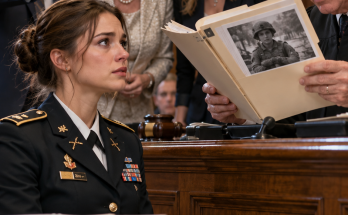
PART 1 — The Woman They Thought They Could Control
Less than twenty-four hours after my divorce was finalized, I froze the private account my former husband had been using to fund his family’s extravagant lifestyle.
By noon, his mother had been escorted out of an exclusive Manhattan jewelry boutique after her payment was declined.
By one o’clock, my phone was ringing so relentlessly that I finally switched it off.
And by sunset, my ex-husband had made a decision that would change his entire life.
He was coming to my apartment to teach me a lesson.
His name was Richard Hayes.
For seven years, I had been married to a man who believed that a woman’s value depended entirely on how useful she was to his ambitions.
When we first met, Richard was an ambitious executive at a rapidly expanding investment firm.
He wore inexpensive suits, drove an aging sedan, and spoke endlessly about the empire he intended to build.
I believed in him.
I helped him prepare presentations late into the night, reviewed his business proposals, and introduced him to people who could help advance his career.
When his company struggled financially during its first major expansion, I quietly used my savings to keep us afloat.
Richard promised he would repay every dollar.
His mother, Patricia, promised she would never forget what I had done for her son.
Both promises turned out to be worthless.
Within five years, Richard had become a wealthy executive.
His company occupied an entire floor of a glass tower overlooking Park Avenue.
He began wearing custom suits, attending private investment dinners, and traveling internationally with business associates.
Patricia moved into a luxurious apartment on the Upper East Side.
She purchased designer handbags, attended exclusive charity galas, and introduced herself as the proud mother of a self-made millionaire.
But she never mentioned the woman who had helped her son survive his company’s darkest days.
Instead, she referred to me as Richard’s quiet little wife.
Whenever someone asked about my career, she laughed and explained that I worked in government administration.
Richard never corrected her.
The truth was that I had spent thirteen years serving in the United States Army.
I was a lieutenant colonel specializing in strategic intelligence and financial threat analysis.
My assignments had taken me into rooms where a single careless sentence could compromise an operation involving national security.
I had learned to recognize manipulation, document suspicious activity, and remain calm when everyone around me was losing control.
My work required discretion.
Richard interpreted that discretion as weakness.
He never asked what I actually did.
He never wondered why I occasionally disappeared for classified assignments or why certain colleagues addressed me by my military rank.
As far as he was concerned, I was simply a convenient source of money with an impressive ability to remain silent.
Then I discovered the truth about his finances.
It began with a bank statement I found tucked inside a folder in our home office.
Richard had been transferring money from an account we shared into a private company controlled by his mother.
At first, I assumed there had been a mistake.
Then I found another transfer.
And another.
Some payments were labeled as business expenses.
Others were described as temporary loans.
Several had no explanation at all.
When I confronted him, Richard barely glanced at the documents.
“You’re making a problem out of nothing,” he said.
“My mother needed help. I handled it.”
“With our money?”
He gave me an irritated look.
“What’s mine is ours, and what’s yours is ours. That’s how marriage works.”
“Then why did you hide the transfers?”
For a moment, his expression changed.
Then he smiled.
“Because I knew you’d overreact.”
That evening, I contacted my attorney.
I did not shout.
I did not threaten him.
I simply began documenting everything.
The divorce proceedings lasted eight months.
During that time, I discovered that Richard had used my signature on several financial authorizations without my knowledge.
I also found evidence suggesting that his company had been concealing substantial liabilities from potential investors.
I preserved every document through lawful channels and gave my attorney copies of the records relevant to our divorce.
I made no accusations I could not support.
I wanted the truth established, not revenge.
Eventually, the judge finalized our divorce.
The settlement clearly separated our finances and terminated my responsibility for accounts that had been established in my name for Richard’s family’s convenience.
The next morning, I contacted the card issuer and removed Patricia’s authorized-user access from my personal account.
That was when everything exploded.
“What have you done?” Richard screamed over the telephone.
I stood beside my penthouse window, watching sunlight spread across Manhattan.
“Good morning to you, too.”
“My mother was humiliated in front of everyone!”
“Her card was declined because she is no longer authorized to use it.”
“You could have warned us!”
“I warned you when I filed for divorce.”
“You’re being vindictive, Marissa!”
I nearly laughed.
For seven years, I had been expected to absorb every insult, every demand, and every financial inconvenience without complaint.
Now that I had established a boundary, I was suddenly the villain.
“Richard, our marriage is over. Your mother is your responsibility.”
“You think you’re so powerful now?”
“No,” I replied quietly. “I think I’m finally finished paying for people who despise me.”
Then I ended the call.
At 6:42 the following morning, someone began pounding on my apartment door.
“OPEN UP!”
Patricia’s voice echoed through the hallway.
“You ungrateful little parasite! You owe this family everything!”
Richard joined her.
“Marissa, open the door. We’re settling this today.”
I checked the security monitor.
Patricia was clutching her handbag with both hands.
Richard stood beside her, his face red with anger.
Behind them was a third man I recognized immediately.
Victor Lang, Richard’s chief financial officer.
Why would the chief financial officer of a multimillion-dollar investment firm be standing outside my apartment at sunrise?
I stepped away from the monitor and walked to my dining table.
A sealed envelope lay beside my divorce decree.
It had arrived late the previous evening through an official military channel.
Inside was a letter confirming my appointment to a new interagency task force investigating suspected financial networks connected to national security risks.
The appointment did not mean Richard was guilty of anything.
But the preliminary information provided to the task force contained the name of a company I had seen repeatedly in my marital financial records.
A company connected to Victor Lang.
A company that had received millions of dollars through a complicated series of transactions.
And a company whose ownership records appeared to lead back to Richard’s business empire.
I had immediately disclosed the potential conflict to the appropriate officials.
My involvement would be determined through the proper process.
I was not going to use my position to settle a personal score.
But I was no longer going to pretend I had seen nothing.
Outside my door, Patricia struck the wood again.
“You have five seconds to open this door!”
I looked at the security monitor and took a slow breath.
They believed they had come to intimidate a divorced woman who had lost her husband.
They had no idea that the documents they had hidden from their investors might soon be examined by people who would not be impressed by their wealth, their connections, or their threats.
Then my phone vibrated.
It was a message from my attorney.
MARISSA, DON’T LET THEM INSIDE. VICTOR’S NAME JUST APPEARED IN A SECOND SET OF RECORDS. CALL ME IMMEDIATELY.
I stared at the message.
Then I looked back at the door.
For the first time that morning, I wondered whether Richard had come to demand money.
Or whether he had come to discover exactly how much I knew.
PART 2 — The Secret Hidden Inside Their Empire
I called my attorney before opening the door.
“Tell me exactly what you found,” I said.
“Your former husband’s company has been linked to several transactions that appear inconsistent with the financial statements provided to investors,” she replied.
“Does that prove Richard committed a crime?”
“No. It proves the records require examination. The relevant authorities will have to establish what happened.”
I appreciated her answer.
Evidence mattered.
Assumptions did not.
I had spent years learning the difference.
My attorney explained that Victor Lang had recently attempted to transfer ownership of a subsidiary connected to Richard’s firm.
The transaction involved a company that had received money from several businesses already under review by federal investigators.
One of those businesses had appeared in the financial records I had preserved during my divorce.
I immediately informed the designated ethics officer overseeing my new assignment.
I supplied the relevant information and requested that any matter involving Richard or his companies be handled by investigators independent of my personal involvement.
My marriage was over.
My professional obligations were not an excuse to interfere with a case.
After making the disclosure, I returned to the security monitor.
Richard was now pacing in front of my door.
Patricia had stopped shouting.
Victor stood several feet away, repeatedly checking his telephone.
Something was wrong.
I opened the door but kept the security chain engaged.
Richard immediately stepped forward.
“You have some explaining to do.”
“About what?”
“About the accounts you froze.”
“They were my accounts.”
“You were married to me for seven years!”
“And now we’re divorced.”
Patricia pushed herself into view.
“After everything my son did for you, this is how you repay us?”
I looked directly at her.
“Your son used money from my accounts without my authorization. I have the records.”
Her expression hardened.
“You always were ungrateful.”
“Interesting. That’s exactly what you called me when I paid your medical bills, covered your rent, and bought the furniture for your apartment.”
Richard raised his voice.
“Stop bringing up the past!”
“The past is where the transactions happened.”
Victor suddenly stepped between them.
“Marissa, perhaps we could discuss this privately.”
I looked at him.
“Why are you here?”
He hesitated.
“We’re trying to resolve a misunderstanding.”
“Then you should speak to my attorney.”
His eyes shifted briefly toward Richard.
It was a tiny movement.
But I noticed it.
Richard noticed it, too.
“Victor, don’t say another word,” he snapped.
The hallway fell silent.
Patricia looked from one man to the other.
“What is going on?”
Neither answered.
I began closing the door.
Richard caught the edge with his hand.
“You’re not going to shut us out!”
I stared at his fingers.
“Move your hand.”
Perhaps it was my tone.
Perhaps it was the realization that I was no longer afraid of him.
Whatever the reason, Richard stepped back.
I closed the door and secured the lock.
Then I heard Victor speak.
“Richard, we need to leave. If the records have reached the wrong people, we’re finished.”
The elevator doors opened a moment later.
Their footsteps disappeared.
I remained beside the entrance, listening until the hallway was quiet.
Then I called my attorney again.
Within the next forty-eight hours, the situation became far more serious.
Independent investigators obtained additional financial records through the appropriate legal process.
Several transactions involving Richard’s company appeared to have been misrepresented to investors.
Some payments had been routed through companies with overlapping directors and addresses.
Others appeared to have been approved using authorizations whose validity was now in question.
Patricia’s name appeared on documents relating to a company she had repeatedly described as a harmless family investment.
The investigators did not assume she understood every transaction.
They began examining who had authorized the payments, who had benefited, and who had known what.
Meanwhile, Richard launched a campaign to discredit me.
He contacted mutual friends and told them I had become unstable after the divorce.
He claimed I was threatening his family with my military position.
He even sent a message to my attorney suggesting that I had stolen confidential business information from his office.
My attorney responded with a formal request that all future communications be directed through counsel.
I did not contact Richard.
I did not threaten him.
I did not reveal anything about the investigation.
I continued reporting for duty and followed every instruction issued by the officials responsible for the case.
Then, on Thursday afternoon, an envelope arrived at my apartment.
There was no return address.
Inside was a single sheet of paper.
ASK YOUR EX-HUSBAND WHY YOUR NAME IS ON THE ACCOUNT THAT RECEIVED THE MONEY.
Beneath the sentence was a bank account number.
I recognized the last four digits.
The account had been opened during the second year of my marriage.
Richard had told me it was a temporary account for household expenses.
I had never knowingly authorized it to receive business funds.
My hands remained steady, but my thoughts moved quickly.
I did not attempt to access the account.
I did not investigate the sender.
I photographed the envelope and its contents, preserved the original, and forwarded everything to my attorney and the appropriate authorities.
That evening, my attorney called.
“The account appears to have been used in transactions connected to the companies under review,” she said.
“Does it establish that I was involved?”
“Not by itself. The question is whether someone used your information without your knowledge. We need to establish who controlled the account and who authorized its activity.”
I closed my eyes.
For years, Richard had insisted that I knew nothing about business.
He had treated my career as an inconvenience and my silence as consent.
Now I had to consider the possibility that he had used that same silence to place my name somewhere it never belonged.
The next morning, I received a second message.
This time, it came from Patricia.
YOU NEED TO MEET ME. RICHARD HAS LIED TO BOTH OF US.
I read it twice.
Then another message appeared.
HE’S GOING TO BLAME YOU FOR EVERYTHING. I HAVE SOMETHING THAT CAN PROVE IT.
I did not agree to meet her alone.
Instead, my attorney arranged a meeting at her office, with appropriate safeguards and a clear understanding that any relevant information would be provided to the proper authorities.
Patricia arrived looking nothing like the glamorous woman who had once dismissed me as unworthy of her son.
Her designer coat was wrinkled.
Her makeup was unfinished.
Her hands trembled as she placed a thick folder on the table.
“I thought Richard was building a legitimate business,” she whispered.
“What is in the folder?” I asked.
She swallowed.
“Copies of documents he told me never to discuss.”
My attorney opened the folder.
Inside were corporate records, payment instructions, and emails referring to an internal arrangement known as the Northbridge account.
One email contained a sentence that made my stomach tighten.
Use Marissa’s name for the authorization. She won’t question the paperwork.
The message had been sent from an account associated with Victor Lang.
It was addressed to Richard.
And Richard’s response was only three words.
Do it tonight.
I stared at the screen.
For a moment, the room seemed to grow very quiet.
The man I had loved had not merely hidden his financial decisions from me.
Someone had apparently discussed using my identity to authorize transactions without my knowledge.
My attorney closed the folder.
“This needs to be reviewed by the investigators immediately.”
Patricia began to cry.
“I never thought he would do something like this.”
I looked at the woman who had spent years humiliating me.
“I don’t know what you knew, Patricia. That’s for the investigators to determine.”
She lowered her head.
Then she reached into her handbag and removed one final document.
“There is something else,” she said.
“Something Richard doesn’t know I kept.”
She slid it across the table.
It was a draft agreement dated three months before my divorce.
The agreement proposed transferring ownership of several company assets into a new entity controlled by Patricia.
At the bottom was a line for my signature.
It looked like my name.
But I had never signed it.
My attorney examined the document carefully.
Then she looked up at me.
“Marissa, if this draft was used to support any actual transfer, we need to know immediately.”
Patricia’s voice broke.
“Richard told me you had already agreed.”
I slowly pushed the document back toward my attorney.
“I never agreed to anything.”
For the first time, Patricia appeared to understand that the woman she had spent seven years treating as an outsider might have been the only person in their family who had consistently told the truth.
But the worst revelation was still ahead.
Because when the investigators examined the document’s electronic history, they discovered that the draft had been created on a computer inside Richard’s executive office.
At 11:18 p.m. on the night before my divorce settlement was signed.
And the person who had accessed the document afterward was not Richard.
It was someone whose name appeared on the task force’s original list of potential witnesses.
Victor Lang.
PART 3 — The Day the Truth Finally Spoke
Three weeks later, Richard invited dozens of business associates to a private reception at his company’s Manhattan headquarters.
He intended to announce a major investment partnership.
According to the invitation, the event would celebrate a new chapter of growth for the Hayes Group.
According to the records reviewed by independent investigators, several of the company’s financial arrangements were facing serious questions.
I learned about the reception through a mutual acquaintance.
I had no intention of attending.
My role in the matter remained subject to formal conflict-of-interest safeguards, and I was not involved in the investigators’ decisions about Richard’s company.
But on the morning of the reception, my attorney received an urgent call.
Richard’s legal team had submitted a statement claiming that I had authorized the disputed account and knowingly participated in the transactions.
He had attached a document bearing my name.
The signature looked convincing.
The date was wrong.
More importantly, the authorization supposedly granted by that document referred to a corporate entity that had not existed when the paperwork was allegedly signed.
It was a contradiction that could be checked against official records.
My attorney immediately notified the appropriate authorities and submitted evidence supporting the timeline.
I did not contact Richard.
I did not issue threats.
I waited for the process to work.
At 6:30 that evening, the reception began.
Richard stood beneath the lights of a private event space, wearing a perfectly tailored black suit.
Patricia sat near the front.
Victor stood beside the presentation screen, smiling at guests as though nothing had happened.
Richard raised a glass.
“Tonight,” he announced, “we celebrate integrity, perseverance, and the future of our company.”
Several guests applauded.
Then the doors opened.
Two attorneys representing the company entered with a senior compliance officer.
They did not announce an arrest.
They did not make a dramatic speech.
They simply requested that Richard and Victor step into a private conference room to discuss a formal notice concerning the company’s records and pending financial review.
Richard’s smile disappeared.
“Now?”
“Yes, Mr. Hayes.”
“This is a private event.”
“The notice concerns company matters.”
Victor began speaking rapidly.
“There must be some mistake.”
The compliance officer handed him a document.
“We recommend that you review it with your counsel.”
Guests stopped talking.
Patricia rose from her chair.
“Richard, what is happening?”
He ignored her.
Instead, he looked toward the entrance as if expecting someone else to appear.
Then he saw me.
I had arrived only because my attorney had asked me to attend a separate meeting in the building with counsel concerning the disputed authorization.
I was not there as an investigator.
I was there as a former spouse whose name had been attached to a document she had never signed.
Richard walked toward me.
“You did this.”
I remained where I was.
“No.”
“You’ve been trying to destroy me since the divorce!”
“Your financial records were not created by me, Richard.”
“You used your military connections!”
“I disclosed the potential conflict and provided relevant evidence through the proper channels. Independent officials are handling the matter.”
His face twisted with anger.
“You expect everyone to believe that?”
“I expect the records to speak for themselves.”
For several seconds, neither of us moved.
Then Victor hurried toward Richard.
“Don’t say anything else,” he whispered.
Richard turned on him.
“You told me the authorization was legitimate!”
Victor went pale.
The words had escaped before he could stop them.
Several people nearby heard him.
Richard stared at him.
“What did you just say?”
Victor looked around the room.
“I didn’t mean—”
“You told me everything had been handled!”
A company attorney stepped forward.
“Mr. Hayes, we strongly advise that you stop discussing these matters and speak privately with your counsel.”
Richard’s mouth opened, but no words emerged.
For the first time in seven years, he seemed to understand that the people around him were no longer interested in protecting his image.
They wanted answers.
Over the following days, investigators continued examining the disputed authorization, the account records, and the transactions connected to the Hayes Group.
The evidence did not resolve every question immediately.
But the electronic document history, bank records, and witness statements helped establish a timeline that contradicted Richard’s original explanation.
Victor eventually provided additional records through his attorney.
Those records raised further questions about who had directed the transfers and why my name had appeared on the paperwork.
The company’s board placed Richard on administrative leave while it reviewed the findings.
Several investors demanded independent audits.
Patricia’s role also came under scrutiny, although the investigators had not yet determined the extent of her knowledge.
For the first time, she could no longer dismiss the entire matter as a misunderstanding caused by an ungrateful daughter-in-law.
Two weeks later, Richard requested a meeting with me.
I agreed to communicate through our attorneys.
He arrived at my attorney’s office without his usual confidence.
His expensive watch was still on his wrist.
His suit was still immaculate.
But his expression had changed.
“Marissa,” he began, “I know things have gone too far.”
I said nothing.
He continued.
“I never intended for you to get dragged into this.”
“Then why did your company submit a document claiming I authorized the account?”
He looked down.
“Victor handled the paperwork.”
“Your response to his email said, ‘Do it tonight.'”
His head lifted sharply.
“You saw that?”
“The relevant records have been provided to the appropriate people.”
He rubbed his forehead.
“Look, I made mistakes.”
I waited.
“I thought I could fix everything before anyone noticed.”
“By putting my name on documents I never signed?”
He did not answer.
For years, I had imagined that if Richard ever admitted what he had done, I would feel triumphant.
Instead, I felt tired.
Not because I regretted leaving him.
Because I finally understood how much energy I had spent trying to earn the respect of someone who had benefited from my silence.
Richard leaned forward.
“My lawyers think we can work something out. If you clarify that you didn’t understand the account, this could become less complicated for everyone.”
I stared at him.
“Are you asking me to make a statement that isn’t true?”
“I’m asking you to help me.”
“No, Richard. You’re asking me to protect you from the consequences of your own decisions.”
He swallowed.
“What do you want from me?”
The answer came easily.
“Nothing.”
He looked confused.
“I don’t want your money. I don’t want your company. I don’t want your apology if you’re only offering it because you’re afraid.”
I stood.
“I want you to stop using my name to explain decisions I never made.”
Then I left the room.
Months passed.
The financial review continued, and the legal proceedings moved forward through the appropriate channels.
Some allegations were substantiated by records.
Others remained unresolved.
I never treated suspicion as proof, and I never used my military rank to influence the outcome.
Eventually, the company announced leadership changes and a restructuring plan.
Richard’s future became a matter for the board, his attorneys, and the authorities handling the investigation.
Patricia sent me a handwritten letter.
She apologized for the years of insults, the financial demands, and the way she had treated me as though my only purpose was to serve her family.
I read the letter once.
Then I placed it in a drawer.
I did not need to hate her.
But I did not owe her immediate forgiveness, either.
As for me, I returned to my work.
One quiet morning, I stood beside my kitchen window with a fresh cup of espresso and watched the city wake beneath the pale gold light.
My phone rang.
It was my attorney.
“The latest review confirms that the authorization bearing your name was not supported by the original records Richard’s team claimed it came from,” she said. “The investigators are continuing to assess the remaining transactions.”
I thanked her and ended the call.
Then I looked around my apartment.
No furious phone calls.
No unexpected bills.
No one demanding that I sacrifice my peace to preserve their reputation.
For seven years, Richard had mistaken my patience for weakness.
Patricia had mistaken my kindness for an obligation.
And both had assumed that because I rarely spoke about my work, I had nothing to say.
They were wrong.
I had never needed to humiliate them in public.
I had never needed to threaten them.
I had simply needed to stop protecting them from the truth.
That afternoon, I received one final message from Richard.
I hope you’re happy now. You got everything you wanted.
I looked at the screen for a long moment.
Then I typed a response.
I wanted my name back. Everything else was your decision.
I sent it, blocked his number, and returned to my coffee.
For the first time in years, my future belonged entirely to me.
And the greatest victory of my life was not watching a powerful man lose his position.
It was discovering that I could walk away from him without losing myself.
THE END