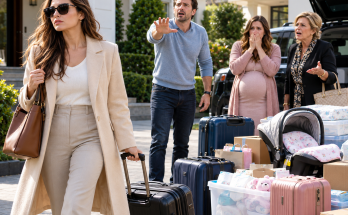
PART 1: The Day My Family Destroyed Everything I Worked For
My brother smashed my $78,000 SUV in broad daylight because I refused to give it to his wife. Then my mother stood in front of me and screamed, “It’s just a car! Just lie to the insurance company!”
She thought I would cry, apologize, and clean up another one of my brother’s messes.
She was wrong.
What my family didn’t know was that I had already made one phone call. And when the police arrived, the first question they asked would turn my mother’s confident smile into pure terror.
My name is Ethan Carter. I was thirty-four years old, worked as a regional operations manager, and had spent nearly eight years building a life that didn’t depend on anyone else.
My black luxury SUV was the most expensive thing I had ever purchased. It cost $78,000, and every dollar came from my own salary, careful saving, and years of refusing to waste money trying to impress people.
To me, it wasn’t just a car. It was proof that I could build something for myself.
Unfortunately, my family had never learned to respect anything I owned.
My younger brother, Mason, was the golden child. Whenever he lost a job, Mom called it bad luck. Whenever he borrowed money and failed to repay it, she called it a temporary setback. Whenever he shouted at someone, she insisted he was under pressure.
I was different.
I was the responsible one, which in my family meant I was expected to pay for everyone else’s irresponsibility.
Two years earlier, I had lent Mason $12,000 to save his struggling construction business. He promised to repay me within six months. I never saw a single dollar.
Then he asked me to co-sign a loan. I refused.
Mom didn’t speak to me for three weeks.
When Mason married Vanessa, I paid for their wedding reception after he claimed he was short on money. When their rent fell behind, I quietly covered two months because Mom begged me not to let them get evicted.
I told myself I was helping family.
In reality, I was teaching them that my boundaries meant nothing.
Everything changed on a warm Sunday afternoon.
I had driven to Mom’s house to deliver some paperwork concerning Dad’s estate. My SUV was parked in the driveway, its black paint shining in the afternoon sun.
Mason came outside wearing a smug expression. Vanessa followed him, scrolling through her phone.
“Ethan, we need to talk about your SUV,” Mason announced.
I closed the folder in my hands. “What about it?”
Vanessa slipped her phone into her purse.
“My current car is too small,” she said. “We need something bigger and safer.”
I nodded politely. “Then you should look for a bigger car.”
Mason laughed as if I had misunderstood an obvious arrangement.
“No. You’re giving us yours.”
For a moment, I thought he was joking.
“Excuse me?”
“You live alone,” he explained. “You don’t have kids. Vanessa and I are planning our future. It makes more sense for us to have the SUV.”
I stared at him.
“You want me to hand you a car I paid $78,000 for because you think you need it more?”
Mom appeared in the doorway.
“Don’t start making this difficult, Ethan.”
I turned toward her. “He’s asking me to give away my car.”
“And you can afford another one,” she snapped. “Mason has a family to think about.”
“They don’t even have children yet.”
Vanessa’s expression hardened.
“Wow. You really are selfish.”
I almost laughed. My brother had unpaid debts, an unstable business, and a history of making promises he couldn’t keep. Yet somehow, I was the selfish one because I wouldn’t surrender my property.
“No,” I said firmly. “The answer is no.”
Mason’s face changed.
For years, he had been able to pressure me into changing my mind. He expected the same result this time.
Instead, he marched toward his pickup truck.
“Fine,” he muttered. “If you won’t give it to us, you won’t be driving it either.”
He opened the truck bed and pulled out a heavy tire iron.
At first, I didn’t believe what I was seeing.
“Mason, put that down.”
He ignored me.
The first blow struck the driver’s-side window.
CRASH!
Glass exploded across the driveway.
Vanessa screamed, but she didn’t run toward him. She stood beside Mom, watching.
Mason raised the tire iron again.
The windshield shattered beneath the second blow. Then he smashed the passenger window, the headlights, and the side mirrors.
I rushed forward.
“STOP! WHAT ARE YOU DOING?”
Mom grabbed my arm.
“Don’t touch him!” she shouted.
I yanked myself free and stepped back as Mason moved toward the hood.
He struck the metal repeatedly, leaving deep dents in the glossy black surface. Then he climbed into his pickup, reversed, and accelerated straight into the front of my SUV.
The impact sent my vehicle grinding backward against the curb.
The front bumper buckled.
A neighbor shouted from across the street. Someone else began recording with a phone.
Mason stepped out of his truck, breathing heavily.
“There,” he said. “Now nobody gets it.”
I looked at the wreckage.
Seven years of hard work, reduced to broken glass and twisted metal in less than five minutes.
Then I looked at my mother.
I expected her to be horrified.
Instead, she marched toward me with an angry expression.
“Look what you made him do!”
I couldn’t believe her words.
“Mom, he just destroyed my car!”
“He was upset because you refused to help your own brother!”
“Help him? I helped him for years!”
She leaned closer and lowered her voice.
“Listen carefully. You’re going to tell the insurance company that someone vandalized the SUV. You don’t need to mention Mason. They’ll pay for the damage, and this family won’t be embarrassed.”
I stared at her.
“You want me to file a false insurance claim?”
“Don’t use that tone with me!”
Vanessa finally spoke.
“It’s just a car, Ethan. You can buy another one. Why would you destroy your brother’s future over something replaceable?”
Something inside me went completely quiet.
I had spent my entire adult life trying to earn the love of people who treated my kindness like an unlimited credit card.
That afternoon, I finally understood something.
They didn’t want my forgiveness.
They wanted my silence.
I reached into my pocket and took out my phone.
Mom’s expression softened immediately.
“Good. Call the insurance company. Tell them what we discussed.”
I looked at her and gave a small, humorless smile.
“Actually, I’m calling someone else.”
I dialed the emergency number.
Mason laughed.
“Who are you calling? A tow truck?”
I ignored him.
When the dispatcher answered, I gave the address, explained that my brother had deliberately damaged my vehicle, and reported that he had rammed it with his pickup.
I told them there were witnesses and that I wanted the incident officially documented.
Mom’s face turned red.
“You called the police? On your own brother?”
“Yes.”
“You ungrateful little—”
She stopped when she noticed the neighbor across the street still recording.
For the first time that afternoon, nobody in my family seemed certain what to do next.
But the worst part was still coming.
Because before the police arrived, I remembered something important about that SUV.
Something Mason and Mom had completely forgotten.
And it was about to change everything.
PART 2: The Question That Made My Mother Go Silent
The police arrived about fifteen minutes later.
Two officers stepped out of their patrol car and approached the driveway. One examined the shattered windshield and dented hood. The other spoke with my neighbor, who had recorded part of the destruction.
Mason immediately adopted the innocent expression he had perfected since childhood.
“Officer, this is a family disagreement,” he explained. “My brother and I had an argument. Things got out of hand.”
Mom rushed to support him.
“No one was hurt. We can handle this privately. There is no reason to make it a big legal problem.”
The officer looked at the wrecked SUV.
“Ma’am, this vehicle has extensive damage.”
“It’s just a car!” Mom snapped. “Insurance exists for exactly this reason.”
The officer turned toward me.
“Sir, is this your vehicle?”
“Yes. I purchased it myself.”
“Did you give your brother permission to damage it?”
“No.”
Mason threw his hands into the air.
“I barely touched it! He’s exaggerating because he’s always been jealous of me.”
I almost admired his ability to lie while standing beside the evidence.
Then the second officer approached with a notepad.
“Before we go any further,” he said, “I need to establish who owns this vehicle and whether anyone else has a legal interest in it.”
I handed him my registration and insurance documents.
He checked the information, then asked Mason to explain why he had struck the SUV with a tire iron and rammed it with his truck.
Mason shrugged.
“He wouldn’t give it to my wife. I got angry.”
The officer stared at him.
“You damaged someone’s vehicle because they wouldn’t give it to you?”
Mason’s confidence faltered.
“It was a family matter.”
“Property damage is not automatically a family matter just because the people involved are related.”
Mom stepped forward again.
“Officer, surely there’s a way to settle this without ruining his life. Ethan has plenty of money. He can afford the repairs.”
I watched the officer’s expression grow colder.
“Whether he can afford the repairs doesn’t give anyone permission to destroy his property.”
Then Vanessa made a mistake.
She pointed at the SUV and said, “Well, he was going to give it to us eventually. Mason just got impatient.”
I turned toward her.
“I never said that.”
“You said you would help us!”
“I helped you pay your rent. I never promised you my car.”
The officer wrote something down.
Mom suddenly grabbed my hand.
“Ethan, please. Think about your father. He would never want his children fighting like this.”
My father had died three years earlier. He had spent his final months trying to teach Mason that responsibility mattered more than excuses.
But Mom had always ignored that lesson.
I gently pulled my hand away.
“Dad would have been ashamed of what happened today.”
Her eyes widened.
“How dare you!”
The officer interrupted before she could continue.
“Ma’am, I need you to step back while we finish our investigation.”
For several minutes, the officers examined the vehicle and photographed the damage. They collected my neighbor’s contact information and asked whether any other witnesses had seen the incident.
Then one officer returned to me.
“Do you have any reason to believe this damage was planned in advance?”
I hesitated.
I remembered Mason’s words when he had first demanded the SUV. His certainty. His anger when I refused. The way he had walked straight to his truck and retrieved the tire iron.
“I don’t know if he planned the damage,” I replied. “But I know he deliberately destroyed the vehicle after I refused to give it to him.”
The officer nodded.
Then he asked Mason to step away from the truck.
Mason refused at first, arguing that the officers were treating him like a criminal. Eventually, he moved to the sidewalk, still muttering under his breath.
That was when Mom approached me one last time.
“Tell them you don’t want to press charges,” she whispered. “Say it was an accident. We’ll work out the money later.”
“Will Mason repay the $12,000 he already owes me?”
She said nothing.
“Will you pay for the damage if the insurance company refuses to cover it?”
Her lips tightened.
“Don’t be ridiculous.”
“Then why should I take responsibility for something he did?”
She looked away.
For the first time, I stopped waiting for her to give me a reasonable answer.
The second officer returned from his patrol car carrying a document.
He studied it, glanced at the SUV, and then looked directly at Mason.
“Sir, I need to ask you one question.”
Mason folded his arms.
“Go ahead.”
The officer’s voice was calm, but every person in the driveway went silent.
“Did you know this vehicle has a documented ownership and financing history that may make your actions more serious than a simple family disagreement?”
Mason blinked.
“What does that mean?”
The officer turned to me.
“Mr. Carter, you mentioned that this vehicle was purchased independently. Is there anything else we should know about its ownership?”
I took a slow breath.
“Yes.”
I opened the folder I had brought to Mom’s house that afternoon.
Inside were the purchase records, the current registration, and a copy of a document I had kept for a reason my family never understood.
The SUV was mine outright. There was no loan for Mason to claim I had hidden, no shared ownership arrangement, and no agreement giving him or Vanessa any right to use it.
But that wasn’t the most important detail.
Several months earlier, after a series of threatening messages from Mason about money I refused to lend him, I had installed a security system with a dash camera and sentry recording. It captured activity around the vehicle when it was parked.
The system had recorded the destruction.
And the footage had automatically uploaded to a secure account.
Mason’s face drained of color.
Mom stared at me.
“You recorded your own brother?”
“I installed security equipment on my own vehicle.”
The officer asked whether I could provide the original recording.
“I can.”
I opened the app and showed him the timestamped footage: Mason approaching with the tire iron, striking the windows, damaging the hood, and driving his pickup into the SUV.
There was no ambiguity about who had done it.
Mason stared at the screen.
“That camera shouldn’t have recorded anything!”
The officer raised an eyebrow.
“Why shouldn’t it have?”
Mason opened his mouth, then closed it.
Mom rushed forward.
“That’s enough! He’s trying to trap his brother!”
The officer turned to her.
“Ma’am, the recording appears to document the incident. We will preserve it as evidence.”
For several seconds, nobody spoke.
Then the officer asked Mason another question.
“Do you have insurance information for the pickup truck you used to strike this vehicle?”
Mason looked toward his truck.
Mom’s expression changed.
And I realized that the question had touched a nerve neither of them had expected.
Because Mason’s truck wasn’t the only thing they had been hiding.
PART 3: The Secret That Destroyed Their Story
The officer requested Mason’s driver’s license and insurance details for his pickup. Mason handed them over reluctantly, complaining that everyone was making a huge issue out of a mistake.
But the officer wasn’t interested in family excuses.
He wanted accurate information, a clear timeline, and evidence of what had happened.
While the officers continued their investigation, I called my insurance company and reported the incident honestly. I provided the photographs and explained that I had video evidence showing intentional damage.
Mom overheard me.
“You’re actually going to do this?” she demanded. “You’re going to let insurance get involved and possibly have your own brother arrested?”
I looked at her.
“What would you have me do? Lie?”
“Families protect each other!”
“Then why was I the only one expected to protect anyone today?”
She had no answer.
The officers eventually finished documenting the scene. They explained the next steps and informed Mason that the evidence could be used in determining whether charges were warranted under local law. They also warned him not to contact witnesses to influence their statements.
Mason was no longer smiling.
Vanessa stood beside him, staring at the ground.
Then the officer approached me again.
“Mr. Carter, one final question. Do you want to provide a formal statement about the damage and the threats that preceded it?”
“Yes,” I answered.
Mom shook her head furiously.
“Ethan, stop. Think about what you’re doing.”
I thought about the $12,000 Mason had never repaid. The bills I had covered. The years I had spent listening to Mom explain why his problems mattered more than mine.
Then I thought about the shattered windshield and the deep dents in the hood.
“I am thinking about what I’m doing,” I told her. “For once, I’m not letting you decide for me.”
The officer took my statement.
Before leaving, he explained that the investigation would continue and that I should preserve the original recording, photographs, repair estimates, and any messages relevant to the incident.
I agreed.
As the patrol car pulled away, Mason turned on me.
“You’ve ruined everything!”
I stared at him.
“You destroyed my car.”
“You could have handled this privately!”
“You could have walked away when I said no.”
He stepped closer, but the neighbor who had been recording moved toward his front gate. Mason stopped.
Then he lowered his voice.
“You think you’re better than us because you make more money.”
“No, Mason. I think I’m allowed to own something without being punished for it.”
His face twisted with anger.
Mom grabbed his arm and pulled him toward the house.
“Come inside,” she ordered.
Vanessa followed, but not before turning back to glare at me.
“You’ll regret humiliating us.”
I didn’t respond.
For the next several days, my phone filled with messages from relatives who had heard Mom’s version of the story.
According to her, I had called the police over a small disagreement. Mason had been emotional, I had overreacted, and the entire family was now suffering because I refused to forgive him.
Nobody mentioned the tire iron.
Nobody mentioned the pickup truck.
Nobody mentioned the false insurance claim she had demanded I make.
So I sent one short message to the family group chat.
It contained three things: a photograph of the destroyed SUV, the repair estimate, and a statement that I would not discuss the matter further while the investigation was ongoing.
I didn’t post the recording publicly. I didn’t insult anyone. I simply refused to lie.
The response was immediate.
Some relatives apologized for judging me without knowing the facts. Others accused me of turning a private disagreement into a public scandal.
I learned something important that week.
People who benefit from your silence often call it betrayal when you finally speak.
The damage estimate came back at more than $30,000. The insurance company reviewed the evidence and explained the next steps under my policy. I made no promises about the outcome, and I did not assume that coverage would be automatic for deliberate damage.
I also hired an attorney to understand my options for recovering the losses.
Mason, meanwhile, began sending messages that sounded very different from his earlier threats.
First, he said he had made a mistake.
Then he said I had provoked him.
Finally, he offered to pay me back in installments if I agreed to tell the authorities that I no longer wanted the matter pursued.
I refused to make any deal that required me to misrepresent what happened.
The investigation continued according to the applicable procedures. I let the evidence speak for itself.
But the biggest surprise came from my mother.
Nearly two weeks after the incident, she called me late at night.
Her voice was softer than I had heard it in years.
“Ethan, your brother is struggling. Vanessa is furious with him, and his business is in trouble. You need to help him.”
I sat quietly, listening.
“Mom,” I finally said, “why are you calling me instead of asking him to take responsibility?”
She sighed.
“Because you’re the one who can fix this.”
There it was again.
Not an apology. Not an acknowledgment of what Mason had done. Just another demand disguised as family loyalty.
“I’ve spent years fixing his problems,” I replied. “I’m done.”
“You can’t abandon your own family!”
“I didn’t abandon anyone. I said no to giving away my car. Mason chose to destroy it. Those are two different things.”
She began crying.
For a moment, the old guilt returned. I remembered being a child, watching her comfort Mason after his mistakes while telling me to be the mature one.
Then I remembered the sound of the windshield breaking.
“I love you, Mom,” I said. “But loving you doesn’t mean I’ll lie for you.”
I ended the call.
Months later, the legal and insurance matters were still being handled through the appropriate channels. I didn’t know exactly how everything would conclude, and I stopped trying to control every outcome.
What I could control was my own behavior.
I replaced the SUV when I was financially ready. I kept my records organized, strengthened my boundaries, and stopped lending money I couldn’t afford to lose.
Mason and I barely spoke.
Mom eventually sent me a message saying she hoped we could become a family again.
I replied that reconciliation would require honesty, accountability, and a genuine apology—not another demand that I sacrifice something to make everyone else comfortable.
She never answered that message.
Perhaps she wasn’t ready.
Perhaps she never would be.
Either way, I finally understood that I didn’t need her permission to protect myself.
My brother had believed that being family gave him the right to take whatever he wanted. My mother had believed that being a good son meant covering up his behavior.
They were both wrong.
The SUV was expensive, but losing it wasn’t the worst part of that Sunday.
The worst part was discovering how easily the people I loved had expected me to betray myself for them.
And the greatest relief was realizing that I didn’t have to.
Sometimes, the most important word you can say to your family is “no.”
And sometimes, the most powerful thing you can do after saying it is refuse to take it back.