“THE AIRLINE THREW A BILLIONAIRE OFF HIS OWN PLANE—THEN THE CEO DISCOVERED WHO HAD JUST CANCELED THE $5 BILLION RESCUE DEAL”
PART 1 — Removed From First Class
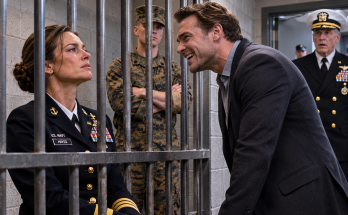
The security officer grabbed Marcus Walker’s briefcase just as the aircraft door was about to close.
“Sir, you’re coming with us.”
Marcus looked up from his tablet.
“Could you tell me why?”
The officer glanced toward the flight attendant standing behind him.
“We’ve received a complaint about your presence in this cabin.”
Marcus paused.
“My presence?”
“Yes, sir. Please don’t make this difficult.”
Across the aisle, a businessman lowered his newspaper. A woman near the window stopped typing on her laptop. Several passengers turned to watch.
Marcus remained seated for another moment.
His boarding pass clearly showed seat 2A. His identification matched his reservation. He had passed through security without a problem, and the airline had confirmed his first-class upgrade the previous evening.
“Have you checked my ticket?” he asked.
The officer’s expression hardened.
“We’re not here to debate your ticket.”
Marcus closed his tablet.
“Then what are you here to do?”
“Escort you off the aircraft.”
Marcus was forty-nine years old, the founder of Walker Meridian Capital, and one of the most influential private investors in American aviation.
He was also a Black man wearing an ordinary charcoal suit, carrying an old leather briefcase, and traveling without an entourage.
To the airline employees confronting him, those details apparently meant more than his verified reservation.
“Very well,” Marcus replied. “I’ll cooperate. But I want your names and the incident number.”
The flight attendant exchanged a nervous glance with the officer.
“Sir, you can request that information later.”
“No,” Marcus said calmly. “I’ll request it now.”
The second security officer stepped forward.
“Let’s go.”
Marcus stood, collected his briefcase, and walked toward the aircraft door.
He didn’t shout.
He didn’t threaten anyone.
And he didn’t mention the meeting scheduled for three hours later.
Because at that very moment, the airline’s board of directors was preparing to approve a five-billion-dollar financing agreement with his investment group.
Without that agreement, Meridian National Airlines would struggle to refinance its debt, complete its aircraft purchases, and maintain its planned international expansion.
Marcus had spent eighteen months negotiating the deal.
He had insisted on independent financial oversight, protections for employees, and a restructuring plan designed to prevent thousands of job losses.
He believed the airline could recover.
But he also believed that no company deserved to be rescued without accountability.
And now, as security escorted him through the jet bridge at Dallas Fort Worth International Airport, he began to wonder whether the airline understood the meaning of accountability at all.
His phone rang before he reached the terminal.
It was his chief financial officer, Olivia Grant.
“Marcus, where are you? The board is waiting for your final approval.”
“I’m at the gate.”
“Why aren’t you on the plane?”
“Meridian security removed me.”
Silence.
Then Olivia spoke slowly.
“Removed you? From your confirmed seat?”
“Yes.”
“Did they give you a reason?”
“They said someone complained about my presence.”
Olivia went quiet again.
“Marcus, the airline’s chief operating officer just called me. He says there’s been a security incident involving an unauthorized passenger.”
Marcus stopped walking.
“Unauthorized?”
“That’s the word he used.”
Marcus looked through the terminal window.
His aircraft was still parked at the gate. Passengers were peering through the windows while ground staff prepared for departure.
“Olivia, I want every document related to today’s incident preserved. Passenger records, gate logs, security reports, crew communications, and any available footage.”
“Understood.”
“And don’t approve the financing.”
“Are you sure?”
Marcus watched the aircraft door close.
“Absolutely.”
He ended the call.
Ten minutes later, the airline’s corporate office received a formal notice that the final financing approval had been suspended pending an independent review.
At first, executives assumed it was a negotiating tactic.
Then the board secretary opened the attached document.
The name at the top belonged to the investor whose signature the airline needed to access the five billion dollars.
Marcus Walker.
The chief operating officer immediately called the airport.
“Find out exactly what happened on Flight 418,” he ordered.
But before anyone could answer, a message arrived from the captain.
It contained just one sentence.
I have reviewed the passenger removal report, and I believe we made a serious mistake.
And the captain wasn’t the only person who had noticed something wrong.
A passenger had recorded the entire confrontation.
By the time the video reached the airline’s senior management, it had already been shared thousands of times.
The caption read:
“Airline security removes a Black passenger from first class despite his confirmed ticket. What are they not telling us?”
Marcus watched the clip once.
Then he turned off his phone.
He wasn’t going to negotiate in anger.
He was going to find out who had ordered the removal—and why the airline had immediately described him as an unauthorized passenger.
Because the answer would determine whether five billion dollars ever reached Meridian Airlines.
PART 2 — The Order Nobody Wanted to Explain
By noon, the video had spread across social media.
News outlets were calling the airline for comment. Passengers from Flight 418 were posting their accounts. Former employees were sharing stories about questionable security practices and complaints that had allegedly been ignored.
Meridian’s public relations department released a statement describing the incident as a routine security matter.
The statement lasted less than an hour before the airline’s own records contradicted it.
Marcus had not been selected through a random screening procedure.
His reservation had been flagged manually.
The instruction had originated from the office of Victor Hale, Meridian’s chief operating officer.
Victor had worked for the airline for twenty-two years. He was widely regarded as a disciplined executive who could solve operational problems that defeated everyone else.
He was also the person most threatened by Marcus’s proposed financing agreement.
The agreement required Meridian to conduct an independent audit of its aircraft procurement contracts. It also required the company to disclose certain consulting payments and reconsider several expensive executive arrangements.
Victor had argued that the conditions would slow the airline’s recovery.
Marcus believed they were essential.
Now, investigators had discovered that Victor’s office had requested additional scrutiny of Marcus’s reservation less than an hour before boarding.
When asked why, Victor claimed he had received an anonymous security alert.
But the alert had no supporting documentation.
The airport security supervisor confirmed that no specific threat had been identified.
And the flight attendant who had approached Marcus finally agreed to give a formal statement.
She said she had been instructed to remove him after a senior employee questioned whether he belonged in first class.
She had asked to verify his boarding pass.
Her supervisor told her not to.
That instruction was now part of the investigation.
At 1:30 p.m., Meridian’s board convened an emergency meeting.
Victor appeared by video.
“We cannot allow one passenger’s experience to jeopardize the financial future of this company,” he argued. “The investor is using an unfortunate misunderstanding to gain leverage.”
The board chair, Eleanor Price, looked directly into the camera.
“Then explain why the passenger’s reservation was flagged manually.”
Victor hesitated.
“We were responding to a concern.”
“Who raised it?”
“We’re still investigating.”
“Then why did your office call him unauthorized before the investigation began?”
Victor didn’t answer.
Eleanor ended the discussion.
“Until we have the facts, nobody is permitted to characterize this incident as a misunderstanding.”
Meanwhile, Marcus was sitting in a quiet conference room at Walker Meridian Capital.
Olivia placed a folder on the table.
“We found something else,” she said.
The folder contained records from the airline’s procurement division.
Three months earlier, Marcus’s team had identified suspicious consulting payments associated with a company called Northbridge Advisory.
The company had received more than eighty million dollars in fees over four years.
Its registered address led to a small office suite.
Its directors had no substantial experience in aviation.
And its largest payments had been approved by executives who reported directly to Victor.
Marcus turned the page.
One transfer had been authorized two days after the airline announced its financial difficulties.
Another had been approved the week the five-billion-dollar rescue agreement entered final negotiations.
“Who owns Northbridge?” he asked.
Olivia pointed to the final page.
“That’s the problem. The company is registered through several layers of ownership. We haven’t established the ultimate beneficiary.”
Marcus studied the records.
“Has Meridian’s board seen this?”
“Not yet. We wanted to verify the documentation first.”
“Send the evidence to the independent review team. No accusations until the facts are confirmed.”
Olivia nodded.
Then her phone rang.
She listened for several seconds before passing it to Marcus.
“It’s Eleanor Price. She wants to speak to you personally.”
Marcus accepted the call.
“Mr. Walker,” Eleanor began, “on behalf of the board, I apologize for what happened today. We would like you to return to the table and complete the financing agreement.”
“Has Victor Hale been suspended?”
“We are reviewing his involvement.”
“Have the relevant records been preserved?”
“Yes.”
“Have you initiated an independent investigation?”
“Yes.”
Marcus paused.
“Then you understand my position. This isn’t about punishing an airline because of one incident. It’s about determining whether its leadership can be trusted with five billion dollars.”
Eleanor lowered her voice.
“There is another reason I wanted to speak with you. The board has discovered that the instruction to flag your reservation was sent from an account belonging to someone outside the operations department.”
Marcus sat up.
“Who?”
“We haven’t confirmed the identity yet.”
“Who had access to the account?”
“Three senior executives and one external consultant.”
Marcus looked at Olivia.
The procurement records lay open between them.
“Does the consultant’s name begin with an R?” he asked.
Eleanor went silent.
“Yes,” she said finally. “Richard Cole.”
Marcus knew the name.
Richard had advised Walker Meridian Capital during its earliest years. He had introduced Marcus to several major investors and helped him build relationships across the aviation industry.
But they had ended their professional relationship two years earlier after Marcus discovered irregularities in a separate investment.
Richard had insisted the errors were administrative.
Marcus had refused to ignore them.
Now the same man appeared to be connected to the airline’s suspicious contracts—and possibly the order that removed him from Flight 418.
Before Marcus could respond, Olivia received a message from the independent review team.
She read it twice.
Then she turned her laptop toward him.
The investigators had traced one of Northbridge Advisory’s largest payments to another company.
That company had transferred the money into an account associated with a private investment partnership.
A partnership whose founding documents carried Richard Cole’s signature.
Marcus leaned back in his chair.
The humiliation at the airport had not been an isolated event.
Someone inside Meridian had apparently been trying to undermine the financing negotiations while concealing suspicious financial relationships.
And Marcus’s removal had given that person exactly what they wanted: a public crisis that could distract attention from the company’s records.
His phone rang again.
This time, it was Richard.
“Marcus,” Richard said warmly, as though they were old friends catching up. “I’ve seen the news. Terrible situation. I hope you’re not planning to let an airport misunderstanding destroy a major deal.”
Marcus looked at the documents.
“Richard, did you have anything to do with my removal from Flight 418?”
A long pause followed.
Then Richard laughed.
“Don’t be ridiculous.”
“Were you involved in Northbridge Advisory?”
“I’m not discussing confidential client relationships over the phone.”
“Then we can discuss them with the investigators.”
Richard’s tone changed.
“Be careful, Marcus. You have a lot of money tied up in this airline. If the deal collapses, you’ll lose as much as they do.”
Marcus ended the call.
For the first time that day, he felt certain about one thing.
The financing agreement could wait.
The truth could not.
That evening, Meridian’s board received a notice that Marcus would attend the following morning’s emergency meeting.
He would bring the verified evidence.
And he would make one final decision about the five-billion-dollar commitment.
But when the board secretary opened the meeting agenda, she discovered a last-minute submission from Victor Hale.
It was a document claiming that Marcus had personally approved a confidential payment to Northbridge Advisory.
The signature looked genuine.
The date matched the negotiations.
And if the document was authentic, it could turn Marcus from the investor demanding accountability into a man facing questions about his own conduct.
Victor had just changed the battle.
Now Marcus needed to prove that the document was a forgery—or risk losing control of the entire investigation.
PART 3 — The Five-Billion-Dollar Decision
The boardroom was silent when Marcus Walker entered.
Twelve directors sat around the long table. Lawyers occupied the seats along the walls. A representative from the independent audit firm had arrived with several sealed evidence folders.
At the far end, Victor Hale sat beside Richard Cole.
Neither man stood.
On the screen behind them was the document Victor had submitted the previous evening.
It appeared to show Marcus approving a consulting payment to Northbridge Advisory.
Victor folded his hands.
“Mr. Walker, we would prefer to resolve this matter privately. If you confirm that the payment was authorized, the board can move forward without further disruption.”
Marcus placed his briefcase on the table.
“You’re asking me to confirm a payment I never authorized.”
“The signature is yours.”
“No,” Marcus replied. “It resembles my signature.”
Richard leaned forward.
“Marcus, we all make mistakes. Perhaps your office processed the document without your direct involvement.”
Marcus looked at him.
“You seem unusually eager to explain a document you claim not to understand.”
Richard sat back.
The independent auditor opened a laptop.
“Before anyone reaches a conclusion, we need to review the electronic records associated with the authorization.”
Victor objected.
“These records are confidential.”
“They are relevant to a potential financial misconduct investigation,” the auditor replied. “The board has authorized their review.”
The auditor displayed the document’s metadata.
The supposed approval had been created on a computer registered to Meridian’s procurement division.
It had been modified twice.
The final modification occurred after Marcus had formally suspended the financing agreement.
Then the auditor displayed the electronic signature record.
The signature had been copied from a different document.
A document Marcus had signed months earlier.
Nobody spoke.
Victor looked toward Richard.
Richard stared at the screen.
The auditor continued.
“The payment authorization was never approved through Mr. Walker’s verified signing process. The document was assembled from existing material and submitted as if it were an original authorization.”
Marcus turned toward Victor.
“Who gave you this document?”
Victor swallowed.
“It was provided to my office.”
“By whom?”
“I need to consult counsel.”
Eleanor Price interrupted.
“Your counsel is here. Answer the question.”
Victor’s shoulders dropped.
“Richard provided it.”
Every eye in the room turned toward Richard.
He immediately stood.
“This is absurd. Victor is trying to protect himself.”
The auditor opened another file.
“Mr. Cole, your firm received consulting payments connected to Northbridge Advisory. We also found communications discussing the timing of the financing announcement and the possibility of delaying approval.”
Richard shook his head.
“Those communications are being taken out of context.”
“Then you will have an opportunity to explain them during the investigation.”
The board chair called for a recess.
When the directors returned, they had reached several decisions.
Victor Hale was placed on administrative leave pending the investigation. Richard Cole’s consulting relationship with the airline was terminated, and the company referred the relevant records to independent investigators and appropriate authorities.
The board also approved a comprehensive review of Northbridge Advisory’s contracts and the payments made through related entities.
But the five-billion-dollar agreement remained unresolved.
Eleanor turned to Marcus.
“We have established that the document presented against you was not an authentic authorization. We have also taken immediate action regarding the executives involved. Will you reconsider the financing?”
Marcus looked around the table.
He thought about the employees who depended on Meridian’s survival.
He thought about the pilots, flight attendants, mechanics, baggage handlers, and airport workers who had nothing to do with the decisions made in the boardroom.
He also thought about the passengers who had watched him being escorted from his seat while employees refused to explain what he had supposedly done.
He opened his briefcase.
“I am not withdrawing the financing because I was insulted,” he said. “And I am not approving it simply because the board has apologized.”
He placed a revised agreement on the table.
“The financing can proceed under three conditions.”
First, Meridian would commission an independent review of the security practices that led to his removal, including how passenger complaints were handled and whether discriminatory treatment had occurred.
Second, the airline would establish a transparent process for reporting and investigating misconduct, with protections against retaliation.
Third, the financial review would cover every questionable consulting contract identified by the investigators. Any confirmed misappropriated funds would be pursued through the appropriate legal channels.
Eleanor reviewed the document.
“These are substantial conditions.”
“They should be,” Marcus replied. “Five billion dollars is a substantial commitment.”
One director asked whether the agreement could be completed that day.
Marcus shook his head.
“Not until the independent team confirms that the company can meet the conditions.”
The board voted to accept the revised framework and begin the required review.
It wasn’t the dramatic cancellation some people had expected.
Marcus wasn’t interested in destroying an airline to prove a point.
He wanted to ensure that the company he was prepared to support could operate responsibly.
Over the following weeks, the investigation uncovered additional evidence of improper consulting payments and attempts to conceal their beneficiaries. The authorities examined the financial records, while Meridian began reviewing the conduct of the employees involved in the incident.
The airline also contacted the passengers who had witnessed Marcus’s removal and issued a formal apology.
The flight attendant who had initially approached him contacted Marcus privately.
“I should have insisted that someone verify your reservation,” she told him. “I knew something wasn’t right, and I followed the instruction anyway.”
Marcus listened.
“I’m glad you’re willing to tell the truth,” he replied. “What matters now is whether the company creates an environment where employees can question an improper order without fearing for their jobs.”
She thanked him.
Several months later, Meridian completed the first phase of its independent review. The company introduced new procedures for documenting security removals and requiring supervisors to provide a clear basis for decisions whenever circumstances permitted.
After the financial conditions were independently verified, Walker Meridian Capital released the first portion of the agreed financing.
The airline stabilized its immediate finances and continued its restructuring under closer oversight.
Marcus never received a public award for what happened.
He didn’t ask for one.
Instead, he returned to the airport where the incident had begun.
As he walked through the terminal, he passed the gate where security had escorted him away from Flight 418.
A young airport employee recognized him.
“Mr. Walker?”
Marcus turned.
“I saw what happened to you,” the employee said. “I’m sorry nobody stood up for you.”
Marcus gave him a thoughtful smile.
“Next time you see someone being treated unfairly, don’t wait for them to be powerful enough to defend themselves.”
The employee nodded.
Marcus continued toward his flight.
His boarding pass showed a confirmed seat.
His identification had been verified.
And this time, the airline had ensured that every detail was correct.
But as he settled into his seat, he opened the original financing agreement on his tablet and reread the final page.
There was a clause he had insisted on keeping from the beginning: the right to suspend funding if the airline failed to meet its governance obligations.
The crisis had proved why it mattered.
He closed the document and looked out at the runway.
The five billion dollars had never been a weapon.
It had been an opportunity to help an airline survive.
The real test was whether its leadership could learn that financial power did not excuse misconduct—and that a person’s dignity did not depend on their wealth, their seat number, or the assumptions of a stranger.
Because the greatest mistake Meridian Airlines made that morning wasn’t removing a billionaire from first class.
It was believing that the man they had humiliated had to prove he deserved the respect they should have given him in the first place.