PART 1 — The Christmas Invitation That Changed Everything
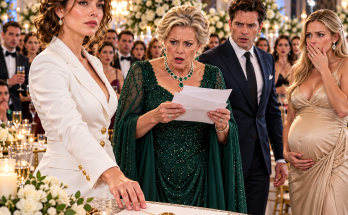
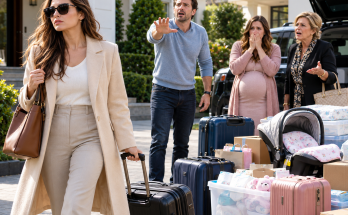
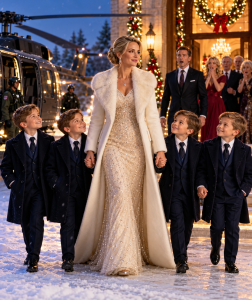
Eight years after my divorce, my ex-husband invited me to Christmas dinner at his family’s luxurious Colorado estate, expecting me to arrive alone, miserable, and jealous of the perfect life he believed he had built without me. He wanted me to meet his beautiful new fiancée, watch his wealthy family celebrate his success, and finally understand what I had supposedly lost when he walked away from our marriage. What he never imagined was that I would arrive in a military helicopter with four eight-year-old boys whose faces looked so much like his that the wineglass in his hand would nearly slip through his fingers.
Three weeks before Christmas, I was sitting at my kitchen table in Colorado Springs, reviewing medical reports for an upcoming emergency-response training program, when an email appeared on my laptop.
The sender’s name made my fingers stop moving.
Major Ethan Caldwell.
My ex-husband.
For several seconds, I simply stared at the screen. Eight years had passed since the last time I had heard his voice in person. Eight years since I had stood in a courthouse wearing a simple gray dress while he signed divorce papers without once looking me in the eyes. Eight years since he had accused me of inventing a pregnancy because I wanted to trap him in a marriage he no longer wanted.
Now, apparently, he wanted to have Christmas dinner with me.
I opened the message.
“Grace, my parents are hosting the annual Caldwell family Christmas dinner this year. Since we’ve both moved on, I thought it might be a good opportunity to put the past behind us. My fiancée, Natalie, will be there, along with the rest of the family. You’re welcome to join us. Ethan.”
I read it twice.
Then I laughed quietly.
It was the sort of invitation a person sent when they wanted to appear generous while secretly hoping someone else would feel small.
Ethan had always been good at that.
During our six-year marriage, he knew exactly how to make an insult sound like reasonable advice. He could criticize my ambitions while claiming he was protecting me. He could ignore my feelings while insisting he was trying to avoid unnecessary conflict. And when our marriage finally collapsed, he convinced his family that I was an emotionally unstable woman who refused to accept that his military career came first.
According to the Caldwell family, Ethan had escaped a difficult marriage and gone on to become a respected military officer.
According to the story he told everyone, I had been the problem.
His mother, Margaret, had once sent me a Christmas card with a handwritten note that said, “I hope you eventually find peace and learn to let go.”
I had kept that card for years.
Not because it hurt me anymore, but because it reminded me how easily people could believe a story when they only heard one side.
I closed Ethan’s email and returned to my work.
Then my eight-year-old son Lucas walked into the kitchen, carrying a broken toy helicopter.
“Mom, can you fix this?”
I looked at him and smiled.
“Let me see what happened.”
Lucas placed the toy on the table. His dark hair fell across his forehead, and his hazel eyes narrowed with the same thoughtful expression Ethan used whenever he studied a difficult problem.
Behind him came Henry, carrying a book about military aircraft. Jack followed with a half-eaten cookie, while Sam entered last, wearing mismatched socks and dragging a blanket behind him.
Four boys.
Four different personalities.
Four little lives that had grown into the center of my world.
Lucas was serious and protective. Henry asked so many questions that even experienced doctors sometimes struggled to keep up with him. Jack could make an entire room laugh without trying. Sam was the quietest, the one who noticed when someone was sad before anyone else did.
They were quadruplets, born eight years earlier after a pregnancy Ethan had refused to believe existed.
I had discovered I was pregnant shortly before our divorce became final. At first, I thought there was one baby. Then an ultrasound revealed two. The technician adjusted the machine, studied the screen, and called another specialist into the room.
That was when I learned there were four.
Four heartbeats.
Four tiny lives growing inside me.
I had cried so hard that the nurse brought me tissues and sat beside me until I could speak.
The first person I wanted to tell was Ethan.
I called him repeatedly.
He never answered.
When I finally sent him a message explaining what the doctor had discovered, his attorney responded instead.
Ethan denied responsibility for the pregnancy and maintained that my claims were part of our ongoing marital dispute.
I begged him to speak to my physician. I offered to send the ultrasound images. I even asked him to attend an appointment so he could hear everything directly from the medical team.
His response came through his lawyer.
He would not participate in what he considered emotional manipulation.
Those words changed something inside me.
I stopped calling.
I stopped explaining.
And I stopped believing that a person who refused to look at the truth would ever find it through my tears.
The boys arrived prematurely on a cold morning in December. They were small, fragile, and determined to survive. I spent weeks moving between hospital rooms, learning how to care for four newborns while trying to understand how I could possibly raise them alone.
There were nights when I slept in a chair beside their incubators. There were mornings when I cried in the hospital bathroom because I was exhausted and frightened. There were days when I wondered whether I had enough strength to become the mother they deserved.
But every time one of them wrapped a tiny hand around my finger, I found another reason to keep going.
I built my life one day at a time.
I returned to emergency medicine, then moved into a civilian medical program supporting military families and emergency-response teams. I trained with paramedics, coordinated disaster-readiness exercises, helped develop trauma-response procedures, and worked alongside people who understood that courage was rarely as glamorous as it looked in photographs.
Eventually, I became the director of a regional trauma-readiness program that coordinated with Army and National Guard medical units across Colorado.
My work was demanding, but I loved it.
I had a purpose.
I had my sons.
And I had finally learned that my worth did not depend on whether Ethan Caldwell believed I deserved happiness.
Still, the email sat in my inbox like an unanswered question.
That evening, after the boys had finished dinner, I called my closest friend, Dr. Olivia Bennett, who had stood beside me during the hardest years of my life.
She listened while I read Ethan’s invitation aloud.
When I finished, she was silent for a moment.
“Are you going?” she finally asked.
“I haven’t decided.”
“Grace, he spent eight years refusing to acknowledge his own children. What exactly does he think you need to put behind you?”
“I don’t know.”
“Yes, you do,” Olivia replied gently. “He wants to show you how well he turned out.”
I looked through the kitchen doorway at my sons. They were arguing over a board game, with Jack accusing Henry of cheating and Sam quietly moving the pieces back into their proper positions.
“Maybe,” I said.
“Then don’t go for him. If you go, go because you’re no longer afraid of the people who believed his version of your story.”
Her words stayed with me long after we ended the call.
The next morning, I opened Ethan’s email again.
I accepted the invitation.
His response arrived within minutes.
“Glad you can make it. Dinner begins at six. Please dress appropriately. It’s a formal family gathering.”
I almost smiled at the final sentence.
Ethan had always confused expensive clothing with dignity.
I replied with a simple message.
“Thank you. I’ll be there.”
I didn’t tell him about the boys.
I didn’t explain that I had spent eight years raising four sons while building a career that gave me a life I could never have imagined during our marriage.
I didn’t mention the medical teams who trusted me, the colleagues who respected me, or the military officers who had become close friends.
I simply accepted his invitation.
Three days later, my mother called.
She had heard from one of Ethan’s relatives that he was engaged to Natalie Harrison, a successful corporate attorney whose family owned several commercial properties in Denver.
“They say she’s perfect for him,” my mother said carefully.
“I’m happy for them.”
“Are you sure you want to go, sweetheart?”
I looked at the framed photograph on my desk. It showed my four boys standing in front of a rescue helicopter during a community emergency-services event the previous summer. They were wearing matching jackets and grinning at the camera, their faces bright with excitement.
“I think it’s time,” I answered.
“Time for what?”
“Time to stop letting the past decide which rooms I’m allowed to enter.”
On Christmas Eve, I prepared the boys for the trip.
I told them we were visiting a family they had never met, and that some people might have questions.
Lucas looked up from fastening his jacket.
“Are they going to be mean to you?”
The question caught me off guard.
“Why would you ask that?”
“Because sometimes people act nice when they don’t really like someone.”
I knelt in front of him.
“Listen to me. We don’t have to prove anything to anybody. We just have to be respectful, tell the truth, and stay together.”
Henry adjusted his tie.
“Is the person we’re visiting your old friend?”
I took a breath.
“No. He’s my father’s opposite in one important way.”
The boys exchanged puzzled glances.
I corrected myself with a small smile.
“He’s a man from my past. You’ll understand more when we get there.”
They accepted the answer, although Lucas continued studying my face as if he knew there was something I hadn’t said.
That night, after they went to bed, I stood beside the window and watched snow fall over Colorado Springs.
I remembered the young woman I had been eight years earlier. She had believed love meant fighting until the other person finally understood. She had believed that if she explained herself clearly enough, even the most stubborn heart would eventually soften.
I wished I could tell that woman something.
You cannot force someone to become the person you need.
But you can choose the person you become after they leave.
On Christmas morning, I received confirmation that our scheduled transportation had been approved. A military medical unit participating in our regional emergency-response partnership was conducting a planned winter operations exercise near the Caldwell estate. Because the estate’s adjoining field was part of the approved training area, a brief, coordinated landing had been arranged with the property owner and the local authorities.
My colleagues had offered us transportation to the estate as part of the exercise logistics.
I hadn’t requested a dramatic entrance.
But I knew Ethan would never forget it.
At five o’clock that afternoon, the boys and I boarded the helicopter.
The four of them pressed their faces toward the windows as the aircraft lifted above the snowy landscape.
“Mom!” Jack shouted over the headset. “The houses look like toys!”
Sam pointed toward the distant mountains.
“Look at all that snow!”
I smiled at them, but my heart beat faster as the Caldwell estate came into view.
The house was enormous, built from pale stone with tall windows, sweeping staircases, and a long drive lined with evergreen trees. Lights glittered across the grounds. A towering Christmas tree shone through the main windows, and expensive cars filled the circular driveway.
Through the glass, I could see silhouettes moving around a beautifully decorated dining room.
Ethan had invited me to watch his perfect life.
He had no idea that the four most important people in my life were about to walk into it.
The helicopter descended toward the designated field beside the estate.
Snow lifted into the air.
Several people near the entrance turned toward the sound.
The aircraft settled onto the ground.
The door opened.
I stepped out first, wearing a long ivory winter coat over a simple dark dress. I helped the boys descend one at a time, making sure each had his gloves and scarf.
Lucas took my left hand.
Henry stood beside him.
Jack and Sam followed close behind.
We began walking toward the house.
Through the front windows, I saw the dining room fall quiet.
A man in a dark suit stood beside the Christmas tree, holding a glass of red wine.
Ethan Caldwell.
He was taller than I remembered, with a little more gray at his temples, but he still carried himself like someone who expected the room to adjust to his presence.
He smiled when he recognized me.
Then his eyes moved to the boys.
Lucas looked up at me.
Henry glanced toward the doorway.
Jack whispered something to Sam.
And Ethan’s smile slowly disappeared.
His glass lowered.
The color drained from his face.
Because all four boys had his dark hair, his hazel eyes, and the unmistakable dimple that appeared on his left cheek whenever they smiled.
Ethan stared at them as if the past eight years had just walked across his front lawn.
His mother rose so quickly that her chair scraped against the floor.
Natalie turned toward him, confused.
“Ethan?” she whispered. “What’s wrong?”
He didn’t answer.
He was staring at the four boys.
And for the first time in eight years, Major Ethan Caldwell looked like a man who had absolutely no idea what to do next.
PART 2 — Four Boys, One Impossible Truth
The front door opened before I reached the steps.
Margaret Caldwell stood in the doorway, one hand pressed against her chest. Her silver hair was carefully styled, and her emerald-green dress looked as though it belonged in a holiday magazine. Behind her, Ethan’s father, Richard, stood motionless beside the staircase.
Neither of them spoke.
Their eyes moved from me to the boys, then back to me again.
“Grace,” Margaret finally whispered.
“Good evening, Margaret. Merry Christmas.”
She seemed unable to decide whether to welcome me or demand an explanation.
Then Lucas stepped forward.
“Hello, ma’am.”
Margaret looked down at him.
For one extraordinary second, her expression changed completely. The boy’s eyes were Ethan’s eyes. His smile was Ethan’s smile. Even the way he tilted his head reminded her of her son when he was eight years old.
“Oh, my goodness,” she breathed.
I gently touched Lucas’s shoulder.
“This is Lucas. And these are his brothers, Henry, Jack, and Sam.”
Ethan had finally reached the doorway.
He stood several feet away, staring at the children.
“How old are they?” he asked.
His voice sounded rough.
“Eight.”
He swallowed.
“All four?”
“Yes.”
He looked at me as if I had spoken in another language.
“You were pregnant?”
The question was so absurd that I almost laughed.
Instead, I held his gaze.
“I told you I was pregnant, Ethan. You said I was lying.”
His father stepped forward.
“Grace, perhaps we should go inside and discuss this privately.”
“Of course,” I replied. “The boys are cold.”
We entered the house.
The warmth of the foyer carried the scent of pine, cinnamon, and an enormous fire burning somewhere beyond the living room. A chandelier glittered above us, and a beautifully decorated staircase curved toward the upper floor.
It was the same house where I had spent countless holidays during my marriage.
The same place where Ethan’s relatives had once congratulated him on every promotion while asking me whether I planned to continue working after we had children.
The same dining room where his mother had once told me that military wives needed to learn how to be flexible.
Now, four boys stood beneath the chandelier, looking around with wide eyes.
Jack pointed toward the Christmas tree.
“Mom, that tree is bigger than our apartment.”
“Almost,” I said.
Sam noticed a bowl of wrapped chocolates on a side table and looked at me for permission.
I nodded.
He took one and thanked the housekeeper who had placed it there.
That small act of politeness seemed to unsettle Margaret more than anything else. She watched him carefully, as though she had expected the children of her son’s supposedly dishonest ex-wife to behave differently.
Natalie approached from the living room.
She was elegant, with shoulder-length blond hair and a dark red dress. Her diamond engagement ring caught the light as she extended her hand toward me.
“I’m Natalie. Ethan has told me a little about you.”
I shook her hand.
“It’s nice to meet you.”
She smiled politely, but her eyes moved toward the boys.
“And these are…?”
“My sons.”
All four boys introduced themselves.
Natalie’s expression remained composed, although I noticed her glance toward Ethan.
He was still standing near the doorway.
“Ethan,” she said softly, “perhaps you should sit down.”
“I don’t need to sit down.”
His answer came too quickly.
Richard cleared his throat.
“Let’s all move into the sitting room. Dinner can wait a few minutes.”
We settled into the large living room. The boys sat together on a sofa near the fireplace, while I took an armchair across from Ethan.
He hadn’t taken his eyes off me.
“Why didn’t you tell me?” he demanded.
I stared at him.
“I did.”
“No. You never told me there were four.”
“I sent you the ultrasound report.”
“I never received it.”
“You received the message. Your attorney responded.”
He turned toward his father.
“Dad, I swear to you, I never knew.”
Richard raised one hand.
“Ethan, we will discuss this calmly.”
But Ethan was no longer interested in calm.
He looked back at me.
“You should have found a way to contact me.”
“I called you. I emailed you. I asked you to speak to my doctor. You refused every opportunity.”
“You could have contacted my commanding officer.”
“And told him what? That my husband wouldn’t answer my calls? That you refused to believe I was carrying your children? I was trying to survive a high-risk pregnancy, Ethan. I wasn’t going to spend my days chasing a man who had already decided I was a liar.”
His face tightened.
“I was under enormous pressure at the time.”
“So was I.”
The room fell silent.
For the first time, Natalie looked genuinely uncomfortable.
Margaret sat down slowly, her fingers twisting around a folded napkin.
“Grace,” she said, “we were told the pregnancy was uncertain.”
I turned toward her.
“Who told you that?”
She looked at Ethan.
He said nothing.
“Your son told everyone I was making up a pregnancy,” I continued. “I was six months along when our divorce was finalized. I gave birth to four premature boys. I spent weeks in a hospital trying to keep them alive. And during that entire time, nobody from this family called to ask whether I was safe.”
Margaret’s eyes filled with tears.
“We thought you wanted nothing more to do with us.”
“I wanted my children to have a father who wanted them.”
That sentence landed harder than any accusation could have.
Henry had been listening carefully. He looked at Ethan, then at me.
“Mom,” he asked, “is that the man who didn’t believe you?”
The room became absolutely still.
I could have softened the truth. I could have told my son that adults made mistakes, that complicated things had happened, that there was no need to worry.
But I had promised my children that we would always tell the truth.
“Yes,” I said quietly. “He is.”
Ethan flinched.
Henry looked down at his hands.
Lucas moved closer to his brothers.
Jack, who usually had a joke ready for every uncomfortable moment, said nothing at all.
Sam watched Ethan with an expression I couldn’t quite understand.
Finally, Ethan sat down.
“How can I know they’re mine?”
The question struck the room like a dropped plate.
Natalie closed her eyes.
Richard looked furious.
Margaret whispered his name in disbelief.
I remained perfectly still.
“You can arrange a DNA test,” I said. “I have nothing to hide.”
Ethan rubbed his forehead.
“I didn’t mean—”
“Yes, you did. And I understand why you’re asking. We can establish the facts scientifically. But understand something: these boys aren’t evidence in a case you need to win. They’re children who deserved a father long before tonight.”
He looked at them again.
Lucas’s left cheek dimpled as he nervously bit his lip.
Ethan’s hand began to tremble.
“Why do they look so much like me?”
“Because they are your sons.”
Natalie stood abruptly.
“I need some air.”
She left the room before Ethan could respond.
A few seconds later, Richard rose and walked toward his study. Margaret remained in her chair, crying silently.
I felt no satisfaction watching them struggle with the truth.
If anything, I felt tired.
I had imagined this moment countless times during the early years of motherhood. Sometimes I had pictured Ethan begging forgiveness. Sometimes I had imagined him falling to his knees when he saw the children. Sometimes I had dreamed of proving every person who doubted me wrong.
But now that the moment had arrived, all I wanted was for my sons to feel safe.
“Mom,” Sam whispered, “can we go home?”
I reached for his hand.
“We can leave whenever you want.”
Ethan stood immediately.
“No. Please. Don’t go yet.”
His voice cracked on the final word.
I looked at him.
“Why should we stay?”
“Because they’re my sons.”
“They’ve been your sons for eight years.”
“I know.”
“No, Ethan. You know their ages. You know what they look like. You know that I told you the truth. But you don’t know them.”
He looked toward the sofa.
Lucas was watching him with cautious curiosity. Henry appeared angry. Jack was trying to comfort Sam, who had grown unusually quiet.
Ethan took one tentative step toward them.
“I’m Ethan,” he said.
Jack glanced at his brothers.
“We know.”
“I mean… I’m your father.”
Lucas frowned.
“Are you?”
The question was innocent.
It was also devastating.
Ethan opened his mouth, but no words came out.
I watched a man who had spent his entire career learning how to respond under pressure discover that there was no training manual for the consequences of his own choices.
Richard returned from the study carrying a folder.
He placed it on the coffee table.
“Before anyone makes another accusation, I believe there is something we need to understand.”
Ethan turned toward him.
“What is that?”
Richard opened the folder and removed several sheets of paper.
“These are copies of correspondence from the year you and Grace divorced.”
I recognized the letterhead immediately.
It belonged to the Caldwell family law firm.
Richard continued reading.
“Your mother and I were informed that Grace was pregnant. We asked you to reconsider the divorce until the situation was resolved.”
Ethan’s face tightened.
“I remember.”
“You told us she had fabricated the pregnancy.”
“I believed she had.”
Richard looked down at the papers.
“Then why did you instruct your attorney to refuse all further communication concerning the pregnancy?”
Ethan froze.
I stared at the folder.
Richard removed another document.
“This letter was sent to our attorney shortly before the divorce was finalized. It states that you wanted all communication from Grace regarding the pregnancy to be directed through your legal representative, and that no further personal response was necessary.”
Ethan stared at the page.
“I was trying to protect myself.”
“From what?” Richard demanded. “From the possibility that your wife was telling the truth?”
Ethan said nothing.
Richard placed the document on the table.
“I respected your decision at the time because I believed you had information I didn’t. But now I have four grandchildren sitting in my living room, and I need to understand why my son spent eight years refusing to ask a single question.”
The silence became unbearable.
Then Natalie returned.
Her face was pale, but her voice was steady.
“Ethan, can I speak to you privately?”
He looked at her.
“Not now.”
“Yes, now.”
She glanced at me, then at the boys.
“I need to know whether the man I’m supposed to marry has been lying to me about something this important.”
Ethan looked as though the floor had shifted beneath him.
“Natalie, I didn’t know about the children.”
“Maybe you didn’t know about the children. But did you tell me the truth about your marriage?”
He stared at her.
She took a slow breath.
“You told me your ex-wife refused to accept the divorce. You told me she had used the possibility of a pregnancy to pressure you into staying. You told me she eventually disappeared from your life because she couldn’t handle your success.”
My stomach tightened.
Natalie continued.
“You never said you had received messages from her. You never said your lawyer had been involved. You certainly never said you had refused to speak to a doctor.”
Ethan looked at the floor.
“I didn’t think it mattered anymore.”
Natalie’s eyes filled with tears.
“You invited her here because you wanted to prove something, didn’t you?”
He didn’t answer.
She removed her engagement ring and placed it on the coffee table.
The small sound it made against the wood seemed louder than the helicopter had been.
“I need time to think,” she said.
Then she walked away.
Ethan didn’t follow her.
For several minutes, nobody moved.
Finally, Margaret approached the boys.
“Would you like some hot chocolate?” she asked softly. “We have marshmallows.”
Jack looked at me.
I nodded.
“Thank you,” he told her.
The housekeeper led the boys toward the kitchen.
When they were gone, Ethan turned to me.
“Grace, I need you to tell me everything.”
I looked at him for a long moment.
“No,” I said. “You need to learn how to ask your sons what they want to tell you. You need to accept that they may not trust you. And you need to understand that forgiveness is not something you can demand because you finally discovered the truth.”
He lowered his head.
For the first time since I had known him, he looked older than his years.
“I was wrong,” he whispered.
“Yes,” I replied. “You were.”
Then Richard opened the folder again.
“There is one more thing,” he said.
He removed a document I had never seen before.
It was a letter addressed to Ethan, dated nearly eight years earlier.
The signature at the bottom belonged to a woman I remembered very well.
Ethan’s mother.
Margaret stared at it, her face suddenly pale.
Richard looked at his wife.
“Margaret, did you know this letter existed?”
She didn’t answer.
And when Ethan read the first two sentences, his expression changed so dramatically that I knew the story of our divorce had just become far more complicated than anyone in that room had imagined.
PART 3 — The Letter That Exposed Eight Years of Lies
Ethan held the letter with both hands.
For several seconds, he didn’t read it aloud. His eyes moved across the page, then returned to the beginning as if he couldn’t believe what he was seeing.
“Mom,” he whispered. “What is this?”
Margaret stood beside the fireplace.
She looked suddenly smaller, as though the elegant room and expensive decorations could no longer protect her from what was coming.
“Ethan, I can explain.”
Richard’s voice hardened.
“Then explain.”
Ethan began reading.
“Ethan, I have spoken with Grace. She has shown me the medical confirmation of her pregnancy, and I believe she is telling the truth. You need to contact her immediately. Whatever has happened between you, this concerns your children.”
He stopped.
His eyes moved to the signature.
Margaret Caldwell.
The letter continued.
“If you continue to ignore this situation, you may one day regret allowing pride to make this decision for you. I have encouraged Grace to give you time, but she cannot be expected to wait forever.”
Ethan lowered the page.
“You knew?”
Margaret began to cry.
“I knew she was pregnant.”
“You knew?”
“I didn’t know there were four babies. She didn’t know that yet herself when I spoke to her. But I knew she wasn’t lying.”
Ethan stared at his mother as if she had become a stranger.
“Why didn’t you tell me?”
“I did tell you.”
“No, you didn’t!”
“I called you. You were away on assignment. You told me you didn’t want to discuss Grace anymore, and you said you had already made your decision.”
Ethan shook his head.
“You could have insisted.”
“I should have,” she whispered. “I should have done much more.”
Richard took the letter from Ethan.
“Why was this never sent?”
Margaret looked at me.
“I sent a copy to your former attorney, Grace. I believed he would make sure Ethan received it.”
I felt my stomach tighten.
“My attorney?”
“Your divorce attorney.”
For the first time that evening, I felt something other than sadness.
I felt the old anger return—not the desperate anger of a woman trying to save her marriage, but the cold, focused anger of someone discovering that important decisions had been made behind her back.
“I never received this letter,” I said.
Margaret nodded, tears running down her face.
“I know that now.”
Ethan turned toward me.
“Did your attorney ever tell you my mother had contacted him?”
“No.”
I looked at the document.
“Who kept this?”
Margaret hesitated.
Richard answered for her.
“I found it in a box of family correspondence last week. I was sorting through old records before Christmas. I recognized the date and asked your mother about it.”
“Why didn’t you tell me?” Ethan demanded.
“Because your mother asked me to wait until she had spoken with you.”
Margaret covered her face.
“I thought I could fix it before it became something the whole family had to face. I thought Ethan would eventually contact Grace himself.”
“But you knew he wasn’t contacting her,” Richard said.
“I know.”
“And you let us believe she had disappeared because she was bitter.”
Margaret began sobbing.
“I was afraid of losing my son. I was afraid of what would happen to his career. I was afraid that if he admitted he had been wrong, he would have to change the life he had planned.”
Ethan looked at her with disbelief.
“So you helped me ignore my own children?”
“I thought I was protecting you.”
“No,” Richard said quietly. “You were protecting the version of your son you wanted everyone to see.”
The words settled over the room.
I had spent eight years believing Ethan’s refusal to acknowledge the pregnancy had been the central wound of my life.
Now I understood that there had been more people involved in maintaining the lie than I had ever imagined.
But I also understood something else.
None of these revelations changed what my children had experienced.
They had grown up without a father.
No letter could give them back the nights when they asked why other children had fathers at school events. No apology could erase the first Father’s Day when Lucas made a card and then quietly put it away because he didn’t know whom to give it to.
I had answered their questions as honestly as I could without poisoning their hearts against the man who had abandoned us.
I had told them that sometimes adults made decisions they later regretted.
I had never told them that their father was evil.
I had simply refused to teach them that love meant accepting mistreatment.
Ethan sat down heavily.
“I don’t know how to fix this.”
I looked at him.
“You can’t fix eight years in one evening.”
“Then tell me what to do.”
“Start by telling the truth. All of it. To your family, to Natalie, and to yourself. Then accept that your sons get to decide whether they want you in their lives.”
He nodded slowly.
For a moment, I thought he might finally understand.
Then the four boys returned from the kitchen.
Jack was carrying a mug of hot chocolate with both hands. Henry followed him, while Sam held a small plate of cookies. Lucas walked beside Margaret, who appeared to have spent the last few minutes trying to compose herself.
Ethan stood.
“Boys, can I talk to you?”
Lucas looked at me.
I nodded.
“You can listen if you want,” I told them. “And you can say no if you don’t feel comfortable.”
Ethan crouched in front of them.
It was the first time that evening he had made himself physically smaller than the people he was addressing.
“My name is Ethan Caldwell,” he began. “And I’m your biological father.”
Henry’s jaw tightened.
“Why weren’t you there when we were babies?”
Ethan swallowed.
“Because I made a terrible mistake.”
“What mistake?” Henry asked.
“I didn’t believe your mother when she told me she was pregnant.”
Jack stared at him.
“But Mom tells the truth.”
“I know.”
“Then why didn’t you believe her?”
Ethan’s eyes filled with tears.
“Because I was selfish. I was angry, and I cared more about being right than finding out the truth.”
Lucas studied him carefully.
“Did you ever look for us?”
Ethan’s face crumpled.
“No.”
The answer was quiet.
It was also the first honest thing he had given them.
Sam stepped closer to his brothers.
“Did you know our names?”
“No.”
“Did you know when we were born?”
“No.”
“Did you know we were four?”
Ethan closed his eyes.
“No.”
Sam looked down at his shoes.
“Mom knew everything about us.”
Ethan couldn’t speak.
I watched him absorb the simple truth of that sentence.
I had known which son preferred his toast lightly browned and which one couldn’t sleep without a night-light. I knew Henry’s favorite book, Jack’s habit of hiding birthday presents before the party, Lucas’s fear of disappointing people, and Sam’s tendency to become quiet when he was overwhelmed.
I knew which medicines each boy could take, which foods caused stomachaches, which teachers they trusted, and which songs helped them fall asleep during thunderstorms.
I knew the exact sound of each child’s cry when he was a baby.
I knew all of it because I had been there.
Ethan had missed every part of their lives.
Not because he had been unable to reach us.
Because he had chosen not to try.
He looked at the boys.
“I know I can’t become your father just because I walked into this room tonight. But if you ever want to know me, I would like the chance to earn your trust.”
Lucas folded his arms.
“Do we have to call you Dad?”
“No,” Ethan answered immediately. “You can call me Ethan if that’s what feels right.”
“Do we have to come here again?”
“No.”
“Do we have to forgive you?”
Ethan’s eyes filled with tears.
“No. You don’t owe me forgiveness.”
For the first time that evening, I felt a small measure of relief.
He wasn’t demanding that the boys comfort him.
He wasn’t asking them to erase the consequences of his decisions.
He was finally acknowledging that their feelings mattered.
Henry looked at his brothers.
Then he turned back to Ethan.
“Maybe we could talk again sometime. But Mom has to be there.”
Ethan nodded.
“Absolutely.”
“And you can’t tell us things that aren’t true.”
“I won’t.”
“And if you say you’re coming somewhere, you have to come.”
Ethan’s face tightened at the weight of that promise.
“I understand.”
Lucas looked at him for another moment.
“Okay. Maybe sometime.”
It wasn’t forgiveness.
It wasn’t reconciliation.
It was a small opening in a door that had remained closed for eight years.
And that was more than Ethan deserved to demand.
Later that evening, Natalie found me near the front entrance while the boys were putting on their coats.
“I owe you an apology,” she said.
I looked at her in surprise.
“For what?”
“For believing a story without asking whether it was true. I knew Ethan had a difficult divorce, but I never considered that there might be another side.”
“You believed the person you loved.”
“I believed him because it was easier than asking difficult questions.”
She glanced toward the living room.
“I don’t know what will happen with our engagement. But I know I can’t marry someone while pretending this doesn’t matter.”
I nodded.
“Whatever you decide, make sure it’s your decision. Not his family’s. Not mine.”
She managed a sad smile.
“Thank you.”
When I turned back toward the boys, Margaret approached me.
“Grace, I know I have no right to ask this, but would you ever consider letting the boys visit us?”
I looked at her for a long moment.
“Perhaps. But not because you feel guilty, and not because Ethan wants to make things right before the new year. If there is going to be a relationship, it has to be built slowly, with the boys’ needs first.”
“I understand.”
“And you need to understand something else. They are not a second chance for you to pretend the past never happened.”
Margaret lowered her head.
“I know.”
I wasn’t sure she did.
But for the first time, she seemed willing to listen.
At the door, Ethan stood waiting.
He had removed his wineglass from the table. His engagement ring announcement had disappeared from the family’s holiday decorations, and Natalie was speaking quietly with her parents near the staircase.
He looked at me.
“Grace, I’m sorry.”
I held his gaze.
“I believe you are sorry tonight.”
He nodded.
“But being sorry tonight isn’t the same as being a father tomorrow.”
“I know.”
“You will need to prove that you can be consistent. You will need to respect my boundaries. And you will need to understand that the boys’ lives do not revolve around your regret.”
“I understand.”
“Then we will see what happens.”
I helped Sam adjust his scarf.
Jack asked whether we could have hot chocolate at home. Henry wanted to know whether the helicopter crew had already finished their training exercise. Lucas took my hand.
As we stepped outside, snow fell softly across the estate.
Behind us, the front door remained open.
I could see Ethan standing beneath the chandelier, watching his four sons leave with their mother.
He looked as though he wanted to follow us.
But he stayed where he was.
For once, he understood that the next step belonged to someone else.
The helicopter had already departed with the medical team, so we left in the vehicle arranged by our colleagues. The boys sat together in the back, quieter than usual.
After several minutes, Jack spoke.
“Mom?”
“Yes?”
“Are we going to see Ethan again?”
“Only if you want to.”
He thought about it.
“Maybe.”
Henry leaned his head against the window.
“I don’t like that he didn’t believe you.”
“Neither do I,” I said honestly.
“But I think he knows he was wrong.”
“I think he does, too.”
Sam reached for my hand.
“I’m glad we have you.”
I squeezed his fingers.
“I’m glad I have all four of you.”
Lucas watched the snow moving through the headlights.
“Mom, were you scared when you went there?”
I smiled faintly.
“Yes.”
“Then how did you do it?”
I looked at my four sons.
“Being brave doesn’t mean you aren’t scared. It means you don’t let fear make every decision for you.”
He considered that for a moment.
Then he leaned against my shoulder.
When we arrived home, the boys changed into their pajamas and gathered around the Christmas tree. We opened the presents we had saved for the evening, ate cookies, and watched the snow fall beyond the window.
For the first time all day, the house felt completely peaceful.
My phone buzzed shortly before midnight.
A message from Ethan.
“I know I cannot undo what I did. I will respect whatever boundaries you set, and I will not pressure the boys. If they ever agree to see me again, I will show up. I understand that I have to earn their trust. I’m sorry, Grace.”
I read it once.
Then I placed the phone on the table.
I didn’t reply that night.
There was no need to make promises about a future none of us could predict.
Eight years earlier, I had believed that the most important thing in my life was convincing Ethan to believe me.
Now I knew better.
The most important thing was that my children had grown up knowing they were loved, even when someone who should have loved them had failed them.
They had a home.
They had security.
They had a mother who would stand beside them no matter how difficult the world became.
And they had learned that a person’s worth was never determined by the number of people who recognized it.
In the weeks that followed, Ethan began the slow work of rebuilding what he had destroyed. He arranged a DNA test, which confirmed what I had known since the day the ultrasound technician counted four tiny heartbeats. He sent the boys letters, never demanding a response. When they eventually agreed to meet him for lunch, he arrived early and stayed until they were ready to leave.
Some days went well.
Others were uncomfortable.
There were questions he couldn’t answer without admitting how deeply he had failed them. There were moments when one of the boys became angry, and Ethan had to learn not to defend himself.
He also began individual counseling to understand why he had allowed pride and fear to shape his decisions. Margaret apologized to the boys and slowly began earning their trust, too. Natalie ended the engagement, deciding that the relationship she thought she was entering was not the relationship she had actually been offered.
None of those changes erased the past.
But they created the possibility of a different future.
Months later, on a bright spring afternoon, I stood beside a field near Colorado Springs while the boys watched a medical helicopter land during a community emergency-services demonstration.
Ethan was there, standing a short distance away.
He had asked permission to attend, and the boys had agreed.
When the demonstration ended, Lucas ran toward him to show him a model aircraft he had built at school. Henry followed, already asking technical questions. Jack challenged Ethan to a race across the grass, and Sam approached more slowly, carrying a drawing he wanted to share.
Ethan looked at me across the field.
There was no grand declaration.
No dramatic apology.
Just a quiet expression of gratitude that I had allowed him to take one small step toward the children he had once refused to acknowledge.
I gave him a brief nod.
Not because everything was forgiven.
Because the boys were happy, and their happiness mattered more than my need to punish him for the past.
That evening, after everyone had gone home, I opened the drawer where I kept a few reminders of my old life.
At the bottom lay the divorce papers.
I looked at them for a moment before placing them back inside.
Once, those papers had represented the end of everything I thought I wanted.
Now they reminded me of the day I stopped begging someone else to recognize my value.
Ethan had invited me to Christmas dinner because he wanted me to witness the life he believed was better without me.
Instead, he discovered that I had built a life filled with love, purpose, and four remarkable boys who knew exactly who had been there for them.
I hadn’t arrived to destroy his happiness.
I hadn’t come to humiliate him.
I had simply walked into the room with the truth.
And sometimes, the truth is the most powerful thing a person can bring to Christmas dinner.
Because the greatest victory isn’t watching someone regret losing you. It’s reaching the point where their regret no longer determines your happiness.