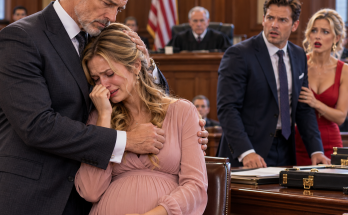
My Family Spent 15 Years Believing My Sister Was Supporting Me—Until I Sold My Farm for $39 Million and Discovered Where My Parents’ Money Had Really Gone
Part 1: The Daughter Everyone Thought Was Broke
Three days after selling my farm for $39 million, I stood outside my parents’ kitchen with two bags of groceries in my hands and heard my sister explaining why I still needed their money.
Then my father asked a question that made my blood run cold.
“If we’ve been sending Fay money every month for fifteen years, why is she still struggling?”
My sister answered without hesitation.
“Because she never learned how to manage money, Dad.”
I stood perfectly still.
There was only one problem with their conversation.
I had never received a single dollar from my parents.
My name is Fay Bennett, and I was thirty-seven years old when I discovered that my family had spent fifteen years discussing a financial struggle I had never experienced.
I grew up in a small farming community where people measured success by the condition of your land, the reliability of your equipment, and whether you could survive a bad season without asking your neighbors for help.
My father believed a person’s character could be judged by their work boots.
My mother believed family should always come first.
My older sister, Ranata, believed appearances mattered more than anything else.
And somehow, despite being raised under the same roof, we grew into three very different people.
Ranata always knew how to make herself look successful.
She bought expensive clothes, drove new vehicles, and posted photographs of vacations that seemed to last forever.
Whenever something went wrong, she knew exactly which relative to call.
I was the opposite.
At twenty-two, I bought eighty acres of neglected farmland with a small inheritance from my grandmother and a loan that took nearly every dollar I earned to repay.
The property had an aging farmhouse, a collapsing barn, rusty equipment, and more weeds than crops.
Most people thought I was making a terrible mistake.
My father was particularly unimpressed.
“You could have bought a house in town,” he told me.
“A house wouldn’t grow anything,” I replied.
He shook his head.
“You’ll understand when you’re older.”
I didn’t argue.
I spent the next fifteen years proving to myself that the land was worth saving.
I repaired fences in freezing rain, worked through summer heat that made the tractor seat burn, and learned how to maintain equipment because hiring someone else would have swallowed my profits.
I packed lunches instead of buying them.
I patched my work clothes instead of replacing them.
And I kept driving the same old pickup long after its paint had faded and its odometer passed two hundred thousand miles.
People saw those things and assumed I was poor.
I never bothered correcting them.
What they didn’t see was the property slowly becoming profitable.
I expanded the farm’s operations, invested carefully, and saved enough to purchase neighboring parcels when their owners retired.
Eventually, I owned more than two hundred acres.
I also owned the farmhouse outright.
But my family never seemed interested in asking how I was actually doing.
At gatherings, my father would glance at my truck and sigh.
“Still haven’t bought yourself something decent?”
“It gets me where I need to go,” I would answer.
Ranata would smile over her wineglass.
“Fay has always been stubborn.”
Everyone would laugh as if she had delivered a clever joke.
I would return to my dinner and let the conversation move on.
I thought their assumptions were harmless.
I was wrong.
Everything changed two years earlier when a development company began purchasing land in our county.
A major logistics and manufacturing complex was planned nearby, and my property happened to occupy a location the company desperately needed.
At first, I assumed their offer was a mistake.
Then their representatives returned with an even larger number.
Negotiations continued for months.
Attorneys reviewed the contracts, surveyors examined the property, and financial advisers explained the consequences of selling.
I told almost nobody.
I didn’t want congratulations before the deal was finished, and I certainly didn’t want distant relatives suddenly remembering my phone number.
Three days before I arrived at my parents’ house with those groceries, the sale finally closed.
The final purchase price was $39 million.
I remember sitting alone in my truck outside the farmhouse, staring at the confirmation on my phone.
For fifteen years, I had measured my life in acres, harvests, repair bills, and early mornings.
Now I was looking at a number so large that it barely felt connected to the person I had been the day before.
I didn’t buy a mansion.
I didn’t order a luxury car.
I didn’t tell my family.
I went home, put the closing documents in a brown folder, and made myself a simple dinner.
The next morning, I woke up early out of habit.
Some things don’t change just because your bank balance does.
On Saturday afternoon, my mother sent me a message.
Fay, could you pick up a few things for us? We’re running low on milk, bread, coffee, and that cinnamon creamer you always find.
I didn’t mind.
I had planned to visit anyway.
I bought everything on her list, added a pie from the bakery she liked, and drove to my childhood home.
It was a little after four when I pulled into the driveway.
Ranata’s expensive SUV was parked beside my father’s sedan.
I carried the bags toward the porch.
The curtains were closed, which was unusual for a sunny afternoon.
I was about to knock when I heard my sister speaking inside.
“She won’t admit how bad things are,” Ranata said.
My footsteps stopped.
Then I heard my name.
“Fay is too proud to ask for help.”
My mother murmured something I couldn’t make out.
Ranata continued.
“That’s why I’ve been handling everything for her.”
I tightened my grip on the grocery bags.
Handling what?
I had never asked Ranata to manage my money.
I had never asked her to pay my bills.
In fact, we had barely spoken outside family gatherings during the previous year.
Then my father asked a question that made me forget about the groceries entirely.
“How much did you send her this month?”
Ranata answered immediately.
“Three thousand, just like usual.”
My heart began pounding.
Three thousand dollars?
I had never received it.
My mother sounded worried.
“Are you sure that’s enough?”
“Mom, I’m doing everything I can,” Ranata replied.
“Fay’s farm has so many expenses, and she refuses to admit she can’t handle them.”
I stared at the front door.
For fifteen years, I had paid my own bills, repaired my own equipment, and built my business without financial help from anyone.
Yet my family apparently believed my sister was keeping me afloat.
Then my father asked the question that changed everything.
“How much does she owe us altogether?”
There was a pause.
Ranata sighed dramatically.
“More than we can reasonably expect her to repay.”
My hands began trembling.
My father had never lent me money.
My mother had never paid one of my farm bills.
I had never borrowed a cent from either of them.
So why were they discussing a debt I didn’t owe?
My phone vibrated in my pocket.
It was a message from my attorney confirming that the final property-transfer documents had been filed.
I glanced at the screen, then back at the door.
Inside, my sister was portraying me as a helpless woman who depended on her generosity.
Outside, I stood with the confirmation of a $39 million sale sitting in my pocket.
But suddenly, the money wasn’t what mattered most.
I needed to know where my parents’ money had gone.
I quietly carried the groceries back to my truck.
I didn’t knock.
I drove home, placed the grocery receipt beside my closing documents, and opened my laptop.
Then I began searching through fifteen years of financial records.
What I discovered made my stomach turn.
And when my mother called that evening and asked me to come back immediately, I finally understood that the secret inside my parents’ house was much bigger than my sister’s lies.
Part 2: The Money That Never Reached Me
At 7:16 that evening, my mother’s name appeared on my phone.
I let it ring twice before answering.
“Fay, sweetheart, can you come over?”
Her voice sounded unusually fragile.
“Why?”
A pause followed.
“Your father needs to talk to you.”
“About what?”
Another pause.
“Ranata has made a terrible mistake.”
I looked at the papers spread across my kitchen table.
“Is she there?”
“Yes.”
“Then I’ll be there in twenty minutes.”
I hung up before my mother could say anything else.
For the first time in years, I wasn’t going to my parents’ house hoping for their approval.
I was going there expecting answers.
When I arrived, every light was on.
My father’s car was still in the driveway, and Ranata’s SUV sat beneath the porch light.
I carried the brown folder inside.
Nobody greeted me.
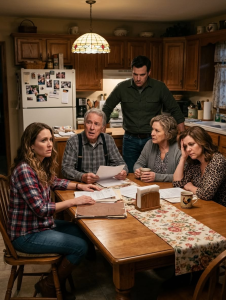
My father sat at the kitchen table with a stack of documents in front of him.
My mother sat beside him, holding a cup of coffee she hadn’t touched.
Ranata was across from them, staring at her hands.
Her husband, Desmond, stood near the sink.
He looked as though he wanted to be somewhere else.
My father pointed toward an empty chair.
“Sit down, Fay.”
I sat.
He pushed a sheet of paper toward me.
“Did your sister ever give you money from us?”
“No.”
“Not once?”
“Not once.”
My mother covered her mouth.
My father closed his eyes for a moment, as though he had been hoping I would give him a different answer.
Then he slid another document across the table.
It contained a list of transfers made from my parents’ joint savings account.
Each payment had a date, an amount, and a short description.
Farm equipment.
Emergency repairs.
Property taxes.
Temporary living expenses for Fay.
I read the entries slowly.
The payments went back fifteen years.
Some were small.
Others were several thousand dollars.
One entry showed a transfer of $18,500 for what was described as an urgent farm-equipment replacement.
I had purchased that equipment myself using a loan from a local agricultural lender.
Another entry listed $12,000 for property taxes.
I had never missed a property-tax payment.
I looked at my father.
“Who created these descriptions?”
“Your sister,” he said quietly.
Ranata lifted her head.
“I was trying to help you.”
“Help me with what?”
“Your farm.”
“My farm has never received money from you.”
“You don’t understand how much work I put into keeping this family together.”
I almost laughed.
“You’ve visited my farm twice in fifteen years.”
Her face tightened.
My father raised his hand.
“Enough.”
He turned another page toward me.
At the bottom was a total.
$486,700.
For several seconds, nobody spoke.
Nearly half a million dollars had disappeared from my parents’ savings under the claim that they were supporting me.
I looked at the number again.
Then I looked at Ranata.
“Where did the money go?”
She began crying.
It was a familiar performance.
Whenever she was caught doing something wrong, tears usually appeared before explanations.
“I was going to pay it back.”
“Pay what back?”
“The money.”
“You told Mom and Dad that you sent it to me.”
“I needed time.”
“For fifteen years?”
She pressed a tissue against her eyes.
“You’ve always been the lucky one, Fay.”
I stared at her.
“Lucky?”
“You got the land. You got to build your own business. Everyone admires you for being independent.”
I could hardly believe what I was hearing.
“You think spending fifteen years repairing fences and working eighteen-hour days was luck?”
“You always had something to work toward,” she snapped.
“I had responsibilities, too.”
“Then why didn’t you tell us you were struggling?” my mother asked me.
I turned toward her.
“Because I wasn’t struggling in the way Ranata described.”
My father rubbed his forehead.
“Your sister told us you were too embarrassed to speak to us.”
“I wasn’t embarrassed.”
“She said you would refuse our help if we contacted you directly.”
“I never knew you were offering any.”
My mother’s eyes filled with tears.
“Ranata said you asked her to be the middle person because you didn’t want us worrying.”
I shook my head.
“Mom, I didn’t ask her to do anything.”
For the first time that evening, Desmond stepped away from the sink.
“That’s not the whole story,” he said.
Ranata turned toward him sharply.
“Don’t.”
He ignored her.
“Your parents didn’t just send her money.”
He looked at my father.
“Ranata told us she was investing the money in Fay’s farm and that Fay had agreed to repay it after selling some land.”
My father stared at him.
“What are you talking about?”
Desmond swallowed.
“She told me Fay was planning to sell part of the property and had promised her a share of the proceeds.”
I felt the room tilt.
“Part of my property?”
Ranata said nothing.
Desmond continued.
“She said the agreement was private because Fay didn’t want the rest of the family involved.”
My father slowly turned toward my sister.
“Did you tell Desmond that?”
Ranata looked down.
“Dad, I can explain.”
“Then explain.”
She started talking rapidly.
She claimed she had invested the money in a business opportunity that had failed.
She said she had used some of it to cover household expenses.
She insisted she had intended to replace everything before our parents noticed.
But none of her explanations accounted for the amount.
My father asked for bank statements.
Ranata refused to look at him.
My mother began crying quietly.
Then Desmond reached into his jacket and pulled out his phone.
“There is something else,” he said.
He placed it on the table and opened a message thread.
The first message was from Ranata.
It read:
Fay will sell the farm eventually. When she does, we’ll finally have enough to start over.
The next message was even worse.
Mom and Dad believe everything I tell them. They won’t question it as long as they think they’re helping her.
My father pushed his chair backward so abruptly that it scraped against the floor.
“Ranata!”
She began sobbing.
“I didn’t mean for it to go this far.”
“Then why did you keep taking the money?” I asked.
She looked at me with a mixture of anger and desperation.
“Because you never needed it!”
The words landed harder than a confession.
I leaned forward.
“So you stole from our parents because you thought I was doing well?”
“I didn’t steal!”
“You told them you were sending me money.”
“I was going to fix it.”
“You let them believe I was irresponsible, helpless, and drowning in debt while you took nearly half a million dollars from them.”
She looked away.
My father stood up.
“Give us the accounts.”
Ranata shook her head.
“What?”
“Every account connected to this money. Every statement. Every record.”
“Dad, please.”
“No more lies.”
For the first time in my life, I saw my sister without the polished smile, the expensive clothes, or the confidence she carried into every family gathering.
She looked frightened.
But I wasn’t satisfied.
Because the documents on the table showed that the money had disappeared over fifteen years.
And Desmond’s messages suggested something else.
Ranata had expected my farm to be sold eventually.
She had expected to receive part of the proceeds.
I slowly opened my brown folder.
My father looked at it.
“What is that?”
I removed the final closing statement and placed it beside the transfer records.
“Something you should see before we discuss anything else.”
He looked down.
His eyes moved across the page.
Then he stopped.
He read the purchase price once.
Then again.
Finally, he looked at me.
“Fay, what is this?”
I took a breath.
“I sold the farm three days ago.”
My mother stared at me.
“For how much?”
I turned the document toward them.
“Thirty-nine million dollars.”
Nobody moved.
Ranata’s crying stopped.
Desmond’s mouth fell open.
My father sat down slowly, as though his legs had suddenly weakened.
My mother whispered my name.
And my sister stared at the closing statement with an expression I had never seen on her face before.
It wasn’t anger.
It wasn’t embarrassment.
It was calculation.
Then she asked the question that revealed what she had really been thinking all along.
“Fay, how much of that money are you going to give me?”
Part 3: The Answer That Changed Our Family Forever
For a moment, I thought I had misunderstood her.
After everything we had just discovered, my sister was asking for my money.
Not whether I was all right.
Not whether I was angry.
Not even whether I intended to report what she had done.
She wanted to know how much she would receive.
I closed the folder.
“Nothing.”
Her expression hardened.
“You can’t be serious.”
“I’ve never been more serious in my life.”
“But we’re family!”
I looked at the transfer records scattered across the table.
“You remembered that when you needed our parents’ money, didn’t you?”
She stood up so quickly that her chair fell backward.
“You have thirty-nine million dollars, Fay!”
“And you took nearly half a million dollars from Mom and Dad.”
“I didn’t take it from you!”
“No,” I said quietly. “You took it from the two people who trusted you.”
My mother began crying harder.
My father remained motionless, staring at the documents.
For years, I had imagined what it might feel like to become successful enough that my family would finally take me seriously.
I had imagined showing them the farm’s accounts, the business records, and the property values.
I had imagined my father admitting that perhaps I had known what I was doing all along.
But standing in that kitchen, I realized I didn’t want their admiration anymore.
I wanted the truth.
My father finally spoke.
“How did we let this happen?”
I looked at him.
“Because nobody asked me.”
He flinched.
I continued before I could lose my nerve.
“You heard Ranata’s version of my life and accepted it because it was easier than asking me about my own business.”
My mother shook her head.
“We thought we were helping you.”
“I know.”
My voice softened.
“And I appreciate that you wanted to help me, even though I never knew about it.”
I paused.
“But you never asked whether I needed anything.”
My father looked down.
“You’re right.”
Those two words surprised me more than the $39 million ever had.
My father had spent most of my life believing that admitting a mistake made a person weak.
Now he sat at his own kitchen table, surrounded by evidence that his trust had been abused, and finally acknowledged that he had failed to question what he was being told.
It didn’t undo the damage.
But it was the first honest thing I had heard from him that evening.
Desmond asked Ranata to explain the missing money one more time.
This time, she admitted that some of it had gone toward credit-card debt, luxury purchases, and expenses she had hidden from her husband.
She still insisted she had intended to repay everything.
My father didn’t argue with her.
He simply told her that he would no longer give her access to his finances.
My mother asked whether there was any way to recover the money.
I told them I would help them organize the records and consult an independent attorney.
I also made one thing clear.
“I won’t use my money to pretend this never happened.”
Ranata looked at me bitterly.
“You’ve always wanted to make me look bad.”
I shook my head.
“You managed that yourself.”
She grabbed her handbag and walked toward the door.
Desmond stayed behind.
Before leaving, he apologized to my parents for not questioning the story sooner.
Then he followed his wife outside.
The kitchen became quiet.
For the first time that evening, there was nobody left to blame except the people who had actually made the decisions.
My mother reached across the table and took my hand.
“Why didn’t you tell us about the sale?”
I looked toward the window.
Beyond the glass, the old backyard stretched toward the fence where my father had taught me to ride a bicycle.
“I wanted to finish it first,” I said.
“And I didn’t want money to change how people treated me.”
My father gave a sad, humorless laugh.
“I suppose you got your answer.”
I thought about the porch.
The grocery bags.
My sister explaining that I was too proud to admit I needed help.
“Yes,” I said. “I did.”
Over the following weeks, I helped my parents gather their financial records and find a lawyer who could advise them independently.
They made their own decisions about how to proceed.
I didn’t demand that they cut Ranata out of their lives.
I didn’t tell them whom they could forgive.
That was their choice.
But I did establish boundaries of my own.
I stopped accepting explanations that contradicted the facts.
I stopped pretending hurtful behavior was harmless simply because it came from family.
And I stopped allowing my sister to turn every conversation into a competition.
The money from the farm sale eventually settled into a carefully structured financial plan.
I set aside funds for taxes, invested conservatively, and began looking for a smaller property where I could build something new.
I bought a modest house outside town with enough land for a garden, a workshop, and a few animals.
I also replaced my old pickup.
Not because I needed to prove anything.
Because after fifteen years of repairing a vehicle that had carried me through every season, I decided I deserved one that started reliably on cold mornings.
My parents visited my new home that autumn.
My mother brought cinnamon creamer.
My father brought a toolbox he had owned for decades.
We sat on the porch and talked about ordinary things.
For once, nobody mentioned Ranata’s achievements.
Nobody compared our lives.
Nobody asked how much money I had.
Before leaving, my father stood beside my truck.
“I should have asked you how you were doing,” he said.
I nodded.
“Yes, you should have.”
He looked as though he wanted me to make the moment easier for him.
I didn’t.
Some apologies need to sit with the truth before they can become anything meaningful.
But I hugged him before he left.
Not because everything was forgiven.
Because I wanted to leave room for something better.
As for Ranata, she eventually sent me a long message explaining that she had made mistakes because she felt trapped by expectations she could no longer afford.
She said she had always envied my independence.
She said she hated feeling as though I had succeeded without needing anyone.
I read the message twice.
Then I replied with one sentence.
“You never had to compete with me, Ranata, but you chose to make my life a lie so yours would look better.”
I didn’t block her.
I didn’t argue.
I simply stopped participating in the competition she had invented.
Months later, I drove past the old farm one final time.
The new owners had begun preparing the land for their project.
The fences were gone, and survey markers stood where my vegetable garden had once been.
I felt a small ache in my chest.
That property had carried me through fifteen years of hard work, loneliness, mistakes, and growth.
Selling it had changed my financial future.
But the greatest change had begun on my parents’ porch, when I discovered that the people closest to me had been living inside a story that wasn’t true.
For years, I thought I needed to become successful enough to prove my worth.
I thought the right house, the right business, or the right bank balance might finally earn me the respect I had always wanted.
I was wrong.
The $39 million didn’t make me valuable.
It simply made it impossible for my family to keep pretending they knew my life better than I did.
And the most important lesson I learned had nothing to do with money.
Sometimes, the greatest betrayal isn’t that someone takes what belongs to you.
It’s that they convince everyone you love that you’re too weak to build anything of your own.
I spent fifteen years building a farm.
It took one afternoon on a porch to teach me how carefully I needed to protect the life I had built.
And if I could go back and tell my younger self one thing, it would be this:
Never confuse being quiet with being powerless.
Sometimes, the person everyone underestimates is the only person in the room who knows the truth.