PART 1 — THE NIGHT I LEFT
I was fifteen when I learned that sometimes the people who are supposed to protect you are the first people to decide you deserve what happened to you.
My brother, Ethan, was nineteen.
Everyone in our family knew he had a temper, but my parents always found a reason to excuse it.
“He’s stressed.”
“He didn’t mean it.”
“You know how to push his buttons.”
That night, I had locked my bedroom door because Ethan had been going through my things.
He wanted my laptop.
I told him no.
A few minutes later, I heard his footsteps coming down the hallway.
Then—
BANG.
The door shook.
“Open it!” he screamed.
I froze.
Another kick.
The wooden frame cracked.
I ran toward the phone in the hallway, but Ethan caught me before I could reach it.
What happened next lasted less than a minute.
But the pain stayed with me for years.
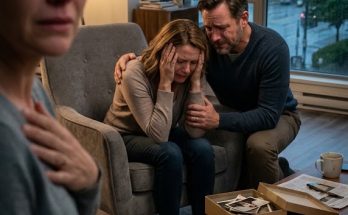
When I finally stumbled into the living room, my mother was standing there.
My father was behind her.
Neither of them rushed to help me.
My mother looked at the injury and whispered, “What did you do to make him this angry?”
I stared at her.
I was fifteen.
I was bleeding.
And somehow, I was the problem.
My father sighed.
“You know how Ethan gets. You should have just given him the laptop.”
Something inside me went completely quiet.
That night, while everyone slept, I packed a sweatshirt, two pairs of jeans, a toothbrush, and the forty-seven dollars I had saved from babysitting.
I left a note on the kitchen table.
I won’t let you blame me anymore.
Then I walked out.
I never went back.
For the next thirteen years, I built a life my family knew nothing about.
I changed my phone number.
I moved twice.
I worked, studied, and eventually became a medical records supervisor at a hospital.
I had a small apartment.
A quiet life.
No screaming.
No slammed doors.
No one telling me that someone else’s violence was somehow my fault.
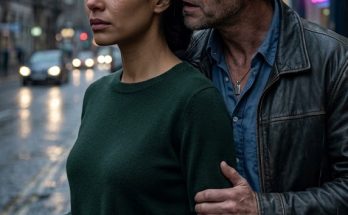
Then, one rainy Thursday evening, I came home and found two people waiting beside my apartment building.
My parents.
My father looked older.
My mother looked frightened.
I almost walked past them.
Then my mother said something that made me stop.
“It’s Ethan.”
My entire body went cold.
“What about him?”
She looked at my father.
He swallowed hard.
“Your brother is in trouble.”
I folded my arms.
“That isn’t my problem.”
“No,” my father said quietly.
“It isn’t.”
Then my mother stepped closer.
“But we need you to lie for him.”
I stared at her.
And for the first time in thirteen years, I realized they hadn’t come because they missed me.
They had come because they were afraid.
PART 2 — THE SECRET THEY WOULDN’T NAME
I refused to invite them inside.
My father kept looking over his shoulder as if someone might be watching us.
Finally, he whispered, “Ethan was with a woman named Rachel Monroe.”
I didn’t recognize the name.
“What happened?”
My mother began crying.
But she wouldn’t answer.
I looked directly at my father.
“What happened?”
He rubbed his forehead.
“Rachel disappeared three nights ago.”
My stomach tightened.
“Is Ethan a suspect?”
Neither of them spoke.
That silence told me everything.
My father finally said, “The police found some of her belongings in Ethan’s car.”
I took a step back.
“And you want me to give him an alibi?”
“He says he wasn’t there,” my mother said quickly.
“Then he can tell the police where he was.”
“He can’t.”
“Why?”
My father looked at the ground.
“Because there are things about that night we don’t understand.”
I almost laughed.
After thirteen years, they had finally come back into my life—and they wanted me to protect the same person they had protected while I was a frightened fifteen-year-old girl.
“No.”
My mother grabbed my hand.
“Mara, please.”
I pulled away.
“You didn’t say please when I was fifteen.”
She froze.
“You didn’t ask if I was okay.”
My voice began shaking.
“You didn’t take me to a doctor. You didn’t call anyone. You stood there and told me I caused it.”
My father looked ashamed.
But then he said something that made my blood run cold.
“If Ethan goes to prison, our family is finished.”
I stared at him.
“Our family ended thirteen years ago.”
I walked inside and locked the door.
That night, I barely slept.
Around 2:00 a.m., I heard footsteps outside my apartment.
I looked through the peephole.
Nobody.
Then my phone buzzed.
Unknown number.
STOP TALKING TO THE POLICE.
I stared at the message.
I hadn’t talked to the police.
Not yet.
Then another message appeared.
YOU DON’T KNOW WHAT YOUR BROTHER DID.
My hands began trembling.
The next morning, I called the police myself.
I told them everything my parents had told me.
I told them about the messages.
And I told them something else.
Something I had never told anyone.
The night I left home, I had taken one thing from my brother’s room.
A small black notebook.
I had found it underneath his mattress.
At the time, I didn’t understand what the names and dates inside meant.
But I had kept it.
For thirteen years.
That afternoon, I opened the notebook again.
And one name appeared again and again.
Rachel Monroe.
But there were twelve other names too.
And beside each name was a date.
The oldest date was from the year I was fifteen.
I stared at the page until my hands went numb.
Then someone knocked on my door.
PART 3 — THE TWO DETECTIVES
I didn’t open the door immediately.
The knock came again.
“Ms. Bell? Police department.”
I looked through the peephole.
Two detectives stood in the hallway.
One was a woman in her forties.
The other was a tall man holding a folder.
I unlocked the door but kept the chain on.
The detective held up her badge.
“We need to ask you about Ethan Whitmore.”
My heart pounded.
“You already know about him?”
“We know quite a lot.”
She looked at me carefully.
“May we come inside?”
I let them in.
The male detective placed a photograph on my kitchen table.
It was Rachel.
Then he placed another photograph beside it.
A different woman.
Then another.
And another.
I recognized the faces from the notebook.
My mouth went dry.
“These women all disappeared over the last thirteen years,” the detective said.
I couldn’t speak.
She continued.
“We believe someone may have been tracking them.”
My eyes moved toward the black notebook.
The detective noticed it immediately.
“Where did you get that?”
“My brother’s room.”
“When?”
“The night I left home.”
The two detectives exchanged a look.
Then the woman asked the question that changed everything.
“Did your brother ever know you had it?”
I shook my head.
“No.”
She slowly exhaled.
“Then you may have been carrying evidence for thirteen years without knowing what it meant.”
I opened the notebook to the first page.
There were names.
Dates.
Addresses.
And beside some of them, a strange symbol.
The detective leaned closer.
“What’s that?”
“I don’t know.”
She studied it for several seconds.
Then her expression changed.
“That isn’t a symbol.”
“What is it?”
“It’s a storage-unit number.”
My heart stopped.
The address beside it was one I knew.
It was an abandoned storage facility only three miles from my childhood home.
The detective immediately stood.
“We need to go there.”
I looked at her.
“What are you going to find?”
She didn’t answer.
Instead, she asked me to come with them.
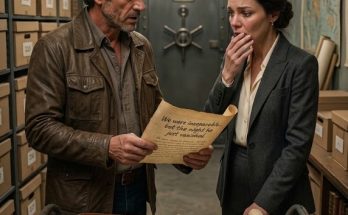
When we arrived, they opened the unit listed in the notebook.
Inside was a battered wooden box.
The detective opened it carefully.
There were photographs.
Old phones.
Receipts.
And dozens of handwritten notes.
But the last item made me stop breathing.
It was a photograph of me.
Taken the summer I was fifteen.
On the back, someone had written:
SHE SAW TOO MUCH.
I stared at the photograph.
My brother hadn’t simply been angry that night.
He had been hiding something.
And suddenly I understood why my parents had spent thirteen years pretending I was the problem.
They hadn’t been protecting Ethan from me.
They had been protecting me from what I was never supposed to discover.