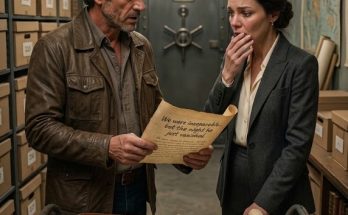
PART 1 — THE GIRL WHO WAS BLAMED
I was sixteen when I learned that sometimes the people who are supposed to protect you can become the reason you have to save yourself.
My sister, Nora, was twenty-one.
Everyone adored her.
She was beautiful, charming, and somehow always managed to turn every disaster into someone else’s fault.
Especially mine.
The night I left home, my parents found my father’s antique watch smashed on the kitchen floor.
Nora stood beside it crying.
“She did it,” she whispered.
I stared at her.
“What?”
Nora pointed at me.
“Lena broke it because Dad wouldn’t give her money.”
My father’s face changed immediately.
I tried to explain that I had been upstairs studying.
My mother slapped her hand against the counter.
“Stop lying.”
“I didn’t break anything!”
Then Nora quietly added something that made my stomach drop.
“She threatened me earlier.”
It was a lie.
But my parents believed her.
My father grabbed my backpack and threw it toward the front door.
“You’ve always been jealous of your sister.”
I was sixteen.
I had nowhere to go.
I stood outside in the rain with a backpack containing two shirts, a school notebook, and twenty-three dollars.
My mother never came after me.
Not once.
I spent the next fifteen years building a life they knew nothing about.
I changed my last name.
I finished school.
I became an emergency-room administrator in Indianapolis.
I bought a small house with a blue front door and planted roses along the walkway.
For the first time, I slept without listening for footsteps outside my bedroom.
Then, one Tuesday evening, someone knocked on my door.
When I opened it, my parents were standing there.
My father looked twenty years older.
My mother was crying.
I almost shut the door.
“Please,” my father said.
I froze.
He had never said that word to me before.
My mother reached into her purse and pulled out an envelope.
“We need your help.”
I looked at the envelope.
“Where’s Nora?”
My parents exchanged a frightened glance.
“She disappeared.”
I felt something inside me go cold.
“How long?”
“Six days.”
My father stepped closer.
“The police are looking for her.”
“Then call the police.”
My mother grabbed my wrist.
“They can’t know what happened.”
I pulled away.
“What happened?”
Neither of them answered.
Then my father whispered:
“Nora left something at our house.”
“What?”
“A photograph.”
He looked toward the street before continuing.
“And whoever is looking for her wants that photograph back.”
I stared at him.
“Who?”
My mother’s voice trembled.
“We don’t know.”
Then she said something that made my heart stop.
“Your sister said if anything happened to her, we were supposed to come to you.”
I didn’t understand.
“Why me?”
My father slowly opened the envelope.
Inside was a photograph of Nora standing beside a teenage girl.
The girl had her back turned to the camera.
But I recognized the jacket she was wearing.
It was mine.
The same jacket I had been wearing the night I left home.
PART 2 — THE PHOTOGRAPH
I didn’t sleep that night.
I kept staring at the photograph on my kitchen table.
Nora was standing beside someone who looked like me.
Same height.
Same dark hair.
Same jacket.
But there was one problem.
The photograph had been taken three years after I supposedly left home.
I called my father.
“Where did you get this?”
He didn’t answer.
“Dad.”
Finally, he said, “Nora gave it to your mother.”
“Why?”
“She said you would understand.”
“I don’t understand anything.”
There was silence.
Then my father whispered:
“Because the girl in that photograph isn’t you.”
I sat down.
“What?”
My father told me something I had spent fifteen years believing was impossible.
The night I left home, Nora hadn’t been telling the truth about the broken watch.
She had been hiding something.
A secret involving a woman named Claire Bennett.
Claire had worked for my father’s company.
She had discovered that someone was secretly transferring money from several business accounts.
Then Claire disappeared.
My father said Nora had been questioned about it.
But before the police could charge anyone, Claire suddenly reappeared and withdrew her accusations.
A week later, Nora left town.
My parents thought the matter was over.
Until six days ago.
Nora returned home unexpectedly.
She told them someone had been following her.
Then she gave my mother the photograph.
“She told us,” my father said, “that the girl beside her was connected to Claire.”
I stared at the picture again.
“Why does she look like me?”
“I don’t know.”
A knock sounded at my front door.
I froze.
It was nearly midnight.
Another knock.
Then a man’s voice.
“Ms. Bell? Police.”
I didn’t move.
The voice came again.
“We need to speak with you about Nora Whitmore.”
My hands became cold.
I opened the door.
Two detectives stood outside.
One was a woman in her forties.
The other held a file against his chest.
“Are you Lena Bell?”
“Yes.”
The detective opened the file.
“We’ve been trying to locate you.”
“Why?”
She pulled out a second photograph.
It showed Nora standing outside an abandoned warehouse.
Beside her was the same mysterious girl.
But this time, the girl’s face was visible.
I stared at it.
My breath caught.
Because I knew her.
Not personally.
But I had seen her before.
In the photograph my parents had shown me, she looked like me.
In this one, she was older.
And standing beside Nora was a man I recognized from my childhood.
My father’s closest business partner.
The detective watched my face carefully.
“You know him?”
I swallowed.
“He used to come to our house.”
The detective nodded.
“He disappeared fifteen years ago.”
I looked at the photograph again.
“Why are you showing me this?”
The detective closed the file.
“Because we found Nora’s car yesterday.”
“Where?”
“At an old property your family owned.”
My stomach tightened.
“What property?”
The detective looked directly at me.
“The house where you lived before you ran away.”
Then she added:
“We found something buried beneath the floorboards.”
PART 3 — THE SECRET THEY HID
I returned to my childhood home with the detectives the next morning.
The house looked smaller than I remembered.
The white curtains were still hanging in my mother’s bedroom.
The same cracked flowerpot sat beside the back door.
But the hallway where I had once been blamed for everything felt completely different now.
The detectives led me into the basement.
There was a section of flooring that had recently been disturbed.
A technician lifted several boards.
Underneath was a metal box.
My father had hidden it there.
Inside were bank records, photographs, letters, and a small cassette recorder.
The detective pressed PLAY.
Static filled the room.
Then Nora’s voice came through.
“I know what you did.”
My father’s face appeared in the doorway.
He had followed us.
“Nora was supposed to destroy that recording,” he whispered.
I turned toward him.
“What did you do?”
He couldn’t answer.
The detective stopped the recording.
Then she looked at me.
“We’ve known for years that Claire Bennett didn’t disappear voluntarily.”
I stared at the floor.
My father finally confessed.
Years ago, Claire discovered the financial fraud inside his company.
He asked Nora to convince her to stay quiet.
Nora refused.
Instead, she secretly recorded conversations and began collecting evidence.
Then everything went wrong.
Claire disappeared.
My father’s business partner fled.
And Nora became terrified that she would be blamed.
So she created a story.
She convinced my parents that I had broken the watch.
She made them believe I was jealous of her.
She knew they would believe her.
Because she needed everyone focused on me while she hid the evidence.
My father looked at me.
“I thought you would come back.”
I stared at him.
“You let me leave.”
He lowered his head.
“I was afraid.”
I shook my head.
“No. You were protecting Nora.”
He didn’t deny it.
Then the detective placed one final photograph on the table.
It showed Nora and Claire standing together.
Alive.
Together.
And behind them was the warehouse.
The detective said, “We found Claire yesterday.”
I couldn’t speak.
“She survived,” the detective continued. “She’s been living under another name for years.”
I covered my mouth.
“What about Nora?”
The detective’s expression changed.
“She contacted Claire two days ago.”
“Why?”
“She wanted to confess.”
I stared at her.
“Where is she?”
The detective didn’t answer immediately.
“She turned herself in this morning.”
For fifteen years, I had believed my sister was the person who destroyed my childhood.
But the truth was more complicated.
She had lied about me.
My parents had abandoned me.
And yet Nora had also spent fifteen years protecting evidence that eventually helped expose what our father had done.
Before I left the house, my mother came running after me.
“Lena.”
I stopped.
She was crying.
“I should have believed you.”
I looked at her for a long moment.
“You should have.”
She reached for my hand.
I stepped back.
Not because I hated her.
Because forgiveness was not something she could demand from the girl she had abandoned.
I walked out through the same front door where I had stood at sixteen with twenty-three dollars and a backpack.
This time, I wasn’t running away.
I was leaving because I finally understood something.
Sometimes the greatest secret in a family isn’t what happened behind closed doors.
It’s how many people saw the truth—and chose to protect the wrong person.