PART 1 — “THIS IS MY HOUSE”
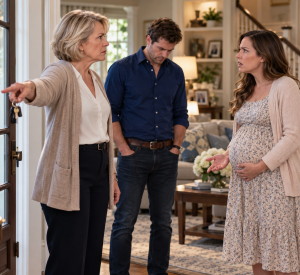
I was pouring my first cup of coffee when I heard my daughter-in-law tell my son I needed to move out.
“David, I need peace and quiet for myself and the baby.”
I froze.
Then Harper said the words I’ll never forget:
“Your mother has to leave.”
I walked into the living room.
David was staring at the floor.
Harper had one hand resting on her pregnant belly.
I looked at both of them.
“Honey,” I said calmly, “this is my house.”
Harper’s expression hardened.
“I know that, Georgia.”
“Do you?”
She took a breath.
“I’m pregnant. I need a peaceful environment.”
“So do I.”
David finally spoke.
“Mom, we’re not saying you have to leave forever.”
I looked at him.
“You’re saying I have to leave the house my father and I paid off thirty years ago.”
He didn’t answer.
That was answer enough.
My husband had worked for decades to pay for this house.
We raised David here.
We celebrated birthdays here.
We survived difficult years here.
After my husband died, this house became more than property.
It was the last place that still felt like ours.
Six months earlier, I had welcomed David and Harper into it because they wanted to save money before their baby arrived.
I thought I was helping my son.
Instead, little by little, they began behaving as though I was the guest.
First it was the television.
Then the kitchen.
Then the groceries.
Then my cooking.
Harper wanted organic everything.
Special coffee.
Expensive snacks.
Specific brands.
I didn’t complain.
She was pregnant.
I kept telling myself:
Be patient.
Then came the bigger requests.
“Could you keep the house quieter?”
“Could you avoid having people over?”
“Could you move your things out of the upstairs room?”
I agreed to most of it.
Until that morning.
“You want me to move out?” I asked.
Harper nodded.
“It would be better for the baby.”
I looked at David.
“And you agree?”
He stared at the floor.
I nodded slowly.
“Fine.”
Harper looked relieved.
Then I added:
“But if I move out, everything else changes too.”
She frowned.
“What does that mean?”
“It means I’m no longer responsible for a household I don’t live in.”
David finally looked up.
“Mom…”
I raised my hand.
“No, David. You wanted independence.”
I smiled calmly.
“You’re about to get it.”
That afternoon, I sat in my study.
I opened my bank account.
The first thing I canceled was the premium television package.
Then the upgraded internet.
Then David’s car insurance.
Then several automatic grocery deliveries.
I wasn’t being cruel.
I was simply removing my name from expenses that belonged to adults who had just informed me I wasn’t welcome in my own home.
When Harper came home, she immediately noticed.
“The Wi-Fi is slow.”
“I changed the plan.”
“The television isn’t working.”
“I canceled the premium channels.”
She stared at me.
“Why?”
“Because I don’t need them.”
“But I do.”
“Then you can arrange them.”
She looked at David.
He looked uncomfortable.
Then I said:
“There’s something else.”
I placed a folder on the table.
“The upstairs bedroom you’re planning to use for the baby?”
Harper smiled.
“Yes.”
I nodded.
“You’ll need to make other plans.”
Her smile disappeared.
“Why?”
“Because that room belongs to someone else.”
“Who?”
I looked at David.
He suddenly looked nervous.
Then I said:
“Your father left that room to me in the will—and he left something else that neither of you has ever seen.”
Harper’s face went pale.
Because there was one thing she didn’t know.
My husband had anticipated exactly this situation.
And three days later, she was going to discover what he had hidden in that room.
PART 2 — “YOU CAN’T TAKE THAT ROOM”
The next morning, Harper confronted me.
“You’re being unreasonable.”
I was sitting at the kitchen table reading the newspaper.
“I don’t think so.”
“The baby needs a nursery.”
“I agree.”
“So why can’t we use the upstairs room?”
“Because it isn’t available.”
She folded her arms.
“You said we could use it.”
“I said you could stay here temporarily.”
“What’s the difference?”
“The difference is that temporary doesn’t mean permanent.”
David walked into the kitchen.
“Mom, can we please not do this?”
I looked at him.
“I’m not doing anything.”
Harper turned toward him.
“Tell her.”
David sighed.
“Mom, we need that room.”
I stood.
“No.”
He stared at me.
“You’re really doing this?”
“I am.”
“Why?”
“Because I finally understand something.”
“What?”
“You don’t want to live with your mother.”
He looked confused.
“You want to live in my house.”
Silence.
Harper’s face reddened.
“This is ridiculous.”
“No,” I said quietly.
“What is ridiculous is asking the woman who owns the house to move out so you can take over.”
She stormed upstairs.
A few minutes later, I heard drawers opening.
Then boxes moving.
Then Harper shouting:
“David!”
He ran upstairs.
I followed.
Harper was standing in the spare bedroom.
She had opened the old wooden cabinet in the corner.
Inside were boxes my husband had stored before he died.
She pointed at them.
“What is all this?”
“Your father’s things,” I said.
“I thought this room was empty.”
“It wasn’t.”
She opened another box.
Inside were old photographs.
Tax documents.
Letters.
And a sealed envelope with my name on it.
David picked it up.
“Mom?”
I took it from him.
My husband’s handwriting was on the front.
I hadn’t seen it in years.
My hands started trembling.
Harper watched me.
“What does it say?”
I opened it.
It was a letter.
My husband had written it shortly before his death.
The first part was personal.
He talked about David.
About me.
About the future.
Then I reached a paragraph that made me stop.
“If David ever brings someone into this house who makes you feel like you don’t belong, remember that this house was purchased for you, not for anyone who might eventually demand it from you.”
I looked at my son.
He couldn’t meet my eyes.
The letter continued.
My husband had established a legal trust connected to the property.
If I ever wanted to sell the house, the proceeds belonged entirely to me.
If I wanted to keep it, nobody else could claim residency simply because they were family.
And there was one final instruction.
“Never allow guilt to make you surrender what I worked my whole life to protect for you.”
I folded the letter.
Harper stared at me.
“So?”
I looked at her.
“So you aren’t being kicked out.”
She looked relieved.
Then I continued:
“But you’re not taking over my home either.”
David stepped forward.
“Mom…”
I looked at him.
“You can stay until you find your own place.”
Harper immediately interrupted.
“We can’t afford that.”
I nodded.
“I know.”
She frowned.
“Then what are we supposed to do?”
I smiled sadly.
“Become adults.”
Nobody spoke.
Then David asked:
“Are you really going to make us leave?”
I looked at him.
“No.”
He seemed surprised.
“You’re going to leave.”
He stared at me.
“There’s a difference.”
That evening, they started searching for apartments.
For the first time in six months, I ate dinner at my own table without asking whether the smell bothered anyone.
The next morning, something unexpected happened.
A lawyer called.
He had been my husband’s attorney.
He said there was one final document that needed to be delivered.
“Your husband instructed me to give it to you only if the property ever became a point of conflict.”
I asked:
“What document?”
He paused.
“The original deed.”
Then he added:
“And there’s something attached to it you may want to see.”
PART 3 — “YOUR FATHER PLANNED FOR THIS”
The lawyer arrived that afternoon.
He placed a thick folder on my dining table.
Inside was the original deed to the house.
My name was clearly listed.
But there was another document.
A handwritten note from my husband.
I read it slowly.
He explained that when David was young, he had worried about what would happen after he died.
He knew I would always put our son first.
He also knew that someday, David might make choices that forced me to choose between being his mother and protecting myself.
So my husband had created a simple rule.
The house was mine.
No matter who lived there.
No matter who needed it.
No matter who pressured me.
I looked at the lawyer.
“Did he really expect this?”
He smiled sadly.
“He knew you.”
That sentence broke me.
Because my husband had understood something I hadn’t.
I had spent my entire life confusing love with sacrifice.
If David needed something, I gave it.
If he struggled, I helped.
If he made a mistake, I covered it.
But my husband knew there would eventually be a point when helping our son meant hurting myself.
And he wanted to protect me from that day.
That evening, David came downstairs.
“Mom?”
“Yes?”
“Can we talk?”
I nodded.
He sat across from me.
Harper wasn’t with him.
“I owe you an apology.”
I didn’t say anything.
He looked down.
“We got comfortable.”
“You did.”
“I stopped thinking of this as your house.”
I nodded.
“And I let Harper believe it was ours.”
I looked at him.
“Why?”
He rubbed his hands together.
“Because I was scared.”
“Of what?”
“Being a father.”
That surprised me.
He admitted he felt overwhelmed by the pregnancy.
The expenses.
The responsibility.
The thought of buying a home.
And instead of facing those problems, he had slowly allowed Harper to convince him that my house was the solution.
“So you decided I was the problem.”
He shook his head.
“No.”
“But you let her say it.”
“I know.”
I looked at my son.
“You didn’t protect me.”
He started crying.
“I know.”
I reached across the table.
“I love you.”
He looked up.
“But loving you doesn’t mean giving you everything.”
He nodded.
“I understand now.”
A few weeks later, David and Harper moved into a small apartment.
It wasn’t luxurious.
It wasn’t perfect.
But it was theirs.
I stayed in my house.
The upstairs bedroom remained exactly as it had been.
I didn’t turn it into a nursery.
I didn’t rent it out.
I simply kept it.
One Sunday morning, David brought the baby over.
I held my grandson for the first time.
He was tiny.
Warm.
Perfect.
Harper stood quietly beside us.
Then she said:
“Georgia?”
I looked at her.
“I’m sorry.”
I smiled.
“Thank you.”
She looked around the house.
“I understand now.”
“Understand what?”
“That this isn’t just a house.”
I nodded.
“It never was.”
It was the place my husband and I built.
The place where we raised our son.
The place where I survived losing him.
And now, the place where my grandchildren could visit without their mother having to own it.
David smiled.
“Mom?”
“Yes?”
“Can we come for dinner next Sunday?”
I laughed.
“Of course.”
He hesitated.
“Can we bring our own groceries?”
I smiled.
“Please do.”
And for the first time in months, everyone laughed.
I didn’t lose my son.
I didn’t lose my home.
And I didn’t have to choose between being generous and protecting myself.
I finally learned the lesson my husband had tried to leave me years before:
A home can be shared.
Love can be given freely.
But neither should ever require you to surrender your dignity.