My Family Called Me a Disgrace and Changed the Locks While I Was Overseas—Then a Judge Revealed Who Really Owned My Father’s $12 Million Estate
Part 1: The Daughter They Tried to Erase
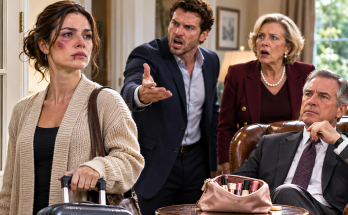
When I returned home after eleven months overseas, my mother was standing on the front steps of the mansion where I had grown up.
She wasn’t crying because she had missed me.
She was crying because I had discovered what my family had done.
“Don’t make this harder than it needs to be, Natalie,” she said, refusing to meet my eyes. “Your father has made his decision. You are no longer welcome here.”
Behind her stood my older brother, Marcus, wearing my father’s expensive watch and holding a folder thick with documents.
He smiled when he saw my suitcase.
“Welcome home, little sister,” he said. “Unfortunately, there’s nothing here for you anymore.”
I stared at the new locks on the front door.
The brass nameplate beside the entrance still carried our family name, Whitmore. The rose bushes my grandmother had planted were still blooming. Even the old oak tree where my father had taught me to ride a bicycle stood in the garden.
But suddenly, I was being treated like a stranger.
“What happened?” I asked. “I called Dad three times last week. He never told me I was being thrown out.”
Marcus shrugged.
“Maybe he finally realized that a daughter who abandons her family doesn’t deserve a place in it.”
I had spent the previous eleven months working overseas as a civil engineer on a major infrastructure project. I had left after my father suffered a stroke and doctors assured us that he was recovering. Before I departed, I had arranged for his medical expenses to be covered and signed several documents allowing Marcus to handle routine household matters.
I had trusted my brother.
That was my first mistake.
My second mistake was believing my family would remember everything I had done for them.
I had paid the mortgage when my father’s business struggled. I had covered my younger sister’s university tuition. I had even sold my apartment to help settle a debt that threatened to take the family mansion.
Yet Marcus stood in front of me as if I had never contributed a single dollar.
“Where is Dad?” I asked.
“Resting,” my mother replied quickly.
“I want to see him.”
“He doesn’t want to see you.”
Those words hurt more than the cold rain beginning to fall around us.
I looked at my mother, searching for some sign that she didn’t believe what she was saying.
Instead, she held out a small cardboard box.
“Your belongings,” she said.
Inside were a few old photographs, my grandmother’s silver bracelet, and a stack of unopened letters addressed to me.
One envelope had my father’s handwriting on it.
I reached for it.
Marcus snatched it away.
“That isn’t yours.”
“It’s addressed to me.”
“It’s old family business.”
I looked directly at him.
“Then why are you afraid of me reading it?”
For the first time, his smile disappeared.
My mother stepped between us.
“Please, Natalie. Just go. Your brother has been handling everything while you’ve been away. Don’t destroy what little peace we have left.”
I took the box and walked toward my car.
I had no idea where I would sleep that night. I had returned expecting to hug my father, eat dinner at the familiar dining table, and tell my family stories about the places I had visited.
Instead, I was leaving with a box of belongings and the suspicion that something terrible had happened while I was away.
At a nearby hotel, I opened the letters.
Most were birthday cards and old bills. But at the bottom of the box, I found a letter dated three weeks before my grandmother died.
It began:
“My dearest Natalie, if your brother has convinced your parents to turn against you, do not fight him with anger. Find the blue folder in my solicitor’s office. Your father knows what I decided, and Marcus knows why he must never let you see this letter.”
I read it twice.
My grandmother, Margaret Whitmore, had been the one person in our family who always defended me. Before she died, she had often told me that money could reveal a person’s character more clearly than years of conversation.
I had assumed she was talking about strangers.
Now I wondered whether she had been warning me about my own brother.
The next morning, I called the solicitor named in the letter.
His receptionist told me that he was available to meet that afternoon.
When I arrived, an elderly attorney named Mr. Bennett greeted me with a grave expression.
“I was wondering when you would come,” he said.
He placed a blue folder on his desk.
“Your grandmother left very specific instructions. She anticipated that your family might attempt to exclude you from the estate.”
My heart began to pound.
“What estate?”
He opened the folder and turned the first page toward me.
It contained a list of properties, investment accounts, and business interests worth approximately twelve million dollars.
At the bottom was a document bearing my grandmother’s signature.
The beneficiary’s name was mine.
I stared at it, unable to speak.
Then Mr. Bennett added something that changed everything.
“Your grandmother’s will was never replaced. Your brother has been presenting documents that appear to transfer control of the estate to him. But there is a serious problem with those documents.”
“What problem?”
Mr. Bennett looked me in the eyes.
“Your father never had the authority to give him what he claims to own.”
And suddenly, I understood why Marcus had been so desperate to keep me away.
He hadn’t simply changed the locks on my childhood home.
He might have been trying to steal an entire inheritance.
Part 2: The Blue Folder That Terrified My Brother
Mr. Bennett spent the next hour explaining my grandmother’s estate.
She had built her fortune through a small chain of hotels and commercial properties. My father had managed parts of the business for years, but my grandmother had never transferred ownership of the entire estate to him.
Instead, she had placed the principal assets in a legal trust.
The trust named me as its primary beneficiary, with independent trustees responsible for managing the properties until I reached the age specified in the original documents.
I was thirty-two.
That condition had been satisfied years earlier.
“Why didn’t anyone tell me?” I asked.
“Your grandmother wanted the arrangement kept private until the estate was ready to be transferred,” Mr. Bennett explained. “She feared that certain relatives might pressure you to sell the properties before you understood their value.”
I thought of Marcus.
He had spent years complaining that our grandmother favored me. He often said I was her favorite because I was quiet, responsible, and willing to listen.
I had always dismissed his jealousy as childish.
Now it looked much more dangerous.
Mr. Bennett showed me copies of the trust documents, the original will, and a series of financial statements. Several recent transfers appeared to have been made without proper authorization.
The documents required investigation. Some signatures looked inconsistent, but the attorney warned me that no conclusion could be drawn until qualified experts reviewed them.
He recommended that I avoid confronting Marcus alone.
For the first time since returning home, I felt something other than humiliation.
I felt prepared.
I contacted my own lawyer and requested a formal review of the estate. We sent notices to the relevant banks and property managers asking them to preserve records and verify who had authority to act on behalf of the trust.
Two days later, Marcus called.
His voice was no longer cheerful.
“What have you been telling people?” he demanded.
“I’ve been asking questions about Grandma’s estate.”
“You have no right to interfere.”
“Then you won’t mind explaining the documents you filed.”
There was a long silence.
“You have no idea how much Dad owes,” he finally said. “I’ve been protecting this family while you played hero overseas.”
“Protecting us from what?”
“From losing everything!”
“Then why did you lock me out?”
He hung up.
That evening, I received a message from my younger sister, Chloe.
Please stop. Marcus says you’re trying to take the house away from everyone.
I called her immediately, but she didn’t answer.
The next morning, I drove to the rehabilitation center where my father was staying. The receptionist confirmed that he was there and agreed to notify him that I had come.
After twenty minutes, a nurse escorted me to his room.
My father looked smaller than I remembered. His right hand trembled slightly, and he needed time to form his words.
When he saw me, his eyes filled with tears.
“Natalie,” he whispered.
I rushed to his bedside.
“Dad, why did you let them lock me out?”
He shook his head.
“Didn’t… know.”
I held his hand.
“Marcus says you made the decision.”
My father struggled to speak. The nurse encouraged him to rest, but he insisted on continuing.
“Paperwork,” he said. “He brought papers. Said… routine.”
My stomach tightened.
“Did you sign them?”
My father looked away.
“Some.”
“Did you know they were being used to remove me from Grandma’s estate?”
He shook his head again.
Then he reached for the bedside drawer and pulled out a folded piece of paper.
It was a note in his handwriting.
“Ask Bennett about the meeting in March. Marcus said it was only about taxes. I was not told Natalie would be removed.”
I read the note, then looked at my father.
“Why didn’t you call me?”
He began to cry.
“Phone… gone. Marcus said you didn’t want to speak to me.”
The room seemed to tilt.
For eleven months, Marcus had been telling my father I had abandoned him.
At the same time, he had been telling me that our father wanted nothing to do with me.
He had separated us so neither of us could discover what he was doing.
Before I left, my father gripped my wrist.
“Don’t hate your mother,” he whispered. “She was frightened.”
I wanted to ask what he meant, but he had grown exhausted.
I promised to return the next day.
Outside the room, the nurse quietly told me that my father had recently asked staff to help him contact me several times. Each time, a family member had said I was unavailable.
I thanked her and documented what she had told me for my attorney.
That afternoon, Mr. Bennett called with an update.
The original trust records had been located, and the financial review had identified transfers requiring further explanation. A court hearing was being scheduled to determine who had legal authority over the disputed assets.
Marcus had been notified.
And he was furious.
He sent me a message:
If you go to court, don’t expect this family to forgive you.
I stared at the words for a long time.
Then I typed a reply.
I’m not asking anyone to forgive me. I’m asking the truth to be heard.
I pressed send.
For the first time in my life, I stopped trying to earn my family’s approval.
I was going to protect my grandmother’s wishes, my father’s rights, and my own future.
And Marcus was about to discover that the sister he had dismissed as weak had spent her entire career solving problems other people thought were impossible.
Part 3: The Day the Judge Opened the Original Will
The courtroom was packed on the morning of the hearing.
Marcus arrived with two attorneys and a confident expression. My mother sat behind him, twisting a tissue in her hands. Chloe sat beside her, looking frightened and confused.
I sat with my lawyer and Mr. Bennett, the blue folder resting on the table before us.
Marcus glanced at me.
“You could still walk away,” he whispered as he passed.
I didn’t answer.
The hearing began with a review of the trust, the original will, and the disputed transfers.
My lawyer explained that the case was not about revenge or family disagreements. It was about determining who legally controlled the estate and whether certain documents had been executed with proper authority.
Marcus’s attorneys argued that he had acted to protect the family’s finances during my absence.
Then the judge asked a simple question.
“Where is the original document authorizing the transfer of the trust’s principal assets?”
Marcus’s lead attorney stood.
“We have submitted copies of the relevant paperwork, Your Honor.”
“I asked for the original authorization.”
The attorney consulted Marcus.
They whispered for nearly a minute.
Finally, the attorney admitted that they had not located an original document establishing the transfer of the entire estate.
Mr. Bennett was then called to explain the records he had preserved.
He presented my grandmother’s original will and the trust agreement. He also described the instructions she had left regarding any attempted transfer of the principal assets.
The judge examined the documents carefully.
Then came the moment I would remember for the rest of my life.
The judge looked toward Marcus.
“Mr. Whitmore, the documents before this court do not establish that you own these assets. The original trust identifies your sister as the primary beneficiary, subject to the trust’s terms. Until the disputed transactions are properly explained, you may not treat the estate as your personal property.”
Marcus’s face turned pale.
My mother covered her mouth.
Chloe stared at her brother as if she were seeing him for the first time.
But the judge was not finished.
The court ordered that the disputed assets be protected while the financial records were examined. Any transfers requiring further review would be handled through the appropriate legal process, and the parties were instructed to preserve relevant communications and documents.
The ruling did not settle every question that day, but it stopped Marcus from acting as though the estate belonged to him alone.
For the first time in months, I could breathe.
Outside the courtroom, my mother approached me.
“Natalie, please,” she said. “We didn’t understand what was happening.”
I looked at her.
“You stood outside my own home and handed me a box of my belongings. You watched Marcus take my father’s letter from me. You never asked why I was being excluded.”
She began to cry.
“I thought he was protecting us.”
“Did you ever ask what he was protecting us from?”
She had no answer.
Chloe approached next.
“I believed him,” she whispered. “He told me you wanted to sell everything and leave us with nothing.”
I felt the old instinct to comfort her.
But I had finally learned that loving someone did not mean pretending their choices had caused no harm.
“You should have asked me,” I said.
She nodded, tears falling down her face.
“I know.”
In the months that followed, the financial investigation continued. Independent reviewers examined the transfers, and several transactions were challenged through the proper legal channels. Marcus disputed the allegations, and the court process continued to determine responsibility.
I did not use my inheritance to punish my family.
Instead, I made sure my father’s care was paid for through properly documented arrangements. I also arranged for an independent manager to oversee the estate while the remaining issues were resolved.
The mansion was no longer a prize in a family war. It was part of my grandmother’s legacy, and I intended to honor the purpose for which she had preserved it.
One Sunday, I invited my father, mother, and Chloe to lunch.
Marcus was not invited.
My father arrived in a wheelchair, accompanied by a nurse. When he saw me, he took my hand and held it for a long time.
“I should have protected you,” he said slowly.
I swallowed the lump in my throat.
“You should have asked questions, Dad. So should I.”
He nodded.
“I believed the wrong person.”
“I did too.”
We sat together in the garden where my grandmother used to grow roses. No one pretended that the past could be erased. There were apologies, difficult silences, and questions that would take years to answer.
But there was also something we had not shared in a long time: honesty.
That evening, I returned to my grandmother’s study and found a final note tucked inside the blue folder.
It read:
“Natalie, money can buy a house, but it cannot make a family. If you ever have to choose between protecting your inheritance and protecting your peace, remember that you are allowed to protect both.”
I placed the note inside a frame beside her photograph.
For years, I had believed that being a good daughter meant sacrificing everything to keep my family happy.
Now I understood that love without honesty could become a cage, and loyalty without boundaries could destroy the very person offering it.
Marcus had tried to erase me from the family because he believed I would never challenge him.
He was wrong.
I didn’t win because I had twelve million dollars waiting in a trust.
I won because I stopped allowing other people to decide whether I deserved a place in my own life.
And the greatest lesson my grandmother left me was this:
When people tell you that asking for the truth makes you disloyal, pay attention. Sometimes the person they want you to stop questioning is the very person you need to question most.