PART 1: The Camera at 3:07 A.M.
The night I discovered my wife hiding pills in my paralyzed father’s bedroom, I realized that the woman I trusted most might be keeping a terrible secret from me.
But I had no idea that the truth would destroy everything I believed about my family.
My name is Daniel Carter. I was thirty-six years old, the owner of a successful construction company, and the only son of Arthur Carter, a seventy-six-year-old man who had been confined to a wheelchair since suffering a devastating stroke.
For two years, my wife, Evelyn, had been caring for him in our enormous family home.
She helped him eat, changed his clothes, managed his medications, and sat beside his bed when he couldn’t sleep. While I worked long hours building my company, she had quietly become the person my father depended on most.
I thought I was lucky to have her.
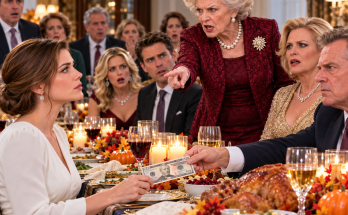
Then my older sister, Vanessa, came to my office carrying a thick folder.
“Your wife is stealing from Dad,” she announced.
I stared at her.
“What are you talking about?”
She threw several bank statements onto my desk.
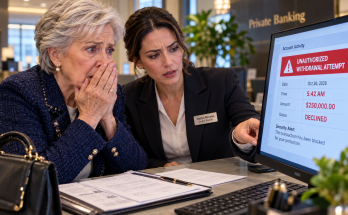
“Look at the withdrawals. Hundreds of dollars disappearing every week. Evelyn controls his care expenses, and she has access to his accounts. What do you think she’s doing with the money?”
I examined the statements. There were withdrawals I couldn’t explain, along with several payments to a pharmacy I had never heard of.
Then Vanessa showed me a photograph of Dad’s bruised wrist.
“Look at him, Daniel. He’s helpless. He can’t even tell you what’s happening to him.”
My stomach tightened.
“Have you spoken to Evelyn?”
Vanessa laughed bitterly.
“She’ll cry, deny everything, and convince you that she’s the victim. That’s what women like her do.”
I wanted to defend my wife, but the photograph had planted a seed of doubt.
That evening, I returned home without telling Evelyn I was back early.
I found her beside Dad’s wheelchair, carefully feeding him soup.
“There you are,” she said with a smile. “Your father had a difficult afternoon.”
I kissed her forehead, then noticed a dark bruise on Dad’s wrist.
“What happened to his arm?”
Evelyn froze for a moment.
“He caught it against the wheelchair yesterday.”
“Why didn’t you tell me?”
“Because it looked worse than it was. I’m sorry.”
She lowered her eyes.
I had known this woman for six years. I knew the way she smiled when she was nervous and how she pressed her lips together when she was hiding something.
That night, I couldn’t sleep.
At seven the following morning, I contacted a security company and arranged for cameras to be installed in the common areas of the house and, with appropriate safeguards for Dad’s privacy, at the entrance to his bedroom.
I told myself I needed evidence before accusing anyone.
But deep down, I was already afraid of what I might discover.
For the first night, nothing unusual happened.
Then, at exactly 3:07 a.m., my phone vibrated.
I opened the live feed.
Evelyn appeared in the hallway, barefoot and wearing a pale blue robe. She looked over her shoulder twice before entering Dad’s room.
Then she closed the door and turned the lock.
My heart began pounding.
Why was she locking herself inside with him in the middle of the night?
I watched as she opened the medicine cabinet, removed a prescription bottle, and counted several small white pills into her palm.
She wrapped them in a tissue and slipped them into her pocket.
Then she approached my father.
“Arthur,” she whispered, leaning close to his face. “Please be patient. I only need two more days.”
My father blinked rapidly.
Evelyn took his hand.
“If Daniel finds out now, everything will be ruined.”
I stopped breathing.
She leaned down and whispered something else, but the audio broke into static.
Then she switched off the bedside lamp and left the room carrying the tissue.
I watched the footage again.
And again.
The next morning, Evelyn made breakfast as if nothing had happened.
“How did Dad sleep?” I asked casually.
“Very well,” she replied. “He didn’t wake up once.”
I stared at her over my coffee cup.
“You’re sure?”
She nodded.
“Of course.”
She was lying.
That afternoon, I returned home unexpectedly, determined to catch her in another lie.
As I passed Dad’s room, I heard music coming from inside.
It was an old jazz recording my mother had loved before she died.
I stepped quietly toward the doorway.
Evelyn was holding Dad’s hands, gently moving his wheelchair to the rhythm.
“One, two, three,” she whispered. “Come on, Arthur. Just like we practiced.”
Then my father’s right hand moved.
Not a random twitch.
His fingers deliberately curled around hers.
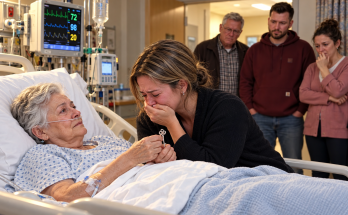
Evelyn covered her mouth, tears spilling down her cheeks.
“You did it,” she whispered. “You really did it.”
I stood frozen in the hallway.
My father had not deliberately moved his hand in two years.
Then he turned his eyes toward the doorway.
He saw me.
His expression changed instantly.
And for the first time since his stroke, my father began to cry.
I rushed into the room.
“Dad? What’s happening?”
Evelyn stepped between us.
“Daniel, please. You need to let me explain.”
Before she could say another word, my father gripped my wrist with surprising force.
His lips trembled.
A broken sound escaped his throat.
It wasn’t a complete word, but I recognized the effort.
He was trying to speak.
And the first sound he managed was my sister’s name.
“Van…”
My blood turned cold.
Because Vanessa had told me that Dad was incapable of communicating.
And now he was trying to tell me something about her.
PART 2: The Secret My Sister Buried
I didn’t confront Evelyn that night.
Instead, I told her I had an urgent business meeting and drove to a hotel across town.
Then I opened every recording from the previous two days.
I slowed the footage down, increased the volume, and examined every movement.
At 3:07 a.m., Evelyn had removed the pills.
At 3:12 a.m., she had taken a small envelope from her robe and placed it beneath Dad’s mattress.
At 3:19 a.m., she had made a phone call from the hallway.
The recording captured only fragments of her conversation.
“No, he isn’t ready yet.”
A pause.
“I know what you promised.”
Another pause.
“If Daniel discovers the truth before Arthur can speak, we could lose everything.”
I replayed that sentence until the words seemed to burn into my mind.
What truth?
And what did my sister have to do with it?
The next morning, I called Vanessa.
“Can you come to the house this afternoon? I need to discuss Dad’s finances.”
She arrived wearing a cream-colored suit, carrying her usual designer handbag.
She looked perfectly composed.
“Finally,” she said. “I’m glad you’re taking this seriously.”
I placed the bank statements on the table.
“Have you withdrawn any money from Dad’s account?”
Her expression barely changed.
“Why would I?”
“I’m asking you a question.”
She sighed dramatically.
“Daniel, I’ve spent months warning you about Evelyn. Don’t tell me she’s convinced you that I’m the problem.”
I watched her closely.
Then I asked, “What happened to Dad’s medical records from the month before his stroke?”
For the first time, her smile disappeared.
“What kind of question is that?”
“A simple one.”
She stood abruptly.
“I don’t have time for this.”
As she walked toward the door, her handbag slipped from her shoulder.
A small white prescription bottle rolled across the floor.
Vanessa snatched it up.
“Mine,” she said quickly.
I looked at the label.
The pharmacy name matched the one on Dad’s bank statements.
Before I could ask another question, she left.
That evening, I returned to the security footage.
At 3:07 a.m., Evelyn entered Dad’s room again.
This time, she retrieved the envelope from beneath his mattress.
Inside it was a folded document.
She held it toward my father.
“Arthur, you have to help me. Daniel deserves to know, but we need proof first.”
My father began shaking his head.
Evelyn took a deep breath.
“Your daughter has already started moving the money. If we wait any longer, she’ll get away with it.”
I felt as if the floor had disappeared beneath me.
My sister had accused my wife of stealing money.
But my wife was accusing my sister of the same thing.
And my father seemed to understand every word.
The following morning, I hired an independent attorney and requested a review of the accounts and medical records. I also arranged for a physician experienced in stroke rehabilitation to assess Dad’s remaining communication abilities.
I didn’t tell either woman.
Two days later, the physician discovered something extraordinary.
My father could understand far more than anyone had realized.
He could follow complex instructions, recognize familiar people, and communicate through deliberate eye movements and limited movements of his right hand.
His speech was severely impaired, but his mind was still working.
The doctor explained that Dad had likely been underestimated for months.
When I asked whether Evelyn could have helped him practice these movements, he nodded.
“Consistent stimulation can reveal abilities that have gone unnoticed. But we need to establish what your father can safely do and whether any medication is interfering with his alertness.”
Those words made the pills even more troubling.
The physician arranged an urgent medication review. Several discrepancies were found between the prescribed treatment plan and the medication records.
I felt sick.
Had someone been giving my father the wrong medication?
That afternoon, the attorney called me into his office.
“Daniel, there’s something you need to see.”
He turned his computer toward me.
A series of financial transfers had been made from Dad’s account over the previous six months. Several had gone to a company registered under a name I recognized immediately.
Vanessa’s business.
But that wasn’t the worst part.
One transfer had been authorized using a digital signature linked to Dad’s old financial power of attorney.
The document should have been invalidated after his stroke because of a legal dispute over his capacity and the authority granted under it.
Someone had submitted paperwork claiming my father had personally approved the transactions.
The signature looked convincing.
But the date was impossible.
Dad had been hospitalized and unconscious that day.
My hands began to shake.
“Who submitted this?”
The attorney pointed to the electronic filing.
Vanessa.
I drove home immediately.
I wanted to confront my sister, but when I arrived, I found Evelyn standing beside Dad’s wheelchair with a small suitcase at her feet.
She looked exhausted.
“What are you doing?” I demanded.
“Leaving.”
“Why?”
She swallowed hard.
“Because Vanessa threatened me. She said if I didn’t stop helping your father, she’d make sure I never saw him again.”
I stepped closer.
“Then tell me everything.”
Evelyn looked toward Dad.
He blinked twice, the signal she had been teaching him.
She took my hand and led me to the bedroom.
Then she pulled a sealed envelope from the bottom of her suitcase.
“Your mother gave this to me three days before she died,” she whispered. “She told me to open it only if your father ever became unable to protect himself.”
I stared at the envelope.
My mother’s handwriting was unmistakable.
Inside was a letter, an old bank statement, and a photograph of Vanessa standing beside a man I had never seen before.
The letter began:
Daniel, if you’re reading this, something has happened that I spent years praying you would never have to face.
My vision blurred as I read the next lines.
Your sister has been hiding something from your father. I found evidence that she has been using his trust to pay debts that could destroy this family.
Then I reached the final paragraph.
But the money is not the most dangerous secret.
The man in the photograph knows what happened the night your father suffered his stroke.
I looked up at Evelyn.
“Who is he?”
Before she could answer, the front door slammed.
Vanessa had returned.
She walked into the room, saw the letter in my hand, and went completely pale.
Then she looked at Evelyn.
“You promised you would never show him that.”
My sister had just confessed to something without saying a single word about what she had done.
And behind her, standing in the doorway, was the unfamiliar man from the photograph.
He looked at my father.
Then he looked at me.
“Daniel,” he said quietly, “your sister isn’t the only person who has been lying to you.”
PART 3: The Recording That Destroyed Our Family
For several seconds, nobody moved.
Vanessa stood near the doorway, her face drained of color.
Evelyn clutched my mother’s letter against her chest.
And the stranger slowly removed his coat.
“My name is Michael Reeves,” he said. “I was your father’s financial adviser for nearly fifteen years.”
I recognized the name.
Michael had disappeared from our family’s life shortly before Dad’s stroke. Vanessa had told everyone that he had stolen money and fled the country.
“Why are you here?” I demanded.
He looked at Vanessa.
“Because I kept the original records.”
My sister immediately shook her head.
“Don’t listen to him. He’s a criminal.”
Michael placed a thick folder on the table.
“Then explain these.”
Inside were copies of financial transfers, correspondence, and medical appointment records. Several documents showed that Vanessa had been trying to obtain greater control over Dad’s estate before his stroke.
There were also messages between Vanessa and a private clinic discussing a proposed change to his medication schedule.
The records didn’t prove what had caused his stroke, but they raised serious questions about whether his care had been properly managed before his hospitalization.
I turned toward my sister.
“Did you change Dad’s medication?”
She began crying.
“I was trying to help him!”
“Then why did you lie about the accounts? Why did you tell me Evelyn was abusing him?”
“Because she was interfering!”
The room fell silent.
Vanessa covered her mouth, realizing what she had just admitted.
Michael opened another folder.
“Your father discovered the financial transfers months before his stroke. He planned to change his power of attorney and have the accounts independently audited.”
I stared at him.
“Why didn’t he tell me?”
“Because he wanted to give Vanessa a chance to repay the money before involving the authorities.”
My sister had been desperate to prevent the audit.
And now I understood why she had worked so hard to turn me against my wife.
If I believed Evelyn was stealing from Dad, I would remove her from his care. Vanessa could then take control of the finances without anyone questioning her actions.
But there was still one mystery.
The pills.
I turned toward Evelyn.
“What were you hiding at three in the morning?”
She took a shaky breath.
“The pills were prescribed to your father, but his medication schedule had been changed without a clear explanation. I noticed he was becoming unusually drowsy and less responsive. I was worried something was wrong.”
“Then why hide them?”
“Because I didn’t know who I could trust. I kept the disputed doses separate so the physician could review them. I should have documented everything more clearly, and I should never have handled it without immediately seeking medical advice.”
She lowered her head.
“I was afraid that if I accused Vanessa without proof, she’d use her influence to have me removed from the house before your father could communicate what he knew.”
Her explanation didn’t erase the risks of what she had done, but it finally made sense of the footage.
She had been trying to protect Dad while gathering evidence.
And she had been doing it alone.
I looked at Vanessa.
“Did you bruise his wrist?”
She shook her head furiously.
“No! I never hurt him!”
For the first time, I believed there might be more to the story than the accusations.
The physician’s earlier assessment had noted that Dad’s wheelchair restraints and positioning needed review. His bruising could have resulted from improper positioning, an accident, or something more serious. We couldn’t establish the cause from the photograph alone.
Then my father made a sound.
A strained, breathless sound that stopped every argument in the room.
His right hand lifted from the blanket.
Slowly, painfully, he pointed toward the folder Michael had brought.
The doctor had warned us that communication would be difficult and that we shouldn’t assume every movement had a specific meaning.
But Evelyn knew the exercise.
She placed three cards in front of Dad: YES, NO, and HELP.
He moved his eyes toward YES when she asked whether he wanted us to examine the folder.
Then Michael opened the final envelope.
Inside was a small memory card.
“I kept a backup of the security recording from the night your father collapsed,” he said. “I was never supposed to have it. Someone deleted the original from the home’s system, but I had already copied it.”
My pulse raced.
He inserted the card into his laptop.
The video showed the family home two years earlier.
Vanessa entered Dad’s study carrying a document folder. She argued with him, pointing at papers on his desk.
The audio was faint, but one sentence was clear.
“You can’t change everything now, Dad. I’ve already promised them the money.”
Dad pushed the papers away.
Vanessa stormed out.
Minutes later, another person entered the room.
It was the same man standing beside Michael in the old photograph.
He was carrying a glass of water.
The video ended before anything else happened.
It didn’t reveal who had caused Dad’s stroke, or whether the man had been involved in any wrongdoing. But it established that he had been at the house shortly before the medical emergency.
Michael identified him as a former business associate of Vanessa’s.
The attorney immediately contacted the appropriate authorities and preserved the original recordings and financial documents. Dad’s doctors reviewed his treatment, and an independent investigation began.
Vanessa was questioned about the transfers and the documents she had submitted. The investigation would take months, and none of us could know what the final findings would be.
But the family secret was no longer buried.
Three weeks later, I returned home from the hospital with my father.
His rehabilitation had begun. His speech remained limited, but he could communicate more consistently with his eyes and his right hand.
One afternoon, Evelyn sat beside him and played my mother’s favorite jazz record.
Dad moved his fingers against hers.
“One, two, three,” she whispered, smiling through her tears.
I watched from the doorway, remembering the night I had mistaken her fear for guilt.
I had secretly installed cameras because I thought I was protecting my father.
Instead, I had nearly destroyed the person who had spent two years protecting him.
I walked over and knelt beside my wife.
“I’m sorry,” I whispered. “I should have trusted you enough to ask the right questions.”
Evelyn took my hand.
“Trust doesn’t mean ignoring the evidence, Daniel. It means finding the truth before deciding who to blame.”
Then Dad moved his hand again.
He reached toward me, slowly curled his fingers around mine, and struggled to form a word.
“Home.”
It was the clearest word he had spoken since his stroke.
I broke down crying.
For the first time in two years, our family had a chance to begin again.
But as I held my father’s hand, I understood something I would never forget:
The most dangerous secrets aren’t always hidden by strangers. Sometimes they’re protected by the people who know exactly which family member you’ll believe without asking a single question.