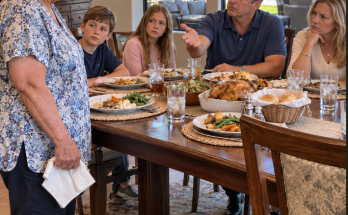
My mother didn’t yell when she threw away my daughter’s dinner.
That almost made it worse.
She simply stood at the kitchen sink, held my two-year-old daughter’s bowl in one hand, and tipped the entire thing down the drain.
Chicken broth.
Noodles.
Carrots.
Everything Sophia had been patiently eating disappeared beneath the running water.
My daughter stared at the empty bowl.
“Grandma…”
Her tiny voice cracked.
“My soup.”
My mother didn’t even look at her.
Instead, she turned toward me.
“You’re thirty-four years old, Laura. It’s time you stopped living like a parasite.”
I couldn’t believe what I was hearing.
My sister Karla sat at the dining table scrolling through her phone.
Without looking up, she said,
“Mom’s right.”
I looked at her.
“You’re talking about me?”
She shrugged.
“You’ve been here long enough.”
I almost laughed.
Karla lived in her own condo across town.
A condo whose mortgage payment had been quietly coming out of my bank account for almost four years.
But nobody in that room knew I had finally stopped keeping score.
My father sat behind the newspaper.
He knew what was happening.
He simply didn’t want to get involved.
Then my mother pointed toward the front door.
“Take your daughter and go.”
I stared at her.
“Mom…”
“No.”
She crossed her arms.
“You want to live like an independent woman? Fine. Go be independent.”
My daughter began crying.
I picked her up.
“Okay.”
My mother smiled.
“Trust me. You’ll be back.”
I didn’t answer.
I put Sophia’s coat on.
Picked up her little bag.
Walked outside.
And closed the door behind me.
I didn’t slam it.
I didn’t scream.
I didn’t tell them what I knew.
Because there was something my family had forgotten.
Something they hadn’t mentioned in years.
Something I had deliberately kept quiet about.
That apartment wasn’t theirs.
Six months earlier, my marriage had collapsed.
My husband left.
There was another woman.
He took some clothes, his car, and most of the money from our joint account.
What he left behind was Sophia.
And a mountain of bills.
I was working as a freelance editor.
My income wasn’t terrible.
But it wasn’t enough to immediately support a child, pay rent, cover daycare, and rebuild my entire life.
My parents had called me.
“Come home.”
My mother had cried on the phone.
“This is what family is for.”
So I moved back.
At first, I was grateful.
I paid groceries.
Then utilities.
Then my father’s medication.
Then internet.
Then repairs.
Then miscellaneous expenses.
Slowly, I became the person everyone called when something needed to be paid.
But somehow, I was still the parasite.
Karla was the favorite.
She always had been.
She lived independently.
She dressed well.
She posted photographs of restaurants and vacations.
Everyone praised her for being successful.
Nobody knew that every month, I transferred $850 toward her mortgage.
She had begged me once.
“Just help me for a few months.”
A few months became years.
And every time I thought about stopping, my mother would say:
“She’s your sister.”
So I kept paying.
That night, Sophia and I stayed at a small boarding house.
One room.
One bed.
A tiny table.
A shared bathroom down the hall.
Sophia fell asleep holding her stuffed rabbit.
I sat beside her.
Then I opened my phone.
There was a folder I’d created years earlier.
The name was simple:
PLAN B.
Inside were scanned documents.
Bank statements.
Receipts.
Medical payments.
Property records.
And one document I’d never expected to need.
I opened it.
My hands were steady.
The document was a property deed.
Five years earlier, my parents had transferred ownership of the apartment into my name.
Not temporarily.
Not partially.
Completely.
The reason was complicated.
They had needed my help qualifying for a financial arrangement after my father had accumulated serious debt.
The lawyer had recommended transferring the property to me as part of the agreement.
My parents had signed.
Witnessed.
Registered.
Then, once the situation was resolved, everyone simply went back to living as though nothing had changed.
They had forgotten.
Or perhaps they had assumed I would never use it.
I stared at the document.
Then I opened my banking app.
The recurring transfer to Karla’s mortgage appeared on the screen.
$850.00
I pressed cancel.
The confirmation appeared.
Recurring payment canceled.
I pressed it again.
Then I opened another account.
My parents’ utility payments.
Canceled.
My father’s pharmacy account.
Removed my card.
Their internet.
Removed.
Their insurance payment I’d been covering.
Removed.
I sat in the dark while my daughter slept.
For years, I had mistaken being needed for being loved.
That night, I finally understood the difference.
The next morning, I called a lawyer.
Her name was Elaine.
I put the property deed in front of her.
She read it twice.
Then looked at me.
“Did your parents sign this willingly?”
“Yes.”
“Was it properly witnessed?”
“Yes.”
“Was it registered?”
“Yes.”
She leaned back.
“Then, Laura, your parents don’t own this property.”
I swallowed.
“Then who does?”
She looked directly at me.
“You do.”
I sat there silently.
The apartment where my mother had just thrown me out.
The home where I had grown up.
The place where my father had raised me.
The place where my daughter had taken her first steps.
Legally…
it belonged to me.
Elaine continued.
“But there’s something else.”
“What?”
“You’ve been paying their expenses?”
“Yes.”
“For years?”
“Yes.”
She opened the documents I’d brought.
“Then we need to look at everything.”
I asked why.
She pointed toward the property records.
“If they’re claiming this property as theirs while you are the legal owner, and if they’ve been making financial decisions involving the property without your consent…”
She stopped.
“What?”
“You may have a much bigger problem than your family realizes.”
I stared at her.
“What kind of problem?”
She closed the folder.
“Come back tomorrow with every document you have.”
I nodded.
As I stood to leave, my phone began ringing.
My mother.
I didn’t answer.
Then Karla.
Then my father.
Then my mother again.
Finally, a message appeared.
“Laura, come home. We need to talk.”
I looked at the message.
Then at my lawyer.
And I knew something had changed.
They thought I was sitting in a cheap boarding room with nowhere to go.
They didn’t know I’d just discovered that I owned the roof over their heads.
PART 2 — THEY THOUGHT I WOULD COME CRAWLING BACK
“MY FAMILY CALLED ME A PARASITE AND THREW ME OUT. THREE DAYS LATER, MY LAWYER CALLED AND SAID, ‘LAURA, YOU NEED TO SIT DOWN. YOUR PARENTS DID SOMETHING WITH YOUR PROPERTY THAT THEY HAD NO RIGHT TO DO.’”
I didn’t go home.
Not yet.
I wanted answers first.
Elaine spent the next two days reviewing everything.
The deed.
Tax records.
Bank transfers.
Insurance documents.
Utility bills.
Mortgage statements.
Then she found something that made her stop.
“Laura.”
I looked up.
“What?”
She slid a document across the desk.
“This is a property tax statement.”
“Yes.”
“Who has been receiving these?”
“My father.”
“Why?”
“I don’t know.”
She pointed to the mailing address.
Then another document.
Then another.
My parents had been receiving property notices in their names.
That wasn’t necessarily illegal.
But there was something else.
A refinance application.
I stared at it.
“What is this?”
Elaine’s expression hardened.
“Your parents attempted to refinance the property.”
My stomach dropped.
“When?”
“About two months ago.”
“Without telling me?”
“Yes.”
I looked at the signature.
It wasn’t mine.
My father had signed documents stating that he was the owner.
I felt sick.
“Can they do that?”
“Not legally.”
“Then why would they?”
Elaine looked at me.
“Because they may have believed you would never challenge them.”
That sentence hurt.
Because it was true.
My entire family had built their lives around one assumption:
I would always stay quiet.
That afternoon, I drove past the apartment.
I didn’t go inside.
I parked across the street.
My mother was standing near the window.
Karla was there too.
They looked worried.
I wondered what had happened.
Then my phone rang.
My mother.
I answered.
“Hello?”
“Where are you?”
“Why?”
“We need to talk.”
“I agree.”
“Come home.”
“No.”
Silence.
Then she said:
“Laura, you’re being dramatic.”
I almost smiled.
“You threw my daughter out of your house.”
“Our house.”
“No.”
Her voice changed.
“What do you mean?”
I didn’t answer.
I simply said:
“Ask Dad.”
Then I hung up.
Twenty minutes later, my father called.
His voice was different.
“Laura.”
“Yes?”
“Where did you get those documents?”
I closed my eyes.
So he knew.
“You remember.”
He was silent.
“The deed,” I said.
“Your mother didn’t mean what she said.”
“She threw my daughter’s dinner into the sink.”
“I know.”
“She told me to leave.”
“I know.”
“She said I’d come crawling back.”
My father sighed.
“Laura, this isn’t the time.”
“It is exactly the time.”
Then I heard something in the background.
My mother’s voice.
“What did she say?”
My father covered the phone.
They were arguing.
Then he returned.
“Can we meet?”
“Where?”
“Somewhere private.”
I agreed.
We met at a small restaurant.
My father looked older than he had three days earlier.
My mother arrived five minutes later.
Karla came with her.
I sat across from them.
Nobody spoke.
Finally, my mother said:
“You’ve misunderstood everything.”
I looked at her.
“No.”
She frowned.
“You don’t know what was happening financially.”
“I know exactly what was happening.”
She glanced at my father.
He looked down.
I placed a folder on the table.
“The apartment belongs to me.”
Karla laughed.
Actually laughed.
“That’s ridiculous.”
I opened the folder.
“The deed was transferred five years ago.”
My mother went pale.
“You can’t be serious.”
I slid the document toward her.
She read it.
Then read it again.
My father didn’t touch it.
Karla looked between them.
“Mom?”
My mother whispered:
“Arthur…”
My father finally said:
“She owns it.”
Karla’s face changed.
“No.”
“Yes.”
“But you said—”
My mother looked at her.
“Karla, stop.”
I watched my sister’s expression.
She looked confused.
Then frightened.
I said:
“And there’s something else.”
I pulled out the mortgage records.
“Karla, you know that $850 payment you’ve been receiving help with every month?”
She looked at me.
“What about it?”
“I’ve been paying it.”
Her face went blank.
My mother stared at her.
“You told us you were handling that.”
Karla looked away.
“I was going to.”
“How long?” I asked.
She didn’t answer.
I did.
“Forty-seven months.”
My father stared at her.
“You told us you were paying your mortgage.”
“I was!”
“No,” I said.
“You weren’t.”
She began crying.
But I wasn’t finished.
I placed another document on the table.
The attempted refinance application.
Karla saw it.
“Where did you get that?”
“From the bank.”
My father looked at her.
“You signed this?”
Karla’s face went white.
“No.”
I pointed to the signature.
“That isn’t my signature.”
My father looked at me.
Then at Karla.
Then at my mother.
Nobody spoke.
Finally, Karla whispered:
“Mom said it was fine.”
My mother stood.
“I never said you could forge anything.”
“I didn’t!”
“You signed it!”
“I thought Dad had permission!”
My father slammed his hand on the table.
“Enough!”
The restaurant went quiet.
I watched them argue.
And suddenly, I realized something.
This wasn’t a family.
It was a chain of people passing responsibility from one person to another until it finally landed on me.
I left.
That evening, Elaine called.
“We have another issue.”
“What now?”
“The refinance application isn’t the worst part.”
My heart sank.
“What is?”
She hesitated.
“Your parents listed the apartment as collateral for another loan.”
I stopped walking.
“What?”
“They borrowed against the property.”
“Without me?”
“Yes.”
“How much?”
She told me.
I couldn’t speak.
The amount was enormous.
Enough to put the apartment at serious risk if the lender believed the documents were valid.
I asked:
“What happens now?”
Elaine answered:
“We challenge the loan.”
“Can my parents lose the property?”
“Potentially.”
I closed my eyes.
“They live there.”
“I understand.”
“They’re my parents.”
“I know.”
I didn’t want revenge.
I wanted my home back.
But now I had another problem.
If I simply reclaimed the property, my parents could lose everything.
And despite everything they had done…
they were still my parents.
The next morning, I went to see them.
My mother opened the door.
She looked exhausted.
“Come in.”
I stepped inside.
The apartment looked exactly as it had when I left.
Except now I saw it differently.
The family photographs.
The old furniture.
The hallway where I’d grown up.
The kitchen where my mother had thrown away Sophia’s soup.
My mother sat down.
“I was wrong.”
I didn’t respond.
“I shouldn’t have thrown you out.”
“No.”
“I shouldn’t have spoken to Sophia that way.”
“No.”
“I was angry.”
I nodded.
Then she looked at me.
“But you can’t take this house from us.”
I stared at her.
“You’re worried about losing the house?”
“Yes.”
“You weren’t worried about where Sophia and I would sleep?”
My mother started crying.
I felt my anger soften.
Not disappear.
Just soften.
Then my father entered the room.
He held a folder.
“There’s something you need to know.”
He put it on the table.
I opened it.
Inside was an old letter.
My father’s handwriting.
And one sentence caught my attention.
“If anything happens to me, Laura must be told the truth about the apartment.”
I looked up.
“What truth?”
My father sat down.
“We didn’t transfer the property to you because of debt.”
I stared at him.
“Then why?”
He took a deep breath.
“Because we knew one day Karla would try to take it.”
I froze.
My mother looked at him.
“Arthur…”
He shook his head.
“She deserves to know.”
Then he looked at me.
“Your sister has been trying to control this property for years.”
I couldn’t believe it.
“What are you talking about?”
My father opened another document.
And suddenly, the entire story changed.
PART 3 — THE HOUSE WAS NEVER THE REAL SECRET
“MY PARENTS HAD THROWN ME OUT OF A HOME THEY KNEW I LEGALLY OWNED. I THOUGHT THEY HAD SIMPLY FORGOTTEN THE DEED. THEN MY FATHER SHOWED ME ONE OLD DOCUMENT THAT REVEALED WHY THEY HAD GIVEN ME THE HOUSE IN THE FIRST PLACE.”
My father pushed the document toward me.
I read it.
Then I read it again.
It was a letter from my mother.
Written five years earlier.
Addressed to my father.
The first sentence said:
“If we put the apartment in Laura’s name, Karla can’t sell it.”
I looked up.
“What?”
My mother began crying.
My father continued.
“Karla had serious debts.”
“How serious?”
“Very.”
I looked at my sister.
“She was in trouble financially?”
My father nodded.
“She had borrowed money from people she shouldn’t have.”
I remembered all those years of paying her mortgage.
All the excuses.
All the emergencies.
All the times my mother had told me:
“She’s just going through a difficult period.”
My father continued.
“She wanted to sell the apartment.”
My eyes widened.
“This apartment?”
“Yes.”
“But it’s your home.”
“It was supposed to stay in the family.”
“Then why give it to me?”
My father looked at me.
“Because you were the only person we trusted not to sell it.”
I sat there silently.
My mother wiped her eyes.
“We thought if the property belonged to you, Karla couldn’t touch it.”
I looked at the deed.
“So you transferred it to me to protect the house.”
“Yes.”
“And then everyone forgot?”
My father shook his head.
“We didn’t forget.”
I stared at him.
“What?”
“We were afraid to tell you.”
“Why?”
“Because Karla eventually discovered the arrangement.”
My heart sank.
“And she wanted the house.”
“Yes.”
I finally understood.
My sister hadn’t simply been jealous of me.
She had been trying to get control of the property for years.
The mortgage payments I’d been making weren’t helping her own home.
They were helping keep her financial situation from collapsing.
And my parents had allowed it because they were terrified of what would happen if they stopped protecting her.
I looked at my mother.
“Then why did you throw me out?”
She broke down.
“I was angry.”
“At me?”
“At myself.”
She covered her face.
“I knew you were the one person who could legally stop everything.”
I stared at her.
“You knew.”
“Yes.”
“And you still called me a parasite.”
“I was ashamed.”
My father looked down.
“We all were.”
I could have taken the apartment immediately.
I could have gone to court.
I could have changed the locks.
I could have forced everyone out.
The law was on my side.
But I didn’t want to destroy my parents.
So I made a different decision.
I called Elaine.
I told her I wanted the property secured.
But I didn’t want my parents homeless.
We created an agreement.
My parents could remain in the apartment for as long as they needed.
But the property would remain legally mine.
The unauthorized loan would be challenged.
Karla would no longer have access to the property.
And every financial arrangement involving my family would be documented.
No more secrets.
No more pretending.
No more rescuing people who refused to take responsibility.
Karla wasn’t happy.
She called me that evening.
“You’re destroying this family.”
I answered calmly.
“No.”
“You’re taking everything away from me.”
“No.”
“You’ve always been jealous of me.”
I almost laughed.
“Karla, I’ve paid your mortgage for almost four years.”
Silence.
“I didn’t ask you to.”
“You didn’t have to.”
She started crying.
“I needed help.”
“I know.”
“Then why are you doing this?”
“Because helping you became enabling you.”
She didn’t answer.
I continued:
“I love you.”
A pause.
“But I’m not paying your bills anymore.”
She hung up.
The next morning, I went back to the boarding house.
Sophia was sitting on the floor coloring.
She looked up.
“Mommy!”
I hugged her.
She wrapped her little arms around my neck.
“Are we going home?”
I smiled.
“Yes.”
“Grandma’s house?”
I paused.
“No.”
Then I corrected myself.
“Our house.”
She smiled.
“Can I have soup?”
I laughed.
“Yes, sweetheart.”
I took her home that afternoon.
Not as a daughter returning to her parents.
Not as a tenant.
Not as someone asking permission.
I walked through the front door as the legal owner.
My mother stood in the kitchen.
She looked at Sophia.
Then she looked at me.
“I made soup.”
Sophia looked at the bowl.
Then at me.
I knelt beside her.
“Do you want some?”
She nodded.
My mother began crying.
“I shouldn’t have done that.”
I knew exactly what she meant.
“You shouldn’t have.”
She looked at Sophia.
“I’m sorry.”
My daughter didn’t understand everything.
But she understood an apology.
She walked over and hugged her grandmother.
I watched them.
And for the first time in days, I allowed myself to breathe.
Months later, things were different.
My parents stayed in the apartment.
Karla moved into a smaller place and began dealing with her debts herself.
I stopped paying everyone’s bills.
I stopped fixing every emergency.
I stopped apologizing for having boundaries.
And something unexpected happened.
My family slowly became healthier.
Not happier immediately.
Not perfect.
But healthier.
Because nobody could hide anymore.
Everything was documented.
Everything was discussed.
Everyone had to carry their own weight.
One evening, I was making chicken soup for Sophia.
She was sitting at the kitchen counter drawing.
My mother walked into the kitchen.
She looked at the pot.
Then smiled.
“Need help?”
I handed her a spoon.
“Stir it.”
She laughed.
“That’s all?”
“That’s all.”
She stirred the soup.
Sophia watched her.
Then asked:
“Grandma, are you going to throw it away?”
My mother froze.
I stopped moving.
Then my mother crouched beside her.
“No, sweetheart.”
She looked at me.
“Never again.”
Sophia smiled.
And went back to coloring.
I stood there watching them.
Thinking about how close I had come to believing my family didn’t love me.
Maybe they did.
Maybe they simply didn’t know how to love me without depending on me.
And maybe I had made the same mistake by believing that being a good daughter meant endlessly sacrificing myself.
I learned something that year.
Family isn’t supposed to mean one person carries everyone else.
Love doesn’t require you to accept disrespect.
Helping someone doesn’t mean allowing them to use you.
And saying no doesn’t make you selfish.
Sometimes, saying no is the first time you finally tell the truth.
My mother once pointed at the door and told me:
“When you can’t afford the rent, you’ll come crawling back.”
She was right about one thing.
I did come back.
But I didn’t come back crawling.
I came back holding the deed.
And the house she thought she was throwing me out of…
was mine all along.