# PART 1 —My son pushed me through a glass patio door, and his wife stood behind him watching as I fell onto the terrace.
Glass scattered across the stone floor. My forehead stung, my hands trembled, and I struggled to understand how the little boy I had once carried to bed could treat me like a stranger.
“Maybe now you’ll learn your place!” Brandon shouted.
His wife, Giselle, folded her arms.
“You have nothing, Eleanor. No money, no power, and nowhere else to go. Stop pretending you’re important.”
I pressed a towel against my forehead and looked at them both.
Then I smiled.
Because they had just made the biggest mistake of their lives.
For three years, I had lived in a small guest cottage behind Brandon’s expensive suburban home. Neighbors often praised him for taking in his elderly mother. They believed I survived on his generosity, and Giselle enjoyed reminding everyone how much it supposedly cost to care for me.
I never corrected them.
After my husband, Richard, died, I had made a decision that even my closest relatives didn’t understand. I wanted to know whether my son loved me—or simply loved the future inheritance he expected to receive.
So I lived modestly. I drove an old car, bought inexpensive clothes, and kept my financial affairs private.
Meanwhile, Brandon grew increasingly impatient.
He had expensive tastes, mounting business expenses, and a wife who believed their lifestyle should never be limited by something as ordinary as a budget.
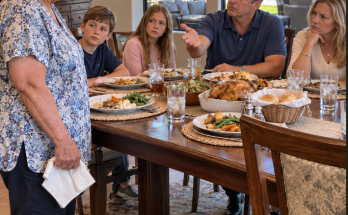
One evening, they invited me into the main house.
A folder waited on the dining table.
“What is this?” I asked.
“Just a property transfer,” Giselle replied sweetly. “We want to make everything easier for the family.”
I opened the folder.
They wanted me to sign away my interest in the land beneath the guest cottage.
“I won’t sign this.”
Brandon’s smile vanished.
“Mom, you’re living here because of me. The least you can do is cooperate.”
“I have never asked you to give me anything.”
“Exactly!” Giselle snapped. “You contribute nothing!”
I looked at my son.
“Is this really what your father would have wanted?”
Brandon slammed his hand on the table.
“Don’t bring Dad into this!”
Then he grabbed my arm and ordered me out.
I pulled away, stumbled backward, and crashed through the glass patio door.
For a few seconds, nobody spoke.
Then Giselle looked down at me.
“Get up. You’re making a scene.”
That was the moment something inside me changed.
I no longer saw the little boy who once held my hand crossing the street.
I saw two adults who believed my age and apparent poverty made me powerless.
Brandon pointed toward the cottage.
“Pack your belongings. You won’t be staying here much longer.”
I slowly stood, accepted a clean towel from a frightened housekeeper, and walked away without another word.
Inside my cottage, I locked the door and opened the small safe hidden behind a framed photograph of my late husband.
There were three things inside: a sealed legal document, a black mobile phone, and a letter Richard had written shortly before his death.
I unfolded the letter.
His handwriting was unmistakable.
Eleanor, if the day ever comes when Brandon treats you as though your worth depends on what you can give him, remember this: you do not owe anyone your dignity in exchange for a place to live.
Tears filled my eyes.
Then I picked up the black phone.
I called my attorney, Margaret Ellis.
“Margaret,” I said quietly, “it’s time to activate the protections Richard and I established.”
She paused.
“Are you certain?”
I looked toward the shattered glass door.
“Yes. And please document what happened tonight.”
Her voice became serious.
“Understood. I’ll begin the necessary steps immediately.”
What Brandon didn’t know was that the cottage, the surrounding property, and a substantial investment portfolio were held under a carefully structured family trust.
And I had never signed away my rights.
But the most important secret wasn’t the money.
It was what Richard had discovered about our son’s business shortly before his death.
Something that could change everything.
# PART 2 — The Phone Call That Changed Everything
At 8:15 the next morning, Brandon woke to a series of calls from his bank and attorney.
By 9:00, Giselle was pacing through the living room, demanding to know why their lawyer had suddenly requested copies of several property documents.
At 9:30, Brandon called me.
“What have you done?” he demanded.
I was sitting in a medical clinic, waiting for a doctor to examine the cuts on my forehead.
“Good morning, Brandon.”
“Don’t play games with me! Our attorney says there’s a dispute over the land.”
“Then you should speak with your attorney.”
“You’re my mother!”
I closed my eyes.
“Yes. I am.”
He went silent for a moment.
Then he lowered his voice.
“Look, Mom. Things got out of hand last night. Giselle and I were stressed. Let’s forget about it.”
I remembered the shattered glass, his shouting, and the way his wife had looked at me on the floor.
“No,” I said. “We won’t forget it.”
I ended the call.
That afternoon, Margaret visited me with a thick folder of documents.
Richard and I had established the trust years earlier to protect our assets and ensure that our retirement would remain secure. Its terms required a formal review before certain property interests could be transferred or distributed.
Brandon had known about the trust’s existence.
What he hadn’t understood was how much control he did—and did not—have.
Margaret placed a document in front of me.
“There’s another issue,” she said. “Richard asked me to preserve the records he collected before his death.”
“What records?”
She opened the folder.
Inside were financial statements, business correspondence, and copies of transactions involving Brandon’s company.
Richard had invested money in his son’s business years earlier. Before he died, he became concerned that Brandon had been using company funds to cover personal expenses and payments unrelated to the business.
He had not accused Brandon publicly.
Instead, he had asked Margaret to preserve the evidence and make sure everything was reviewed properly if questions arose later.
I studied the records.
“Does Brandon know you have these?”
“No,” Margaret replied. “And we won’t make accusations without a proper review.”
For the first time since Richard’s death, I understood why he had been so worried.
This was no longer simply a dispute over a cottage.
It was about honesty, responsibility, and the way our family had confused financial privilege with entitlement.
Over the next several days, Margaret arranged an independent review of the relevant documents. She also sent formal notice that no transfer of my property interests could proceed without the required legal process.
Brandon and Giselle tried calling repeatedly.
First came apologies.
Then accusations.
Finally, Brandon sent a message:
You are destroying your own family over one argument.
I read it twice before replying.
One argument did not destroy this family. What happened afterward revealed what was already broken.
That evening, Margaret called.
“The initial review has identified transactions that require further explanation,” she told me. “We are requesting additional records through the appropriate legal channels.”
I took a slow breath.
“Will this affect Brandon’s ownership of his business?”
“Not automatically,” she replied. “Any consequences will depend on the evidence and the relevant agreements.”
I appreciated her honesty.
I didn’t want revenge built on assumptions.
I wanted the truth.
Then she told me something else.
“Eleanor, I also reviewed the trust valuation. Your current net worth is substantially higher than your son believes.”
I sat very still.
“How much higher?”
“Approximately twenty-one million dollars, depending on market valuations.”
I looked out the window.
Twenty-one million dollars.
And yet, after everything I had built with Richard, my son had treated me as though I were an unwanted burden.
Margaret’s next words brought me back to reality.
“The money is protected, but we need to make decisions carefully. What happened to you should be documented, and your safety comes first.”
I agreed.
For the first time in years, I stopped worrying about whether Brandon would be angry with me.
I started asking myself what kind of future I wanted.
And the answer was surprisingly simple.
Peace.
But Brandon wasn’t ready to accept that I could live without his approval.
Three days later, he arrived at my cottage with Giselle and an attorney.
He carried another folder.
“We’re going to settle this today,” he announced.
Margaret was already waiting inside.
She rose from her chair and placed a single document on the table.
“Before anyone discusses a settlement,” she said, “there are several matters your attorney needs to review.”
Brandon glanced at the document.
His expression changed.
For the first time, he looked genuinely uncertain.
Because the papers concerned not only the property transfer he wanted—but also the financial questions his father had left behind.
# PART 3 — The Truth My Son Never Expected to Face
The meeting lasted nearly two hours.
Brandon’s attorney examined the trust documents, requested clarification about the property interests, and reviewed the records Margaret had brought.
Giselle sat stiffly beside her husband.
The confidence she had displayed when she called me useless was gone.
Finally, their attorney closed the folder.
“Brandon, we need to discuss this privately.”
“What does that mean?” Giselle demanded.
“It means we cannot proceed as you originally expected,” he answered. “The proposed transfer is not something you can simply demand.”
Brandon turned toward me.
“Mom, you could have told me all this years ago.”
I looked at him calmly.
“You never asked what I had. You only asked what you could get.”
He opened his mouth, but no answer came.
Then Margaret addressed the financial records.
“These transactions require further review. Nothing has been decided about responsibility, but the documents must be examined before anyone makes additional claims or transfers.”
Brandon’s face reddened.
“You’re accusing me of something?”
“No,” Margaret replied. “We’re asking questions that the records raise. You will have an opportunity to respond.”
Giselle suddenly stood.
“This is ridiculous! We were trying to help the family!”
I turned toward her.
“By demanding my property?”
She looked away.
For the first time, there was no clever response.
The meeting ended without a settlement. The property dispute would follow the proper legal process, and the financial review would continue independently.
I had no desire to ruin my son’s life.
But I would no longer protect him from the consequences of his own choices.
Over the following weeks, I moved into a comfortable apartment near the botanical gardens. I hired a reliable caregiver to help with the practical things I needed and arranged for my cottage to be secured while the legal issues were resolved.
I also established a charitable fund in Richard’s memory to support older adults facing housing insecurity.
It wasn’t a gesture meant to embarrass Brandon.
It was something Richard and I had discussed for years, and I finally had the freedom to make it happen.
One afternoon, Brandon came to see me alone.
He looked tired.
“Mom, I want to apologize.”
I let him speak.
He admitted that financial pressure had made him impatient. He admitted that he had treated my refusal as an obstacle instead of respecting it. He even acknowledged that he should have stopped when I tried to pull away from him.
But when he said, “I hope we can put all of this behind us,” I asked a question.
“What do you think you need to do to make things right?”
He stared at the floor.
“I don’t know.”
“Then start by understanding that an apology doesn’t erase what happened.”
He nodded slowly.
I didn’t promise to forgive him immediately.
I didn’t promise him money.
And I didn’t tell him what would happen with his business.
Those matters would be handled separately, based on evidence, legal obligations, and the choices he made from that point forward.
Before leaving, he stopped at the door.
“Did Dad know things would end up like this?”
I thought about Richard’s letter.
“I don’t think your father wanted this outcome,” I answered. “He wanted you to become someone who didn’t measure love in dollars.”
Brandon lowered his head.
For the first time in a long while, I saw something other than anger in his face.
I saw regret.
Whether that regret would lead to real change was a question only time could answer.
As for me, I had finally learned a lesson that took years to understand:
You can love your family without surrendering your dignity. You can offer forgiveness without abandoning boundaries. And you can protect what you’ve built without apologizing for having it.
My twenty-one million dollars had never been the most valuable thing I possessed.
My peace was.
And from that day forward, I refused to let anyone take it from me again.
What would you do in my place—give your son another chance, or keep your distance until he proves he’s changed?