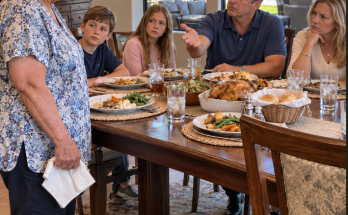
My mother stood up at my wedding, raised her champagne glass, and announced in front of nearly a hundred guests that my marriage wouldn’t survive a single year because my husband wasn’t good enough for me.
People stopped eating.
The music continued for another few seconds before the DJ noticed the silence and lowered the volume.
My father stared at his plate. My aunt covered her mouth. Several guests exchanged uncomfortable glances, wondering whether my mother had finally gone too far.
I stood beside my new husband, Ethan, wearing the wedding dress I’d dreamed of since I was a little girl.
I had imagined this moment a thousand times.
I thought my mother would cry happy tears, hug me, and tell me she was proud of the woman I’d become.
Instead, she looked directly at Ethan and said, “My daughter deserves a man who can give her the world. You can barely afford to give her a comfortable life.”
My throat tightened.
I wanted to disappear.
But Ethan did something I would remember for the rest of my life.
He didn’t shout. He didn’t insult her. He didn’t ask me to defend him.
He simply lifted his champagne glass and replied, “Thank you, Linda. I’ll remember that.”
Then he turned toward me, smiled gently, and whispered, “Come on, sweetheart. Let’s enjoy our wedding.”
For five years, he never mentioned that insult again.
Not once.
I thought his silence meant he’d forgiven my mother.
I thought he’d forgotten the humiliation.
I thought our marriage had finally proven her wrong.
But on our fifth wedding anniversary, Ethan sent my mother a package.
When she opened it, she called me trembling so badly that I could barely understand her words.
“Olivia, what has your husband done? Why does he still have that check?”
I looked at Ethan.
He was sitting beside me on our bed, holding a cup of coffee and watching me with an expression I had never seen before.
Then he quietly said, “Put your mother on speaker, Liv. It’s time she answered the questions she’s been avoiding for five years.”
I had no idea that the package contained an old check, a photograph, and a letter that would expose the biggest lie my mother had ever told me.
And the truth had begun long before my wedding day.
My name is Olivia Bennett. I grew up in a wealthy family in Nashville, Tennessee, where appearances mattered more than almost anything else.
My mother, Linda, believed that a person’s worth could be measured by their bank balance, their neighborhood, the car they drove, and the people they knew.
She had a particular vision for my future.
She wanted me to marry a successful businessman, live in an expensive home, attend charity galas, and eventually give her grandchildren who would carry our family’s name with distinction.
She often spoke about marriage as though it were a business agreement.
“Love is wonderful when you’re young,” she used to tell me. “But eventually, you need a man who can provide.”
My father rarely challenged her.
He was a quiet man who spent most of his time working, and he had learned that disagreeing with my mother usually led to days of arguments.
I was an only child, and for most of my life, I tried desperately to make her proud.
I attended the schools she selected. I studied hard. I found a respectable job after college. I wore the clothes she approved of and learned how to smile politely when she criticized my decisions.
But then I met Ethan.
And everything changed.
I was twenty-seven when my car broke down on a rainy Thursday evening. I was stranded outside a small automotive garage, trying to decide whether to call my father or wait for roadside assistance.
Ethan came outside wearing a dark work shirt with his name stitched above the pocket.
“Car trouble?” he asked.
I nodded.
He examined the engine, discovered the problem, and told me he could repair it that evening.
“You don’t have to stay,” he said when he noticed me shivering. “There’s a coffee shop around the corner. Go warm up, and I’ll call you when it’s ready.”
I remember laughing.
“You’re going to trust a stranger to leave her car here?”
He smiled.
“I’m trusting you to come back for it.”
That was how our story began.
I returned the next morning with coffee and pastries to thank him.
He was embarrassed by the gesture, but he accepted the coffee and shared the pastries with the other mechanics.
We started talking.
I learned that Ethan had grown up in a modest household outside Nashville. His father had worked as a mechanic for nearly forty years, and Ethan had learned the trade by watching him repair old trucks in their driveway.
His father had passed away several years earlier, leaving Ethan a collection of tools, a small savings account, and a piece of advice he repeated often.
“Never promise someone a life you can’t provide. But never make someone feel small because you have less than they do.”
Ethan lived by those words.
He rented a modest apartment, drove an old pickup truck, and worked long hours.
He wasn’t wealthy.
But he was dependable, patient, and kind in ways I had rarely experienced.
He remembered how I liked my coffee. He noticed when I was tired. He never made fun of my mistakes, and he never treated my opinions as less important than his own.
When I had a difficult day at work, he listened without immediately telling me what I should have done differently.
When I became ill, he brought soup and sat beside me until I fell asleep.
When I worried about disappointing my mother, he reminded me that my life didn’t have to be a performance designed to earn her approval.
For the first time, I felt loved for who I was rather than for what I might become.
Six months after we met, Ethan asked me to marry him.
There was no expensive restaurant, no photographer hiding behind a curtain, and no diamond ring that cost more than a car.
He took me to a quiet park where we had spent one of our first afternoons together.
He held my hands and told me he wanted to build a life with me.
“I can’t promise we’ll always have money,” he said. “I can’t promise there won’t be difficult years. But I can promise that you’ll never have to face those years alone.”
I cried before he even finished speaking.
“Yes,” I whispered. “Of course I’ll marry you.”
When I told my mother, she didn’t congratulate me.
She asked what Ethan earned.
When I told her he was a mechanic, she assumed I was joking.
“You’re marrying a mechanic?”
“He owns his own tools and works at a garage.”
“That isn’t what I asked, Olivia.”
I explained that Ethan was hardworking, responsible, and wonderful to me.
My mother shook her head.
“Wonderful doesn’t pay a mortgage.”
I told her we would build our future together.
She looked at me as though I’d announced I was moving to another country without a passport.
“You have spent your entire life preparing for something better than this.”
I couldn’t believe what I was hearing.
“Mom, he’s a good man.”
“Good men can still be bad choices.”
From then on, she made no effort to hide her disapproval.
At family dinners, she asked Ethan whether he’d considered finding a more respectable career.
She criticized his clothes and complained that his pickup truck looked embarrassing parked beside my father’s luxury sedan.
When Ethan offered to help her carry groceries, she thanked my father instead.
Once, during a dinner party, she introduced Ethan to her friends as “Olivia’s little garage project.”
I watched his face tighten.
But he smiled politely and changed the subject.
That night, I apologized to him.
“I don’t know why she treats you like that.”
Ethan kissed my forehead.
“Because she has already decided what kind of man I am. I can’t change her mind by arguing.”
“But you shouldn’t have to tolerate it.”
“I don’t tolerate it because I think she’s right,” he said. “I tolerate it because I love you, and I don’t want every family gathering to become a battle.”
His patience made me love him more.
But it also made my mother believe she could get away with anything.
When we announced our engagement, she tried to persuade me to postpone the wedding.
She suggested that Ethan needed more time to establish himself.
Then she offered to introduce me to a wealthy investment executive whose family owned several commercial properties.
I refused.
She called me foolish.
I told her I had made my decision.
For several weeks, she barely spoke to me.
Eventually, she agreed to attend the wedding, but only after my father reminded her that refusing to appear would embarrass the family.
I should have known that her agreement didn’t mean she had accepted our marriage.
On the wedding morning, Ethan arrived early and helped arrange chairs outside the reception hall.
He checked that the flowers had been delivered, made sure the older guests had comfortable seats, and even helped the caterers carry boxes when one of their employees arrived late.
My mother watched him from the doorway.
“He’s behaving like staff,” she muttered to me.
I stared at her.
“He’s helping people.”
“That’s exactly my point.”
I walked away before I said something I would regret.
The ceremony itself was beautiful.
When Ethan saw me walking toward him, his eyes filled with tears.
He held my hands so tightly that I could feel them trembling.
During our vows, he promised to respect me, support me, and never allow pride to stand between us.
I promised to stand beside him through every season of our lives.
I meant every word.
At the reception, my father gave a short speech welcoming Ethan into the family.
For a moment, I thought everything might be all right.
Then my mother took the microphone.
Her toast began pleasantly enough.
“To my beautiful daughter, Olivia. I have always wanted the best for you.”
She paused and looked at Ethan.
“And I suppose every woman has to make her own mistakes.”
The room became uncomfortable.
She continued.
“I give this marriage twelve months. Ethan, sweetheart, my daughter is far too good for a man like you.”
A few guests laughed nervously, unsure whether she was making a joke.
She wasn’t.
I felt tears gathering in my eyes.
Ethan squeezed my hand.
Then he raised his glass.
“Thank you, Linda. I’ll remember that.”
He sat down beside me and continued eating.
Later, I found him outside near the garden.
“I’m so sorry,” I whispered.
He pulled me into his arms.
“You didn’t say those things, Olivia.”
“She humiliated you in front of everyone.”
“Yes,” he replied. “She did.”
“Are you angry?”
He thought for a moment.
“I’m disappointed. But I didn’t marry your mother. I married you.”
I rested my head against his chest.
I believed that was the end of it.
I didn’t know that, two weeks earlier, Ethan had received a message from my mother asking him to meet her privately.
I didn’t know that she had prepared a cashier’s check for twenty thousand dollars.
And I certainly didn’t know what she had demanded in exchange for that money.
Because while I was choosing flowers and writing our wedding vows, my mother was preparing to make my husband an offer she believed no man in his financial position could refuse.
An offer that would haunt her for the next five years.
PART 2 — THE SECRET MEETING, THE CHECK, AND THE LETTER MY MOTHER HID
Two weeks before our wedding, Ethan received a phone call from an unfamiliar number.
The woman on the other end introduced herself as Linda Bennett.
She asked him to meet her at a hotel restaurant downtown.
Ethan told me later that he immediately suspected something was wrong.
But he agreed to go because he thought my mother might finally be ready to discuss our marriage like an adult.
He arrived at the hotel wearing a clean button-down shirt and the only formal shoes he owned.
My mother was already seated at a table near the window.
A leather handbag rested beside her, and a sealed envelope lay in front of her glass of water.
She didn’t offer him coffee.
She didn’t ask how his business was doing.
She didn’t congratulate him on the engagement.
Instead, she looked at him and said, “Let’s save each other some time.”
Ethan sat down.
“Of course.”
“My daughter is making a mistake.”
He didn’t respond.
“She has been raised to expect a certain standard of living. She has opportunities you can’t provide. She could have a very different future if she married someone suitable.”
Ethan folded his hands on the table.
“Olivia is an adult. She can decide what kind of future she wants.”
My mother smiled without warmth.
“That’s exactly the problem. She’s being emotional.”
She opened her handbag and removed an envelope.
Inside was a cashier’s check for twenty thousand dollars.
Ethan stared at it.
“What is that?”
“Twenty thousand dollars,” she replied. “Enough for you to pay your debts, buy equipment, or start fresh somewhere else.”
He looked up.
“What do you want me to do?”
My mother leaned forward.
“You will end the engagement. You will tell Olivia that you’ve changed your mind. You’ll leave Nashville, and you won’t contact her again.”
Ethan sat perfectly still.
He had spent years working for every dollar he earned. Twenty thousand dollars represented months of labor, equipment he needed for his garage, and a financial cushion he had never been able to afford.
But the money wasn’t what shocked him.
It was the way my mother spoke about me as though I were a possession she could transfer.
“You want me to abandon the woman I love in exchange for money?”
“Don’t make this dramatic,” she replied. “You and I both know you’re not the right man for her.”
Ethan pushed the envelope back across the table.
“No.”
My mother blinked.
“Excuse me?”
“I said no.”
She stared at him, apparently unable to believe he had refused.
“You should think carefully about this. Twenty thousand dollars could change your life.”
“My life is not for sale.”
“Everyone has a price.”
“Then you haven’t met everyone.”
For the first time, my mother appeared genuinely angry.
She accused Ethan of being selfish.
She told him he was trapping me in a life of financial struggle.
She warned him that I would eventually resent him when I realized what I had given up.
Ethan listened without raising his voice.
Then he said something that my mother would remember long after he left the hotel.
“Olivia isn’t a prize you’re offering me. She’s a person who chose me. And I won’t punish her for your disappointment.”
He stood up.
My mother called after him.
“If you tell Olivia about this meeting, I’ll make sure she believes you were only interested in my family’s money!”
Ethan stopped at the doorway.
He turned back.
“I’m not afraid of what you tell people about me.”
Then he left.
He did not take the check.
He did not tell me about the meeting.
He went home and returned to work the next morning.
For the first few days, he considered telling me everything.
But he imagined what would happen.
My mother would deny it.
I would be caught between the two people I loved.
The wedding would become an argument about her behavior rather than a celebration of our commitment.
So he decided to keep the check and the meeting private until he could find a way to address the situation without allowing my mother to control the outcome.
He had asked the hotel manager to provide a receipt for the meeting, and he had kept the envelope in which the check had been delivered.
He didn’t use the check.
He didn’t deposit it.
He placed it in a locked box with the envelope and a brief note recording what had happened.
Then he tried to move forward.
The wedding came and went.
Our first year of marriage was not easy.
Ethan worked six days a week at the garage. Sometimes he came home with grease beneath his fingernails and exhaustion written across his face.
We lived in a small rental house with an unreliable heater and a kitchen table we had bought secondhand.
I worked in an office during the day and helped with the business accounts in the evenings.
There were nights when we ate simple meals and discussed whether we could afford to replace an aging piece of equipment.
But I was happy.
We had our disagreements, as every couple does, but we never made each other feel small.
When business was slow, we adjusted our spending.
When a customer failed to pay an invoice, Ethan worked with them to find a solution.
When I worried that we weren’t progressing quickly enough, he reminded me that building something worthwhile took time.
My mother continued predicting our failure.
Whenever I visited her, she asked whether we were having money problems.
If I mentioned a repair at our house, she would say, “You see? This is what happens when you marry beneath your means.”
If Ethan bought a used vehicle, she asked why he couldn’t afford a new one.
If he arrived at a family dinner after work, she commented on the smell of the garage.
I began limiting my visits.
Ethan never encouraged me to cut her off.
He simply asked me to consider how I felt after spending time with her.
Eventually, I admitted that I often went home feeling ashamed of things that shouldn’t have mattered.
“Then we need to change something,” he said.
We started setting boundaries.
We stopped discussing our finances with my mother.
We stopped asking for her approval before making decisions.
And when she insulted Ethan, I began speaking up.
It wasn’t easy.
For years, I had believed that a good daughter was one who kept the peace, even when keeping the peace meant swallowing her own feelings.
But marriage taught me that peace built on silence wasn’t peace at all.
It was fear wearing a polite smile.
Meanwhile, Ethan’s business began improving.
He introduced a reliable appointment system, invested in diagnostic equipment, and built relationships with local delivery companies that needed regular vehicle maintenance.
His reputation grew.
Customers began recommending him to friends.
He hired a second mechanic and then a third.
By our second anniversary, the garage was making a modest profit.
By our third, he had opened another location.
My mother noticed the change, but she never admitted that she had underestimated him.
Instead, she claimed that his success proved he had finally become the kind of man she had wanted me to marry.
I found that remark insulting.
Ethan simply laughed.
“Let her believe what she wants,” he said. “We know how much work it took to get here.”
At our fourth anniversary, we bought a house.
It wasn’t the enormous property my mother had always imagined I’d own, but it was perfect for us.
It had a sunny kitchen, a garden, and a small spare room we planned to turn into a nursery.
For the first time, I felt that the future we had imagined together was becoming real.
Then I discovered I was pregnant.
I cried when I saw the positive test.
Ethan came into the bathroom and found me sitting on the floor, holding it in both hands.
He looked at my face.
“Liv? What’s wrong?”
I laughed through my tears.
“Nothing. Everything is right.”
He looked at the test.
Then he knelt in front of me and wrapped his arms around my waist.
“We’re having a baby?”
I nodded.
He covered his face with both hands and began to cry.
That evening, we sat in the nursery and talked about names.
We talked about bedtime stories, family traditions, and the kind of parents we wanted to become.
I told Ethan I wanted our child to grow up knowing that love wasn’t something they had to earn.
He kissed my forehead.
“Then that’s what we’ll give them.”
Three months later, our fifth wedding anniversary arrived.
I was four months pregnant.
That morning, Ethan brought coffee to our bedroom and kissed me awake.
“Happy anniversary, sweetheart.”
I smiled.
“Five years.”
“Five years,” he repeated.
He rested his hand gently against my stomach.
“How are my two favorite people?”
I laughed.
“We don’t even know whether we’re having a boy or a girl.”
“I’ve got a feeling.”
Then he grew quiet.
“Olivia, there’s something I need to do today.”
I looked at him.
“What is it?”
He reached into his bedside drawer and removed a small package wrapped in plain brown paper.
“I sent something to your mother yesterday. It should arrive this morning.”
My smile faded.
“Why?”
He sat beside me.
“Because I think it’s time.”
“Time for what?”
He didn’t answer immediately.
Instead, he took a breath and said, “Do you remember the wedding toast your mother gave?”
I nodded.
“I remember every word.”
“Do you remember how I responded?”
“You thanked her.”
He smiled faintly.
“I told her I’d remember.”
I stared at him.
“Ethan, what are you talking about?”
He placed the package receipt on the bed.
“Five years ago, your mother offered me twenty thousand dollars to leave you.”
My heart began pounding.
“What?”
“She wanted me to end our engagement and disappear from your life.”
I couldn’t speak.
He explained the meeting, the check, and the threat my mother had made when he refused.
I listened in disbelief.
Then I began to cry.
“You let me spend five years believing she had simply disapproved of you?”
“I didn’t want our marriage to begin with a battle.”
“But she humiliated you at our wedding!”
“I know.”
“And you never told me?”
“I wanted to give you the life we promised each other. I didn’t want her actions to become the center of our marriage.”
I wiped my eyes.
“What did you send her?”
He looked at the package receipt.
“The check. A photograph. And a letter.”
“What photograph?”
His expression changed.
“A photograph I found in my father’s old papers. It has your mother in it, but it was taken years before our wedding.”
I frowned.
“Why would that matter?”
“Because I think it explains why she was so desperate to keep me away from you.”
Before I could ask another question, my phone began ringing.
It was my mother.
I answered.
“Hi, Mom.”
Her voice was unsteady.
“Olivia, I just opened Ethan’s package.”
I looked at my husband.
“What package?”
“Don’t pretend you don’t know! There’s a check in here. A photograph. And a letter.”
Her breathing grew ragged.
“Why would he send me these things after all this time?”
Ethan leaned toward me.
“Put her on speaker.”
I did.
Then he spoke.
“Linda, have you looked at everything inside?”
My mother was silent.
Finally, she whispered, “Where did you get that photograph?”
Ethan looked at me.
“From my father’s old papers. The same place I found the letter.”
My mother’s voice cracked.
“You weren’t supposed to have that.”
I felt cold all over.
“Mom, what is happening?”
She didn’t answer.
Instead, she said something that changed the conversation completely.
“Ethan, you weren’t supposed to keep that twenty-thousand-dollar check.”
I turned toward my husband.
“Why is she saying that?”
Ethan squeezed my hand.
“Because she knows what it represents.”
Then he looked directly into my eyes.
“Olivia, the money wasn’t the only secret your mother was trying to protect.”
He reached for a second envelope.
Inside was a faded photograph of my mother standing outside a hospital, holding a newborn baby.
A young woman stood beside her.
I recognized the young woman immediately.
It was my late aunt Margaret.
And suddenly, the fifth anniversary package became something far more important than a reminder of an insult.
It became the key to a secret that had been hidden from me since the day I was born.
PART 3 — THE PHOTOGRAPH, THE HIDDEN LETTERS, AND THE TRUTH THAT SET ME FREE
I stared at the photograph for a long time.
My mother looked younger than I had ever seen her. Her hair was shorter, her face thinner, and her expression was unlike the composed, confident woman I had grown up knowing.
Beside her stood my aunt Margaret.
Margaret had died when I was eleven years old.
I remembered her as a gentle woman who always brought me books, asked about my schoolwork, and seemed genuinely interested in the little things I wanted to tell her.
My mother had always described Margaret as troubled.
She said my aunt had made poor choices and struggled to take responsibility for her life.
After Margaret died, my mother rarely mentioned her.
I had assumed there was nothing more to the story.
Now I was looking at a photograph that suggested otherwise.
“Ethan,” I whispered, “where did this come from?”
He opened the envelope and removed a handwritten letter.
“My father worked in hospital administration before he retired,” he explained. “After he died, I found several boxes of old documents. Most were ordinary family records, but this photograph was tucked inside a folder with a letter addressed to your mother.”
I unfolded the letter.
The handwriting was faded, but I could read the words.
Linda, I know we agreed that Olivia would remain with you while I recovered. I am grateful for everything you have done for her. But I need you to understand that I never intended to give up my place in her life. Please let me see my daughter without making her feel that she must choose between us.
I read the letter again.
Then I looked at my mother on the phone.
“Mom, what does this mean?”
She began crying.
“Olivia, please. You have to understand the circumstances.”
“What circumstances?”
“Margaret was ill. She couldn’t take care of a child at the time.”
“So you raised me?”
“Yes.”
“Why didn’t you tell me she was my biological mother?”
There was a long silence.
Then she whispered, “Because I was afraid of losing you.”
I felt as though someone had pulled the floor out from beneath me.
For my entire life, I had believed that my parents were my biological parents.
I had believed Margaret was simply my father’s sister.
I had believed my mother when she told me that Margaret had abandoned me emotionally and chosen her own life over her family.
Now I was learning that the woman who had raised me had hidden the truth.
“Tell me everything,” I said.
My mother took a shaky breath.
“Margaret gave birth to you when she was young. She became seriously ill after the delivery, and the doctors advised her to focus on her recovery. Your father and I agreed to take care of you temporarily.”
“Temporarily?”
“Yes.”
“What happened?”
She didn’t answer.
I pressed the phone closer to my ear.
“What happened, Mom?”
“Margaret needed time to recover. We had you at our house. You were a beautiful baby, and we grew attached to you.”
I stared at Ethan.
My mother continued.
“By the time Margaret was well enough to return to work, you were already settled with us. She wanted to take you back, but your father and I believed you would have a more stable life if you stayed.”
“Did she agree?”
“Not completely.”
I felt sick.
“You told me she abandoned me.”
“I was trying to protect you from confusion.”
“You told me she didn’t want me!”
My voice rose so sharply that Ethan gently touched my arm.
My mother began sobbing.
“I was afraid you would leave us.”
I couldn’t understand how a person could make such a decision and then continue living as though nothing had happened.
I thought of every birthday when my mother told me I should be grateful for everything she had sacrificed.
I thought of every time she criticized my choices and reminded me that she had given me a good life.
I thought of Margaret’s gentle smile and the books she used to bring me.
Had she been trying to tell me something?
Had she wanted to explain who she really was?
I remembered being ten years old, sitting beside Margaret in her garden while she showed me how to plant small flowers.
She had held my hand and said, “Olivia, never let anyone convince you that you are difficult to love.”
At the time, I hadn’t understood why she said it.
Now the memory hurt so much that I had to close my eyes.
My mother was still talking.
“I loved you. I still love you. I raised you. I gave you everything.”
I took a deep breath.
“Did you keep letters from Margaret?”
Silence.
That was all the answer I needed.
“Mom?”
“Yes,” she finally whispered.
“How many?”
“I don’t know.”
“Where are they?”
“In a box. In the attic.”
I ended the call.
For several minutes, I sat motionless beside Ethan.
He didn’t tell me what to feel.
He didn’t suggest that I forgive my mother.
He simply held my hand and waited until I was ready to speak.
Finally, I whispered, “I don’t know who I am anymore.”
He turned toward me.
“You’re Olivia. You’re still the same woman I married.”
“But everything I remember is different now.”
“Some of the things you believed have changed,” he said gently. “But your life, your choices, and the love we’ve built are still real.”
I began crying again.
“I should have known.”
“No,” he replied. “You should have been told the truth.”
That afternoon, I drove to my parents’ house.
Ethan offered to come with me, but I asked him to stay home.
I needed to hear the truth from my mother without anyone else speaking for either of us.
When I arrived, she was sitting in the living room with the package open on the coffee table.
The check lay beside the photograph.
The letter was folded in half.
She looked older than I remembered.
“Olivia,” she whispered.
I sat opposite her.
“Show me the letters.”
She looked toward the staircase.
Then she slowly stood and went upstairs.
I heard a door open, followed by the sound of something being moved.
A few minutes later, she returned carrying a cardboard box.
Inside were dozens of envelopes.
Some were addressed to my parents.
Others had my name written across the front.
Several had been returned unopened.
I picked up the first letter addressed to me.
The date was from when I was seven years old.
I opened it carefully.
My darling Olivia,
I hope you are happy and healthy. I think about you every day. I wish I could be there to read you stories and hear about the things you are learning. I am told you love drawing flowers. I hope you always remember that the world is full of beautiful things waiting for you to discover.
I love you more than words can explain.
Love, Aunt Margaret.
I pressed the paper against my chest.
Another letter had been written when I was nine.
Another when I was ten.
There were birthday cards, postcards, and photographs of Margaret standing outside places I had never visited.
She had tried to remain part of my life.
My mother had kept those attempts hidden.
I looked up.
“Why?”
She wiped her eyes.
“I thought it would be easier if you believed Margaret had moved on.”
“Easier for whom?”
She didn’t answer.
“Did Dad know?”
She looked down.
“Yes.”
That hurt almost as much as everything else.
My father had died three years earlier.
I would never be able to ask him why he had allowed the secret to continue.
My mother sat back down.
“We didn’t plan for things to happen this way,” she said. “We thought we were doing what was best for you.”
“You made decisions about my identity without giving me the chance to understand.”
“We raised you as our daughter.”
“And I love you for the things you did for me. But that doesn’t erase what you took away.”
She began to cry again.
For the first time, I saw something in her expression that looked like genuine fear.
She was afraid of losing me.
But instead of trusting me enough to tell me the truth, she had spent decades trying to control what I knew.
I looked at the check on the table.
“Was that why you tried to pay Ethan to leave me?”
She nodded slowly.
“I knew he would encourage you to question things. He had no reason to accept the way our family worked.”
“So you offered him money to disappear.”
“I thought if he left, you would eventually find someone who understood our family.”
I stared at her.
“You didn’t want someone who understood me. You wanted someone who would obey you.”
She covered her face.
I couldn’t bring myself to comfort her.
I gathered the letters and photographs into the box.
“I’m taking copies of these to an attorney. I want to understand my legal history and find out whether there are any records I should have received.”
My mother nodded weakly.
“And Mom?”
She looked up.
“I need time. I won’t pretend everything is fine just because you’re sorry now.”
I left the house carrying the box.
That evening, Ethan helped me organize the letters by date.
We read them one by one.
Some contained little details about Margaret’s life.
She worked at a local library for several years. She loved gardening. She collected postcards from places she hoped to visit.
Others were heartbreaking.
In one letter, she wrote that she had stood outside my school during a family event, hoping to catch a glimpse of me.
She hadn’t approached because she didn’t want to frighten me or create a scene.
Another letter described a birthday present she had purchased and left with my parents, hoping they would give it to me.
I had never received it.
The letter didn’t say what the present was.
But attached to it was a photograph of a small silver music box.
I remembered that music box.
It had appeared in my bedroom when I was eleven, shortly before Margaret died.
My mother had told me it was a gift from an old family friend.
I had treasured it for years.
Now I knew where it had come from.
I sat at the kitchen table and cried until my eyes hurt.
Ethan made tea and placed a warm blanket around my shoulders.
“You don’t have to read them all tonight,” he said.
“I don’t want to stop.”
“Then we won’t.”
We stayed awake until nearly midnight, reading Margaret’s words and piecing together the history I had never been allowed to know.
The next morning, I contacted an attorney who specialized in estate records and family matters.
I didn’t want to make accusations without evidence.
I wanted a clear understanding of what had happened.
The attorney reviewed the letters and explained that the legal circumstances surrounding my childhood would need careful examination. The old hospital records, any guardianship documents, and the estate papers would all matter.
She also discovered that Margaret had established a small trust for me before she died.
The trust was intended to provide financial support for my education and future.
The records were incomplete, and further investigation was necessary to determine what had happened to the assets.
I was shocked.
“I never knew about this.”
The attorney nodded.
“We’ll need to review the original documents before drawing conclusions.”
For the first time, I felt that I could move forward without relying solely on my mother’s explanation.
I wanted facts.
I wanted answers.
And I wanted the truth to exist independently of the person who had hidden it.
Over the next several weeks, the attorney contacted the relevant institutions and gathered the available records.
Some questions were answered.
Others remained unresolved.
But one thing became increasingly clear: Margaret had made repeated efforts to remain connected to me, and those efforts had been concealed.
I decided to write my mother a letter.
I told her that I remembered the good things she had done for me. I remembered the meals she cooked, the school supplies she bought, and the times she sat beside me when I was sick.
Those memories were real.
But so was the harm caused by hiding the truth.
I told her that if we were ever going to rebuild our relationship, it would have to be based on honesty rather than fear.
I also told her that Ethan would always be welcome in my life, and that I would never again allow anyone to treat him as though he were beneath them.
My mother replied several days later.
Her letter was short.
She apologized for the wedding insult.
She apologized for the check.
And she apologized for hiding Margaret’s letters.
She admitted that she had spent years trying to control my future because she feared that if I learned the truth, I would no longer need her.
I read her letter several times.
Then I placed it in the box with Margaret’s letters.
I wasn’t ready to forgive everything.
But I was willing to leave room for the possibility that my mother could change.
That was enough for the moment.
Months passed.
Ethan’s business continued to grow, and our baby arrived on a rainy morning in early spring.
When the nurse placed our daughter in my arms, I began to cry.
Ethan stood beside the bed, staring at her with an expression of complete wonder.
“What should we call her?” he whispered.
I looked down at our daughter.
“Margaret,” I said.
He smiled.
“Margaret Bennett?”
I nodded.
“If that’s okay with you.”
He kissed my forehead.
“I think it’s beautiful.”
We named our daughter Margaret Rose.
I wanted her to grow up knowing that her name carried a story—not one of shame, but one of love, courage, and the importance of telling the truth.
A few weeks after we brought her home, my mother visited.
She stood in the doorway holding a small gift bag.
For a moment, neither of us spoke.
Then she looked at the baby in my arms.
“May I hold her?”
I hesitated.
Our relationship was still fragile.
But I decided to let her.
She sat on the sofa and held her granddaughter carefully, as though afraid that one wrong movement might cause me to take the baby away.
“She looks like Margaret,” she whispered.
I sat beside her.
“Tell me about her.”
My mother looked at me in surprise.
“What?”
“Tell me what she was like before I was born. Tell me what she loved. Tell me the things you remember.”
For the first time, my mother began speaking about Margaret without criticizing her.
She described her laugh, her favorite books, and the way she used to sing while cooking.
She admitted that Margaret had been a loving, complicated person who had made mistakes but had never stopped loving me.
I listened.
I asked questions.
And when my mother struggled to answer, I didn’t fill the silence for her.
Rebuilding trust would take time.
There would be more conversations, more difficult memories, and perhaps more discoveries.
I understood that forgiveness wasn’t a single decision made during an emotional afternoon.
It was a process that required honesty, accountability, and change.
My mother would have to learn that she couldn’t control my life by hiding information.
And I would have to learn how to love her without allowing her fear to determine my choices.
One evening, several months after our daughter’s birth, I found Ethan sitting in the nursery.
He was holding the original photograph of my mother and Margaret outside the hospital.
I sat beside him.
“Do you ever regret keeping the check for five years?” I asked.
He thought for a moment.
“Sometimes I wonder whether telling you earlier would have made things easier.”
“Would you do anything differently?”
He looked at me.
“I might have found a better way to explain what happened. But I don’t regret refusing the money. I don’t regret marrying you. And I don’t regret helping you discover the truth.”
I rested my head against his shoulder.
“You gave me the chance to know a part of myself I’d never been allowed to understand.”
He took my hand.
“You did the hard part. You chose to face it.”
I looked at the photograph.
For five years, my mother had believed Ethan was not good enough for me because he didn’t come from money.
She had assumed he would eventually abandon me when life became difficult.
Instead, he had stood beside me through the discovery of a painful family secret, never demanding that I take his side or punish my mother.
He had refused twenty thousand dollars because he believed my future belonged to me.
And when the time came to reveal the truth, he hadn’t sent the package to humiliate my mother in front of the world.
He had sent it because the secret had become too important to keep hidden.
I placed the photograph back in its frame.
Then I looked at our daughter sleeping peacefully in her crib.
I made a promise to her that night.
She would never have to earn our love.
She would never be told that her past was shameful.
She would never be forced to choose between the people she loved because someone else was afraid of losing control.
And she would always have the right to ask questions, even when the answers were difficult.
Because family isn’t defined by wealth, appearances, or the stories people tell to protect themselves.
It’s defined by the love people show when they have nothing to gain, the truth they are willing to face when it hurts, and the courage to let the people they love make their own choices.
My mother once raised a champagne glass at my wedding and predicted that my marriage would fail within twelve months.
Five years later, my husband sent her a package containing the check she had offered him, an old photograph, and a letter that exposed the truth she had hidden.
She thought money could make him disappear.
She thought fear could keep me obedient.
She thought protecting her version of our family mattered more than allowing me to know the truth.
But she was wrong.
Ethan never needed her approval to become a good husband.
And I never needed her permission to discover who I was.
Today, the twenty-thousand-dollar check remains in a small box with our wedding photographs and Margaret’s letters.
I keep it there not because I want to remember my mother’s cruelty, but because it reminds me of a choice that changed my life.
My husband could have taken the money.
He could have walked away.
He could have accepted the easy path and left me to discover the truth alone.
Instead, he chose love over money, honesty over convenience, and patience over revenge.
And that choice gave me something far more valuable than a wealthy family name.
It gave me the freedom to build a family of my own.
If you were Olivia, would you give your mother another chance after discovering what she had hidden for so many years—or would you walk away to protect the family you had built?