Part 1 — The Closing
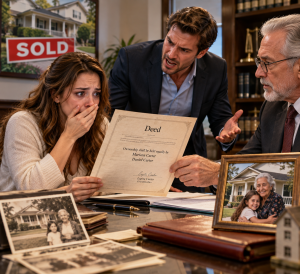
The first time I realized my brother had sold our childhood home, I was sitting in a lawyer’s office with a pen in my hand.
I had no idea why I had been summoned.
My brother, Daniel, sat across from me, avoiding eye contact.
“This won’t take long,” he muttered.
The attorney opened a thick folder.
“The property at 18 Willow Lane is being transferred today.”
I froze.
“Transferred?”
Daniel finally looked at me.
“I sold the house.”
My stomach dropped.
“Our house?”
“Our parents’ house,” he corrected. “It belongs to me now.”
I stared at him in disbelief.
After our mother died, we had agreed that neither of us would sell the house without discussing it with the other.
At least, I thought we had agreed.
Daniel had apparently found a buyer and signed everything without telling me.
Then the attorney reached for another document.
“Before we proceed, there is one issue with the title.”
Daniel’s face suddenly changed.
“What issue?”
The attorney looked at me.
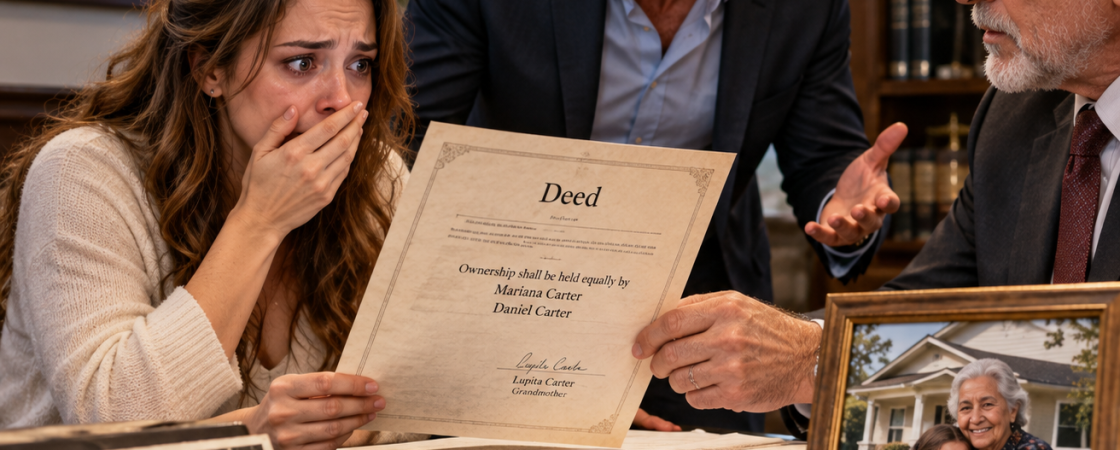
“The deed was changed twelve years ago.”
I frowned.
“Changed by whom?”
He slid the document across the table.
At the bottom was our grandmother’s signature.
My heart began pounding.
Grandma had died years ago.
The attorney quietly said,
“She transferred ownership of the property to both grandchildren equally.”
Daniel stood up so quickly that his chair nearly fell backward.
“That’s impossible.”
The attorney shook his head.
“It was properly recorded.”
Then he turned the page.
“And there’s something else you both need to see.”
Part 2 — Grandma’s Secret
The next page contained a handwritten letter from Grandma.
My hands trembled as I read it.
She explained that she had changed the deed after overhearing Daniel talking about selling the house.
She knew he wanted the money.
But she also knew something Daniel had never told me.
Grandma had discovered that our father had secretly left a second savings account connected to the house.
The money was supposed to pay for repairs and eventually help both of us.
But shortly before Dad died, the account had been emptied.
Grandma suspected someone in the family had taken it.
And she had written one sentence that made Daniel go pale:
“If the house is ever sold, the truth about the missing money must be revealed first.”
The attorney opened another envelope.
Inside were old bank statements.
Thousands of dollars had been withdrawn over several years.
All the withdrawals happened while Daniel had been living in the house.
I looked at my brother.
“Daniel… what is this?”
He wouldn’t answer.
Then the buyer’s attorney entered the room.
He looked confused.
“We’ve just received a notice from the title company. The sale cannot proceed.”
Daniel slammed his hand on the table.
“You can’t stop this!”
The attorney calmly replied,
“Actually, we can.”
Then he placed one final document in front of us.
It was a letter Grandma had instructed her lawyer to open only if Daniel attempted to sell the property without my consent.
And the first sentence read:
“If you’re reading this, my grandson has finally made the mistake I was waiting for.”
Part 3 — What Grandma Knew
The letter revealed everything.
Grandma had known Daniel was planning to sell the house.
She had also known about the missing money.
But she hadn’t accused him because she wanted proof.
She had secretly hired an accountant to trace every withdrawal.
The records showed that Daniel had transferred the money into an account under a company he secretly owned.
He had used the money to pay debts and finance another property.
I looked at him.
“You stole Dad’s money?”
Daniel finally broke down.
He admitted it.
He said he thought no one would ever find out.
He believed the childhood home belonged entirely to him because our father had supposedly left it to him.
But Grandma had discovered the truth.
That’s why she changed the deed.
She made sure the house could never be sold without both grandchildren being involved.
The buyer withdrew from the deal.
Daniel eventually had to repay the missing money, and the house remained jointly owned.
Months later, I returned to the old house alone.
I walked into Grandma’s bedroom and found a small wooden box hidden behind the dresser.
Inside was one final note.
It said:
“A home isn’t valuable because of its walls. It’s valuable because of the people who loved you there. Never let anyone sell your memories for money.”
I sat on the old floor and cried.
For years, I thought Grandma had simply left us a house.
I finally realized she had left us something much more important—
the truth.