Part 1 — “She Doesn’t Know What She’s Saying”
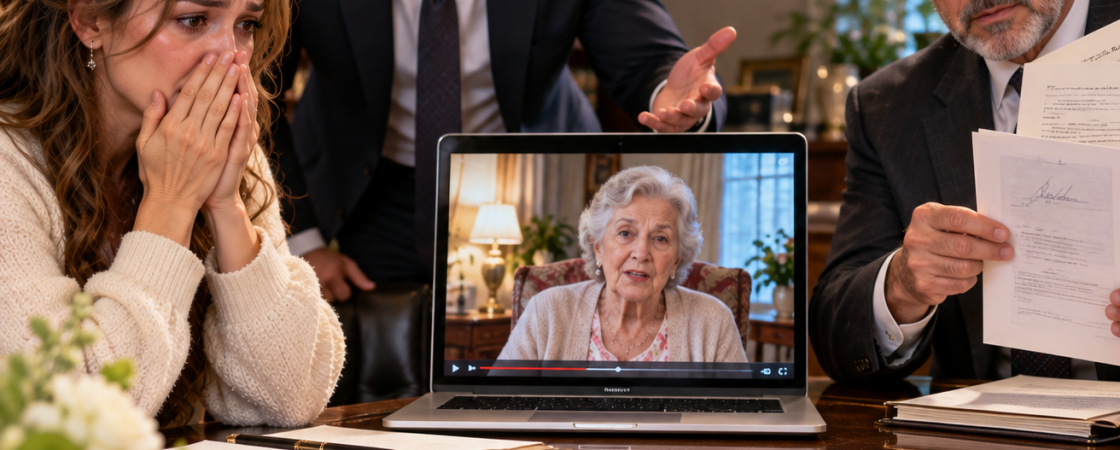
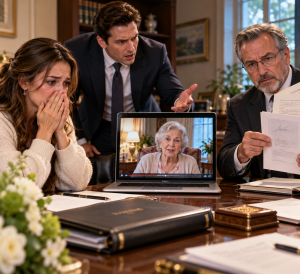
The day Grandma’s will was supposed to be read, my brother Daniel arrived with a lawyer.
He placed a thick medical folder on the table.
Before the attorney could say anything, Daniel spoke.
“Grandma wasn’t mentally competent when she changed her will.”
I stared at him.
“What are you talking about?”
He sighed dramatically.
“She had dementia.”
My stomach dropped.
Grandma had been 84, but until the last months of her life, she remembered everyone’s birthdays, knew exactly where everything was, and could tell stories from decades ago with incredible detail.
Daniel shook his head.
“She couldn’t even remember what she had for breakfast.”
The attorney looked at him carefully.
“Do you have medical documentation supporting that claim?”
Daniel immediately handed him the folder.
Inside were several hospital records.
“She was confused,” Daniel said. “She didn’t know what she was signing.”
Then he looked at me.
“You know what this means, right?”
I didn’t answer.
“If the new will is invalid, the previous will becomes effective.”
I suddenly understood.
The previous will left almost everything to Daniel.
The newer will, signed six months before Grandma died, divided her estate equally between us.
Daniel wanted the old will restored.
The attorney opened the new will.
“Your grandmother specifically requested that this document replace all previous wills.”
Daniel laughed.
“She didn’t understand it.”
I looked at him.
“Did you even visit her?”
His expression hardened.
“I was taking care of her.”
That wasn’t true.
I had been the one visiting Grandma every weekend.
I had helped organize her medications.
I had taken her grocery shopping.
And six months earlier, Grandma had told me something strange.
She had said,
“Your brother is going to tell everyone I’m confused.”
At the time, I didn’t understand.
Now I did.
The attorney suddenly received a phone call.
He listened for several seconds.
Then his expression changed.
“I need everyone to remain here.”
Daniel frowned.
“Why?”
The attorney looked at us.
“The hospital has located an audio recording made by your grandmother six months ago.”
Daniel went completely silent.
Part 2 — Grandma’s Recording
The attorney connected his laptop to the conference-room speaker.
A recording began.
Grandma’s voice filled the room.
Clear.
Calm.
Completely unmistakable.
“Today is March 14th.”
She continued.
“I am recording this because I want there to be no confusion about my wishes.”
Daniel shifted uncomfortably.
Grandma named the date.
She named the hospital.
She named her doctor.
Then she explained why she had changed her will.
“I am fully aware of what I own and who I want to inherit it.”
My eyes filled with tears.
Then Grandma said something that made Daniel’s face turn white.
“I believe my grandson Daniel may try to challenge this will by claiming I am mentally incapable.”
The room went silent.
Daniel stood up.
“This is ridiculous.”
The attorney raised his hand.
“Please sit down.”
The recording continued.
“I am not suffering from dementia. My doctor has explained that I am experiencing occasional memory problems, but I remain capable of understanding my finances and legal decisions.”
Then Grandma explained why she had divided the estate equally.
She didn’t want either grandchild fighting over her money.
But she had one final concern.
“I am especially worried that Daniel has been asking me to sign documents I don’t fully understand.”
Daniel suddenly interrupted.
“That never happened.”
The attorney stopped the recording.
He looked at Daniel.
“Would you like to explain?”
Daniel shook his head.
“She was confused.”
The attorney restarted the recording.
Grandma’s voice continued.
“I have therefore instructed my attorney never to allow Daniel to handle my financial documents without another person present.”
I looked at my brother.
He wouldn’t look at me.
Then came the final part.
Grandma listed exactly what she owned.
The house.
Her investment accounts.
Her savings.
Her jewelry.
And the family business shares.
She knew the exact amounts.
She even joked about the price of a stock she had purchased years earlier.
There was nothing confused about her.
When the recording ended, the room remained silent.
Then the attorney opened another folder.
“These are the medical evaluations from the same month.”
He placed them on the table.
“Her doctors documented that she was mentally competent when she executed the new will.”
Daniel’s face had gone pale.
But then he suddenly smiled.
“You still can’t prove I did anything wrong.”
The attorney looked at him.
“I haven’t accused you of anything.”
Then he pulled out one more document.
“But the hospital gave us something else.”
Daniel stopped smiling.
It was a financial authorization form.
With his signature.
And Grandma’s signature underneath it.
Except Grandma had never signed it.
Part 3 — The Truth Grandma Left Behind
The attorney compared the document with Grandma’s verified signature.
They weren’t the same.
The hospital had also discovered that the authorization had been submitted while Grandma was hospitalized.
Daniel had used it to request information about her investment accounts.
My brother finally admitted it.
He had been trying to find out exactly how much Grandma owned.
He wanted to know whether challenging the new will would be worth the legal expense.
But he never expected Grandma to have protected herself so carefully.
The attorney explained that the recording, medical evaluations, and financial records would all become part of the estate file.
Daniel looked at me.
“You knew she was changing the will?”
“No.”
He lowered his voice.
“Then why did she trust you more?”
I thought about Grandma.
About all the weekends I had spent sitting beside her.
About the meals we cooked together.
About the stories she told me.
I finally answered.
“She didn’t trust me because I was better than you.”
I paused.
“She trusted me because I never asked her for anything.”
Daniel looked away.
The new will was upheld.
Grandma’s estate was divided exactly as she had instructed.
But the most valuable thing I received wasn’t the money.
It was a small envelope the attorney handed me afterward.
My name was written on the front in Grandma’s handwriting.
Inside was a short note.
“If you’re reading this, someone probably tried to speak for me after I was gone.”
I started crying.
Grandma continued:
“Please remember that getting older doesn’t mean losing your voice. I made this recording because I wanted my own words to survive me.”
At the bottom, she had written one final sentence:
“Never let someone rewrite the truth simply because they think I won’t be here to correct them.”
I folded the letter carefully.
My brother had tried to convince everyone that Grandma couldn’t remember her own wishes.
But Grandma had planned for exactly that.
Six months before she died, she had left behind her own voice—
and it told the truth.