PART 1 — The Photograph
My brother Daniel died when he was twenty-two.
The Navy called it a training accident.
That was the phrase repeated at his funeral.
“A tragic accident during a routine exercise.”
Twenty-five years later, I still remembered every word.
Daniel had joined the Navy because he wanted to see the world.
He was the adventurous one in our family.
The night before he left for training, he sat on my bedroom floor and joked about how he was finally escaping our small town.
“Don’t forget me when I become famous,” he said.
I laughed.
“You’ll be begging me to visit.”
He smiled.
“I’ll send you a postcard.”
He never did.
Three months later, my parents received the news.
Daniel had died during a training exercise at sea.
The official report said he had fallen overboard during a nighttime exercise.
His body was never recovered.
For years, I asked questions.
Why had he been training at night?
Why had no one been able to save him?
Why was there so little information?
Every time, I received the same answer.
“It was an accident.”
Eventually, my parents stopped talking about it.
Then my father died.
Then my mother.
And Daniel became a name we rarely said aloud.
Until one afternoon, an envelope arrived at my house.
There was no return address.
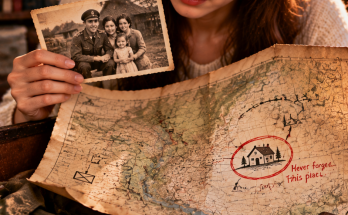
Inside was a photograph.
I nearly dropped it.
Daniel was standing on the deck of a Navy vessel.
He was smiling.
But he wasn’t alone.
Three other sailors stood beside him.
And one of them had written something on the back.
“This is the last photograph taken before they told us Daniel was dead.”
Below that was a phone number.
I called immediately.
An elderly man answered.
“Hello?”
“Is this James Miller?”
Silence.
“Yes.”
“My name is Sarah Carter.”
Another silence.
“My brother was Daniel Carter.”
His voice suddenly became quiet.
“I know who you are.”
My heart started pounding.
“You knew my brother?”
“I served with him.”
“Then tell me what happened.”
He exhaled slowly.
“Sarah…”
“What?”
“I’ve been waiting twenty-five years for someone in your family to ask that question.”
Then he said something I’ll never forget.
“Daniel didn’t fall overboard.”
PART 2 — The Last Training Exercise
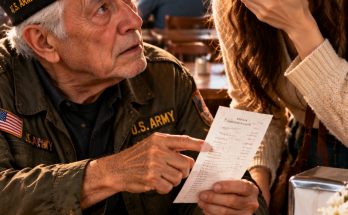
James agreed to meet me at a small diner near the harbor.
He arrived carrying a worn leather folder.
He looked nothing like the young sailor in the photograph.
But when he placed the photograph on the table, I recognized his younger face immediately.
“You were there?”
“Yes.”
“The night Daniel died?”
James nodded.
I waited.
Finally, he opened the folder.
Inside were copies of old training schedules, handwritten notes, and photographs.
He pointed to one document.
“This was the official exercise plan.”
I read it carefully.
Daniel’s assigned position had been on the upper deck.
But another handwritten note showed something different.
“Why was he moved?”
James looked at me.
“He wasn’t supposed to be there.”
“Where was he supposed to be?”
“Inside.”
My stomach tightened.
James explained that the training exercise had been changed at the last minute.
Daniel had been ordered onto the upper deck to assist with equipment.
The sea was rough.
Visibility was poor.
Then something went wrong.
“There was a collision?”
“No.”
“An explosion?”
“No.”
“Then what?”
James leaned forward.
“Someone gave Daniel the wrong order.”
I stared at him.
“Who?”
“I don’t know.”
“You must know.”
“I know who gave the order. I don’t know why.”
He slid another photograph toward me.
It showed Daniel standing beside a piece of equipment.
On the back was Daniel’s handwriting.
“Something isn’t right with this exercise.”
My hands began to tremble.
“What did he know?”
James looked around the diner.
“Daniel had discovered that some of the equipment being used for the exercise had a serious defect.”
“What kind of defect?”
“A safety failure.”
I stared at him.
“Did he report it?”
“Yes.”
“And then he died?”
James didn’t answer.
That was answer enough.
I felt sick.
For twenty-five years, we’d believed Daniel had simply fallen into the ocean.
But James told me something even stranger.
Daniel hadn’t disappeared immediately.
“He was alive after he went overboard.”
I froze.
“What?”
“We heard him.”
“You heard him?”
“Yes.”
James’s eyes filled with tears.
“He was calling for help.”
“Then why didn’t anyone save him?”
James lowered his voice.
“Because the rescue boat wasn’t deployed.”
My heart stopped.
“Why?”
“That is the question I’ve been asking myself for twenty-five years.”
He opened the leather folder again.
At the bottom was a small cassette tape.
“Daniel gave this to me earlier that day.”
I stared at it.
“What is it?”
“His recording.”
“Of what?”
James looked directly at me.
“He recorded a conversation with the officer who ordered the exercise.”
I couldn’t breathe.
“Does the recording still work?”
James nodded.
“But there’s something you need to know before you hear it.”
“What?”
He pushed the cassette toward me.
“Daniel knew he might not come back.”
PART 3 — What Daniel Left Behind
I took the cassette home.
I found an old player in my father’s attic.
For several minutes, I couldn’t press the button.
I was terrified.
Then I finally pushed PLAY.
Static filled the room.
Then I heard a voice.
Daniel.
My little brother.
Older than I remembered.
But unmistakably him.
“If you’re listening to this, something went wrong.”
My eyes filled with tears.
Daniel continued.
He explained that he had discovered the equipment problem during training.
He had reported it.
But someone had told him to remain silent because stopping the exercise would cause a major investigation.
Daniel refused.
Then came the part that changed everything.
He had recorded a conversation with a senior officer.
The officer told Daniel that the equipment would be used anyway.
Daniel asked what would happen if someone got hurt.
The officer answered:
“Then we’ll call it an accident.”
I covered my face.
Not because I was surprised.
Because I finally understood why my brother had been afraid.
Daniel knew.
He knew the exercise was dangerous.
He knew people were ignoring the problem.
And he had tried to stop it.
Then the recording ended.
But there was one final message.
Daniel’s voice became softer.
“Sarah, if this somehow reaches you… don’t blame yourself for not knowing.”
I began crying.
“You always worried about me.”
A pause.
“Tell Mom and Dad I love them.”
Then:
“And tell Sarah I’m sorry I never sent that postcard.”
I laughed through my tears.
Even at the end, he remembered.
James helped me contact the surviving sailors.
Together, we provided the recording, photographs, and documents to the appropriate authorities.
The original investigation was reviewed.
Years later, the official record was amended to acknowledge that Daniel’s death involved failures that had not been fully documented in the original account.
It didn’t bring him back.
Nothing could.
But for the first time in twenty-five years, his death wasn’t simply described as an accident.
It had a story.
It had evidence.
And it had his voice.
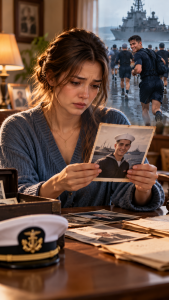
I framed the photograph James had sent me.
Daniel was smiling in it.
Young.
Alive.
Completely unaware that the photograph would someday become the first clue to the truth.
I placed it beside a photograph of our parents.
Then I whispered:
“I’m sorry it took me twenty-five years.”
I touched Daniel’s face in the photograph.
“But I finally heard you.”
And underneath his photograph, I placed one sentence:
“He wasn’t forgotten. Someone simply had to keep asking what really happened.”