My neighbor took almost everything from my garden while I was away at my sister’s house.
She thought I would come home angry.
She thought I would march straight to her door and demand an explanation.
Instead, I decided to let the truth speak for itself.
My name is Margaret, and my husband, Daniel, passed away earlier that spring.
For twenty-eight years, he had taken care of the vegetable garden behind our house.
Tomatoes were his specialty.
He had built wooden supports for the vines, saved seeds from the best tomatoes every year, and kept an old notebook where he wrote down exactly when each variety should be planted.
After he died, I couldn’t bring myself to touch the garden.
Then one afternoon, I found our sixteen-year-old daughter, Lily, standing beside the tomato plants.
She was holding one of her father’s old gardening gloves.
“Mom,” she said quietly, “I think Dad would want us to finish what he started.”
So we did.
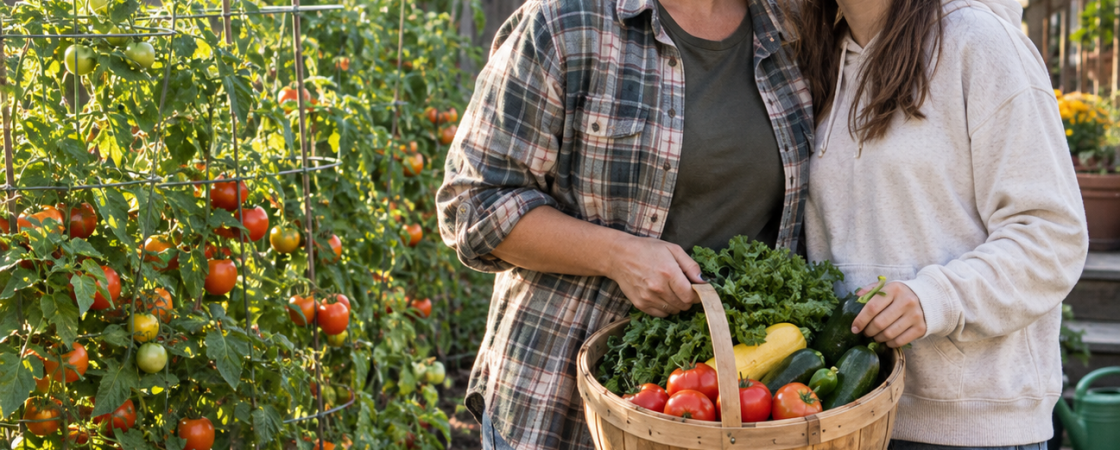
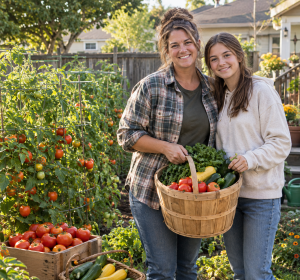
For months, Lily and I watered the plants, tied up the vines, removed weeds, and watched the tiny green tomatoes slowly turn red.
By August, the garden was overflowing.
There were baskets of tomatoes, peppers, cucumbers, and squash everywhere.
It was the first thing in months that made our house feel alive again.
Then one Saturday morning, I woke up early and noticed something strange.
Several baskets were missing.
I checked the garage.
Nothing.
I walked into the garden.
Whole sections had been harvested.
Then I noticed footprints leading toward the fence we shared with our neighbor, Carol.
Carol had always been friendly enough, but she had a habit of treating other people’s things as though they were available to her.
I walked toward her backyard.
There, beside her garage, were three large boxes.
And inside those boxes were our tomatoes.
I knocked on her door.
Carol opened it casually.
“Can I help you?”
I pointed toward the boxes.
“Those came from my garden.”
She didn’t even look embarrassed.
“Oh, those? I thought you had too many.”
“You thought?”
She shrugged.
“You can’t possibly eat all of them.”
I stared at her.
“My husband grew those.”
Her expression changed for only a second.
Then she said,
“Well, he’s not using them anymore.”
Lily was standing behind me.
I saw her face fall.
I took a slow breath.
“Put them back.”
Carol laughed.
“You’re being dramatic.”
I didn’t argue.
I simply turned around and walked home.
That evening, Lily asked me,
“Are we going to do anything?”
I looked toward the garden.
“No.”
She looked surprised.
“Then what are we going to do?”
I smiled.
“We’re going to wait.”
Because I had just remembered something Carol didn’t know.
And by the next morning, the entire neighborhood was going to know exactly what she had done.
PART 2 — The Plan
The next morning, I didn’t confront Carol.
Instead, I called the community garden committee.
Our neighborhood had a small weekend farmers’ market where residents could sell homemade food and produce.
Carol had been telling everyone for weeks that she planned to have a huge vegetable stand there.
Apparently, she had already printed signs advertising “Carol’s Garden Fresh Produce.”
I knew exactly what she intended to do.
She planned to sell the vegetables she had stolen from us.
So Lily and I spent the afternoon gathering evidence.
We photographed the garden.
We photographed the empty sections.
We photographed Daniel’s handwritten gardening notebook.
And then we found something even better.
Every year, Daniel had marked his vegetable crates with a tiny wooden stamp.
A little blue bird.
It was his personal mark.
When I went back to Carol’s garage, I could see those same blue birds stamped on the boxes.
There was no question where the vegetables had come from.
But I still didn’t confront her.
Instead, I called the farmers’ market organizer and explained what had happened.
She asked me to bring the photographs and Daniel’s notebook.
The next morning, Lily and I arrived early at the market.
Carol was already there.
Her table was covered with our tomatoes, cucumbers, peppers, and squash.
A giant sign read:
CAROL’S FARM FRESH VEGETABLES
She was smiling proudly as neighbors walked past.
Then she saw me.
Her smile disappeared.
“You’re not going to cause a scene, are you?” she whispered.
“No.”
She looked relieved.
Then I placed Daniel’s old notebook on the table.
Carol stared at it.
I opened it to a page where Daniel had recorded the planting dates.
Then I placed photographs beside it.
Finally, I put one of his wooden blue-bird stamps on the table.
“This is my husband’s garden,” I said quietly.
Carol’s face went pale.
“You can’t prove—”
A woman standing nearby interrupted.
“Actually, she can.”
It was the market organizer.
She had already seen everything.
She asked Carol where she had obtained the vegetables.
Carol couldn’t answer.
People began gathering around the table.
Someone recognized the blue bird stamp.
Another neighbor remembered seeing Lily working in the garden all summer.
Then something unexpected happened.
An elderly man from two streets away stepped forward.
He pointed toward Carol’s truck.
“I saw you loading those boxes late Friday night.”
Carol looked around desperately.
Suddenly, the confident woman who had laughed at me in her kitchen had nothing to say.
The organizer told Carol that she could not sell the produce.
But I wasn’t finished.
I picked up one of the tomatoes.
“This isn’t about the money,” I said.
“It never was.”
Carol looked at me.
“Then what do you want?”
I looked directly into her eyes.
“I want you to understand what you took.”
And then I told everyone about Daniel.
I told them about his notebook.
About the wooden supports he built.
About how Lily had learned gardening from him.
And about why those vegetables meant far more to us than their price at a market.
The crowd became completely silent.
Carol lowered her head.
But the biggest surprise was still waiting for her.
PART 3 — What She Had To Face
Carol stood behind her table while everyone watched.
For the first time, she wasn’t angry.
She wasn’t defensive.
She wasn’t making excuses.
She simply looked embarrassed.
Then she quietly said,
“I’ll give everything back.”
I nodded.
But I told her something she wasn’t expecting.
“You can keep the vegetables.”
She looked confused.
“What?”
“Keep them.”
Lily looked at me in surprise.
I continued.
“But tomorrow, you’re going to come to my garden.”
Carol didn’t understand.
“You’re going to help us rebuild what you damaged.”
She swallowed.
“You mean… work?”
“Yes.”
“For how long?”
“As long as it takes.”
The next morning, Carol showed up.
She helped repair the broken tomato supports.
She replaced the plants she had damaged.
She cleaned the garden paths.
And when she finished, Lily handed her one of Daniel’s old gardening gloves.
Carol looked at it for a long moment.
Then she said quietly,
“I shouldn’t have taken anything.”
“No,” I replied.
“You shouldn’t have.”
She looked toward the garden.
“I thought because you were alone, you wouldn’t notice.”
I shook my head.
“I noticed everything.”
She apologized to Lily too.
That mattered more to me than anything else.
A few weeks later, the garden began producing again.
Not as much as before.
But enough.
Lily and I harvested the first tomatoes together.
She picked up the biggest one and smiled.
“Dad would have been proud.”
I smiled back.
“Yes, he would.”
As for Carol, she never stole from our garden again.
In fact, something strange happened the following spring.
She planted her own garden.
And every time she saw us outside, she waved.
She finally understood the lesson I wanted her to learn:
Sometimes the most powerful way to deal with someone who has wronged you isn’t to destroy them.
It’s to make them face what they did—and give them the chance to become better afterward.