PART 1: MY GRANDDAUGHTER WHISPERED, “GRANDPA, STOP PAYING DAD”—THEN I DISCOVERED WHERE MY $280,000 HAD REALLY GONE
For seven years after my daughter died, I sent my son-in-law $40,000 every January to raise my granddaughter. I never questioned a single payment—until my seven-year-old granddaughter grabbed my hand one afternoon and whispered, “Grandpa, please stop giving Daddy money. He says I’m not allowed to tell you what he does with it.”
I thought I was keeping my daughter’s final promise.
I never imagined I was helping someone destroy everything she had left behind.
My daughter, Rachel, was my only child. Before she died, she made me promise to protect her little girl, Sophie, no matter what happened.
“Dad,” she told me during our last Christmas together, “if anything ever happens to me, please make sure Sophie never feels alone.”
Three months later, Rachel died in a highway accident.
Her husband, Daniel, told me she had died instantly. The police confirmed the accident, and I buried my daughter with a grief so heavy that even breathing felt like work.
My wife, Margaret, never recovered from losing Rachel. She passed away the following year, leaving me alone with my memories, my small hardware business, and the only piece of my daughter still living in this world.
Sophie.
Daniel was only thirty-four when he became a widower. He told me he was struggling to raise a young child while working full-time, so I offered to help.
Every January, I transferred $40,000 into his account.
I told myself it would pay for Sophie’s education, clothes, medical care, and whatever opportunities she deserved.
Over seven years, I sent him $280,000.
I never asked for receipts.
I never questioned his decisions.
I trusted him because he was the father of my granddaughter.
Every Sunday, I took Sophie to lunch. We visited the park, bought ice cream, and talked about her schoolwork. She was a bright little girl with her mother’s smile, and whenever she laughed, I felt as though Rachel had somehow returned for a moment.
But one afternoon, everything changed.
We were sitting on a bench outside a small bakery when Sophie suddenly stopped eating her strawberry cupcake.
“Grandpa, can I ask you something?”
“Anything, sweetheart.”
“Do you give Daddy money every year?”
I smiled sadly.
“Yes. It’s to make sure you have everything you need.”
She looked down at her shoes.
“But I don’t have my own bedroom anymore.”
I frowned.
“What do you mean?”
“Daddy says we have to live in his friend’s apartment because our house belongs to someone else now.”
My stomach tightened.
Daniel had told me two years earlier that he had purchased a beautiful home for Sophie. He had even sent me a message thanking me for helping make it possible.
“Where is the house I helped you buy?” I asked.
Sophie began twisting the ribbon on her sleeve.
“Daddy says I’m not supposed to talk about it.”
I leaned closer.
“Sweetheart, you can tell Grandpa anything.”
Her eyes filled with tears.
“Daddy gets angry when I ask about Mommy’s things. He put all her boxes in a storage place, and last week I heard him talking to a lady on the phone.”
“What lady?”
Sophie looked around to make sure nobody was listening.
“She asked him if the money was enough to keep you from asking questions.”
For a moment, I couldn’t speak.
Then Sophie reached into her little backpack and pulled out a folded piece of paper.
“I found this in Daddy’s desk. I don’t know what it means, but he told someone he was going to make everything disappear before my birthday.”
I unfolded it.
It was a bank statement showing a transfer of $40,000 into an account I had never seen before.
The account belonged to a company called R.M. Legacy Holdings.
At the bottom of the page was a handwritten note.
“Final payment received. Property transfer scheduled for October 18.”
My hands began to shake.
October 18 was only twelve days away.
I looked at my granddaughter.
“Did your father tell you what happens on that day?”
Sophie shook her head.
Then she whispered six words that made my blood run cold.
“Grandpa, I think Daddy is selling me.”
I pulled her into my arms.
“No one is selling you, sweetheart. I promise.”
But as I drove her home that evening, I noticed a black SUV following us.
It turned when I turned.
It stopped when I stopped.
And when I finally reached my driveway, my phone rang.
An unfamiliar man spoke before I could say hello.
“Mr. Miller, if you care about your granddaughter, stop investigating your son-in-law.”
Then he added something that made my heart nearly stop.
“Your daughter Rachel didn’t die the way you’ve been told.”
PART 2: THE STRANGER KNEW MY DAUGHTER’S SECRET—AND THE HOUSE I BOUGHT FOR MY GRANDDAUGHTER DIDN’T EXIST
I barely slept that night.
The stranger’s words kept replaying in my mind.
Your daughter Rachel didn’t die the way you’ve been told.
The following morning, I contacted the detective who had handled Rachel’s accident seven years earlier. He was retired now, but when I gave him the name of my son-in-law, his voice changed.
“Mr. Miller, I can’t discuss every detail over the phone. But there were questions about that accident that we never resolved.”
“What questions?”
A long silence followed.
“Meet me tomorrow. Bring whatever documents you have.”
Before the meeting, I visited my bank.
I asked them to trace the $280,000 I had transferred to Daniel over the years. The manager explained that the money had passed through several accounts before reaching R.M. Legacy Holdings.
The company had been registered just months after Rachel’s death.
Its listed director was a woman named Vanessa Reed.
I recognized the name immediately.
Vanessa was the woman Sophie had overheard speaking to her father.
I asked the bank manager to print the transaction history. As I read through the pages, I discovered that my money had paid for luxury hotel stays, expensive jewelry, a sports car, and monthly payments on a property in another state.
There was no education fund.
No savings account for Sophie.
No house purchased in her name.
The $280,000 I had sent to protect my granddaughter had been used to build a life Sophie had never been invited to share.
That afternoon, I drove past the address Daniel had given me as his new home.
A real estate sign stood on the lawn.
The property was empty.
A neighbor recognized Daniel’s name and told me he had sold the house nearly three years earlier.
I stood outside the gate, struggling to understand how someone could accept a grieving grandfather’s money year after year while allowing his own child to live without a stable home.
Then I remembered Sophie’s words.
He gets angry when I ask about Mommy’s things.
I called Daniel and asked whether Sophie could spend the weekend with me.
He refused immediately.
“She has schoolwork. And I don’t want you confusing her with questions about her mother.”
“I’m her grandfather.”
“And I’m her father. Don’t forget that.”
He hung up.
An hour later, he sent me a message.
Stop asking Sophie about money. If you keep interfering, you won’t see her again.
That was when I knew this was no longer simply about money.
The next day, I met the retired detective in a quiet diner.
He brought an old folder containing photographs of the accident scene, witness statements, and a report I had never seen.
“Rachel’s car left the road during heavy rain,” he explained. “But another vehicle was reported near the scene. We never identified the driver.”
“Are you saying someone caused the accident?”
“I’m saying we couldn’t prove what happened. Don’t jump to conclusions.”
He opened another document.
Rachel had called emergency services shortly before the crash. The recording had been preserved, but the relevant section had been difficult to interpret because of the damage and background noise.
The detective had requested a new review.
Before I left, he gave me one more piece of information.
“Your daughter had contacted a lawyer three days before the accident. She was preparing documents concerning a family trust.”
“What trust?”
He looked at me carefully.
“A trust established by your late wife. It was intended to provide for Sophie. Rachel was its trustee, and you were named as the person who would take over if she died.”
I stared at him.
“My wife never told me about a trust.”
“According to the documents, it held considerably more than the money you’ve been sending Daniel.”
“How much?”
“Approximately $6.8 million, including property and investments.”
My mouth went dry.
The trust had been created to ensure Sophie would never be financially dependent on anyone who might exploit her.
Yet Daniel had been receiving my money for seven years while claiming to be struggling.
And now someone was preparing to transfer property connected to the trust.
I returned home and searched through the few legal papers Margaret had left behind. At the bottom of an old cabinet, I found a letter addressed to me in her handwriting.
Inside was a key and a note.
If anything happens to Rachel, the truth is in the place where we planned to keep Sophie’s future safe. Do not trust anyone who asks you to sign away your rights.
The key opened a private safe-deposit box.
Inside were trust documents, property deeds, and a sealed envelope bearing Rachel’s name.
I opened it with trembling hands.
Rachel had written the letter two weeks before her death.
She described discovering suspicious transfers from the family trust. She suspected someone had been using forged documents to move money and property without her permission.
At the end, she wrote:
Dad, if you are reading this, please don’t confront Daniel until you understand who is helping him. I found evidence that someone close to us has been planning this for a long time.
Beneath the letter was a copy of a document scheduled for October 18.
It authorized the transfer of the remaining trust assets to R.M. Legacy Holdings.
The signature at the bottom appeared to be mine.
But I had never signed it.
I took the papers to a lawyer the next morning. After reviewing them, she immediately contacted the trust administrator and requested an emergency hold on the transfer.
Then she examined the document more closely.
“Mr. Miller, this signature may be forged. And the person who submitted it claims to have your authorization.”
“Who?”
She turned the page toward me.
The witness listed beneath the signature was Vanessa Reed.
The same woman connected to Daniel’s company.
But the final line contained another name.
Margaret Miller.
My dead wife.
The document was dated six months after her funeral.
I felt the room tilt around me.
Someone had used my wife’s name after her death.
Someone had forged my signature.
And someone was preparing to steal the future she had built for our granddaughter.
My lawyer picked up her phone.
“We need to stop this transfer immediately.”
Before she could make the call, my own phone rang.
It was Sophie.
She was crying so hard I could barely understand her.
“Grandpa, please come get me.”
“Where are you, sweetheart?”
“At home. Daddy is packing my clothes. He says we’re leaving tonight.”
“Leaving for where?”
She lowered her voice.
“I heard him tell Vanessa that once the papers are signed, nobody will ever find us.”
Then I heard a man’s voice in the background.
“Who are you talking to?”
Sophie screamed.
The call went dead.
I grabbed my keys and ran for the door.
But when I reached Daniel’s apartment, it was empty.
On the kitchen counter lay Sophie’s schoolbag, her favorite stuffed rabbit, and a note addressed to me.
“If you want to see your granddaughter again, cancel the lawyer’s appointment.”
PART 3: I STOPPED THE $6.8 MILLION TRANSFER—THEN THE WOMAN WHO KNEW MY DAUGHTER’S FINAL SECRET WALKED INTO COURT
For several minutes, I stood in Daniel’s empty apartment, unable to move.
Sophie’s little rabbit lay on the counter beside the note.
I picked it up and held it against my chest.
My granddaughter had lost her mother. She had grown up believing her father was the only parent she had left. And now he had taken her away because I had finally started asking questions.
I wanted to call the police and accuse Daniel of everything.
My lawyer stopped me.
“We need to act carefully. We don’t know where Sophie is, and we don’t want him moving her farther away. We’ll report her missing, preserve the evidence, and seek an emergency order.”
That evening, we contacted the authorities.
The forged signature, the suspicious transfers, the trust documents, and the threats against me were enough to trigger an investigation into the planned property transfer.
The court froze the remaining trust assets before October 18.
For the first time in seven years, Daniel could no longer move the money as he pleased.
But Sophie was still missing.
The next morning, an investigator found that Daniel had rented a furnished house under another name. Vanessa had paid the deposit.
Authorities located the property and confirmed that Sophie was there. After a welfare check and coordination with the appropriate officials, she was brought somewhere safe while the adults’ claims were investigated.
When I finally saw her, she ran into my arms.
“Grandpa, I’m sorry,” she sobbed. “Daddy said everything was my fault because you stopped giving him money.”
I held her tightly.
“You have never done anything wrong. Not one thing.”
She buried her face in my jacket.
“Are you going to leave me too?”
I felt something break inside me.
“Never, sweetheart. I’m here.”
The investigation uncovered more than any of us expected.
Vanessa had helped Daniel establish R.M. Legacy Holdings. Investigators found records suggesting that money intended for Sophie had been diverted into personal accounts and that documents had been submitted to transfer assets without proper authorization.
The investigation also revealed that Rachel had challenged suspicious financial activity shortly before her death.
That discovery prompted authorities to reopen parts of the accident investigation. They reviewed the original evidence, interviewed witnesses again, and examined the recovered emergency call.
The results did not immediately prove that anyone had caused the crash. But they established that Rachel had been trying to protect the trust and had feared that someone was taking money that did not belong to them.
Then, three weeks later, a woman appeared at my lawyer’s office.
She was in her late fifties, dressed in a plain gray coat, and carrying a thick folder.
“My name is Helen Brooks,” she said. “I was Rachel’s attorney.”
I stared at her.
“Why didn’t you contact me seven years ago?”
She lowered her eyes.
“Because I was told you had already been informed that Rachel wanted everything left to Daniel.”
“That was a lie.”
“Yes,” she whispered. “I eventually discovered that.”
Helen explained that Rachel had visited her shortly before the accident. She wanted to protect Sophie’s inheritance and had requested an independent review of the trust’s finances.
Rachel had also asked Helen to prepare a statement documenting her concerns about unauthorized transfers.
But the appointment to sign the final documents never happened.
Helen had spent years trying to establish what happened to the missing records. She had recently discovered that a duplicate set had been kept in a secure archive.
She placed a small envelope on the table.
“Rachel asked me to give you this if the trust was ever threatened again.”
Inside was a short handwritten note.
Dad, I know you trust people because you want to believe the best in them. Please remember that protecting Sophie doesn’t mean keeping the peace. Sometimes it means telling the truth, even when the truth destroys the family you thought you had.
I read it twice.
Then I cried for the daughter I had lost and the seven years I could never recover.
Helen also gave us evidence that helped investigators establish the timeline of the disputed transactions and the efforts to conceal them. The material became part of the ongoing legal proceedings.
Daniel and Vanessa were eventually required to answer questions about the money, the trust documents, and Sophie’s sudden relocation. The courts handled the financial claims separately from the child-custody proceedings, and the investigation into Rachel’s accident continued.
The legal process took months.
Some of the money was recovered. Other assets had been sold or spent, and recovering everything would take time.
But the trust was protected, Sophie had a safe place to live, and the court established safeguards around her care and inheritance.
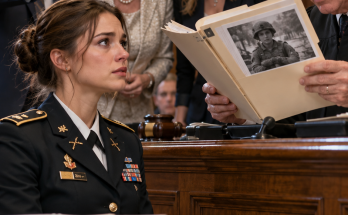
On the day of the final hearing concerning the disputed transfer, Daniel sat across the courtroom from me.
He looked older than I remembered.
When the judge asked whether he had anything to say, he stood.
“I was trying to build a future,” he said. “I made mistakes, but I never stopped loving my daughter.”
I looked at him.
“Then why did you make her afraid to tell the truth?”
He had no answer.
The judge ordered further financial accounting and left the criminal allegations to the appropriate proceedings. Daniel’s access to the trust remained restricted, and decisions about Sophie’s care were made according to her safety and best interests.
Outside the courtroom, Helen approached me.
“There is one more thing Rachel wanted you to know,” she said.
I braced myself.
“Before the accident, she had arranged for Sophie to receive a letter on her eighteenth birthday. It was meant to explain the trust and tell her about the family who had worked to protect her.”
“Can I read it?”
Helen shook her head gently.
“It was written for Sophie. She should decide when she’s ready.”
For once, I understood that protecting my granddaughter didn’t mean controlling every part of her life. It meant giving her the safety, honesty, and choices that had been taken from her for too long.
That evening, Sophie and I sat beneath the old oak tree where we had shared ice cream for years.
She rested her head against my shoulder.
“Grandpa, is Mommy’s money still there?”
“Some of it is,” I told her. “And we’re going to keep working to recover what belongs to you.”
She thought about that for a moment.
“Can we use some of it to help children who don’t have a grandpa?”
I smiled through my tears.
“Yes, sweetheart. When you’re older, you can help decide how.”
She took my hand.
“Mommy would like that.”
I looked up at the evening sky and finally understood something I should have known all along.
I had spent seven years believing that sending money was the same as keeping my promise.
It wasn’t.
My promise was to protect a little girl, even when doing so meant questioning someone I loved, facing painful truths, and refusing to let fear decide what happened next.
And the greatest inheritance my granddaughter would receive was not the $6.8 million trust.
It was the freedom to grow up knowing that she was loved, that the truth mattered, and that she never had to keep a dangerous secret to protect the adults around her.
But just as we were getting ready to leave, my phone buzzed.
An unknown number had sent me a message.
There was only one sentence:
“Mr. Miller, Daniel wasn’t the first person to use Rachel’s name. Ask who changed the original trust seven years before she died.”
I stared at the screen.
Because seven years before Rachel’s death, the trust had been created by my wife.
And the only person who could have changed its original terms was someone who had known our family long before Daniel ever joined it.
Someone I had trusted for more than forty years.
Someone whose name I had never thought to question.