PART 1: THE WOMAN THEY THOUGHT HAD NOTHING
The moment my husband walked into divorce court with three expensive attorneys and his pregnant mistress, he smiled at me as if my defeat had already been signed, sealed, and delivered.
He had no idea that the woman sitting alone at the opposite table had spent eleven years protecting the very empire he intended to use against her.
My name is Claire Bennett. I was thirty-six years old, the mother of twin boys, and—according to my husband’s legal team—a financially dependent housewife who had never contributed a single dollar to our family’s success.
My husband, Nathan Whitmore, was the celebrated founder of Whitmore Medical Technologies, a company valued at nearly twenty-five million dollars.
Business magazines praised him as a visionary. Investors admired his intelligence. Television hosts called him one of the most promising entrepreneurs on the East Coast.
And his employees believed he had built everything from nothing.
That was the story Nathan had carefully constructed.
For eleven years, I had allowed him to tell it.
I remembered the first night we met. Nathan was twenty-seven, brilliant but broke, working out of a rented room above a struggling pharmacy. He had developed a prototype for a portable medical monitoring device that could help doctors identify dangerous changes in patients before their conditions became critical.
He had the idea.
I had the resources to make it real.
My father, Dr. Thomas Bennett, had spent forty years building a medical equipment company before selling it shortly before his death. He left me a substantial inheritance, along with a trust designed to support investments that could improve people’s lives.
When Nathan showed me his prototype, I saw something extraordinary.
I invested $1.8 million from my inheritance into the first version of his company. I hired engineers through professional contacts, negotiated with suppliers, and spent months helping prepare presentations for potential investors.
The original company documents listed me as the majority shareholder.
Nathan was the chief executive officer.
He was the face of the business, and I was the person working behind the scenes to keep it alive.
We agreed that way because I trusted him.
When our twin sons, Ethan and Noah, were born, I stepped away from daily operations. Nathan promised that my shares would remain protected and that I could return whenever I wanted.
For a while, our life was beautiful.
Then the money grew.
The company signed contracts with major hospital networks. Investors began calling Nathan a genius. Our modest house became a sprawling estate, and our family vacations moved from quiet beach towns to private villas overlooking the Mediterranean.
The more successful Nathan became, the less he mentioned my contribution.
At first, I told myself it didn’t matter.
I knew what I had done.
But eventually, Nathan stopped saying we had built the company together.
He began saying, “I built this company.”
Then came the late nights, the secretive phone calls, and the sudden insistence that his business affairs were none of my concern.
Six months before he filed for divorce, I discovered the truth.
His mistress was Vanessa Cole, the company’s director of investor relations. She was twenty-nine, glamorous, ambitious, and completely convinced that Nathan’s fortune belonged to him alone.
One evening, I found a message on his tablet.
Once the divorce is final, we can stop pretending. Claire won’t get anything important. The prenup protects us.
Another message followed.
And once I have full custody, she won’t have any leverage left.
I read the words several times.
Then I looked through the financial records Nathan had carelessly left open on his desk.
I found transfers between company accounts, documents relating to a planned merger, and a draft agreement proposing to move several valuable assets into a new holding company.
My name appeared nowhere.
The next morning, Nathan placed divorce papers on the breakfast table.
“I want this to be civilized,” he told me.
I looked at the papers.
“You’ve already decided what happens to the boys?”
“They’ll be better off with me. You have no income, Claire. No career. No real way to support them.”
“And the company?”
He gave me a pitying smile.
“The company is mine. You signed the prenup.”
I remembered signing it nine years earlier, just days before our wedding.
Nathan’s attorney had assured me it was a standard agreement. I had asked for time to review it independently, but Nathan had held my hands and promised that we would never need to use it against each other.
I had trusted my future husband.
Now he was using that trust as a weapon.
I refused to sign the settlement.
Nathan’s expression hardened.
“You’re making a mistake.”
“No,” I replied quietly. “I’m finally correcting one.”
He laughed.
Three weeks later, his lawyers filed for primary custody of our sons and demanded that the court recognize his exclusive ownership of the business and its assets.
His legal team was led by Richard Sloan, a powerful attorney known for representing wealthy executives in high-profile divorces.
Richard believed the case was simple.
Nathan had a prenup, a substantial income, and a team of financial experts. I had no current salary and no attorney listed on my initial response.
What Richard didn’t know was that I had spent the previous month meeting privately with the attorney who had drafted the company’s original incorporation documents.
And I had discovered something Nathan never expected me to find.
The morning of the hearing arrived cold and rainy.
At 9:00 a.m., I entered the courthouse wearing a simple navy dress. I carried a leather folder and a small photograph of my sons tucked inside my handbag.
Across the corridor, Nathan stood surrounded by his three attorneys.
Vanessa was beside him in a fitted cream dress, her diamond ring catching the overhead lights.
She placed one hand protectively over her stomach.
When she noticed me, she leaned toward Nathan and whispered something.
They both laughed.
Richard approached me.
“Mrs. Whitmore, my client is willing to offer you a modest financial settlement if you withdraw your claim to the company and agree to the proposed custody arrangement.”
“How modest?”
“Two hundred thousand dollars. A generous amount considering your limited contribution to the business.”
I stared at him.
“Limited contribution?”
He adjusted his tie.
“You were a homemaker. Mr. Whitmore built a multimillion-dollar company.”
I opened my folder just enough for him to see the first page.
His smile disappeared when he noticed the date on the document.
“That cannot be—”
“It is,” I said.
Before he could respond, the courtroom doors opened.
The clerk called our case.
Nathan entered first, confident and smiling. Vanessa followed him to the gallery, where she settled into a seat behind his attorneys.
I took my place at the opposite table.
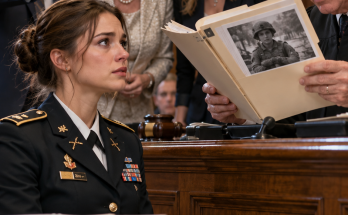
Judge Margaret Ellison entered a few minutes later. She was a stern woman in her early sixties, with silver hair and a reputation for disliking theatrical performances in her courtroom.
She reviewed the case file.
“Mr. Whitmore is seeking primary custody, exclusive ownership of the marital residence, and confirmation that Whitmore Medical Technologies is his separate property. Is that correct?”
Richard stood.
“Yes, Your Honor. The evidence will show that my client created and developed the business, while his wife has no independent professional standing.”
Judge Ellison looked at me.
“Mrs. Whitmore, are you represented by counsel?”
“No, Your Honor. I intend to represent myself today.”
Nathan leaned toward his attorney and whispered.
I saw the satisfaction in his face.
Richard began presenting financial summaries, property valuations, and excerpts from the prenuptial agreement. He described Nathan’s work schedule, his financial stability, and the educational opportunities he could provide for our children.
Then he turned to me.
“Mrs. Whitmore has no employment history in the last eight years, no demonstrated ability to generate comparable income, and no ownership interest in the company under the current records.”
“Objection,” I said.
Judge Ellison looked up.
“On what grounds?”
“The records he’s presenting are from the current holding company. They don’t establish who originally owned the business or how those ownership rights were transferred.”
Richard’s expression tightened.
“Your Honor, the original records are irrelevant to the present ownership structure.”
“That is for the court to decide,” the judge replied. “Proceed carefully, Mr. Sloan.”
For the first time that morning, Nathan stopped smiling.
Richard continued with the custody argument.
He described the mansion, the private school, the family vacations, and the expensive extracurricular activities he could provide. Then he suggested that my lack of employment made me financially unstable.
I listened without interrupting.
Finally, Judge Ellison turned to me.
“Mrs. Whitmore, do you have evidence to support your objection?”
I placed my leather folder on the table.
“Yes, Your Honor. I have the original incorporation documents, the initial shareholder register, the investment agreement, and the complete chain of ownership transfers.”
Richard immediately stood.
“We have not been provided with any admissible evidence establishing that these documents alter the current ownership structure.”
I looked directly at him.
“Your firm received a formal notice requesting preservation of the original corporate records six weeks ago. Your client acknowledged that notice.”
The courtroom became silent.
Judge Ellison extended her hand.
“Let me see what you have.”
I passed the first document to the clerk.
The judge examined the incorporation certificate, then the shareholder register.
Her eyes stopped on the second page.
She turned it over.
Then she read the first page again.
Nathan shifted in his chair.
“Your Honor, I assure you that any early arrangements were superseded by later agreements.”
The judge raised one hand.
“Mr. Whitmore, I have not asked you to explain anything.”
She reached the signature page.
For several seconds, she said nothing.
Then she looked directly at Nathan.
“Mr. Whitmore, before we proceed any further, I have one question.”
Nathan swallowed.
“Of course, Your Honor.”
The judge lifted the original ownership register.
“Why does this document identify your wife as the owner of sixty-eight percent of the company—and why does your signature appear beneath that declaration?”
Nathan’s face went completely white.
Vanessa stopped smiling.
And Richard Sloan slowly sat down.
Because the company Nathan claimed to have built alone had never belonged to him in the way he had told everyone.
And the document in the judge’s hand was only the beginning.
PART 2: THE SIGNATURE THAT DESTROYED HIS LIES
For nearly ten seconds, nobody in the courtroom moved.
Judge Ellison looked at Nathan as if she were waiting for him to explain something that should never have needed explaining.
Nathan finally cleared his throat.
“Your Honor, that document is outdated. My wife made an early investment, but I was responsible for the development, management, and growth of the company. The current ownership structure is entirely different.”
“Then I suggest you provide documentation supporting that statement,” the judge replied.
Richard stood again.
“Your Honor, we request a brief recess to review the documents.”
“Granted. Fifteen minutes.”
The gavel fell.
Nathan immediately turned toward his attorneys.
I could not hear everything they said, but I saw Richard’s expression change as he examined the shareholder register. He flipped through the pages, checked the dates, and pulled out his laptop.
Vanessa leaned forward.
“What is it?” she whispered.
Nathan snapped, “Nothing. Just an old corporate filing.”
But his voice lacked its usual confidence.
I walked into the corridor to get some water.
A few minutes later, Nathan followed me.
“Claire.”
I continued toward the drinking fountain.
“Claire, stop.”
I turned.
He looked angry, but beneath the anger was something I had not seen in years.
Fear.
“Where did you get those documents?”
“From the company’s original corporate records.”
“You had no right to access those.”
“I was a founding shareholder. I had every right to request them.”
He stepped closer and lowered his voice.
“You don’t understand what you’re doing. If you damage the company’s reputation, thousands of employees could suffer.”
I stared at him.
“Then you should have thought about those employees before you tried to erase my ownership.”
His jaw tightened.
“You were never interested in running the company.”
“I was interested in raising our children while trusting you to protect what we built.”
“You signed the prenup!”
“And the prenup never transferred my shares to you.”
For the first time, he had no immediate answer.
I turned to leave.
He caught my wrist, then released it when a court officer looked in our direction.
“Listen to me,” he said. “We can still settle this privately. I’ll increase the offer. Five hundred thousand dollars. You can have the house, too, if that’s what you want.”
I almost laughed.
He still believed the problem was the amount of money.
“You don’t understand, Nathan. I didn’t come here to negotiate the price of my silence.”
I returned to the courtroom before he could respond.
When the hearing resumed, Richard appeared more restrained.
He acknowledged that the original documents were authentic but argued that subsequent corporate restructuring had changed the ownership arrangement.
Judge Ellison asked for the relevant transfer agreements.
Richard produced several documents.
I recognized them immediately.
They were the same documents I had found during my review of the company’s records, except the versions he presented omitted an attachment referenced on the final page.
“Your Honor,” I said, “may I direct the court’s attention to paragraph seven of the 2021 restructuring agreement?”
The judge nodded.
“The agreement states that any transfer of shares held in the Bennett Family Trust requires written approval from both the trustee and the beneficiary. The attached schedule identifies the shares involved.”
Richard frowned.
“That attachment is not part of the exhibit submitted by the plaintiff.”
“Because I have the complete original,” I replied.
I handed the document to the clerk.
The judge reviewed it carefully.
Then she asked Richard, “Did your client obtain the approvals required by this agreement?”
Richard turned toward Nathan.
Nathan looked down at the table.
“Mr. Whitmore?” the judge asked.
He finally answered.
“The restructuring was handled by the company’s financial department.”
“That was not my question.”
“No, Your Honor. I did not personally obtain those approvals.”
I watched his attorneys exchange glances.
Richard attempted to recover.
“The absence of a particular approval does not automatically invalidate every subsequent transaction. We would ask the court to reserve judgment on the corporate implications.”
Judge Ellison nodded.
“That may be appropriate. However, I will not treat disputed ownership as established merely because Mr. Whitmore’s name appears on recent company filings.”
She ordered both sides to preserve all original corporate records and directed the parties to provide complete documentation of the disputed transfers.
Then the hearing returned to custody.
Nathan’s attorney argued that I had no current income and therefore could not provide the same lifestyle for our sons.
I stood.
“Your Honor, I would like to clarify one point. My financial circumstances have been deliberately misrepresented.”
Richard sighed.
“Mrs. Whitmore has no salary.”
“That is true,” I replied. “But I have personal assets that are separate from the company, and I have never depended exclusively on my husband’s income.”
I submitted statements showing the assets held in my name and documentation of the trust my father had established.
The judge reviewed them.
“These records suggest that Mrs. Whitmore has substantial independent resources.”
Nathan’s face tightened.
I continued.
“I would also like the court to consider the messages my husband sent our sons concerning this case.”
Richard objected immediately.
“Those communications are irrelevant to the ownership dispute.”
“They are relevant to the custody question,” Judge Ellison said. “Show me what you have.”
I produced printed copies of messages Nathan had sent me and the boys.
In one, he told our eight-year-old sons that their mother would soon be forced to leave their home because she had no money.
In another, he wrote that they would never have to worry about seeing me again if they told the court they wanted to live with him.
I had not wanted to use those messages.
But Nathan had repeatedly insisted that I was an unfit mother while telling our children frightening lies about their future.
The judge read each page in silence.
When she finished, she looked toward Nathan.
“Did you send these messages?”
He shifted in his chair.
“Some of them, yes. But they were taken out of context.”
“What context makes it appropriate to tell eight-year-old children that their mother will disappear from their lives?”
Nathan said nothing.
For the first time, Vanessa looked uncomfortable.
Judge Ellison ordered a neutral custody evaluation and prohibited either parent from discussing disputed financial matters or court strategy with the boys.
She made it clear that neither wealth nor the appearance of wealth would determine custody.
Then came the final surprise of the afternoon.
Richard announced that Nathan intended to introduce an updated financial statement showing that the company had recently transferred a substantial portion of its assets into a separate holding company.
The stated purpose was to protect the business during the divorce.
I recognized the holding company name.
Whitmore Strategic Holdings.
It had been created only four months earlier.
And according to the documents, Nathan owned one hundred percent of it.
“Your Honor,” I said, “I have reason to believe that assets originally belonging to the company were transferred to this holding company without the approvals required under the original ownership agreement.”
Richard objected.
“That is speculation.”
“I have the transaction ledger.”
The judge looked at me.
“Why was this not presented earlier?”
“Because I obtained the certified ledger only yesterday, after the company acknowledged my formal records request.”
She reviewed the summary.
Her expression hardened.
The ledger showed that millions of dollars had been moved between related entities. Some transfers had no clear explanation in the accompanying descriptions. Others appeared to involve intellectual property developed during the company’s earliest years.
Judge Ellison ordered the parties to preserve the relevant financial records and directed that no further extraordinary transfers occur while the ownership dispute was being examined.
Nathan looked furious.
“You can’t freeze my company because of an accusation,” he said.
The judge’s gaze sharpened.
“Mr. Whitmore, this court has ordered preservation of disputed assets and records. If you have complied with the law, you should have no difficulty demonstrating that fact.”
The hearing ended shortly afterward.
Outside the courtroom, Richard pulled Nathan aside.
Vanessa stood a few feet away, staring at her phone.
I was gathering my papers when she approached me.
“You think you’ve won,” she said quietly.
I looked at her.
“I think the truth deserves to be heard.”
She gave a short, bitter laugh.
“Nathan told me you signed everything away years ago. He said you were never involved in the business.”
“Did he tell you who paid the engineers when he couldn’t make payroll?”
She hesitated.
“Did he tell you whose money kept the company alive during its first two years?”
Her expression changed.
“Did he tell you why the original patents were assigned to the company under an agreement requiring my approval for certain transfers?”
Vanessa’s lips parted, but no words came out.
I gathered my folder.
“Ask him about those things.”
Then I walked away.
That evening, I returned to the house where I had raised my sons.
Nathan arrived nearly an hour later.
He found me sitting at the kitchen table with a cup of tea.
“You embarrassed me in front of the entire court,” he said.
“No, Nathan. Your own documents did that.”
He paced the kitchen.
“You have no idea how much damage you’re causing.”
“I know exactly what I’m doing.”
He stopped.
“Claire, I made mistakes. But you can’t destroy eleven years of work over a divorce.”
I looked at him for a long moment.
“I didn’t destroy anything. I simply stopped protecting you from the truth.”
His expression darkened.
Then he said something that made my blood run cold.
“If you continue with this, you’ll lose more than money.”
“What does that mean?”
He leaned closer.
“It means you should think carefully about what happens when people discover what really happened during the company’s first year.”
He left before I could respond.
For the next two hours, I sat at the table replaying his words.
What had happened during that first year?
I knew the company had nearly failed. I knew my father had provided emergency funding and introduced Nathan to his first major investor.
But there was one detail I had never fully understood.
My father had insisted that the original ownership documents be kept in a separate legal file, outside the company’s ordinary records.
He had told me it was important.
I had assumed he meant that the investment needed protection.
Now I wondered whether he had been protecting something else.
The following morning, my attorney called.
I had finally retained one after the hearing, and she had spent the night reviewing the documents.
“Claire,” she said, “I need you to come to my office. There’s something in the original corporate file that we haven’t discussed.”
“What is it?”
She paused.
“The ownership register isn’t the only document Nathan signed. There’s a second agreement concerning the company’s founding assets. And if the signature is authentic, the implications are much bigger than a divorce settlement.”
I gripped the phone.
“What does the agreement say?”
Her voice lowered.
“It says that your father did not merely finance the company. He required Nathan to acknowledge a condition before the business could ever become his.”
I closed my eyes.
“What condition?”
“I want you to read it yourself.”
When I arrived at her office, she placed a sealed envelope on the desk.
Inside was a document dated eleven years earlier.
At the bottom of the final page was Nathan’s signature.
Above it was a clause my husband had spent a decade pretending did not exist.
And when I read the final sentence, I finally understood why he had been so desperate to settle the divorce before the original records reached a courtroom.
PART 3: THE SECRET THAT TOOK EVERYTHING BACK
The agreement was six pages long.
My attorney, Evelyn Price, placed it between us and waited while I read.
The first five pages described the original funding arrangement, the ownership structure, and the rights attached to the company’s earliest patents.
The final page contained a clause written in plain language.
If any founding shareholder attempted to fraudulently conceal ownership, unlawfully transfer protected assets, or deliberately misrepresent the company’s ownership structure for personal gain, the affected parties could seek legal remedies under the agreement.
A separate provision required certain intellectual property and associated licensing rights to remain subject to the original shareholder protections unless the specified approvals were obtained.
I read the passage twice.
“This doesn’t automatically mean I own everything,” I said.
“No,” Evelyn replied. “And we must be careful not to overstate what it establishes. But it gives us a strong reason to challenge the transfers and demand a complete accounting.”
“Why did my father insist on this clause?”
Evelyn opened another folder.
“Because he had concerns about Nathan’s plans even before the company launched.”
I looked up.
“What concerns?”
She slid a letter across the desk.
It was written by my father six weeks before the incorporation papers were signed.
His handwriting was unmistakable.
Claire,
You believe love is built on trust, and I hope you are right. But business is built on records. Never allow anyone to convince you that keeping accurate records means you do not trust them.
If this company succeeds, Nathan will receive more attention than you. That is not necessarily a problem. A business needs someone willing to stand in front of the cameras.
But never surrender your ownership merely because someone else is better at taking credit.
I hope you will never need this advice.
Love, Dad.
I stared at the letter until the words blurred.
My father had understood something I had been unwilling to consider.
He had not predicted the affair or the divorce.
He had simply understood that money could change the way people saw themselves—and that trust without safeguards could become a dangerous vulnerability.
Evelyn closed the folder.
“We need to move carefully. We should not assume the court will decide every corporate question in the divorce proceedings. We’ll pursue the appropriate remedies, and we’ll make sure the judge has the relevant evidence.”
For the first time in months, I felt something other than anger.
I felt prepared.
Over the next several weeks, the case changed dramatically.
The court appointed a neutral financial examiner to review the disputed transactions. The company was required to preserve its records, and the parties were prohibited from making extraordinary transfers of the disputed assets while the matter was under review.
Nathan’s legal team attempted to argue that my original investment had been fully repaid years earlier.
The financial examiner found no complete documentation supporting that claim.
They also discovered that several transfers into Whitmore Strategic Holdings had been recorded without the approvals required by the relevant agreements.
Some transactions could be explained by ordinary business operations.
Others could not.
The examiner identified inconsistencies that required further investigation and recommended that the parties obtain independent valuations of the disputed assets.
Nathan’s attorneys became increasingly cautious.
The confident man who had entered court believing he could dismiss me with a settlement offer now faced questions about his company’s records.
Then came the custody evaluation.
The evaluator interviewed both parents, reviewed school records, spoke with relevant caregivers, and considered the messages Nathan had sent our sons.
The report found that both parents loved the children but raised concerns about Nathan’s attempts to involve them in the dispute.
It recommended that the boys remain in a stable arrangement with regular contact with both parents, subject to further court review.
Judge Ellison adopted temporary arrangements consistent with the children’s best interests and ordered both of us to avoid using the boys as messengers or involving them in financial arguments.
Nathan was furious.
He had expected money to guarantee him control.
Instead, the court was examining his actual behavior as a parent.
At the same time, the company’s board began asking questions.
Investors had noticed the court filings. Several had requested clarification about the ownership dispute and the transfers to the new holding company.
Nathan tried to reassure them.
He told the board that the disagreement was a private marital matter and that the company remained financially sound.
But the board wanted answers.
During a special meeting, the directors requested the original incorporation records, the investment agreements, and the financial examiner’s preliminary findings.
For the first time in eleven years, Nathan had to explain the company’s history without being able to rewrite it.
The board placed certain proposed transactions on hold pending independent review.
Vanessa, meanwhile, discovered that the future Nathan had promised her was not as secure as she had believed.
She had expected to become the wife of a wealthy executive whose assets were entirely his own.
Instead, she learned that major ownership questions remained unresolved and that the company could face costly litigation.
One evening, she called me.
I almost ignored the call.
Then I answered.
“I need to tell you something,” she said.
I waited.
“Nathan told me you had signed away your shares. He said your father had given the money to him as a gift and that you were only listed as an owner temporarily.”
“That isn’t true.”
“I know that now.”
Her voice trembled.
“He also told me the financial transfers were approved. He said the holding company was created for tax and liability reasons.”
“Why are you telling me this?”
“Because he asked me to sign a statement confirming that you had never participated in the company’s early operations.”
I sat upright.
“Did you sign it?”
“No. I told him I wasn’t going to make a statement about something I hadn’t witnessed.”
For a moment, neither of us spoke.
Then she added, “There’s something else. He told me that the original patent agreements had been replaced years ago. But when I checked the investor records, I found references to an older licensing agreement that was still active.”
I closed my eyes.
The agreement my father had insisted on protecting.
“Can you provide those records to the appropriate investigators?” I asked.
“If I’m asked to cooperate, yes.”
I did not thank her for suddenly discovering a conscience.
But I listened.
The following week, Nathan’s attorneys contacted Evelyn.
They wanted to discuss a comprehensive settlement.
Their initial proposal offered me a substantial cash payment, the family home, and a limited share of future company profits in exchange for abandoning my ownership claims and accepting the original prenuptial agreement as controlling.
Evelyn rejected it.
“We are not going to negotiate away disputed rights before the accounting is complete,” she told them.
A second offer followed.
Then a third.
Each time, the amount increased.
Nathan was beginning to understand that the woman he had dismissed as powerless possessed something far more important than a dramatic courtroom revelation.
She possessed documents.
And those documents could be examined by independent professionals who did not care how charming he was at a business dinner.
The final hearing took place three months after the first.
Courtroom Four was full again.
This time, Nathan arrived without Vanessa.
The board had placed him on temporary administrative leave while it reviewed the findings. The company’s shares and valuation remained subjects of ongoing scrutiny, and he had hired additional counsel to address the corporate dispute.
He still wore an expensive suit.
But he no longer looked invincible.
Judge Ellison reviewed the examiner’s report, the original shareholder register, the investment agreements, and the evidence concerning the disputed transfers.
She was careful to distinguish what had been established from what remained unresolved.
“The evidence before this court supports the conclusion that Mrs. Whitmore held a substantial ownership interest at the company’s formation,” she said. “The later transfers are disputed, and the documentation presented does not establish that every required approval was obtained.”
Richard stood.
“Your Honor, we respectfully maintain that the current ownership structure should be recognized unless and until a separate action determines otherwise.”
“I agree that the full corporate consequences may require separate proceedings,” Judge Ellison replied. “But this court cannot simply ignore credible evidence of an ownership interest when determining the parties’ marital property claims.”
She continued.
“The prenuptial agreement may govern certain categories of property, but it does not automatically resolve every question concerning assets held before marriage, third-party trust interests, or disputed transfers. Those issues must be evaluated according to the agreement’s actual language and the applicable law.”
Nathan looked toward me.
For the first time, I saw the man I had married beneath the public image he had constructed.
He looked tired.
Not remorseful, necessarily.
But tired of fighting the evidence.
Judge Ellison then addressed custody.
“The children’s welfare is not a bargaining chip. Neither parent will be rewarded for financial superiority, and neither will be penalized simply for having a lower current income. The court will consider stability, parenting conduct, and the children’s individual needs.”
She ordered continued compliance with the temporary parenting arrangements while the remaining issues were resolved.
Then she turned to the financial dispute.
“The parties are directed to proceed with a full accounting and to preserve all relevant assets and records. Any claim that the disputed transfers were proper must be supported by complete documentation. I will not treat an unverified assertion as an established fact.”
Nathan leaned toward Richard.
The attorney shook his head slightly.
Whatever they had planned to say, they decided against saying it.
After the hearing, Nathan approached me in the courthouse corridor.
“I hope you’re happy,” he said.
I looked at him.
“That’s what this is about to you? Whether I’m happy?”
“You wanted everyone to think I stole your company.”
“I wanted the court to see the original ownership records.”
“I worked for eleven years to build that business.”
“So did I.”
He looked away.
“I never thought you would take it this far.”
I thought about the nights I had spent reviewing contracts while pregnant, the money I had invested when the business was close to failing, and the years I had spent raising our sons while Nathan stood on stages accepting awards for an empire we had built together.
“You never thought I would stop letting you tell my story,” I said.
He had no answer.
The divorce was finalized several months later, after the parties resolved many of their personal and financial disputes through a negotiated agreement approved by the court.
I received a settlement based on the marital property findings and the rights established in the proceedings. The ownership dispute involving the company required separate corporate steps and continued independent review, rather than being decided entirely in the divorce case.
The company eventually restructured its governance under independent oversight. The board appointed an interim chief executive while the disputed transactions were examined, and the company reached agreements addressing the ownership and licensing issues that had remained unresolved.
Nathan did not lose every dollar he had earned.
But he lost the power to present himself as the sole creator and unquestioned owner of an empire whose history was more complicated than he had admitted.
His reputation changed, too.
The man who had once described himself as a self-made entrepreneur now had to answer questions about the company’s founding agreements and the disputed transfers.
As for Vanessa, she ended their relationship before the remaining corporate proceedings concluded.
She had fallen in love with the future Nathan promised her.
When that future became uncertain, she decided she no longer wanted it.
I did not celebrate her decision.
I had learned that the collapse of someone else’s illusion was not the same thing as healing.
The most important change in my life happened quietly.
On a Saturday morning, I sat with my twin boys at the kitchen table, helping them build a model bridge for a school project.
Ethan held up a wooden support beam.
“Mom, why does this part have to go underneath?”
“Because it holds the weight,” I explained.
Noah studied the model.
“So it isn’t the part people see that makes it strong?”
I smiled.
“Not always.”
He carefully placed the beam into position.
“Then maybe we should make this part extra strong.”
I watched my sons return to their project.
And for the first time in a very long while, I felt no need to prove anything to anyone.
I had spent years allowing other people to define me as the quiet wife, the dependent mother, the woman who had nothing of her own.
But I had never been nothing.
I had been the investor who believed in an idea before anyone else did.
The mother who stayed home when her children needed her.
The shareholder who trusted her husband until that trust was betrayed.
And the woman who finally stood in court and asked that the truth be examined.
Months later, when I returned to the courthouse to complete a final administrative matter, I passed the same courtroom where Nathan had once smiled at me with absolute confidence.
I remembered the way the judge had lifted the original shareholder register.
I remembered the silence.
And I remembered the question that had changed everything.
Why did the document identify his wife as the owner?
It was not a magical question that instantly erased a marriage, destroyed a company, or guaranteed a particular legal outcome.
It was something much more powerful.
It was the first question Nathan could no longer answer with charm, money, or intimidation.
Because the truth had finally entered the room.
And this time, nobody was allowed to pretend it wasn’t there.
THE END.