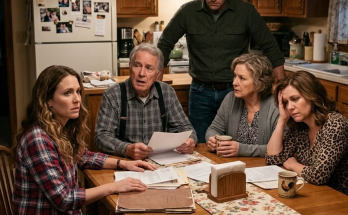
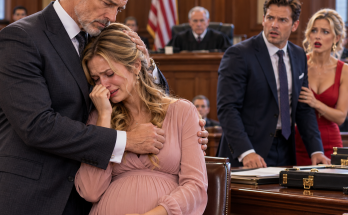
MY EX-HUSBAND DESTROYED MY HOUSE AFTER THE DIVORCE—THEN MY FATHER STOOD UP IN COURT AND REVEALED A SECRET THAT MADE HIM GO PALE
PART 1: HE THOUGHT HE COULD DESTROY EVERYTHING I HAD LEFT
My name is Nicole Bennett, and I thought the worst part of my divorce was finally over when the judge awarded me the house.
I was wrong.
My ex-husband, Brian, had spent eight months fighting me over every dollar, every piece of furniture, and every memory we had made together. When the judge ruled that the house belonged to me, Brian was ordered to remove his remaining belongings within fourteen days.
He stood outside the courtroom afterward, adjusting his expensive watch.
“You can have the house,” he said with a bitter smile. “Let’s see how long you can afford to keep it.”
I didn’t respond.
For years, I had mistaken his arrogance for confidence. I wasn’t going to make that mistake again.
The house had been our home for eleven years. My father had helped us with the original down payment, and I had spent countless weekends renovating the kitchen, planting roses in the backyard, and turning an empty spare room into a reading nook.
After our marriage fell apart, those memories became painful.
Still, I wanted the house because it represented something important.
A chance to begin again.
Two weeks passed.
The deadline for Brian to collect his belongings came and went.
The following morning, I drove to the property with a bucket, cleaning supplies, and a list of repairs I wanted to make.
I remember thinking that, by lunchtime, I might finally feel at peace in my own home.
Then I unlocked the front door.
And my entire world seemed to stop.
The living room looked as though a storm had torn through it.
A massive hole had been punched into the wall beside the fireplace. Broken picture frames lay scattered across the floor. The curtains had been ripped from their rods, and a wooden cabinet that had belonged to my grandmother was split down the middle.
I took one cautious step forward.
Water dripped somewhere in the kitchen.
When I entered, I discovered that every faucet had been left running.
Water had spread across the counters and soaked into the wooden flooring. One cabinet door hung crookedly from its hinges, and several drawers had been pulled out and abandoned on the floor.
Then I saw the hallway.
Another hole in the wall.
Then another.
My hands began to tremble.
I walked into the living room and noticed something that made my knees feel weak.
My grandmother’s antique mirror.
It had been in our family for generations. Its ornate gold frame had survived three moves, two renovations, and more than sixty years without a scratch.
During the divorce, Brian had fought bitterly over it.
He had insisted that it belonged to him because we had displayed it in our shared home.
The judge had ultimately awarded it to me.
Now the mirror lay shattered across the hardwood floor.
The frame was broken, and hundreds of fragments reflected the ceiling lights like tiny pieces of ice.
I sank onto the edge of the sofa.
For several minutes, I couldn’t speak.
Brian hadn’t simply left the house in poor condition.
Someone had deliberately damaged it.
And I knew exactly who had been inside.
I pulled out my phone and began taking photographs.
The damaged walls.
The running faucets.
The broken furniture.
The shattered mirror.
I photographed everything before touching a single object.
Then I called my attorney.
When I explained what had happened, she became unusually quiet.
“Nicole, don’t clean anything yet. Save every photograph and any available security footage. I’ll arrange for the damage to be documented properly.”
“What can we do?”
“If the evidence supports what you’re telling me, we can ask the court to address the damage and any financial losses. But first, we need to establish exactly what happened.”
I agreed.
Before ending the call, she reminded me that we still had one final hearing scheduled later that week.
The court needed to resolve the remaining financial issues between Brian and me.
I looked around the ruined living room.
Then I made a decision.
I wasn’t going to let him frighten me out of the home I had fought so hard to keep.
That afternoon, I called my father.
His name was Richard Bennett.
He was a quiet man who had spent most of his life working in commercial real estate and construction. He rarely offered unsolicited advice, and throughout my divorce, he had deliberately stayed out of the arguments.
He believed I needed to make my own decisions.
But when I told him what I had found, his voice changed.
“Did you photograph everything?”
“Yes.”
“Did you touch anything?”
“No.”
“Good. Send me the photographs.”
I heard papers moving on his desk.
Then he asked a question I hadn’t expected.
“Nicole, did Brian ever tell you why he was so desperate to keep that house?”
I frowned.
“He said it was worth more than I realized.”
Dad was silent for several seconds.
“Bring everything your attorney has given you to the courthouse on Friday,” he said. “And don’t sign anything Brian offers you before then.”
“Dad, what aren’t you telling me?”
“I’ll explain when the time is right.”
He ended the call.
I stared at my phone, more confused than before.
My father had always been protective, but he had never spoken to me like that.
For the first time, I wondered whether the destruction of my house was only one part of a much bigger story.
And on Friday morning, I was about to find out why.
PART 2: MY FATHER HAD BEEN QUIET FOR EIGHT MONTHS—BUT HE WASN’T UNPREPARED
The courthouse was crowded when I arrived on Friday.
Brian sat beside his attorney, wearing a charcoal suit and an expression of exaggerated exhaustion.
He looked like a man who had been terribly inconvenienced by an unreasonable former wife.
When he saw me, he offered a small, mocking smile.
I took my seat beside my attorney.
My father sat on my other side, carrying a slim leather folder.
He hadn’t said much on the drive to the courthouse.
He had simply asked whether I was ready.
I told him I was.
The hearing began with a discussion of the remaining financial matters.
Brian’s attorney argued that his client was experiencing financial hardship and should not be required to pay any additional money.
“Mr. Brian has already suffered substantial losses during this divorce,” the attorney explained. “He is asking the court to consider his current financial circumstances.”
My attorney stood.
“Your Honor, we have additional evidence concerning the condition in which my client’s home was left after Mr. Brian’s deadline to remove his belongings.”
She presented the photographs.
One by one, the images appeared on the courtroom monitor.
The damaged walls.
The flooded kitchen.
The broken furniture.
The shattered antique mirror.
Brian stared straight ahead.
When the photographs were finished, his attorney rose again.
“My client denies intentionally causing any damage. The property was an emotional environment, and we cannot establish who was responsible for every condition shown in those photographs.”
I felt anger rising in my chest.
Emotional environment?
That was what he called a home with holes punched through its walls and water running across the floor?
I leaned toward my attorney and whispered, “He’s lying.”
She nodded slightly.
“We’ll let the evidence speak.”
Brian finally turned toward me.
He leaned back in his chair and gave me the same cold smile I had seen so many times during our marriage.
“You should have taken the settlement when I offered it,” he whispered.
I looked directly at him.
“You should have left my house alone.”
His smile faded.
Before either of us could say another word, my father leaned toward our attorney.
He whispered something.
Our attorney listened, then looked at him with surprise.
“Are you certain?” she asked quietly.
Dad nodded.
Then he lifted his hand.
“Your Honor, may I provide information that may be relevant to the court’s consideration of the remaining financial issues?”
The judge looked toward him.
“Mr. Bennett, are you a party to these proceedings?”
“No, Your Honor. But I may have documentation relevant to a financial arrangement involving the property.”
Brian’s attorney immediately objected.
“Your Honor, this is improper. Mr. Bennett has not been identified as a witness for today’s hearing.”
The judge considered the request.
“Counsel, approach the bench.”
The attorneys moved forward.
They spoke in low voices for several minutes.
Brian looked increasingly irritated.
Finally, the judge returned to her seat.
“Mr. Bennett may explain the nature of the documents. Any additional evidence will be considered according to the applicable rules and procedures.”
My father stood.
He straightened his jacket and opened his leather folder.
Then he looked at Brian.
For the first time in eight months, Brian seemed genuinely uncomfortable.
“Brian,” Dad said calmly, “do you remember the money I gave you and Nicole when you purchased that house?”
Brian shrugged.
“I remember you helping with the down payment.”
“How much?”
“I don’t remember the exact amount.”
Dad removed a document from the folder.
“Two hundred and ten thousand dollars.”
A murmur passed through the courtroom.
I turned toward my father.
Two hundred and ten thousand?
I knew Dad had helped us when we bought the house, but I had never understood the full amount. Brian had always described the money as a generous gift from my father to both of us.
Dad continued.
“That money wasn’t an unconditional gift. It was part of a written agreement.”
Brian’s face tightened.
“What agreement?”
Dad placed a copy of the document on the table.
“An agreement you signed.”
Brian leaned toward his attorney.
His attorney read the first page, then the second.
The man’s expression changed.
“Your Honor,” he said cautiously, “we request a brief recess to review this document.”
The judge nodded.
As everyone stood, Brian turned toward my father.
“You can’t do this.”
Dad met his eyes.
“I haven’t done anything to you, Brian. I’ve simply brought the paperwork.”
Brian’s voice dropped.
“You said you wouldn’t use that agreement.”
My father closed the folder.
“I said I hoped I’d never have to.”
Those words sent a chill through me.
I had spent months believing that Brian’s only goal was to take as much money from me as possible.
But now it was clear that he was afraid of something much more specific.
Something connected to the house.
And my father had known about it all along.
During the recess, I pulled him aside.
“Dad, what is that agreement?”
He looked at me with a sadness I had never seen in his eyes.
“When you and Brian bought the house, I wanted to make sure you would never lose the money I had saved for you. I put the arrangement in writing. Both of you signed it.”
“But why didn’t you tell me?”
“Because I believed Brian was going to honor it. I didn’t want money to become another source of conflict in your marriage.”
I looked toward the courtroom door.
“Does this have something to do with the damage?”
“Possibly,” Dad replied. “But that’s for the court to determine.”
He handed me a copy of the document.
At the bottom of the second page, I saw Brian’s signature.
Below it was a clause I had never noticed before.
I read it once.
Then again.
And suddenly, I understood why Brian had fought so desperately to keep the house.
The agreement didn’t merely concern the money my father had contributed.
It contained a condition that could affect Brian’s financial obligations if he had deliberately damaged the property.
I looked up at Dad.
“Did Brian know this clause was in here?”
My father gave a small nod.
“He signed every page.”
Across the hallway, Brian was arguing with his attorney.
His voice rose.
Then the courtroom doors opened.
The clerk announced that the hearing would resume.
My father placed one hand on my shoulder.
“Whatever happens next, Nicole, remember something.”
“What?”
“You didn’t cause this. And you don’t have to protect him from the consequences of his own decisions.”
I returned to my seat.
Brian was no longer smiling.
And when the judge asked my father to explain the agreement, the entire courtroom became silent.
PART 3: THE DOCUMENT THAT CHANGED EVERYTHING
My father stood in front of the judge with the original agreement in his hands.
“Your Honor,” he began, “when Nicole and Brian purchased the property eleven years ago, I provided $210,000 toward the purchase. I wanted my daughter to have a secure home, regardless of what happened in her marriage.”
He paused.
“However, I also wanted the arrangement to be fair to both parties. So I had an attorney prepare a written agreement specifying how the funds would be treated if the property were sold or the marriage ended.”
The judge examined the document.
“And both parties signed this agreement?”
“Yes, Your Honor.”
Brian’s attorney stood.
“We do not dispute that the signatures appear on the document. However, we would like an opportunity to examine the full agreement and determine how it applies to the present circumstances.”
“Granted,” the judge replied.
My father continued.
“The agreement also addressed intentional damage to the property. It provided for the assessment of documented losses and preserved any remedies available under applicable law. I believe the court should consider that provision alongside the photographs already submitted.”
Brian suddenly stood.
“This is ridiculous! He gave us that money because he wanted to help us!”
The judge struck her gavel.
“Mr. Brian, you will wait until you are recognized before speaking.”
Brian sat down, his jaw clenched.
My father didn’t raise his voice.
“Yes, I wanted to help them. That’s why I made the agreement clear from the beginning. I never expected to use it against anyone.”
He turned toward the judge.
“But when I learned what had happened to my daughter’s home, I reviewed the documents. I believed the court should have the opportunity to consider them before making a final decision.”
The judge studied the photographs again.
Then she looked at Brian.
“Mr. Brian, do you dispute that you had access to the property after the deadline?”
Brian hesitated.
“I still had some belongings there.”
“That’s not what I asked. Did you have access to the property?”
“Yes.”
“Did you leave the property in the condition shown in these photographs?”
His attorney rose immediately.
“My client disputes the allegation that he intentionally caused the damage. We ask that the matter be investigated before any finding is made.”
The judge nodded.
“That’s a reasonable request. The photographs raise serious concerns, but the court will not determine responsibility based solely on the condition of the house.”
For the first time that morning, I felt myself breathe more easily.
No dramatic accusation.
No instant punishment.
Just a judge who understood that evidence mattered.
My attorney then submitted the repair estimates we had obtained after the damage was documented.
The preliminary cost was substantial.
The damaged drywall needed to be replaced. The flooring required professional assessment. The plumbing had to be inspected, and several pieces of furniture were beyond repair.
The antique mirror was another matter.
Its monetary value could be estimated.
Its sentimental value could not.
The judge reviewed the materials and ordered the parties to preserve all relevant evidence. She also directed that the alleged property damage and the financial agreement be addressed through the appropriate legal process.
Then came the moment Brian had been dreading.
My father reached into his folder and removed one final document.
“This is the original payment record showing the source of the funds used for the down payment,” he said. “It corresponds with the agreement and the bank records already available to counsel.”
The judge accepted the document for review.
Brian stared at the paper.
His face had gone pale.
He leaned toward his attorney and whispered urgently.
But the attorney shook his head.
Whatever Brian had hoped would remain hidden, the paperwork had made one thing clear: my father’s contribution had never been the simple, unconditional gift Brian had claimed it was.
The judge adjourned the hearing and ordered the parties to submit further documentation before the remaining financial issues could be resolved.
There would be no instant courtroom victory.
No magical ruling that repaired the house or erased the damage.
But there would be accountability, and Brian could no longer pretend that the evidence didn’t exist.
Outside the courtroom, he approached me.
For once, he wasn’t smiling.
“You planned this,” he said.
I looked at him in disbelief.
“You destroyed my house, Brian. I photographed what I found and called my attorney. That’s all I did.”
“You brought your father into it.”
“He was already part of the agreement you signed.”
Brian glanced toward my father.
Then he looked back at me.
“You’re going to regret this.”
For years, those words would have frightened me.
That day, they didn’t.
“No,” I replied quietly. “I regret believing that I had to keep the peace with you at any cost.”
I walked away.
Over the following weeks, the damage was assessed, the financial records were examined, and the parties continued through the legal process. My attorney pursued the remedies supported by the evidence and the written agreement.
The case wasn’t resolved overnight.
But I finally had something I hadn’t felt in years.
Control over my own future.
I returned to the house with a contractor and began the long process of repairing it.
The first day, we removed the damaged drywall.
The second, we addressed the plumbing.
The following week, I chose new paint for the living room.
I also found a specialist who believed my grandmother’s antique mirror might be partially restored.
It wouldn’t look exactly as it had before.
Some of the damage was permanent.
But that didn’t mean it was worthless.
One evening, while standing in the newly repaired living room, I called my father.
“Thank you,” I told him.
He was quiet for a moment.
“For what, sweetheart?”
“For bringing the agreement to court. For making sure I wasn’t left to handle everything alone.”
He sighed.
“I wish you’d never needed it.”
“So do I.”
Then he said something I have never forgotten.
“Nicole, the purpose of helping someone isn’t to control their life. It’s to make sure they have a chance to stand on their own feet.”
I looked around the room.
For months, I had believed that Brian had taken everything from me.
My peace.
My confidence.
My sense of home.
But as I listened to my father, I finally understood something.
The house was damaged, but it wasn’t the end of my story.
The marriage was over, but I wasn’t broken.
And the man who had spent years convincing me that I couldn’t survive without him had finally discovered that I could.
Brian thought destroying my house would destroy me. Instead, the evidence he left behind forced him to face the consequences of his choices.
And the most important thing my father gave me that day wasn’t a document or a legal advantage.
It was the reminder that I never had to accept cruelty just to keep the peace.
Sometimes, the strongest comeback isn’t revenge. It’s rebuilding your life—and refusing to let the person who hurt you decide what happens next.