My In-Laws Gave Their Three Favorite Children $20,000 Each for a House—My Husband and I Got a Card Calling Us “Independent.” Two Years Later, We Bought the Abandoned Property Nobody Wanted, and His 88-Year-Old Grandmother Showed Up With a Secret.
PART 1 — The Card That Replaced $20,000
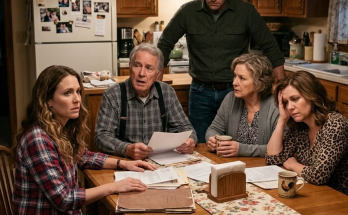
The envelopes were waiting beneath our plates at Easter dinner.
My sister-in-law Kimberly opened hers first. She read the letter inside, covered her mouth, and started crying.
Jeff tore open his envelope next. When he saw what was inside, he stood up and hugged his mother.
Then Stacy opened hers.
“Twenty thousand dollars!” she exclaimed. “Mom, Dad, you didn’t have to do this!”
My mother-in-law, Judith, smiled proudly.
“We want all our children to have a good start. Buying a home is an important step.”
I sat beside my husband, Nathan, waiting for someone to pass us our envelope.
Nathan and I had been married for five years. We rented a small farmhouse on the outskirts of town, drove an aging pickup truck, and worked almost every hour we could manage. We weren’t wealthy, but we paid our bills on time and saved whatever remained.
Finally, Nathan reached beneath his plate.
Our envelope was thinner than the others.
Inside was a greeting card decorated with a bluebird perched on a branch.
I opened it.
Dear Nathan and Emily,
You’ve always been such an independent couple. We admire how capable you are and know you can handle anything life brings your way.
With love, Mom and Dad.
I read it twice.
There was no check.
No money.
Not even an explanation.
Across the table, Judith watched us with a satisfied smile.
“Some couples need a little more help getting started,” she said. “Others have the strength to build their own lives.”
Her husband, Ronald, raised his coffee mug.
“That’s right. You two should be proud of yourselves.”
Nathan’s jaw tightened.
I could feel the heat rising in his face, but he simply folded the card and slipped it into his pocket.
“Thank you,” he said. “That’s thoughtful of you.”
I followed his lead.
“The card is beautiful.”
Then I continued eating my dinner while Kimberly discussed the house she planned to buy, Jeff talked about a down payment on a new development, and Stacy showed everyone photographs of the property she had already found.
Nobody asked Nathan and me about our plans.
Nobody asked whether we had enough savings.
And nobody seemed to notice that the only couple who received no financial help was also the couple who had spent years quietly helping everyone else.
On the drive home, Nathan didn’t turn on the radio.
He kept both hands on the steering wheel, staring at the dark country road.
Finally, he spoke.
“How much do we have saved?”
I knew exactly what he meant.
“Six thousand two hundred dollars.”
He nodded.
“Then we’ll need to save more.”
I looked at him.
“Are you angry?”
He was quiet for a moment.
“I’m disappointed. But I don’t want to spend the rest of my life trying to convince my parents that we deserve the same treatment as everyone else.”
I reached for his hand.
“What do we do now?”
He gave me a small, tired smile.
“We build something of our own.”
That night, we sat at our kitchen table and made a plan.
I worked in the hospital’s insurance billing department during the week. Starting the following Monday, I picked up additional shifts at a roadside diner.
Nathan repaired farm equipment after his regular workday and on weekends. He sold his fishing boat, gave up his expensive hobbies, and started taking every repair job he could find.
We stopped eating out.
We stopped buying clothes unless something genuinely needed replacing.
Our meals became simple. Eggs, potatoes, homemade soup, and whatever vegetables we could get cheaply.
Whenever I felt discouraged, I remembered the bluebird card.
Not because I wanted revenge.
Because I wanted to own a home where nobody could make us feel as though we were less deserving than someone else.
For two years, we worked and saved.
We didn’t complain to Nathan’s parents. We didn’t ask for money. And we didn’t tell his siblings how difficult things had become.
Then, one spring morning, Nathan came home carrying a folded newspaper.
“Emily, look at this.”
He spread it across the kitchen table.
The county was auctioning the old Miller property because of unpaid taxes.
The house sat on several acres outside town. Nobody had lived there in six years. The porch sagged, the windows were cracked, and weeds covered much of the yard.
Everyone in town knew the place.
People called it the Miller ruin.
Nathan had repaired farm equipment for a man who lived nearby, so he knew the property better than most.
“The foundation looks better than you’d expect,” he said. “The roof needs work, and the electrical system will have to be replaced, but the structure might be salvageable.”
I studied the photograph.
“How much?”
“The opening bid is low because of the taxes and condition.”
I waited.
Nathan looked at me.
“We might actually have a chance.”
For the next two weeks, we investigated everything we could. We reviewed the public records, checked the auction requirements, and arranged an inspection where permitted.
We calculated the money we could spend without putting ourselves in immediate financial danger.
Our maximum bid was forty-two thousand dollars.
It was almost everything we had saved.
On the morning of the auction, we stood outside the courthouse while a county representative called out the property’s details.
Several people attended.
Most were investors.
One man in an expensive padded vest seemed particularly interested.
The bidding began.
Thirty thousand.
Thirty-five thousand.
Thirty-eight thousand.
The investor kept raising his hand.
Forty thousand.
Forty-one thousand.
Nathan squeezed my fingers.
We had agreed that if the price went beyond our limit, we would walk away.
Then the investor called out another bid.
Nathan took a breath.
“Forty-one thousand five hundred dollars.”
The auctioneer looked around.
The investor hesitated, glanced at his notes, and finally shook his head.
“Sold!”
I could hardly believe it.
Two years of extra shifts, missed weekends, and sacrifices had brought us to that moment.
We had bought the abandoned Miller property for $41,500.
We paid using a cashier’s check and the savings we had worked so hard to accumulate.
The clerk handed Nathan a set of old keys.
He looked down at them, then at me.
“We have a house,” he whispered.
I started crying.
Not because it was beautiful.
It wasn’t.
But it was ours.
We hadn’t received a generous check at Easter dinner. We hadn’t been given a head start. Nobody had stepped in to rescue us.
We had done it ourselves.
Or so we thought.
Because three weeks later, Nathan’s eighty-eight-year-old grandmother, Opal, called me at the hospital.
“Emily, I read the county notice,” she said.
I smiled.
“Then you know we bought the Miller place.”
“I know exactly what you bought.”
There was something unusual in her voice.
“Pick me up after church on Sunday,” she instructed. “And don’t tell Ronald.”
I sat up straighter.
“Why not?”
“Because there’s something your husband needs to know about that property.”
She paused.
“And it’s something his parents have been hoping nobody would ever bring up again.”
PART 2 — The Grandmother Who Knew the Truth
On Sunday morning, I picked Opal up outside her church.
She wore a navy-blue coat, carried a small handbag, and held a folded envelope in one hand.
At eighty-eight, she moved slowly, but her eyes were sharp.
As soon as she settled into the passenger seat, she looked at me.
“Have you and Nathan started fixing the house?”
“A little. He’s checking the wiring, and I’ve been stripping the old wallpaper.”
“Good,” she said. “Don’t spend too much money until you’ve heard what I have to tell you.”
My hands tightened around the steering wheel.
“Opal, what’s going on?”
She glanced out the window.
“First, tell me something. Did Judith and Ronald give Kimberly, Jeff, and Stacy twenty thousand dollars each?”
I nodded.
“And you and Nathan received nothing?”
“Just a card.”
Opal closed her eyes briefly.
“I thought that was what happened.”
Her words unsettled me more than I expected.
“You knew about the gifts?”
“I knew they were planning to help the other three. I didn’t know they’d humiliate Nathan by pretending a greeting card was the same thing.”
I didn’t know what to say.
Opal had always been kind to Nathan, but she rarely interfered in family disagreements. She preferred listening to everyone before offering an opinion.
That was why her anger surprised me.
“Your husband has always been the one who asks for the least,” she said. “Sometimes families mistake that for needing the least.”
We drove past the old church and continued toward the Miller property.
When the house came into view, Opal leaned forward.
“So this is where you bought.”
I parked beside the crooked porch.
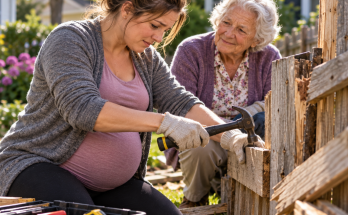
Nathan was already outside, working on a section of damaged fencing.
When he saw his grandmother climb out of the car, he hurried over.
“Grandma? What are you doing here?”
Opal smiled and hugged him.
“I came to see your house.”
Nathan looked at me, confused.
We helped her up the steps and settled her in a chair near the front window.
The living room smelled of old wood and fresh paint. Some of the wallpaper had been removed, revealing faded plaster underneath.
Opal slowly surveyed the room.
Then she reached into her handbag and took out the envelope.
“Before you bought this property, did anyone tell you about its history?”
Nathan shook his head.
“We checked the county records. The previous owners had unpaid taxes, and the property was scheduled for auction.”
“That explains how it came to be sold,” Opal replied. “It doesn’t explain why your parents never wanted anyone in this family to buy it.”
Nathan frowned.
“What do you mean?”
Opal opened the envelope and removed several old documents.
The first was a faded photograph of a younger couple standing in front of the house.
The second was a copy of a handwritten letter.
The third was a legal document with several names and dates.
I watched Nathan’s expression change as he read them.
“Grandma,” he whispered, “where did you get these?”
“Your grandfather kept them. After he died, I found them among his papers.”
She explained that decades earlier, the Miller property had belonged to a woman named Helen Miller, a close friend of Nathan’s grandfather.
Helen had lived there with her husband and young son.
When her husband died unexpectedly, she struggled to keep the farm running. Nathan’s grandfather helped her repair equipment, maintain the property, and care for the land.
Over the years, the two families became close.
Helen eventually made arrangements to ensure the property would remain in the family if it was ever sold.
But those arrangements were never completed in the way she had intended.
After Helen died, ownership passed through several complicated legal steps. The property accumulated unpaid taxes, and the county eventually scheduled it for auction.
Nathan stared at the documents.
“So my grandfather knew the Miller family?”
“Very well,” Opal replied.
“Then why didn’t anyone tell us?”
“Because the story didn’t end with your grandfather.”
She reached for the final paper.
“This document concerns an agreement made years ago. It may affect the history of the property and the way certain people have been describing their involvement with it.”
I looked at Nathan.
“What does it say?”
Opal took a breath.
“Your father once tried to arrange a private purchase of the Miller property. He wanted to acquire it before it went to auction.”
Nathan looked stunned.
“Dad wanted this place?”
“Yes. He believed it could be renovated and sold for a considerable profit. But he never completed the purchase.”
“Why?”
“Because he couldn’t agree with the people involved about the terms.”
Opal folded her hands.
“After that, he began telling relatives that the property was worthless and that nobody sensible would want it.”
Nathan looked around the room.
That explained the dismissive comments his father had made whenever the old Miller house came up in conversation.
But it didn’t explain why Opal had asked us to keep her visit secret.
She placed the documents on the table.
“There’s another reason I came today. I want you to understand something before you spend another dollar.”
She pointed to a paragraph in the legal document.
“This needs to be reviewed by a property lawyer. I won’t tell you that it gives you any particular rights, because I don’t know how a court would interpret it today. But it could explain why your father was so interested in this land.”
Nathan read the paragraph again.
His face became serious.
“Are you saying Dad knew there was something valuable here?”
“I’m saying he knew more about this property than he ever admitted.”
I sat quietly, trying to absorb everything.
For two years, Nathan and I had worked ourselves exhausted to buy the Miller place. We had believed we were purchasing an abandoned house nobody wanted.
Now we were learning that the property had a history our family had never discussed.
Opal reached across the table and took Nathan’s hand.
“Your grandfather believed a person’s character was revealed by what they did when nobody was watching. He also believed that the person who worked hardest wasn’t always the person who received the most help.”
Nathan swallowed.
“He would have been proud of us.”
Opal’s eyes softened.
“He would have been very proud.”
Before leaving, she asked Nathan to promise that he would have the documents reviewed properly and would not let anyone pressure him into signing anything.
He promised.
I drove her home just before sunset.
As I helped her out of the car, she leaned toward me.
“Emily, don’t confuse being independent with having to face everything alone.”
I hugged her.
“Thank you for telling us.”
She smiled.
“One more thing. If Ronald calls, don’t argue with him. Let him explain himself.”
I didn’t understand what she meant until the following afternoon.
Nathan was replacing a damaged board on the porch when his phone rang.
It was his father.
Nathan answered on speaker because his hands were covered in dust.
Ronald didn’t bother with a greeting.
“I heard you bought the Miller property.”
Nathan stopped working.
“Yes, Dad.”
“Who told you to buy it?”
“Nobody. We saw the auction notice and decided it was a good opportunity.”
There was a pause.
Then Ronald said something that made my stomach drop.
“You need to sell it back to me. Immediately.”
Nathan looked at me.
“Why?”
“Because you’ve made a mistake, and I’m trying to help you fix it.”
Nathan took a slow breath.
“No, Dad. We bought the property legally. We’re keeping it.”
Ronald’s voice hardened.
“You don’t understand what you’ve gotten yourself into.”
Nathan looked at the old house, the damaged porch, and the land we had spent two years working to afford.
“Then explain it to me.”
His father hung up.
For several seconds, neither of us spoke.
Then Nathan looked at me.
“Grandma was right. There’s something Dad doesn’t want us to know.”
And for the first time, I wondered whether the bluebird card had been more than a cruel Easter gesture.
Perhaps Nathan’s parents had never believed we were capable of building a life of our own.
Perhaps they had simply wanted to keep us from discovering what we could do without them.
PART 3 — The House That Exposed Their Biggest Lie
The next morning, Nathan and I contacted a property lawyer.
We brought every document Opal had given us, along with the auction paperwork and our purchase records.
The lawyer reviewed everything carefully.
She explained that the old agreement did not automatically give us additional rights or guarantee that we would make a profit. Its legal significance would depend on the original terms, the ownership history, and applicable law.
But she also found something important.
Ronald had previously approached a local investor about purchasing the Miller property before the auction. His proposed deal had fallen apart, and the investor had withdrawn.
The lawyer recommended that we keep copies of all correspondence and avoid making any agreements with Ronald until the property’s legal history had been fully reviewed.
We followed her advice.
For the next several weeks, we concentrated on making the house safe.
Nathan repaired the wiring with the help of a licensed electrician. We hired a professional to inspect the foundation and roof. I continued removing old wallpaper, and together we cleared the overgrown yard.
The work was exhausting.
There were mornings when I woke up with aching shoulders and wondered whether we had taken on more than we could handle.
But every time I looked at the house, I remembered the courthouse steps and the moment the auctioneer had called, “Sold!”
We had earned the right to try.
Then something unexpected happened.
A local historian contacted us after learning that the Miller property had been purchased.
She explained that Helen Miller had been an important figure in the area’s agricultural community. She had helped establish a small cooperative that allowed struggling farmers to share equipment and sell produce together.
Several old records connected the property to that history.
The historian asked whether she could photograph the documents Opal had found.
With our lawyer’s guidance, we agreed to let her examine copies.
Her research eventually revealed that Helen had helped organize a community agricultural program decades earlier. The house had once served as a meeting place where farmers discussed crop prices, shared repair knowledge, and helped families facing difficult seasons.
The property’s history was far more meaningful than its condition suggested.
It wasn’t a hidden fortune.
It wasn’t a secret mansion waiting to be discovered.
It was a place that had once brought people together.
And that made Nathan and me want to restore it even more.
We began researching the possibility of turning part of the land into a small community garden and workshop space, where local families could learn to grow vegetables and repair basic farm equipment.
We would need permits, funding, and professional advice before making anything official.
But the idea gave us something we hadn’t expected when we bought the property.
A purpose beyond owning a house.
Meanwhile, Ronald continued calling.
At first, he demanded that Nathan sell the property to him.
Then he offered to reimburse us for the purchase price.
Finally, he proposed paying us a modest profit if we transferred ownership immediately.
Nathan refused every offer.
“Dad, we aren’t selling,” he told him. “If you have a legitimate legal concern, our lawyer can review it. But you don’t get to decide what we do with our home.”
Ronald accused him of being ungrateful.
He said Nathan was making the family look bad.
He even suggested that Opal had confused him by giving us old documents.
Nathan listened without raising his voice.
Then he ended the call.
For years, he had avoided disagreements with his father because he believed keeping the peace was part of being a good son.
Now he understood that peace built on silence wasn’t peace at all.
It was simply the absence of an argument.
A month later, Judith called me.
Her voice was unusually soft.
“Emily, I think we should all have dinner together.”
I knew what she wanted to discuss.
“Is this about the Miller property?”
There was a pause.
“Your father-in-law is upset, and we think everyone needs to talk.”
I agreed to meet, but Nathan and I decided we would not sign anything or make financial promises during the conversation.
We met at his parents’ house the following Sunday.
Kimberly, Jeff, and Stacy were there, too.
The three siblings had already purchased their homes using the twenty-thousand-dollar gifts.
Judith served coffee, but nobody touched it.
Ronald sat at the head of the table.
“I want to know why you two are being so difficult,” he began.
Nathan looked at him calmly.
“We bought a property we could afford. We are restoring it. That’s all.”
Ronald shook his head.
“You don’t understand the situation.”
“Then tell us the truth.”
For a moment, Ronald said nothing.
Then he admitted that he had wanted to buy the Miller property before the auction because he believed the land might become more valuable in the future.
He had hoped to purchase it cheaply and renovate it as an investment.
But he hadn’t secured the money in time.
When Nathan and I bought the property, Ronald feared that his son might benefit from an opportunity he had failed to obtain.
He was also embarrassed that he had dismissed the house as worthless for years, only to discover that someone else had seen its potential.
“So you wanted us to sell it because you didn’t want us to succeed?” Nathan asked.
Ronald looked away.
“That’s not what I said.”
“It’s what you’ve been asking us to do.”
Judith intervened.
“We only wanted to help our children in different ways.”
Nathan reached into his pocket and removed the bluebird card from Easter.
He had kept it all that time.
He placed it on the table.
“Mom, you gave three of your children twenty thousand dollars each. We received this card telling us how independent we were.”
Judith’s eyes filled with tears.
“We thought you were doing well.”
“We were working two jobs each. We were saving every dollar we could. We didn’t ask for anything because we didn’t want to beg for help. But that doesn’t mean it didn’t hurt.”
Nobody spoke.
Then Nathan continued.
“We bought the Miller property because we wanted a home. We didn’t buy it to prove anything to you. We didn’t buy it to make you jealous. And we won’t sell it just because you’re uncomfortable with what we’ve accomplished.”
His father stared at him.
For the first time, Ronald had no quick answer.
Kimberly lowered her eyes.
Jeff began turning his coffee cup between his hands.
Stacy quietly admitted that she hadn’t realized how difficult things had been for Nathan and me.
“I thought you had plenty of money,” she said. “You never told us you were struggling.”
Nathan nodded.
“We didn’t want anyone to feel responsible for our choices. But we also didn’t want to be treated as though we needed less love because we asked for less money.”
Judith began crying.
She apologized for making assumptions about us and for treating independence as an excuse to offer us less support.
Her apology didn’t erase what had happened.
It didn’t return the two years we had spent wondering why we were treated differently.
But it was the first time she had acknowledged the hurt without trying to explain it away.
Ronald remained quiet for most of the conversation.
Eventually, he admitted that he had allowed his pride to influence his behavior.
He apologized to Nathan, though the words came slowly.
Nathan accepted the apology without making any promises about the property.
We left that evening with no dramatic victory and no sudden inheritance.
We simply returned to the house we had bought ourselves.
Over the following year, we continued restoring the Miller property.
The roof was repaired. The porch was rebuilt. The old electrical system was replaced, and the yard gradually became a garden again.
With the proper approvals, we began hosting occasional community workshops and sharing extra vegetables with neighbors.
Opal visited often.
She liked sitting on the new porch, watching Nathan work, and telling stories about his grandfather.
One afternoon, she handed me a small wooden box.
Inside was a photograph of Helen Miller standing in front of the house.
On the back, Opal had written a sentence from one of her late husband’s letters.
The best homes aren’t measured by what they cost, but by what people find inside them.
I read the words twice.
Then I placed the photograph on the mantel.
That evening, Nathan and I sat together on the porch while the sun set behind the fields.
“Do you ever think about that Easter dinner?” I asked.
He smiled faintly.
“Sometimes.”
“Do you wish your parents had given us the money?”
He thought about it.
“Of course. It would have made things easier. But I don’t want to spend the rest of my life measuring our success against what they gave someone else.”
I rested my head against his shoulder.
“We built this ourselves.”
“We did.”
The Miller property was never a magical solution to every problem. Repairs cost more than we expected, and there were still bills to pay.
But it gave us something that no greeting card could provide.
A place we had earned.
A home we could improve together.
And the knowledge that our future didn’t depend on convincing anyone else that we deserved a chance.
Nathan’s parents eventually began visiting, though our relationship changed. We learned to set clearer boundaries, and we stopped allowing family expectations to determine our financial decisions.
Judith later told me that the bluebird card had been intended as praise.
I told her I understood that was what she claimed, but that the message had hurt because it had replaced an opportunity offered to everyone else.
She didn’t argue.
Sometimes, an honest conversation is the beginning of repairing a relationship. Sometimes, it simply helps people understand why things cannot return to the way they were.
Either way, we had learned to speak honestly.
And as I watched Nathan planting tomatoes beside the old farmhouse, I realized something.
The greatest reward wasn’t the house itself.
It wasn’t proving his father wrong.
It wasn’t even watching the family finally acknowledge our hard work.
It was knowing that we had built a life without allowing someone else’s judgment to define our worth.
They had given three children twenty thousand dollars each.
We had received a card.
But two years later, we owned a home we loved, a piece of land with a meaningful history, and a future we had chosen for ourselves.
And every time I looked at the bluebird photograph on our mantel, I remembered the lesson that had taken us years to learn:
Being independent doesn’t mean you need less love, less respect, or fewer opportunities. It simply means you’ve learned how to keep going when nobody offers you a hand.