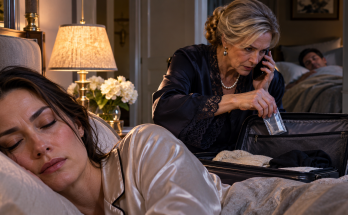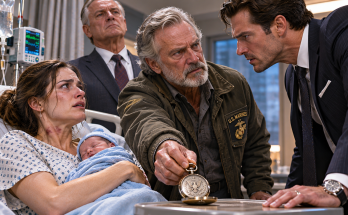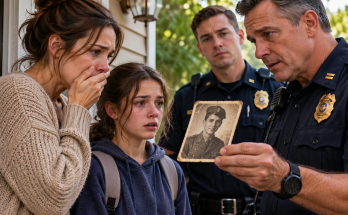
MY PARENTS SUED ME FOR STEALING THE FAMILY RANCH—THEN I WALKED INTO COURT IN MY ARMY DRESS UNIFORM. MY FATHER LAUGHED UNTIL THE JUDGE READ THE NAME ON MY MEDALS AND ORDERED THE COURTROOM DOORS CLOSED.
PART 1 — THE DAUGHTER THEY WERE ASHAMED OF
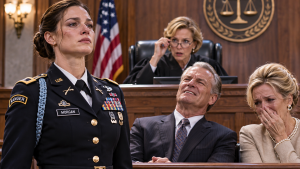
The moment I walked into a Georgia courtroom wearing my Army dress uniform, my father leaned toward my mother and whispered something that made her smile.
They thought I had come to embarrass myself.
They had no idea that the judge was about to recognize the name they had spent fifteen years pretending did not belong to their family.
My name is Captain Rebecca Morgan.
I am thirty-eight years old, and for most of my adult life, I have served in the United States Army.
But to my parents, I was still the daughter who had disappointed them by choosing a military career instead of marrying a wealthy man and taking over the family business.
Three weeks before that courtroom hearing, I received a certified letter at my home outside Savannah.
It was a lawsuit.
My parents, Richard and Elaine Morgan, were suing me over ownership of my grandfather’s 160-acre ranch.
According to the complaint, I had illegally taken control of the property, refused to contribute to its maintenance, and prevented my parents from accessing land they had supposedly managed for years.
They were demanding that the court transfer the ranch into their names.
I read the document twice.
Then I noticed something that made my stomach tighten.
My parents claimed they had paid the property taxes, insurance, and maintenance costs for the last eleven years.
That was impossible.
I had paid every single bill.
Every tax payment had come from my military salary. Every insurance renewal had been processed through my personal account. Even the money used to repair the barn roof after a storm had come from my savings.
I had kept every receipt.
I had done it because my grandfather, Thomas Morgan, had asked me to protect that ranch before he died.
He had been the only person in my family who had ever believed in me.
When I was seventeen, I told my father I wanted to enlist.
He slammed his newspaper onto the kitchen table.
“Absolutely not. No daughter of mine is going to spend her life taking orders from strangers.”
My mother looked disappointed.
“Rebecca, you were raised to have a better future than that.”
My grandfather had been sitting quietly near the window.
He looked at me and said, “If that’s what your heart tells you to do, then go. Just make sure you become someone you can respect when you look in the mirror.”
Those words stayed with me.
I enlisted after graduation.
I completed my training, became a combat medic, and eventually earned my commission as an officer.
My parents never attended my graduation.
They never visited my first duty station.
When I received my first major commendation, I mailed a photograph home.
My mother returned it in an envelope.
There was no note.
Only the photograph, folded in half.
I stopped sending pictures after that.
Over the years, I served in difficult places, treated wounded soldiers, and learned what it meant to make decisions when another person’s life depended on me.
During one deployment, an attack struck the medical convoy I was traveling with.
I was thrown against the side of the vehicle and suffered serious injuries.
Two soldiers died that day.
I spent months recovering from surgery, and the scars on my shoulder never completely disappeared.
I returned to duty because the people I served with were worth fighting for.
My parents never asked what happened.
They didn’t even know the full story.
The only person who called me every week was my grandfather.
He would ask about my health, tell me stories about the ranch, and remind me that the old oak tree beside the main barn had been planted by his father.
“That land has seen a lot of things, Rebecca,” he once told me. “But it should never become a place where people are forgotten.”
I didn’t understand what he meant at the time.
After he passed away, I inherited the ranch.
My parents were furious.
My father had expected to receive it.
He had already told several business associates that he planned to sell the land to a property developer.
But my grandfather’s will was clear.
The ranch belonged to me.
There was one additional instruction in a sealed letter.
I was to keep the original farmhouse and the old medical building on the property intact.
I followed his wishes.
I paid the bills, repaired the fences, and kept the land from being sold.
I never imagined that my own parents would eventually sue me for doing exactly what my grandfather had asked.
The evening before the hearing, I opened the drawer where I kept my grandfather’s letter.
I read his final words again.
“Rebecca, if anyone ever tries to take this land from you, don’t fight them with anger. Let the truth speak. And remember, the ranch was never meant to belong to one person. It was meant to serve people who had nowhere else to go.”
I folded the letter carefully.
Then I opened my wardrobe.
My Army dress uniform hung inside a protective garment bag.
I had not worn it in months.
I checked the ribbons, polished my shoes, and carefully placed my grandfather’s letter inside a folder with the property records.
The next morning, I arrived at the courthouse alone.
My parents were already sitting beside their attorney.
My father wore an expensive navy suit.
My mother wore a cream-colored dress and a necklace I recognized from my grandfather’s estate.
When she saw me, she looked at my uniform and shook her head.
“Still playing soldier,” she whispered.
My father laughed.
“Maybe the judge will finally explain to her that wearing a uniform doesn’t make her a property owner.”
I said nothing.
Then Judge Evelyn Carter entered the courtroom.
She reviewed the file, adjusted her glasses, and looked toward the plaintiffs.
“Mr. Morgan, you are asking this court to remove your daughter from a property she inherited legally?”
“That’s correct, Your Honor,” my father answered confidently. “She abandoned the ranch. My wife and I have maintained it for years.”
The judge turned toward me.
“Captain Morgan, do you have anything to say before we examine the evidence?”
I stood carefully.
“Yes, Your Honor. I have the original deed, every property tax receipt, every insurance payment, and a letter from my grandfather explaining why he left me the property.”
My father’s attorney smiled.
“Paperwork can be manufactured, Captain.”
Before I could respond, Judge Carter looked down at my uniform again.
Her eyes stopped at one particular ribbon.
She leaned forward.
Then she looked at my face.
“Captain Rebecca Morgan?”
“Yes, Your Honor.”
The judge slowly removed her glasses.
“Are you the same Captain Morgan who led the medical evacuation at Fort Albright?”
My father stopped smiling.
The judge looked toward the court clerk.
“Bring me the sealed military commendation attached to the original property file.”
I froze.
I had never known that my grandfather had placed anything about my military service in his legal records.
And when the clerk returned carrying a thick envelope marked with my name, my mother’s face suddenly turned pale.
PART 2 — THE DOCUMENT MY GRANDFATHER HID
The courtroom became completely silent.
Judge Carter opened the envelope and removed several documents.
My father shifted in his chair.
“What does this have to do with the ownership of the ranch?” he demanded.
The judge ignored him.
She examined the first page, then looked at me.
“Captain Morgan, were you involved in the evacuation operation at Fort Albright six years ago?”
“Yes, Your Honor.”
“Were you responsible for coordinating the rescue of the personnel trapped inside the damaged medical facility?”
“I was part of the medical response team.”
The judge nodded slowly.
“I remember that operation. My nephew was among the injured soldiers.”
I stared at her.
She continued.
“He survived because your team refused to leave anyone behind. He told our family about a female Army officer who remained at the evacuation point after being injured herself.”
My throat tightened.
I remembered that night.
The smoke.
The alarms.
The wounded soldiers.
The sound of someone calling for help from behind a collapsed doorway.
I remembered refusing to leave until the last patient had been moved.
I had never expected anyone in that courtroom to know about it.
Judge Carter placed the commendation on the bench.
“Your grandfather submitted this document with his estate records. He also included a statement explaining why he believed the ranch should remain in your possession.”
My father leaned forward.
“Your Honor, this is a property dispute, not a military ceremony.”
The judge looked directly at him.
“Then perhaps we should return to the property dispute.”
She opened another folder.
“Mr. Morgan, your complaint claims that you paid eleven years of property taxes and maintenance costs. Is that correct?”
“Yes.”
“Then I assume you can provide financial records.”
My father’s attorney stood.
“We have prepared a summary of expenses.”
The judge examined the pages.
I immediately recognized the first invoice.
It was for a barn repair that had never happened.
The second was for a new electrical system.
That system had already been installed before my grandfather died.
The third listed payments to a company called Morgan Land Services.
I had never heard of it.
“Your Honor,” I said, “may I see those documents?”
The judge passed them to me.
I looked at the company address.
My hands became cold.
It was my father’s business address.
I turned to the judge.
“This company did not perform the work listed here.”
My father’s expression hardened.
“Of course you would say that.”
I opened my folder and placed my own records on the table.
“These are the original invoices, payment confirmations, and bank statements showing that I paid for the actual repairs.”
The judge began comparing the documents.
After several minutes, she called the court clerk closer.
“Please verify these payment dates against the plaintiffs’ submitted records.”
The clerk examined both sets of documents.
Then he stopped.
“Your Honor, several of the invoices submitted by the plaintiffs appear to have been dated before the work was supposedly completed.”
My father’s attorney quickly stood.
“We object to the characterization.”
Judge Carter raised one hand.
“Sit down, counsel. I have not made a finding yet.”
My mother suddenly spoke.
“We were only trying to protect the property. Rebecca was never there. She was always overseas.”
I turned toward her.
“Mom, I paid the taxes while I was overseas. I paid for the roof while I was recovering from surgery. I even paid the insurance when you told Grandpa’s lawyer you couldn’t afford it.”
She looked away.
My father shook his head.
“You think that gives you the right to keep everything?”
“No,” I answered quietly. “Grandpa gave me the right. I simply honored his wishes.”
The judge returned to the sealed envelope.
There was another document inside.
It was a handwritten letter from my grandfather.
Judge Carter read the first few lines silently.
Then she stopped.
“Mr. and Mrs. Morgan, did either of you know that your father established a charitable foundation connected to this property?”
My mother looked confused.
My father immediately shook his head.
“No. There was no foundation.”
The judge turned another page.
“According to this document, the foundation was established to provide temporary housing and rehabilitation support for injured veterans and their families.”
I looked at the judge.
I had never heard of this.
She continued.
“Your grandfather designated the farmhouse, the medical building, and twenty acres of surrounding land as the foundation’s original property.”
My father suddenly stood.
“That’s ridiculous. My father was old. He didn’t understand what he was signing.”
The judge looked up sharply.
“Sit down, Mr. Morgan.”
My father sat.
The judge read the final paragraph.
“Captain Morgan was appointed trustee because her grandfather believed she understood the meaning of service, responsibility, and sacrifice.”
My eyes filled with tears.
Grandpa had never told me.
He had quietly planned something much bigger than an inheritance.
Then the judge noticed a second signature on the document.
She compared it with the signature on the property deed.
Her expression changed.
“Mr. Morgan, I need to ask you something.”
My father swallowed.
“Yes?”
“Why does the signature authorizing the transfer of twenty acres to Morgan Land Services appear to be dated three months after your father’s death?”
The room went silent.
I looked at my father.
He looked at his attorney.
And for the first time that morning, neither of them had an answer.
Then the court clerk approached the bench and whispered something to the judge.
She read a note, looked at my parents, and ordered a brief recess.
Before leaving, she turned toward me.
“Captain Morgan, please remain available. There is another document in this file that may change everything.”
I had thought the lawsuit was about money and land.
But when I saw the expression on my mother’s face, I realized the truth was much worse.
She knew exactly what that second document contained.
And she had been hoping I would never find it.
PART 3 — THE PROMISE THAT CHANGED EVERYTHING
When the courtroom doors reopened, Judge Carter returned with a different folder.
My parents were no longer whispering to their attorney.
My mother was staring at the floor.
My father looked furious.
The judge took her seat.
“Before this court proceeds, I want the record to reflect that the estate documents have raised serious questions about an attempted transfer of property after the original owner’s death.”
My father’s attorney stood.
“Your Honor, we request additional time to review these materials.”
“You will have an opportunity to respond,” the judge replied. “But first, I want the parties to understand what the documents actually say.”
She held up the second document.
It was a letter written by my grandfather and signed before two witnesses.
The letter explained that he had discovered someone was attempting to sell part of the ranch without his permission.
He had also learned that money intended for the property’s maintenance had been redirected.
The final paragraph was addressed directly to me.
“Rebecca, if you are reading this, then someone has tried to turn our family’s land into something it was never meant to be. I know your parents may not understand your choices. But I have watched you become a woman who keeps her promises, even when nobody is watching.”
I pressed my lips together.
The judge continued reading.
“Do not let anyone convince you that your service was wasted. The people you helped may never know your name, but that does not make their lives any less important. Keep the ranch open. One day, someone will arrive there believing they have nowhere left to turn. Make sure they find a door that opens.”
I lowered my head.
For years, I had wondered whether my grandfather understood how much his support meant to me.
Now I knew.
He had understood everything.
Judge Carter placed the letter down.
“Mr. Morgan, the court has also received a preliminary report from the county recorder’s office. It indicates that the attempted transfer of the twenty-acre parcel was submitted using a power of attorney that had been revoked before the filing date.”
My father’s face turned gray.
“That can’t be right.”
“Do you recognize this document?”
The judge displayed a copy.
My father stared at it.
My mother began crying.
Then she whispered something I could barely hear.
“Richard, tell them the truth.”
He turned toward her.
“Don’t you dare.”
The judge immediately intervened.
“Mrs. Morgan, if you have information relevant to these proceedings, you may speak through counsel.”
My mother wiped her cheeks.
“I signed the paperwork.”
My father looked as though someone had struck him.
She continued.
“Richard told me it was only a temporary arrangement. He said we needed to move the land into the company before Rebecca returned. He promised we would transfer it back later.”
I stared at her.
“Why?”
She looked at me.
“Your father had debts. The development company offered him money for the property. He said your grandfather would have wanted us to have something after he died.”
“Grandpa left you the house and other assets,” I replied. “He didn’t leave you the ranch.”
My mother began sobbing.
“I know.”
My father finally stood.
“Enough! I was the one who took care of this family. I was the one who stayed here while she ran around playing hero overseas!”
The judge’s voice became firm.
“Mr. Morgan, your daughter’s military service is not on trial here.”
He pointed at me.
“She abandoned us! She chose strangers over her own parents!”
I slowly stood.
For the first time that morning, I looked directly into his eyes.
“I didn’t abandon you, Dad. I sent letters. I called. I invited you to my commissioning ceremony. I asked you to visit when I came home injured. You refused.”
My voice shook, but I continued.
“I never asked you to be proud of my uniform. I only wanted you to be proud that I was your daughter.”
Nobody moved.
“I paid for Grandpa’s property because I promised him I would protect it. I didn’t do it for money. I didn’t do it to punish you. And I certainly didn’t do it because I wanted to fight my own family in court.”
My mother covered her mouth.
Then I reached into my folder and removed one final document.
It was a proposal I had prepared months earlier.
I placed it before the judge.
“This is the plan I intended to carry out once the property records were settled.”
Judge Carter read the first page.
Her expression softened.
It was a proposal to restore the old medical building and turn the ranch into a temporary recovery center for injured service members and their families.
There would be accessible accommodation, counseling rooms, outdoor rehabilitation areas, and a small workshop where veterans could learn new skills.
The project would be funded through a combination of my savings, charitable donations, and the foundation Grandpa had established.
I had already spoken to several retired military doctors.
I had even found volunteers willing to help repair the farmhouse.
My father stared at the document.
“You were going to turn the ranch into a hospital?”
“Not a hospital,” I answered. “A place where people can recover without feeling like they have become a burden.”
The judge read the final page.
Then she closed the folder.
“Captain Morgan, your grandfather’s instructions are clear. The original deed names you as the legal owner, and the foundation documents establish the intended use of the designated property. The plaintiffs have not demonstrated a valid basis for taking ownership from you.”
She paused.
“This court therefore denies the plaintiffs’ request to transfer the ranch. The disputed property records will be referred to the appropriate authorities for further review.”
My father sank into his chair.
My mother began crying again.
I didn’t celebrate.
I didn’t smile.
I simply stood there, feeling the weight of fifteen years finally lifting from my shoulders.
As the hearing ended, Judge Carter asked me to approach the bench.
She spoke quietly.
“My nephew still remembers that evacuation. He has a family now. He often says he was given another chance at life because someone refused to leave him behind.”
I nodded.
“Please tell him I’m glad he’s doing well.”
The judge smiled.
“Your grandfather would have been proud of you.”
Those words hurt more than I expected.
Because I knew he would have been.
Outside the courthouse, my mother approached me.
“Rebecca, can we talk?”
I stopped.
She looked older than I remembered.
“I should have come to your ceremony,” she said. “I should have visited when you were hurt.”
I didn’t answer immediately.
“Yes,” I finally said. “You should have.”
She started crying.
“I don’t know how to make this right.”
I looked at her for a long moment.
“Then don’t start by asking me to forgive you. Start by telling the truth.”
She nodded.
My father remained near the courthouse steps, refusing to look at me.
I walked toward my car.
There was still work to do.
Six months later, the old medical building on the ranch reopened after extensive renovations.
A wooden sign stood beside the entrance:
WALTER MORGAN RECOVERY RANCH
Below it were the words my grandfather had written in his final letter:
“NO ONE WHO HAS GIVEN EVERYTHING SHOULD HAVE TO HEAL ALONE.”
The first family arrived on a rainy Thursday.
A young Army veteran stepped out of a truck with his wife and little daughter.
He looked at the building, then at me.
“Ma’am, are you sure we’re allowed to stay here?”
I smiled.
“That’s exactly why we built it.”
He lowered his head, trying to hide his tears.
I showed them their room.
Later that evening, I sat on the old farmhouse porch with Buster beside me, watching the rain fall over the fields.
My mother had sent a letter that morning.
I hadn’t opened it yet.
I looked at the wooden sign in the distance and thought about Grandpa.
For years, I had believed my greatest achievement was earning the uniform my parents hated.
But that day, I finally understood something.
The uniform was never the point.
It was what I had learned while wearing it.
And somewhere beyond those fields, another soldier who thought the world had forgotten them was finally going to have a place to come home.
THE END.