PART 1 — “DON’T FILL YOUR PLATE. YOU DIDN’T PAY FOR THIS.”
The room went silent when my mother said it.
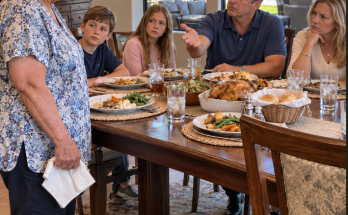
I was standing beside the buffet with a white dinner plate in my hands.
The candles were glowing.
The champagne was flowing.
The flowers I had personally ordered filled every table.
And my mother had just told her own daughter that she wasn’t entitled to eat the dinner.
“Olivia,” she said sharply, loud enough for everyone nearby to hear, “don’t fill your plate. You didn’t pay for this.”
My hand stopped.
Across the table, my sister Camille lowered her fork.
Then she smiled.
Not a surprised smile.
Not an uncomfortable smile.
A satisfied one.
“Mom,” Camille said softly, “don’t embarrass her.”
Then she looked directly at me.
“But she’s right.”
Someone behind me quietly cleared their throat.
I looked around the private dining room.
Thirty-six guests had gathered for my parents’ fortieth wedding anniversary.
My father was wearing the navy suit I had helped him choose.
My mother was wearing the pearl necklace I had bought her last Christmas.
The flowers on every table were the exact arrangements I had spent three weeks selecting.
The restaurant had prepared my father’s favorite roast.
The champagne was the brand my mother loved.
Even the handwritten anniversary cards on the tables had been printed and delivered by me.
And yet, somehow, I was the only person in the room who apparently hadn’t paid for anything.
I looked down at the plate in my hands.
Then I looked at my mother.
She folded her arms.
“Well?”
I smiled faintly.
“Don’t worry, Mom.”
I set the plate down.
“I won’t take anything.”
Camille’s smile widened.
I turned around.
And for the first time in my life, I didn’t explain myself.
I simply walked away.
But before I tell you what happened next, you need to understand something.
My family had been teaching me this lesson since I was nine years old.
I was useful when I paid.
I was valuable when I provided.
But the moment I wanted something for myself, I became selfish.
When I was nine, my parents had hosted my birthday party.
There were twelve children in our backyard.
There were balloons.
A rented cake.
Ice cream.
Games.
And one enormous chocolate cake sitting on the kitchen counter.
I remember reaching for a slice.
My mother grabbed my wrist.
“Wait.”
I looked up at her.
She pointed toward the other children.
“Let the guests have some first.”
“But it’s my birthday.”
She stared at me.
“Don’t be greedy, Olivia. You didn’t pay for this.”
Everyone laughed.
I pretended not to care.
But I remembered.
I remembered every time afterward.
When I was sixteen, Camille needed a new dress for homecoming.
My parents bought her one.
When I asked for a new laptop for school, my mother told me we couldn’t afford it.
When Camille went to college, my parents helped with tuition.
When I went to college, I worked two jobs.
When Camille got married, my parents paid for the venue.
When I got married, I paid for most of mine.
Nobody said anything.
Because that was simply how our family worked.
Camille received.
I handled things.
And somehow, everyone became comfortable with that arrangement.
By the time I was thirty-five, I had become the person everyone called whenever something needed to be done.
A hotel reservation?
Call Olivia.
A family reunion?
Call Olivia.
A birthday dinner?
Olivia.
A Christmas party?
Olivia.
A relative needed an emergency hotel room?
Somehow, my card appeared.
I didn’t complain.
I told myself I was helping my family.
Then came my parents’ fortieth anniversary.
My mother called me three months before the celebration.
“Olivia, sweetheart, you know how wonderful you are at organizing things.”
I already knew where this was going.
“What do you need?”
“A small dinner.”
“How many people?”
“Oh, maybe twenty.”
It became thirty-six.
Then forty.
Then forty-two.
Camille invited people from her husband’s family.
My mother added neighbors.
My father added former coworkers.
By the time I finished the guest list, we were at fifty.
I booked the Hearthstone Room at Alderwood.
I paid the deposit.
I selected the menu.
I arranged the flowers.
I coordinated the photographer.
I ordered the cake.
I even reserved a private parking area because my father had trouble walking long distances.
And I left my credit card on file for the remaining balance.
I never announced that I had paid.
I didn’t need praise.
I just wanted my parents to have a beautiful anniversary.
Then Camille discovered the event.
And suddenly, she decided she was the host.
She changed the seating arrangement.
She upgraded the flowers.
She added champagne.
She ordered expensive desserts.
Then she posted pictures online.
“Planning something special for Mom and Dad.”
People commented:
You’re such a wonderful daughter.
Camille always goes above and beyond.
Your parents are lucky to have you.
My mother replied:
“My girl has always taken care of us.”
I stared at the screen.
My name wasn’t mentioned.
Not once.
I could have corrected them.
I could have posted the invoices.
I could have shown the receipts.
Instead, I put my phone down.
I told myself it didn’t matter.
Until that night.
Until my mother looked at the plate in my hands and said:
“Don’t fill your plate. You didn’t pay for this.”
Something inside me finally changed.
I didn’t cry.
I didn’t argue.
I didn’t expose anyone.
I simply put on my coat.
And walked toward the exit.
Camille followed me.
“Olivia.”
I kept walking.
“Don’t be dramatic.”
I stopped.
She smiled.
“You’re really going to leave your parents’ anniversary because Mom made one comment?”
I turned around.
“No.”
Her smile disappeared.
“I’m leaving because I finally understood the comment.”
“What does that mean?”
I looked at her.
“It means you were right.”
Then I walked out.
What Camille didn’t know was that I had my phone in my hand.
And the person I was calling wasn’t my mother.
It wasn’t my father.
And it certainly wasn’t her.
It was Daniel.
The restaurant manager.
“Daniel?”
“Yes, Olivia?”
“I’m outside.”
He was quiet for a moment.
Then I said:
“I need you to do exactly what we discussed.”
His voice changed.
“Are you sure?”
I looked through the glass doors.
My mother was laughing.
Camille was talking to the guests.
My father was raising his champagne glass.
None of them were looking for me.
“Yes,” I whispered.
“I’m sure.”
PART 2 — THE MANAGER WALKED INTO THE PARTY WITH A BLACK FOLDER
Ten minutes after I left, my family continued celebrating.
That’s what hurt the most.
Nobody followed me.
Nobody called.
Nobody asked if I was okay.
The music continued.
The champagne continued.
The photographer continued taking pictures.
My mother even stood beside Camille for photographs.
The daughter who had supposedly “organized” everything.
The daughter everyone believed had paid for everything.
The daughter who had been praised all night.
Meanwhile, I sat in my car across the parking lot.
I wasn’t crying.
I was waiting.
At 8:47 p.m., my phone buzzed.
A message from Daniel.
Done.
I stared at the word for several seconds.
Then I turned off my phone.
Inside the dining room, dessert was being served.
My mother was smiling.
Camille was telling a story about how difficult it had been to organize the celebration.
“I wanted everything to be perfect,” she said.
My father raised his glass.
“To Camille.”
Everyone applauded.
My mother hugged her.
“My wonderful daughter.”
And then Daniel walked into the room.
He wasn’t carrying food.
He wasn’t carrying wine.
He wasn’t smiling.
In his hands was a black leather folder.
He walked directly toward my parents’ table.
My mother looked up.
“Daniel?”
He stopped beside her.
“Mrs. Doyle.”
She smiled politely.
“Is everything all right?”
Daniel placed the folder on the table.
“There has been an adjustment to the reservation.”
My father frowned.
“What kind of adjustment?”
Daniel opened the folder.
“The person who originally reserved this room has canceled the payment authorization.”
My mother blinked.
“What?”
Daniel looked toward Camille.
“Would you like me to explain?”
Camille’s face changed.
“Explain what?”
Daniel turned the folder around.
Inside were the original reservation documents.
The deposit.
The catering agreement.
The floral charges.
The champagne upgrade.
The additional guest charges.
The private room fee.
Everything.
At the bottom was the original payment authorization.
OLIVIA DOYLE.
Camille’s mouth opened.
My mother stared at the document.
Then she whispered:
“That’s impossible.”
Daniel remained professional.
“I’m afraid it isn’t.”
My father looked at Camille.
“You said you paid for this.”
Camille’s face went pale.
“I—I was going to.”
“You said everything was handled.”
“I thought—”
Daniel interrupted.
“I was instructed to remove Olivia’s payment authorization.”
My mother stood.
“You can’t do that!”
Daniel looked at her.
“Mrs. Doyle, the authorization belongs to Olivia. She has every right to cancel it.”
My mother’s voice became louder.
“But this is our anniversary!”
“I understand.”
“Then who is paying?”
Daniel looked around the room.
Nobody spoke.
The silence was enormous.
My father slowly lowered his champagne glass.
“How much?”
Daniel opened another page.
“The current balance is $8,164.”
Someone at the far end of the table gasped.
Camille immediately turned toward my mother.
“Mom, don’t look at me.”
My mother stared at her.
“But you said—”
“I didn’t know she was paying everything!”
My father stood.
“You told everyone you organized this.”
“I did!”
“Then pay for it.”
Camille’s eyes filled with panic.
“With what?”
My mother looked at her.
And for the first time that evening, the smile was gone.
Then Daniel reached into the folder again.
“There is one more item.”
My father frowned.
“What now?”
Daniel pulled out a second document.
“This concerns the additional charges.”
Camille looked terrified.
“What additional charges?”
Daniel calmly answered.
“The upgrades requested after the original contract.”
He placed the invoice on the table.
The extra champagne.
The premium floral arrangements.
The upgraded dessert.
The additional guests.
The private musician.
The photography package.
All requested under Camille’s name.
My father slowly turned toward her.
“You ordered all of this?”
Camille swallowed.
“I thought Olivia was paying.”
The room went completely silent.
My mother looked toward the doorway.
“Where is Olivia?”
Nobody answered.
Then my father finally understood.
“She knew.”
Camille looked at him.
“What?”
“She knew all of this would happen.”
My mother shook her head.
“No.”
Daniel quietly closed the folder.
“Your daughter asked me not to embarrass anyone.”
My mother’s face tightened.
“She didn’t?”
“No.”
“She simply asked me to provide the documentation.”
Then Daniel walked away.
My father stared at the invoice.
My mother sat down.
Camille began crying.
And suddenly, the entire room knew what I had spent years refusing to say.
I wasn’t the daughter who couldn’t contribute.
I was the daughter who had been contributing the entire time.
But that wasn’t the biggest surprise.
Because Daniel had one final instruction from me.
And he hadn’t told them yet.
PART 3 — THE SURPRISE NOBODY SAW COMING
At 9:15 p.m., I was home.
I had changed out of my red dress.
I had made tea.
And I was sitting quietly in my living room when someone knocked on my door.
It was my great-aunt Ruth.
She was holding her purse in one hand and a folder in the other.
I opened the door.
“Aunt Ruth?”
She smiled sadly.
“I thought you might need this.”
I let her inside.
She sat down.
For a moment, neither of us spoke.
Then she placed the folder on my coffee table.
“I should have given this to you years ago.”
I opened it.
Inside were copies of old bank statements.
Receipts.
Property documents.
And one handwritten letter.
I looked at her.
“What is this?”
Ruth sighed.
“Your grandmother’s estate.”
I froze.
“My grandmother?”
“She left you something.”
I stared at the papers.
My grandmother had died when I was twenty-two.
I had always been told that everything went to my parents.
Ruth shook her head.
“That isn’t what happened.”
My hands began trembling.
“She left you an investment account.”
“How much?”
Ruth looked at me.
“Enough that you never needed your parents’ approval.”
I couldn’t speak.
She continued.
“Your father was appointed temporary administrator because you were still young.”
I stared at the documents.
“And the money?”
“Your father used part of it to help with Camille’s wedding.”
My stomach dropped.
“He used my money?”
Ruth nodded.
“He told everyone it was family money.”
I looked at the paperwork.
There were withdrawals.
Large ones.
Wedding expenses.
College tuition.
A car.
A down payment.
All from an account that had belonged to me.
My eyes filled with tears.
“Why didn’t you tell me?”
“Because your father told me you knew.”
I closed my eyes.
For years, I had believed Camille was simply the favored daughter.
Now I understood.
She hadn’t only received more love.
She had received my money.
And my parents had allowed me to believe I was the dependent one.
Ruth reached across the table.
“There is something else.”
She handed me another document.
It was dated three years earlier.
I read it.
Then read it again.
It was a financial statement from the investment account.
There was still money left.
A lot of it.
My grandmother’s money had continued growing.
And the account had never been closed.
I looked at Ruth.
“Why didn’t I know this existed?”
“Because your father had the statements sent to his office.”
I sat completely still.
Then my phone rang.
Dad.
I stared at the screen.
I didn’t answer.
It rang again.
Then again.
Finally, a message appeared.
Please call me. We need to talk.
A second message came.
Your mother is upset.
A third.
Camille can’t pay the restaurant bill.
I almost laughed.
After everything…
That was what he was worried about.
Not what they had done to me.
Not what my mother had said.
Not how they had treated me.
The bill.
I typed one sentence.
The woman in the red dress didn’t cancel your family. She canceled her payment.
Then I put the phone down.
Five minutes later, another message arrived.
How much do you want?
I stared at it.
I didn’t want money.
I wanted something much simpler.
I wanted them to understand that I was no longer available to be used.
So I replied:
Nothing.
Then I added:
I want my life back.
The next morning, my father came to my house.
He stood on my porch for almost ten minutes before I opened the door.
He looked exhausted.
“Olivia.”
I didn’t invite him in.
He swallowed.
“Your mother wants to apologize.”
I nodded.
“Okay.”
“She didn’t mean what she said.”
“She said it clearly.”
“She was upset.”
“So was I.”
He looked down.
Then he whispered:
“Camille’s in trouble.”
I didn’t answer.
“She can’t afford the restaurant.”
“That isn’t my problem.”
He nodded slowly.
“I know.”
Then he reached into his coat.
He handed me a check.
I looked at it.
“What is this?”
“Your grandmother’s money.”
I stared at him.
He couldn’t meet my eyes.
“I should have told you years ago.”
“Yes.”
“I was wrong.”
“Yes.”
He swallowed.
“Can you forgive me?”
I looked at the man who had spent twenty-five years teaching me that love had to be earned.
Then I shook my head.
“Not today.”
He looked hurt.
But for the first time, I didn’t feel responsible for making him feel better.
I closed the door.
And that was the moment I realized something.
My mother had been right about one thing.
I didn’t pay for that dinner.
Not anymore.
I had spent years paying for their celebrations, their mistakes, their emergencies, their expectations, and their approval.
But that night, for the first time, I walked away with something more valuable than a paid bill.
I walked away without owing them anything.
And three months later, I received an invitation in the mail.
It was from Camille.
She was getting married again.
At the bottom of the invitation was a handwritten note:
“Olivia, we hope you can come. We’ve already paid for everything ourselves.”
I smiled.
Then I put the invitation in the recycling bin.
Because sometimes the biggest revenge isn’t making people pay.
It’s finally realizing you don’t have to pay for a seat at a table where they never wanted you to sit.