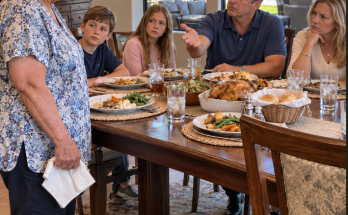
PART 1 —The first time my mother told me to sell the business I had spent twelve years building, she said it while buttering a piece of bread.
No warning.
No apology.
No hesitation.
“Claire, you need to sell Bennett & Bloom.”
I actually laughed.
I thought she was joking.
My father didn’t.
He sat across the dining table with his hands folded, looking at me with the expression he used whenever he had already decided something and expected everyone else to obey.
“Your sister needs the money,” he said.
I put my fork down.
“How much?”
My mother looked at Madison.
Madison stared at her phone.
“About nine hundred and eighty thousand.”
For several seconds, nobody spoke.
Then I said the only thing that came to mind.
“Why would I sell my company because Madison owes someone almost a million dollars?”
My mother sighed.
“Because you’re family.”
That sentence had been used against me my entire life.
When I was sixteen and Madison needed a new car, I was told to understand.
When she dropped out of college, I was told not to judge her.
When she opened a boutique and lost money, I was told that successful people took risks.
When she launched an online beauty company and spent hundreds of thousands of dollars before making a single profitable month, I was told she was being entrepreneurial.
And now the beauty company was gone.
So was most of the money.
But apparently my business was supposed to become the emergency fund.
I looked at Madison.
“You borrowed nearly a million dollars?”
She finally put down her phone.
“I didn’t borrow it for myself.”
“What does that mean?”
“It was for the company.”
“The company that’s now closed?”
She rolled her eyes.
“It was complicated.”
“No,” I said. “It’s actually pretty simple.”
My father leaned forward.
“Enough.”
I looked at him.
“Dad, Bennett & Bloom isn’t a savings account.”
“I know what it is.”
“No, you don’t.”
I had started the company at twenty-two with a borrowed oven and three hundred dollars.
I had cooked birthday cakes in church kitchens.
I had delivered wedding food in my own car.
I had worked through food poisoning.
I had slept on the floor of my first commercial kitchen during a twelve-hour wedding prep because there was no money for another employee.
Twelve years later, Bennett & Bloom had three delivery vans, forty-two employees, a massive commercial kitchen, contracts with hotels and museums, and reservations booked more than a year in advance.
It wasn’t something I could simply “sell.”
It was hundreds of people’s livelihoods.
My employees depended on those paychecks.
My clients depended on those contracts.
And I had spent twelve years earning every single one of them.
Madison leaned back.
“You’re acting like I’m asking you to sell your house.”
“You’re asking me to sell my entire life.”
“You can start another business.”
I stared at her.
“You really believe that?”
She shrugged.
“You’re good at business.”
My mother nodded.
“Exactly.”
Something inside me went completely quiet.
Not angry.
Not emotional.
Just finished.
I looked at my father.
“And if I say no?”
His expression hardened.
“Then you’re choosing a business over your sister.”
“No.”
I stood.
“I’m choosing not to destroy forty-two people’s lives because my sister made financial decisions she couldn’t afford.”
My mother slammed her palm against the table.
“You selfish girl.”
I picked up my coat.
Dad’s voice followed me.
“If you walk out, don’t expect this family to help you when you need us.”
I turned around.
“That’s fine.”
Then I walked out.
I thought that would be the end of it.
It wasn’t.
Because two days later, my mother called me.
Her voice was cold.
“You’ll regret choosing a kitchen over your blood.”
I saved the voicemail.
I didn’t know yet how important that recording would become.
Because the following morning, one of my delivery drivers called me at 5:17 a.m.
“Claire?”
His voice was shaking.
“You need to come to the kitchen.”
“Why?”
He took a breath.
“Someone broke in.”
I was out of bed instantly.
When I arrived at Bennett & Bloom, the front doors were shattered.
Inside, refrigerators had been opened.
Storage shelves had been knocked over.
Equipment was damaged.
Several computers were smashed.
My office had been completely destroyed.
Someone had gone through filing cabinets and thrown contracts across the floor.
Then I saw the thing that made my stomach turn.
On the wall above my desk, someone had spray-painted six words.
FAMILY COMES BEFORE PRIDE.
I stood there staring at it.
My employee beside me whispered,
“Claire…”
I didn’t answer.
Because suddenly, my mother’s voicemail didn’t sound like an insult anymore.
It sounded like evidence.
And then I remembered something.
Something my parents had no idea I had done.
Three months earlier, after a suspicious attempt to break into one of our delivery vans, I had hired an attorney and completely restructured Bennett & Bloom.
The building lease.
The equipment.
The trademarks.
The recipes.
The contracts.
The company accounts.
Everything had been transferred into a separate operating company.
And every security camera in the building uploaded footage directly to an off-site server.
Nobody could erase it by destroying the computers.
I pulled out my phone.
Opened the security app.
And pressed play.
The footage loaded.
At first, the screen was dark.
Then headlights appeared outside the kitchen.
A vehicle stopped.
Two people stepped out.
And when the camera angle changed, I recognized one of them immediately.
I felt the blood drain from my face.
It was someone I had trusted my entire life.
But the second person beside him was the one who made me realize this wasn’t about money anymore.
My father had not come alone.
PART 2 — My Parents Destroyed My Business to Force Me to Pay My Sister’s Debt—Then the Police Found One Thing in the Wreckage That Changed Everything
I watched the security footage three times.
I wanted to be wrong.
I wanted the image to blur.
I wanted the person walking through my kitchen at 2:13 in the morning to be a stranger.
He wasn’t.
It was my father.
And beside him was Madison’s husband, Tyler.
They wore dark jackets.
Caps.
Gloves.
They had clearly tried to conceal their identities.
But they didn’t know the cameras were recording to a server they couldn’t reach.
I called the police.
Then I called my attorney.
Then I called my insurance company.
Within hours, investigators were inside Bennett & Bloom.
My employees stood outside in stunned silence.
Some were crying.
Some were furious.
One of my chefs asked the question everyone was thinking.
“Are we going to lose our jobs?”
I looked at him.
“No.”
I didn’t know how I was going to make that promise true.
But I said it anyway.
Because I had built that company for twelve years.
I wasn’t going to let my family destroy it in one night.
My attorney arrived with a folder.
She looked at the damage.
Then she looked at me.
“Claire, I need you to tell me everything.”
So I did.
The dinner.
The ultimatum.
The voicemail.
The threats.
The security footage.
Everything.
She listened carefully.
Then she asked,
“Did your father know the company had been restructured?”
“No.”
“Did Madison?”
“No.”
She nodded.
“That matters.”
“How?”
“Because the assets they destroyed may not belong to you personally anymore.”
I understood immediately.
The company was legally separate.
The damage wasn’t simply damage to my personal property.
It was destruction of corporate property.
And according to my attorney, there was something else.
Something I hadn’t known.
She pulled another document from the folder.
“This is the acquisition agreement you signed last month.”
I stared at it.
“That’s confidential.”
“It is.”
“What does it have to do with this?”
She turned the page.
“Look at section eight.”
I read it.
Then read it again.
My hands went cold.
The company that had been negotiating to acquire Bennett & Bloom had included a protection clause.
If a criminal act caused significant damage to the facility before closing, the buyer could either terminate the deal or fund an immediate relocation and continue with the acquisition.
They had chosen the second option.
My attorney looked at me.
“They’re still buying the company.”
I couldn’t speak.
“How?”
“Because they aren’t buying the building.”
She smiled slightly.
“They’re buying the business.”
The next morning, Sterling Hospitality Group sent a representative to the kitchen.
His name was Daniel.
He walked through the wreckage with me.
Broken equipment.
Damaged walls.
Destroyed computers.
Boxes scattered everywhere.
He looked around for several seconds.
Then he said,
“We’re not backing out.”
I almost laughed.
“Why?”
“Because what your parents destroyed isn’t the company.”
He pointed toward me.
“You are.”
Then toward the employees standing outside.
“And them.”
Then toward the shelves of recipes and contracts.
“And what you’ve built.”
Sterling offered to relocate us temporarily into one of their unused commercial kitchens.
They would cover the relocation costs.
The acquisition would continue.
But there was another surprise.
They had reviewed the security footage.
And they had already sent it to their attorneys.
That afternoon, my father called.
I almost didn’t answer.
When I did, he sounded furious.
“You went to the police?”
“Yes.”
“You’re pressing charges against your own father?”
“You broke into my business.”
“We were trying to protect your sister!”
“You destroyed my property.”
“You left us no choice!”
I paused.
“No.”
His voice became quieter.
“You don’t understand what’s happening.”
“I understand perfectly.”
Then he said something I’ll never forget.
“Madison is going to prison if she can’t pay that debt.”
I closed my eyes.
“So you destroyed my business to save her?”
“We were desperate.”
“You should have been honest.”
He went silent.
Then he said,
“Your sister didn’t tell you everything.”
My stomach tightened.
“What does that mean?”
He hung up.
I immediately called my attorney.
Before I could explain, she said,
“Claire, don’t contact Madison.”
“Why?”
“Because we received something from the lender.”
She emailed me a document.
I opened it.
It was a financial statement.
Madison’s debt wasn’t $980,000.
It was closer to $1.4 million.
And almost half of it wasn’t business debt.
It was personal spending.
Luxury travel.
Jewelry.
Private clubs.
A leased car.
Credit cards.
Then I saw the name of the person who had personally guaranteed a portion of the loan.
My father.
I stared at the screen.
He hadn’t been trying to save Madison from losing her company.
He had been trying to save himself from losing everything.
But there was more.
At the bottom of the document was a note from the lender.
Collateral review pending.
I called my attorney.
“What collateral?”
She didn’t answer immediately.
Then she said,
“That’s what we’re trying to determine.”
The next morning, we found out.
And it changed the entire story.
Because Madison hadn’t used Bennett & Bloom as collateral.
She had used something else.
Something my father believed belonged to him.
Something that had been transferred years earlier.
Something connected to my grandfather.
And suddenly, I understood why my parents had been so desperate for me to sell my company.
They weren’t trying to save my sister.
They were trying to cover up a much bigger problem.
PART 3 — My Parents Destroyed My Business to Save My Sister From a $1.4 Million Debt—Then I Discovered What My Father Had Been Hiding for 12 Years
The document arrived at 9:04 on Monday morning.
My attorney placed it in front of me.
“Read the second page.”
I did.
Then I stopped breathing.
The collateral securing part of Madison’s loan was an investment account.
An account worth more than $1.7 million.
An account originally established by my grandfather.
For me.
My grandfather had died when I was nineteen.
Before he passed, he had told me something I didn’t fully understand at the time.
“Your father will tell you that this money belongs to the family.”
I had laughed.
He hadn’t.
He handed me a small envelope.
“Don’t let anyone convince you that being generous means surrendering your future.”
I had forgotten those words.
Until that moment.
The investment account had been established in my name through a trust.
My father had been listed as trustee while I was a minor.
But when I turned eighteen, control was supposed to transfer.
Except it hadn’t.
My father had continued managing the account.
And according to the documents my attorney had obtained, he had moved money from that account over the years.
Not all of it.
Just enough to avoid attracting attention.
College expenses for Madison.
Business loans.
Credit cards.
A car.
A failed investment.
Then, eventually, the collateral for Madison’s enormous loan.
My father had been using my inheritance to finance my sister’s life.
And when the account was finally at risk of being exposed, he needed money quickly.
That’s why he wanted Bennett & Bloom sold.
He didn’t need my company because Madison owed money.
He needed my company because he had run out of places to hide the money he had already taken.
I sat in silence.
My attorney looked at me.
“There’s more.”
She slid another page across the table.
It was a transfer authorization.
My father’s signature.
My name.
And a date.
The authorization had been created when I was twenty-three.
Except there was one problem.
I had never signed it.
My attorney looked at me.
“Do you recognize this signature?”
“No.”
“Neither do we.”
I stared at the page.
Someone had forged my name.
And suddenly, the destruction of my business made sense.
They hadn’t broken in simply to scare me.
They had been looking for documents.
Documents that could prove what my father had done.
The police later found a damaged filing cabinet behind my office wall.
Inside was a folder I hadn’t seen in years.
My grandfather’s original trust documents.
My father’s eyes must have missed it.
But one page had been left untouched.
It contained a handwritten note from my grandfather.
It said:
Claire, if you’re reading this, someone has probably tried to convince you that what I left you belongs to everyone. It doesn’t. Protect it. Build something with it. And never confuse family loyalty with allowing someone to destroy your future.
I cried when I read it.
Not because of the money.
Because for the first time, I realized my grandfather had known exactly what kind of family dynamics I would face.
The legal case moved quickly after that.
My father’s attorney contacted mine.
Then Madison’s attorney did.
Then the lender’s attorneys.
Everyone suddenly wanted to negotiate.
But I didn’t.
Not yet.
Because there was one final piece.
The security footage.
The footage showed my father entering my kitchen.
But it also showed something else.
Before he left, he stood in front of the camera.
He looked directly into it.
Then he said something.
The audio was clear.
“I gave you a chance, Claire.”
He pointed toward the camera.
“You should have sold.”
That sentence became one of the most important pieces of evidence in the entire case.
My father had essentially admitted why he was there.
He wasn’t protecting Madison.
He wasn’t acting out of desperation.
He was trying to force me to surrender.
And he failed.
Bennett & Bloom reopened six weeks later in a new facility.
The Sterling acquisition went forward.
Every one of my forty-two employees kept their jobs.
We eventually expanded to two new cities.
Madison’s company disappeared completely.
The lender pursued the people who had personally guaranteed the debt.
My father’s financial problems became his responsibility.
And the money from my grandfather’s trust?
It was finally placed under my sole control.
Months later, I received a letter from my father.
It was only three pages.
The first two were excuses.
The third was different.
He wrote:
“I thought because you were the strong one, you could afford to lose something for the family.”
I read that sentence several times.
Then I wrote one line beneath it.
“Being strong never meant I owed you my future.”
I mailed it back.
I never heard from him again.
Today, Bennett & Bloom is bigger than I ever imagined it could become.
But whenever someone asks me what the hardest part of building a company was, I don’t talk about the long nights.
I don’t talk about the loans.
I don’t talk about the failed events or the broken ovens or the years when I wasn’t sure payroll would clear.
I tell them this:
The hardest thing I ever built was a life I could finally protect from the people who believed loving them meant destroying myself.
And the strangest part?
My parents thought destroying my kitchen would leave me with nothing.
They didn’t realize the kitchen was never the thing that made Bennett & Bloom valuable.
I was.