PART 1 — THE CHRISTMAS DINNER THAT CHANGED EVERYTHING
On Christmas Day, my mother looked at my eight-month-old daughter and made a cruel remark in front of our entire family.
For several seconds, I couldn’t speak.
Then I stood up, collected every present beneath the Christmas tree with my daughter’s name on it, and said quietly, “This is the last Christmas Lily will ever spend in this house.”
My mother laughed.
She thought I was being dramatic.
But when my husband picked up the diaper bag and followed me toward the door, her laughter began to fade.
She had no idea that the daughter she’d spent thirty years controlling was finally ready to walk away.
And before New Year’s Day, she would discover that my decision came with consequences she had never expected.
My name is Claire Bennett. I’m thirty-two years old, married to a wonderful man named Evan, and the mother of a little girl who changed my understanding of love.
Lily was born six weeks early.
Instead of bringing her home and decorating a nursery, Evan and I spent our first weeks as parents sitting beside an incubator in the neonatal intensive care unit.
I learned the sounds of hospital monitors before I learned my daughter’s favorite lullaby.
I memorized feeding schedules, watched her tiny chest rise and fall, and celebrated every small improvement as if the world had handed me a miracle.
Three weeks later, the doctors finally told us we could take her home.
I cried all the way to the parking garage.
Today, Lily is eight months old. She’s still smaller than some babies her age, but her pediatrician is pleased with her progress. She smiles at strangers, laughs whenever her father makes silly faces, and reaches for everything within her tiny arms’ length.
To Evan and me, she’s perfect.
But my mother, Carol, has never been particularly good at loving anything she couldn’t criticize.
Growing up, I learned that compliments in our house usually came with conditions.
When I earned good grades, Mom asked why they weren’t better.
When I received a scholarship to college, she wondered why I hadn’t gotten into a more prestigious university.
When I introduced Evan to the family, she studied him from head to toe before saying, “Well, at least he seems dependable.”
She said it as though I’d brought home a secondhand washing machine.
For years, I convinced myself that this was simply how she showed concern.
I told myself she loved me in her own way.
And when I became pregnant, I genuinely believed that becoming a grandmother might soften her.
Perhaps holding her first granddaughter would help her understand how precious a child’s confidence could be.
Perhaps she’d remember that children needed encouragement more than criticism.
Perhaps, for once, she’d choose kindness.
I was wrong.
When Lily was born early, Mom asked whether I’d done something during pregnancy that might have caused it.
When Lily needed extra time to gain weight, she questioned my feeding routine.
When the pediatrician reassured us that Lily was progressing well, Mom suggested doctors were sometimes too quick to tell anxious parents what they wanted to hear.
Every conversation ended the same way.
I defended myself.
Mom called me sensitive.
And eventually, I apologized just to restore the peace.
Evan noticed the pattern long before I admitted it existed.
“You don’t have to keep putting yourself through this,” he told me one evening.
“I know,” I answered.
But knowing something and being ready to change it are two different things.
So when Christmas approached, I made the same mistake I’d made every year.
I hoped this time would be different.
On Christmas morning, I dressed Lily in a beautiful red velvet outfit with tiny white buttons. Evan packed the presents we’d bought for the family, and I prepared the green bean casserole Mom had requested.
Before we left, he kissed my forehead.
“Remember, we can leave whenever you want.”
I smiled.
“It’s Christmas. Let’s try to enjoy it.”
He gave me a look that said he wasn’t entirely convinced.
Neither was I.
When we arrived at my parents’ house, the place looked like something from a holiday magazine.
White lights framed the windows. A magnificent tree stood in the living room, surrounded by beautifully wrapped presents. The smell of roasted turkey and cinnamon filled the air.
Relatives were already gathered around the fireplace.
My brother Mark waved us over, and his wife, Jenna, immediately asked to hold Lily.
“Oh, look at this little princess!” she exclaimed.
Lily grabbed Jenna’s finger and broke into a delighted smile.
For the first time that morning, I relaxed.
Dinner preparations continued in the kitchen. My cousins talked about their holiday plans, my father poured drinks, and the children ran around showing off their new toys.
Mom even complimented Lily’s dress.
“That’s a pretty outfit,” she said.
I nearly felt hopeful.
Then her gaze moved to Lily’s face.
“She still looks so tiny, though.”
I took a breath.
“She’s growing steadily. The doctor is happy with her progress.”
Mom waved her hand dismissively.
“Well, I suppose you can’t expect miracles when she’s already behind.”
The words stung, but I swallowed my reaction.
Not today, I told myself.
Not on Christmas.
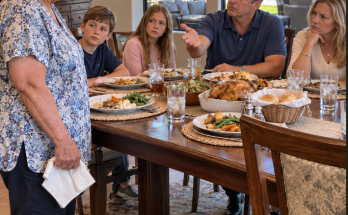
A few minutes later, everyone gathered around the dining table. Lily sat on my lap, happily chewing a soft teething toy while Evan served her a little baby food we’d brought along.
My mother watched us.
Then she turned toward my aunt and spoke loudly enough for everyone to hear.
“Honestly, Claire worries about that baby so much you’d think she were made of glass.”
A few relatives exchanged uncomfortable glances.
Mom continued.
“Maybe if she’d stop treating Lily like a fragile little project, the child would finally catch up.”
My fork stopped halfway to my mouth.
“Mom, please don’t.”
She looked at me as though I’d interrupted an important speech.
“I’m only telling the truth.”
“No. You’re making comments about a baby whose doctor has already told us she’s doing well.”
My sister-in-law Jenna quietly reached for Lily’s hand.
Mom’s expression hardened.
“And now you’re getting defensive again. I suppose we’ll all have to spend the next eighteen years pretending she’s perfect.”
The table went silent.
I felt Evan’s hand settle over mine.
Then Mom looked directly at Lily and delivered the remark that ended everything.
“Maybe next Christmas we’ll have a reason to celebrate if she finally starts looking like a normal, healthy child.”
For a moment, I couldn’t breathe.
My father stared at his plate.
My brother suddenly became fascinated by his glass.
Nobody challenged her.
And that silence hurt almost as much as the words.
I looked down at my daughter.
Lily was smiling at the little Christmas lights reflected in a spoon. She didn’t understand the conversation. She didn’t know that her grandmother had just made her existence sound like a disappointment.
But someday, she would understand words.
Someday, she’d recognize the expression on someone’s face when they decided she wasn’t good enough.
And I realized I had a choice.
I could keep teaching her that family members were allowed to hurt you as long as you loved them.
Or I could teach her that love never requires you to accept cruelty.
I stood up.
Mom frowned.
“Where are you going?”
I walked to the Christmas tree and began gathering the gifts with Lily’s name on them.
One by one, I placed them in a shopping bag.
Mom let out a short laugh.
“Oh, here we go. Claire’s having another episode.”
I didn’t answer.
Evan stood immediately and picked up the diaper bag.
Then he took our coats from the hallway.
Mom’s smile began to fade.
“Claire, sit down. You’re embarrassing yourself.”
I turned toward her.
“No, Mom. I’m done embarrassing myself by pretending this is acceptable.”
She stared at me.
I held Lily close and said the words I’d never imagined saying.
“This is the last Christmas my daughter will ever spend in this house.”
Mom laughed again, but this time it sounded forced.
“You’ll calm down tomorrow.”
“Maybe. But my decision won’t change.”
“You can’t keep my granddaughter away from me over one stupid comment!”
I looked at her steadily.
“It wasn’t one comment. It was every comment you’ve made about her since she was born. And every time you made me feel like I had to defend my own child.”
Mom’s mouth fell open.
For the first time in my life, I didn’t rush to comfort her.
I didn’t apologize for making her uncomfortable.
I didn’t explain myself until she felt better.
I simply turned toward the door.
Behind me, my mother shouted, “If you walk out now, don’t expect me to chase after you!”
I paused for a moment.
Then I answered without turning around.
“I’m not asking you to chase me. I’m asking you to understand why I’m leaving.”
Evan opened the door.
Cold winter air rushed into the hallway.
We stepped outside together, carrying our daughter and the presents we’d brought for her.
Behind us, the door closed.
For the first time in thirty-two years, I walked away from my mother’s anger without carrying the responsibility for fixing it.
I thought that would be the hardest part.
I was wrong.
Because the next morning, my phone began ringing.
And before New Year’s Day, my mother would discover that losing access to her granddaughter wasn’t the only consequence of what she’d done.
PART 2 — THE PHONE CALL THAT EXPOSED MY MOTHER
At 7:16 the next morning, my phone started vibrating on the kitchen counter.
Mom’s name appeared on the screen.
I stared at it while Evan made coffee and Lily sat in her high chair, happily smacking a soft spoon against the tray.
I didn’t answer.
The phone stopped.
Then it rang again.
And again.
Finally, a message appeared.
Mom: “I hope you’ve calmed down. Your behavior yesterday was unacceptable. Call me before this gets any worse.”
I read it twice.
Not one word about Lily.
Not one apology.
Not even an acknowledgment of what she’d said.
According to Mom, the problem wasn’t that she’d humiliated her granddaughter.
The problem was that I’d refused to sit there and accept it.
Evan came to stand beside me.
“Are you going to call her?”
“No.”
He nodded.
“Good.”
A few minutes later, Dad called.
Unlike Mom, he sounded tired rather than angry.
“Claire, your mother hasn’t slept,” he began.
I closed my eyes.
“Dad, neither did I. Lily woke up twice last night.”
“I’m not calling to argue. Your mother says you intend to keep Lily away from the family.”
“I intend to protect my daughter from people who make her feel unwanted.”
“She didn’t mean it the way you took it.”
“Then how did she mean it?”
Dad fell silent.
I waited.
He didn’t answer.
Finally, he said, “You know how your mother is.”
That sentence had followed me throughout my childhood.
It had been used to excuse insults, dismiss hurt feelings, and convince me that keeping the peace was more important than telling the truth.
I was tired of it.
“Dad, knowing how she is doesn’t mean I have to keep exposing Lily to it.”
He sighed.
“It’s Christmas, Claire. Families say things they regret.”
“Then she can apologize for what she said.”
“She expects you to apologize first.”
I almost laughed.
“For what?”
“For storming out.”
I looked at Evan.
He shook his head slightly.
“Dad, I didn’t storm out. I left because I wasn’t going to let my daughter grow up believing she deserved to be insulted.”
Another long silence followed.
Then Dad said, “Your mother won’t like this.”
“I know.”
And I ended the call.
For the first time, I didn’t feel guilty afterward.
I felt exhausted.
But underneath the exhaustion was something else.
Relief.
Over the next two days, relatives began reaching out.
My aunt sent a message saying she was sorry she’d stayed quiet at dinner.
My cousin admitted that Mom’s remarks had made her uncomfortable too.
Jenna called and told me that she’d been thinking about the moment I gathered Lily’s gifts.
“You looked so calm,” she said.
“I wasn’t calm. I was trying not to cry.”
“Well, for what it’s worth, I think you did the right thing.”
I thanked her.
Then she added something that made me pause.
“Claire, your mom told everyone you took Lily away because she suggested you should be more careful about the baby’s health.”
I sat up straighter.
“What?”
“That’s what she told us this morning. She said you misunderstood her concern.”
I felt my stomach tighten.
Mom wasn’t merely refusing to apologize.
She was rewriting what happened.
According to her version, she had been a concerned grandmother, and I had been an unreasonable daughter who couldn’t tolerate advice.
I told Jenna exactly what Mom had said at the table.
There was a long silence.
Then Jenna whispered, “That’s not what I heard.”
“Exactly.”
After we hung up, I opened the family group chat.
There were twenty-seven messages.
Mom had written a long paragraph about how painful it was to be rejected by her own daughter during the holidays.
She described herself as a grandmother who had been denied the chance to love her granddaughter.
Several relatives had responded with sympathetic messages.
One wrote, “I’m sure Claire will come around.”
Another said, “Don’t let one misunderstanding ruin the family.”
I stared at the screen.
Not one person had asked what had actually happened.
I considered explaining everything.
I could have listed every comment Mom had made about Lily.
I could have described the NICU, the sleepless nights, and the months of anxiety.
I could have explained how many times I’d swallowed my feelings to keep family gatherings peaceful.
Instead, I wrote one short message.
“I’m willing to discuss reconciliation when Mom is ready to acknowledge what she said and apologize to Lily and me. Until then, we’re taking some space.”
Then I muted the conversation.
I thought that would end the matter.
It didn’t.
That afternoon, Mom called again.
This time, I answered.
“Finally,” she said. “I’ve been trying to reach you all day.”
“I saw your messages.”
“Then why haven’t you responded?”
“Because I needed some space.”
She made a frustrated noise.
“Claire, this is getting ridiculous. Everyone is asking questions. Your aunt thinks I’ve done something terrible.”
“You made a cruel comment about your granddaughter.”
“I was joking!”
“About an eight-month-old baby?”
“Oh, please. She won’t even remember it.”
That sentence stopped me cold.
Maybe Lily wouldn’t remember this particular Christmas.
But I would.
And I would remember how her grandmother treated her before she was old enough to understand.
I took a slow breath.
“Mom, this isn’t about whether Lily remembers your words. It’s about what I allow her to experience as she grows up.”
My mother scoffed.
“You’re acting as if I mistreated her.”
“You did.”
“I raised you!”
“And I appreciate the things you did for me. But that doesn’t give you permission to hurt my child.”
Her voice sharpened.
“You’ve changed since you married Evan.”
I almost smiled.
“No, Mom. I think I’ve finally stopped pretending.”
She went quiet.
Then she said, “If you want to behave like this, don’t expect me to help you when you need something.”
I frowned.
“Help me with what?”
There was a pause.
Then she answered.
“Your father’s situation.”
My stomach tightened.
“What situation?”
She hesitated.
“Nothing. Forget it.”
“Mom, what are you talking about?”
“Ask your father.”
Then she hung up.
I stood in the kitchen, staring at my phone.
Something about her words bothered me.
My parents had never been wealthy, but they’d always managed their finances. Dad had worked for the same manufacturing company for more than twenty-five years, and Mom had a part-time bookkeeping job.
They owned their home and usually lived within their means.
What could she possibly mean by my father’s situation?
I called him.
He didn’t answer.
I tried again an hour later.
Still nothing.
That evening, while Evan put Lily to bed, I opened my email and searched for an old message from Dad.
Six months earlier, he’d asked me to review a document relating to a small property he’d inherited from his uncle.
He wasn’t comfortable with online paperwork, and I’d helped him organize the documents.
I found the email.
Then I found the attachment.
It was a property agreement.
I read through it slowly.
And then I noticed a paragraph I’d overlooked the first time.
My father’s name appeared beside a loan obligation.
I frowned and opened another document he’d sent me.
Then another.
The more I read, the more concerned I became.
I wasn’t a lawyer, and I wasn’t going to jump to conclusions. But the documents suggested that Dad had made a financial commitment he might be struggling to meet.
And there was one detail that made my heart sink.
My parents had apparently been counting on financial help from me.
Not the occasional help I’d offered voluntarily.
Something much bigger.
I leaned back in my chair.
Suddenly, Mom’s words made sense.
“Don’t expect me to help you when you need something.”
It sounded like a threat.
But what if she was afraid that I would stop helping them?
What if the family emergency she had been hiding was already approaching?
I didn’t know the whole story yet.
But I knew one thing.
I wasn’t going to make another decision based on guilt.
The next morning, I called Dad again.
This time, he answered.
“Claire,” he said quietly. “We need to talk.”
“About the property?”
He didn’t speak for several seconds.
Then he whispered, “Your mother wasn’t supposed to tell you anything.”
My stomach dropped.
“Tell me what, Dad?”
He took a deep breath.
“Your parents’ house is in trouble.”
PART 3 — BY NEW YEAR’S, MY MOTHER WAS BEGGING ME TO COME BACK
Dad asked me to meet him at a small café near his office.
I almost said no.
Part of me wanted to tell him that his financial problems weren’t my responsibility, especially after the way Mom had treated Lily.
But I also knew my father had spent most of his life avoiding conflict with my mother.
He wasn’t innocent in what had happened at Christmas. His silence had hurt me too.
Still, I agreed to meet him.
Not because I was prepared to rescue anyone.
Because I wanted the truth.
When I arrived, Dad was already sitting in a corner booth with a folder beside his coffee.
He looked older than he had a week earlier.
“Thanks for coming,” he said.
I sat opposite him.
“Tell me what’s going on.”
He opened the folder.
My parents had fallen behind on several financial obligations. A loan connected to the inherited property had become difficult to manage, and their monthly expenses had increased after Dad’s hours were reduced at work.
They’d used some of their savings to cover the shortfall.
Then they’d borrowed more.
Now, they were struggling to keep everything current.
“How long has this been happening?” I asked.
Dad looked down.
“About eight months.”
I stared at him.
“Eight months?”
He nodded.
“And you didn’t tell me?”
“Your mother didn’t want you worrying.”
I let out a quiet breath.
“Dad, you let Mom tell me I was a burden while you were hiding this from me?”
His eyes filled with regret.
“I know how it sounds.”
“How does it sound to you?”
He didn’t answer.
I looked through the documents carefully.
There were payment notices, statements, and a letter from their lender explaining the next steps if they failed to bring the account current.
It was serious.
But it wasn’t something I could fix with one quick transfer.
Even if I wanted to.
“Why did Mom say I shouldn’t expect her to help me?” I asked.
Dad rubbed his forehead.
“She thought you might stop contributing to the household expenses.”
I stared at him.
“What household expenses?”
He looked uncomfortable.
For years, I’d occasionally helped my parents with unexpected bills. I’d paid for a broken water heater, covered a few medical expenses, and contributed toward repairs when a storm damaged their roof.
Those had been gifts.
I had never promised to become their permanent financial safety net.
But now I learned that Mom had begun treating my occasional help as something she could rely on indefinitely.
She had even told Dad that once Evan and I were more financially comfortable, we could contribute toward their housing costs.
Without ever asking us.
I sat back.
“So she was afraid I’d stop helping.”
Dad nodded slowly.
“And instead of talking to me, she decided to threaten me?”
“I don’t think she saw it that way.”
“Dad, she told me not to expect help when I needed something. She said that because I wouldn’t accept her behavior toward Lily.”
He lowered his eyes.
“I know.”
I waited for him to defend her.
He didn’t.
For the first time, I wondered whether my father was finally beginning to understand the damage their family dynamic had caused.
I closed the folder.
“I’m sorry you’re struggling. But I’m not going to make a financial decision because I feel guilty.”
Dad nodded.
“I understand.”
“And I won’t put Lily in a situation where she’s treated like she’s less important than everyone else.”
He looked up.
“I understand that too.”
I wasn’t ready to forgive him.
But at least, for once, he wasn’t asking me to pretend nothing had happened.
Before we left, I told him I’d review the documents and see whether there was anything practical I could suggest.
I made it clear that I wasn’t promising money.
I was promising to look at the situation carefully.
That distinction mattered.
When I returned home, Evan was waiting in the kitchen.
“How did it go?”
I explained everything.
He listened without interrupting.
Then he asked, “What do you want to do?”
I thought about it.
“I want to help Dad understand his options. I don’t want to become responsible for their entire financial life.”
“Then that’s the boundary.”
We spent the next several days reviewing our own budget and speaking with a financial adviser about the documents. We also suggested that my parents speak directly with their lender and an independent adviser about their options.
There were ways to address the financial problem without making promises we couldn’t afford or taking on obligations that weren’t ours.
But the bigger issue wasn’t money.
It was whether my mother could accept that helping her didn’t mean surrendering my boundaries.
On December 29, Mom finally called.
Her voice was unusually soft.
“Claire, can we talk?”
I hesitated.
“What do you want to talk about?”
“Christmas.”
I waited.
She sighed.
“I think things got out of hand.”
I closed my eyes.
There it was again.
Not an apology.
Not an acknowledgment.
Just a way of describing something she’d done as though it had happened by itself.
“Mom, what do you think got out of hand?”
“The argument.”
“There wasn’t an argument until you insulted Lily.”
She exhaled sharply.
“I told you, I was joking.”
“And I told you that it wasn’t funny.”
For several seconds, neither of us spoke.
Then she said something I hadn’t expected.
“Your father told me you know about the house.”
I looked at Evan.
He stopped what he was doing and listened.
“Yes,” I answered.
“Are you going to help us?”
There it was.
The question she’d been trying to reach from the beginning.
I took a slow breath.
“I’m willing to help you understand your options. I’m not promising to pay your bills.”
Her voice became tight.
“After everything we’ve done for you?”
I felt the familiar guilt rise.
Then I remembered Lily’s face at Christmas.
I remembered the silence around the table.
I remembered how easily Mom had made my daughter sound like a disappointment.
And I remembered how she’d laughed when I said I was leaving.
“Mom, I love you. But helping you financially doesn’t mean I have to accept being treated badly.”
She was quiet.
I continued.
“And I need you to understand something else. Lily will never be asked to earn your kindness. She’s a child. She deserves love without conditions.”
My mother began crying.
For a moment, I couldn’t tell whether she was hurt, frightened, or finally beginning to understand.
Then she whispered, “I don’t want to lose my granddaughter.”
“Then you need to treat her with respect.”
“I didn’t mean what I said.”
“But you said it.”
Another silence followed.
Finally, Mom asked, “What do you want me to do?”
It was the first time she’d asked me that question without immediately telling me I was wrong.
I answered honestly.
“I want you to apologize. Not because you want money or because you’re afraid I’ll keep Lily away. I want you to acknowledge that what you said was cruel and promise not to do it again.”
She didn’t answer immediately.
Then she whispered, “I’m sorry, Claire.”
I waited.
“I’m sorry I said those things about Lily. I shouldn’t have spoken about her that way.”
My throat tightened.
It wasn’t a perfect apology.
It didn’t erase what had happened.
But it was the first time my mother had directly acknowledged that she’d hurt us.
“I appreciate you saying that,” I replied.
“Can I see Lily?”
I looked at Evan.
We had discussed this possibility several times.
We agreed that reconciliation, if it happened, would need to be gradual. No pretending that Christmas hadn’t happened. No using money or family pressure to force a reunion.
“Not today,” I said gently. “Let’s give it some time. We can talk again after New Year’s.”
Mom began crying harder.
“So you’re still punishing me?”
“No. I’m protecting our peace while we figure out how to move forward.”
She didn’t seem to understand the difference yet.
But for the first time, I didn’t feel responsible for making her understand immediately.
We ended the call.
That evening, Evan and I sat on the living-room floor while Lily crawled between us, reaching for the wrapping paper left over from her Christmas presents.
She laughed when Evan placed a paper bow on his head.
I laughed too.
And I realized that our home felt lighter than it had in weeks.
We weren’t waiting for my mother to approve of our decisions.
We weren’t checking our phones every few minutes.
We weren’t rehearsing explanations for why we deserved basic respect.
We were simply enjoying our daughter.
On New Year’s Eve, Dad sent me a message.
“Your mother is thinking about what you said. We’re speaking with the lender and getting professional advice. Thank you for helping us understand our options.”
I replied that I was glad they were taking practical steps.
I didn’t promise to pay their debts.
I didn’t agree to return to the old arrangement.
And I didn’t use their financial problems as an opportunity to punish them.
I simply let them take responsibility for their situation.
A few days later, Mom sent another message.
“I hope one day we can have Christmas together again. I’ll do my best to be a better grandmother.”
I read it several times.
Then I looked at Lily, who was sitting beside Evan and trying to pull his socks off.
I didn’t know whether my mother would truly change.
One apology couldn’t erase thirty years of behavior.
And one difficult Christmas couldn’t define the rest of our family’s story.
But I knew what would happen if the old pattern returned.
I would no longer sacrifice my daughter’s confidence to preserve my mother’s comfort.
That was the promise I made to myself.
Not that I’d never forgive my mother.
Not that we’d never share another holiday.
But that love would no longer mean silence.
A few weeks later, we agreed to meet at a quiet café for a short visit. Mom brought Lily a small stuffed rabbit and asked before holding her.
It was a little thing.
But I noticed it.
She didn’t make comments about Lily’s size. She didn’t compare her to other babies. And when Lily reached for me, Mom handed her back without complaining.
Was everything fixed?
No.
Trust takes longer to rebuild than it takes to break.
But we had begun.
And that was enough for one day.
Looking back, I still remember the moment I gathered Lily’s gifts beneath the Christmas tree.
My mother thought I was throwing a tantrum.
She thought I’d return once I felt guilty enough.
She thought I needed her approval more than I needed my peace.
She was wrong.
The most important lesson I learned that Christmas wasn’t about cutting people off or winning an argument.
It was about understanding that boundaries aren’t revenge.
They’re a way of protecting the people and relationships that matter most.
I still love my mother.
But I no longer believe that loving her requires me to accept every hurtful thing she says.
And my daughter will grow up knowing something I wish I’d learned much earlier:
You never have to prove that you deserve kindness. Not even to your own family.
That Christmas, I walked out carrying my daughter and her presents.
By New Year’s, my mother was asking for another chance.
And for the first time, the decision about what happened next belonged to me.
THE END