I returned to my parents’ home outside Denver on a Friday evening, five years after leaving to serve my country.
I had imagined the reunion many times during long nights away from home. Perhaps my mother would hug me. Maybe my father would finally tell me he was proud of me. Even my younger sister, Tiffany, might put down her phone long enough to ask about my life.
Instead, Tiffany opened the door, looked me up and down, and laughed.
“You actually came back looking like that?”
She was wearing a designer dress, expensive jewelry, and the confident smile of someone who had never been told no.
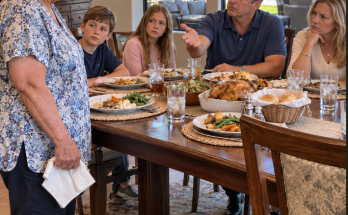
Behind her, music played in the living room. My parents had invited relatives and friends to celebrate Tiffany’s engagement to Brad, a man who loved talking about his military connections almost as much as he loved showing off his expensive watch.
My mother appeared in the hallway.
“Oh, you’re here,” she said, sounding more inconvenienced than pleased. “We weren’t sure you would come.”
“I said I would.”
Her eyes moved to my plain jacket and the small insignia visible near my shoulder.
“Five years in the military, and this is what you have to show for it?”
Tiffany laughed.
“Brad has already been promoted twice. Meanwhile, my sister disappears for five years and comes back with practically nothing.”
Brad approached with a glass of whiskey.
“So, what exactly do you do?”
“I serve.”
He chuckled. “That doesn’t answer the question.”
“It’s the answer you’re getting.”
His smile tightened.
My father finally emerged from his study.
“Please,” he said, looking around at the guests. “Can we get through one evening without you causing a scene?”
I stared at him.
I had not even raised my voice.
But in my family, my existence had always been treated like a disruption.
For as long as I could remember, Tiffany had been the daughter who could do no wrong. She received praise for ordinary accomplishments, while my achievements were dismissed as luck or stubbornness.
When I enlisted, my mother told relatives I was throwing my future away.
When I received my first major assignment, my father called it a glorified desk job.
And when I stopped sharing details about my work, they decided I must have nothing worth sharing.
They never understood that silence was sometimes part of serving.
I couldn’t tell them everything I did. I couldn’t explain every assignment or introduce them to every person I worked with.
So I stopped trying.
That evening, I had come home for one reason: my grandmother’s estate.
Before she passed away, she had left me a sealed letter and instructed her attorney to handle the inheritance. I had received confirmation that the final paperwork was ready, but I had not yet had the opportunity to review it.
I intended to discuss it privately with my father.
Instead, while looking for him, I heard voices coming from his study.
“Once she signs, everything can be transferred to Tiffany,” a stranger said.
I stopped outside the half-open door.
My father’s reply made my stomach tighten.
“She won’t question it. She’s been away too long to understand what’s changed.”
I pushed the door open.
A man in a gray suit sat behind the desk, surrounded by legal documents. My father stood beside him, while my mother watched from the window.
“What is this?” I asked.
Everyone turned.
The stranger hurriedly covered a page with his hand.
My eyes caught the heading on another document.
PROPERTY TRANSFER AGREEMENT.
And beneath it was my name.
I stepped closer.
“Why is my name on a document transferring Grandma’s property to Tiffany?”
My mother folded her arms.
“Because your sister needs the house more than you do.”
“That isn’t what I asked.”
My father slammed his hand against the desk.
“You’ve been gone for five years! Tiffany has a future here. You barely visit. What would you even do with the property?”
I looked at the unfamiliar man.
“Are you the attorney handling Grandma’s estate?”
He hesitated.
That hesitation told me more than his answer could have.
I took out my phone and photographed the documents that were visible, including the names, dates, and signature lines.
My father lunged toward the desk.
“Put that away!”
I stepped back.
“No.”
For the first time that evening, nobody laughed.
I returned to the living room without another word.
I had barely sat down when three hard knocks shook the front door.
Two police officers entered.
One looked at a document in his hand before turning toward me.
“Are you the woman named in this complaint?”
Tiffany rose immediately.
“Yes, officer. That’s my sister.”
My mother crossed her arms.
“She has caused nothing but trouble for this family.”
The officer looked at me.
“We need you to come with us while we investigate an allegation involving the estate documents.”
Brad smirked.
“Guess all that military discipline didn’t help much.”
I said nothing.
Because the truth was, I had already noticed something the officers had not yet seen.
The complaint had been filed only hours earlier.
And the person who filed it was the same man I had seen sitting in my father’s study.
Then headlights swept across the front windows.
A black SUV pulled into the driveway.
Another followed.
Then a third.
The front door opened again.
A tall man in an immaculate military dress uniform stepped inside. Four stars gleamed on his shoulders.
The room fell silent.
He surveyed the officers, the documents, and my family’s startled faces before looking directly at me.
Then he raised his hand in a formal salute.
“Colonel Bennett.”
My sister’s glass slipped from her fingers.
My father went pale.
And the general turned toward the officers.
“Before anyone takes this officer anywhere, I need to know who authorized this complaint.”
PART 2 — THE GENERAL KNEW MY NAME
For several seconds, nobody moved.
The police officer holding the complaint looked from the general to me.
“Sir, we received a report alleging misconduct involving disputed property documents.”
The general nodded once.
“Then investigate the evidence. But nobody should confuse an accusation with proof.”
His name was General Richard Hayes. He was a senior officer who had worked with my command on a joint assignment. I had not expected him to appear at my parents’ house, but my commanding office had been informed that an official complaint had been filed against me.
The general had come to ensure that the matter was handled through the proper channels.
He had not come to threaten the police or demand special treatment.
He had come because the allegation could affect an active-duty officer, and the circumstances required immediate clarification.
My mother stared at him.
“You know her?”
“Very well,” he replied.
Tiffany recovered enough to laugh nervously.
“I’m sorry, General, but I think there’s been a misunderstanding. My sister isn’t anyone important. She has always exaggerated her career.”
The general looked at her.
“Your sister is a highly respected officer. Her rank does not depend on whether your family understands her work.”
Brad suddenly became fascinated by the floor.
My father cleared his throat.
“This is a family matter. We can handle it ourselves.”
The general’s expression remained steady.
“Then you should have no objection to a proper review of the documents.”
I handed the police officer the photographs I had taken in the study.
“These were on my father’s desk. My name appears on a transfer I never signed.”
The officer examined the images.
The unfamiliar man in the gray suit was no longer in the room.
My father claimed he had left to make a phone call.
But the general asked the officer to record his identity and determine whether he had been involved in filing the complaint.
Then I made another call.
My grandmother’s estate attorney answered immediately.
I explained what had happened and asked him to confirm the status of the inheritance.
His response changed everything.
The property had never been transferred to my parents.
Grandma’s will had left it to me, subject to the completion of the estate process. No one else had authority to sign on my behalf, and no valid transfer had been approved.
The attorney also confirmed that he had not prepared the document my father had shown me.
I looked at my family.
“You told everyone I was trying to take something that wasn’t mine,” I said. “But you were trying to transfer something that wasn’t yours to give away.”
My mother shook her head.
“We were only trying to help Tiffany.”
“By using my name?”
She looked away.
Tiffany began crying.
“You have everything! You have your career, your uniform, all these people who respect you. I just wanted one thing for myself.”
“You wanted something Grandma left to me,” I replied. “And you were willing to let me be accused of a crime to get it.”
“I didn’t know Dad was going to call the police!”
My father turned sharply toward her.
“Be quiet.”
That single sentence revealed more than he intended.
Tiffany stopped crying.
The officers asked my father additional questions about the documents. He insisted that everything had been a misunderstanding, but the timeline and photographs raised serious concerns that required further investigation.
The general did not interfere with that process.
He simply remained beside me while the officers documented what they had found.
Then he addressed my family.
“You’ve spent this evening judging your daughter by what you believe her rank means. Perhaps you should spend a little time learning what integrity means instead.”
My mother looked genuinely wounded.
“Are you saying we’re bad parents?”
“I’m saying that the evidence deserves more respect than assumptions.”
Nobody answered.
Then my phone vibrated.
It was a message from the estate attorney.
He had located a second document among Grandma’s records.
It was a letter she had written shortly before her death.
The attorney asked whether I wanted him to read it aloud.
I looked at my parents.
For five years, they had told me I had abandoned my family.
For five years, they had treated my silence as proof that I had failed.
Now they were discovering that I had simply refused to explain myself to people who had already decided not to listen.
“Yes,” I said. “Please read it.”
The attorney opened the letter.
And the first sentence made my mother sit down.
PART 3 — GRANDMA’S FINAL MESSAGE
“My dearest Claire,” the letter began, “if you are reading this, I hope you have finally learned that you do not need to earn the love of people who only value what they can take from you.”
I felt my throat tighten.
Grandma had always understood me better than anyone else in the family.
She had watched my mother praise Tiffany for the smallest accomplishments while treating my achievements as inconveniences. She had listened when I spoke about joining the military, and she never once suggested that I was throwing my life away.
The attorney continued.
“I have left you the property because I trust your judgment. I want you to have a place where you can rest, build a future, and remember that you are loved without conditions.”
My mother covered her mouth.
The letter continued for another page.
Grandma had anticipated that disagreements might arise. She had instructed her attorney to preserve the estate records and ensure that any transfer followed the proper legal process.
She had not named Tiffany as a substitute beneficiary.
She had not authorized my parents to make decisions on my behalf.
And she had left a final instruction.
“Do not use this inheritance to punish anyone. Use it to build a life where you no longer have to accept mistreatment to belong.”
When the attorney finished reading, the room remained silent.
My father sat heavily on the edge of the sofa.
Tiffany’s makeup was running down her cheeks.
My mother looked at me as if she expected me to rescue her from the consequences of everything that had happened.
“Claire,” she whispered, “we’re still your family.”
I thought about the years of criticism, the lies about my career, the property documents, and the police standing in the living room because my own family had allowed an accusation to become a weapon.
“I know,” I said.
Her eyes filled with hope.
Then I continued.
“But being family doesn’t give you permission to hurt me.”
She began to cry.
For the first time, I did not rush to comfort her.
The police completed their initial report and explained that the disputed documents would need to be examined before any final conclusions could be reached. The general thanked them for following the proper process and reminded me that I should cooperate with any further investigation.
Then he turned toward me.
“Colonel, are you ready to leave?”
I glanced around the room.
At my father’s lowered head.
At Tiffany’s abandoned phone.
At Brad, who had spent the evening mocking my career and now couldn’t meet my eyes.
“Yes, sir.”
I picked up my jacket and walked toward the door.
My mother followed me.
“Please don’t leave like this. We can fix everything.”
I paused on the porch.
“I hope you do fix it. But I won’t pretend tonight didn’t happen.”
Then I stepped outside.
The cold night air felt cleaner than anything inside that house.
The general walked beside me toward the waiting SUV.
Before I got in, he said something I would remember for the rest of my life.
“Your family may never understand the work you do. That doesn’t make the work any less valuable.”
I thanked him.
Then I looked back at the house one final time.
For years, I had believed that if I worked hard enough, earned enough respect, and proved myself enough times, my family would finally be proud of me.
That night, I understood how wrong I had been.
My worth had never depended on their approval.
In the months that followed, the estate matter was handled through the appropriate legal channels. The questionable transfer documents were reviewed, and I worked with the attorney to protect my inheritance. The police investigation proceeded separately, based on the available evidence.
I did not use my military position to seek revenge.
I did not need to.
I moved into the house Grandma had left me, restored the small garden she had loved, and framed her letter beside the window where she used to sit and read.
My family eventually reached out.
Some apologized.
Some made excuses.
I listened, but I no longer confused forgiveness with surrender.
I learned that I could care about people without giving them control over my life.
And I learned that sometimes the strongest response to humiliation is not a dramatic speech or a public victory.
It is quietly choosing not to return to the place where you were taught to feel small.
Five years after I had left home, my family finally learned that my silence had never meant weakness.
It had meant I was building a life they could neither define nor take away.
And when I looked at Grandma’s letter one last time, I understood the greatest inheritance she had given me wasn’t the property.
It was the freedom to stop asking permission to be proud of myself.