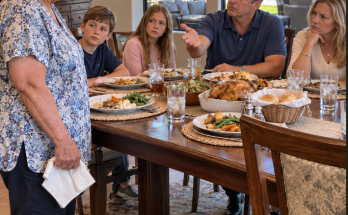
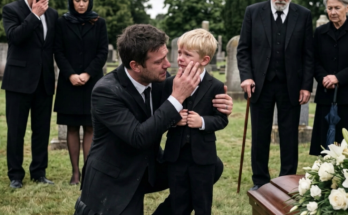
When I woke up and discovered that my entire family had disappeared, I thought something terrible had happened to them. Then I found a note beside the cold campfire—and realized they had deliberately left my ten-year-old daughter and me alone in the wilderness.
The note contained only six words:
“This is for your own good.”
I read it three times, hoping I had misunderstood.
My name is Natalie Brooks. Eight weeks before that morning, my husband, Daniel, had died unexpectedly, leaving me to raise our ten-year-old daughter, Sophie, alone.
Daniel and I had built a successful technology company together. He handled operations, while I managed the finances and long-term strategy. We weren’t billionaires, but we’d worked hard enough to build a comfortable life for our family.
After his death, I inherited his shares in the company.
That was when my relatives began treating me differently.
My father, Richard, suddenly had opinions about every decision I made. My mother, Margaret, insisted I was too emotionally fragile to manage a business. My older brother, Jason, repeatedly offered to take over my responsibilities.
“You need someone who can think clearly,” he’d tell me.
“I am thinking clearly,” I always replied.
Jason would exchange a knowing look with our father, as though my refusal proved his point.
Then my mother suggested a family camping trip in the mountains of Colorado.
“You and Sophie need fresh air,” she said. “Daniel would have wanted you to spend time together instead of burying yourself in work.”
She was right about one thing. Daniel had loved camping, and he’d promised Sophie another mountain adventure before he died.
So I agreed.
Jason selected the campsite, a remote location surrounded by pine forests and towering peaks. He insisted we travel in his truck and our father’s SUV because the mountain road was difficult.
My sister-in-law, Vanessa, even suggested collecting everyone’s phones for a digital detox.
“No screens, no work, no distractions,” she announced cheerfully.
At the time, it seemed harmless.
The first evening was almost beautiful.
We roasted marshmallows, listened to Sophie tell silly stories, and watched the sunset paint the mountains gold. For a few hours, I almost believed we were becoming a family again.
After dinner, my mother handed me a cup of herbal tea.
“You look exhausted, sweetheart,” she said. “Drink this and get some rest.”
I remember feeling unusually sleepy afterward.
I also remember hearing my mother whisper something to Jason while I was settling into the tent.
“She deserves a chance to start over.”
I assumed she meant my grief.
I was wrong.
When I woke the next morning, the campsite was empty.
Both vehicles were gone. So were the tents, sleeping bags, food containers, and emergency supplies.
Even our phones had disappeared.
Sophie sat up beside me, rubbing her eyes.
“Mommy, where’s Grandma?”
I couldn’t answer.
I walked toward the picnic table and discovered the note beneath a flat stone.
This is a necessary reset. Trust me.
Beneath those words was Jason’s signature.
My hands began to shake.
This wasn’t an accident. They hadn’t forgotten us.
They had planned it.
The only things left behind were Sophie’s purple backpack, two bottles of water, three granola bars, and a small lighter.
Sophie looked at the empty campsite and began to cry.
“Did we do something wrong?”
I dropped to my knees and wrapped my arms around her.
“No, baby. None of this is your fault.”
I wanted to believe we’d simply been the victims of some cruel family prank that had gone horribly wrong.
But there was something I couldn’t explain.
Before Daniel died, he’d told me that if anything ever happened to him, I should never sign away my shares in the company without consulting his attorney.
At the time, I’d assumed he was being cautious.
Now I remembered that conversation with frightening clarity.
Three days before the camping trip, Jason had brought me a folder containing documents he claimed would simplify the company’s management.
I’d refused to sign them.
He’d looked furious.
And now he had left me and his own niece stranded in the mountains.
I checked the remaining supplies and studied the road. We had no reliable way to call for help, and I had no idea how far we were from the nearest staffed facility.
I took Sophie’s hand.
“We’re going to find help,” I told her. “We’ll stay together, and we’ll take this one step at a time.”
She wiped her cheeks and nodded.
Then she reached into her backpack and pulled out a folded piece of paper.
“Mom, I found this in the pocket. I think it’s Daddy’s handwriting.”
My heart stopped.
Daniel had been gone for nearly two months. Why would a note from him be inside the backpack we’d brought on this trip?
I unfolded it carefully.
There were only two sentences:
If your family ever tries to make decisions for you, ask Evelyn about the blue file.
And beneath that:
Trust the person they tell you not to trust.
I stared at the words as the mountain wind swept through the empty campsite.
Because Evelyn was Daniel’s former business partner.
And my family had spent the last two months warning me that she was dangerous.
I folded the note and put it in my pocket.
Suddenly, I understood that being abandoned in the mountains might not be the only thing my family had planned.
They wanted me frightened, isolated, and desperate. But what exactly were they trying to make me give up?
I had no answer yet.
And with Sophie depending on me, I couldn’t afford to make a mistake.
PART 2 — The Secret My Husband Left Behind
By the fourth day, Sophie and I had run out of the food we’d been given. But when we finally found a remote service road, we discovered something that made me question whether our abandonment had been intended to last only a few hours—or whether my family had expected us never to return.
We had spent the previous days moving carefully through the wilderness, conserving water and looking for signs of other people.
I wasn’t an experienced hiker, and the weather changed quickly. At night, I kept Sophie close beneath the shelter we managed to improvise. Every time a branch snapped in the darkness, I fought the urge to panic.
Sophie tried to be brave.
She asked for her father sometimes, especially when she was tired.
Each time, I held her and reminded her that we would get through this together.
On the fourth afternoon, we found a narrow service road running between the trees.
We followed it until we reached a maintenance cabin.
It was locked, but a ranger returning from a nearby inspection spotted us and immediately called for assistance.
Within hours, medical personnel were checking us over, and authorities were arranging our return to civilization.
Sophie was dehydrated and exhausted, but she was safe.
I thought the worst was finally over.
Then a deputy asked me a question that changed everything.
“Mrs. Brooks, did you know your family reported you missing?”
I stared at him.
“They left us there.”
He paused.
“They told us you became confused during the trip, took your daughter, and walked away from the campsite. They claimed they searched for you before contacting authorities.”
My stomach turned.
“They took our phones. They took the cars. They left a note.”
The deputy wrote everything down.
“Do you have the note?”
I reached into my pocket.
It was still there.
He photographed it and asked me to describe exactly what had happened before we went to sleep.
For the first time since waking up at the empty campsite, I began to understand the full extent of the deception.
My family hadn’t merely abandoned us.
They had prepared an explanation for our disappearance.
They wanted the authorities to believe I had been responsible.
But why?
That evening, from the hospital, I contacted Daniel’s attorney, Mr. Collins.
When I told him about the note from Daniel and asked about the blue file, he went silent.
Then he said something I will never forget.
“Natalie, I was hoping you’d never need to ask me that question.”
He explained that several weeks before his death, Daniel had become concerned about irregular transactions involving the company.
Money had been transferred between subsidiaries without proper documentation. Certain company records had been altered, and a proposed restructuring would have moved control of a valuable division into a separate entity.
Daniel had started investigating.
He had also made arrangements to protect his ownership shares in case anyone tried to pressure me into signing them away.
“Did he mention my family?” I asked.
“Not directly. But he told me he feared someone close to you might try to exploit your grief.”
My throat tightened.
“What was in the blue file?”
“Financial records, correspondence, and a copy of the proposed restructuring agreement. Daniel left instructions that I should only release it to you after verifying your identity and discussing it with you in person.”
I closed my eyes.
Jason’s folder. My father’s sudden interest in the business. My mother’s insistence that I was incapable of making decisions.
The pieces were beginning to fit together.
But one question remained.
Why leave Sophie and me in the wilderness?
Mr. Collins didn’t pretend to know.
“Whatever their motive, what happened to you and your daughter needs to be investigated separately from the financial matter,” he said. “Don’t confront anyone alone. Let the authorities handle the evidence.”
I agreed.
The next morning, he met me at his office and showed me the blue file.
Inside were records of suspicious payments, messages about the restructuring, and a draft agreement that would have transferred significant voting power away from me.
One email, sent from Jason’s account, caught my attention.
It read:
She won’t sign while she still has access to Collins and the original records. We need to get her away from everything for a few days.
Another message referred to the camping trip.
It didn’t explicitly describe a plan to harm us, but it made clear that Jason had viewed the trip as a way to isolate me while the company documents were being prepared.
My hands trembled as I read.
“Does this prove he arranged what happened to us?” I asked.
“It’s important evidence,” Mr. Collins replied. “But the authorities will need to establish who did what and why.”
Then he turned to the final section of the file.
It contained a letter Daniel had written to me shortly before his death.
I recognized his handwriting immediately.
My love,
If you’re reading this, something has happened that I hoped we would never have to face.
I trust you more than anyone. You have always been stronger than people realize, especially when they mistake your kindness for weakness.
Don’t let anyone convince you that grief makes you incapable of protecting what we built.
And please remember: the people who call themselves family are not always the people who act like family.
I pressed the letter against my chest.
For weeks, I had been struggling to keep our company running while trying to make sense of life without my husband.
Now I realized that Daniel had been worried about the very people I had turned to for support.
But there was one final page in the file.
It was a list of names connected to the suspicious transactions.
Beside one name, Daniel had written a note:
Evelyn knows where the original records are.
I looked up at Mr. Collins.
“Evelyn?”
“Evelyn Shaw,” he said. “Daniel’s former business partner.”
The same woman my family had warned me never to trust.
I remembered the second sentence on Daniel’s note.
Trust the person they tell you not to trust.
For the first time, I wondered whether Evelyn had been trying to warn us all along.
Before I could ask more, my phone rang.
It was my mother.
Her voice broke the moment I answered.
“Natalie, sweetheart, thank goodness you’re alive.”
I said nothing.
“We were terrified,” she continued. “We made a terrible mistake. Please, let us explain.”
I looked at the blue file lying open on the desk.
Then I asked one question.
“Why did Jason think I needed to be isolated before signing those documents?”
The silence on the other end told me more than her apology ever could.
Then my mother began to cry.
And what she admitted next would force me to choose between protecting the family I had grown up with and protecting the daughter who had trusted me to keep her safe.
PART 3 — The Apology Came Too Late
My family arrived at my house three days after our rescue, carrying flowers, gifts, and a story about how everything had been a terrible misunderstanding. They expected me to forgive them. Instead, I placed Daniel’s letter on the table and asked them to explain one sentence from the blue file.
Jason stood closest to the door.
My father remained behind him, avoiding my eyes.
My mother clutched a box of Sophie’s favorite cookies as though it could somehow undo what had happened.
Vanessa didn’t speak at all.
I didn’t invite anyone to sit down.
“You have five minutes,” I said.
My father frowned.
“Natalie, this isn’t how family should treat each other.”
I almost laughed.
“That’s exactly what I’ve been trying to explain.”
My mother stepped forward.
“We never wanted you or Sophie to be hurt. We thought a few days away would give you time to calm down.”
“Calm down from what?”
“Your grief. The business. Everything.”
I looked at Jason.
“Did you take our phones?”
He stared at the floor.
“Did you take the vehicles?”
He said nothing.
“Did you leave us with almost no food or water?”
My father finally intervened.
“We thought you’d find your way to the road. We didn’t think it would take so long.”
Sophie was upstairs with a trusted family friend. I was grateful she couldn’t hear them trying to explain away what had happened.
“You left a ten-year-old child alone in the mountains,” I said. “You made no effort to ensure we could contact anyone. Then you told the authorities that I had wandered away.”
My mother’s face crumpled.
“I was afraid.”
“Of what?”
She looked toward Jason.
He answered for her.
“The company was falling apart. You wouldn’t listen to anyone, and we were trying to protect what Daniel built.”
“No,” I said. “You were trying to control it.”
I picked up the restructuring agreement from the table.
“This document would have transferred my voting rights to a company controlled by Jason. You wanted me away from my attorney and the original financial records while you prepared it.”
Jason’s expression changed.
“That’s not the whole story.”
“Then tell me the rest.”
He looked at our father, who gave him a warning glance.
That small movement told me everything I needed to know about the relationship between them.
Jason had not acted alone.
But the blue file contained something else: emails showing that he had discussed the restructuring with our father, while our mother had helped arrange the trip and collect the phones.
Vanessa had handled the supplies.
Each of them had played a role.
My father finally spoke.
“We were going to explain everything once you signed. We thought we were doing what was best for the family.”
“Which family?” I asked. “The one that abandoned Sophie?”
Nobody answered.
Then I placed Daniel’s letter on the table.
“My husband knew someone might try to pressure me. He made arrangements to protect me, and you tried to get around them.”
My mother covered her mouth.
Jason’s voice grew sharp.
“Daniel was paranoid. He didn’t understand how much pressure the company was under.”
“He understood enough to document the transactions you hoped I wouldn’t discover.”
For the first time, Jason looked frightened.
Not because I was shouting.
I wasn’t.
He was frightened because the documents were real, the attorney had copies, and the authorities were already investigating what had happened in the mountains.
I told them I had given the records to my attorney and the relevant evidence to investigators.
“I won’t negotiate with you about this,” I said. “I won’t sign away my shares. And I won’t ask the authorities to ignore what happened to Sophie and me.”
My father took a step forward.
“You would destroy your own family?”
I met his eyes.
“You did that yourselves.”
My mother began sobbing.
She told me she had never wanted us to be harmed. She insisted she thought the trip would frighten me into accepting help, not leave us in genuine danger.
I wanted to believe that some part of her still loved me.
But love without responsibility had nearly cost my daughter her sense of safety.
“I hope you eventually understand what you’ve done,” I told her. “But forgiveness is not something you can demand from me.”
I asked them to leave.
They went quietly.
Over the following weeks, investigators examined the financial records and interviewed the people involved in the trip. The evidence revealed a coordinated attempt to isolate me while the proposed business restructuring moved forward. The authorities also investigated the circumstances of our abandonment and the misleading report made afterward.
I won’t pretend that every question was answered overnight.
Legal cases take time, and accusations must be established through evidence rather than family arguments.
But the documents gave investigators a place to start, and my attorney helped protect my ownership rights while the financial investigation continued.
Evelyn Shaw eventually met with me.
She had kept copies of correspondence Daniel had shared with her, including records that helped explain why he had become concerned about the company’s finances.
She hadn’t been trying to steal the business.
She had been trying to ensure that the original documents survived.
“I wish Daniel had told you more while he was alive,” she said.
“So do I.”
We sat together in her office, reviewing the records he had left behind.
For the first time since his death, I felt as though I was finally seeing the full picture of the life he had been trying to protect.
But the most important conversation happened at home.
One evening, Sophie sat beside me on the couch, holding her father’s old camping compass.
“Mom, are we ever going camping again?”
I took a moment before answering.
“If you want to, sweetheart. But we’ll choose somewhere safe, and we’ll make sure we have everything we need.”
She nodded.
Then she asked the question I had been dreading.
“Why did Grandma leave us?”
I pulled her into my arms.
“Some adults make terrible choices when they’re afraid of losing something. That doesn’t make what they did right, and it was never your fault.”
“Does Grandma still love us?”
I brushed her hair away from her face.
“I can’t answer that for her. But I can promise you that love should never make you feel unsafe.”
She rested her head against my shoulder.
That night, I placed Daniel’s letter in a small wooden box beside his photograph.
I no longer saw it as a warning about betrayal.
I saw it as a reminder that I had the right to make my own decisions, to protect my daughter, and to demand honesty from the people who claimed to care about us.
My family eventually sent letters asking for forgiveness.
Some accepted responsibility. Others continued to insist they had acted for my benefit.
I read every letter.
I answered only when I was ready.
I didn’t rush to restore relationships simply because we shared a name.
And I never again confused family loyalty with blind obedience.
The mountains had taken ten frightening days from our lives. They had left Sophie and me exhausted, shaken, and uncertain about whom we could trust.
But they had also revealed something I needed to understand.
The greatest betrayal wasn’t that my family left us alone in the wilderness. It was that they believed our trust was something they could use against us—and that I would forgive them simply because they were family.
They had underestimated me.
And they had underestimated the little girl who shared her last granola bar with her mother when she had every reason to be afraid.
We survived because we stayed together.
We began to heal because we told the truth.
And we moved forward because we finally understood that protecting the people we love sometimes means saying no to the people who claim to love us.
If you were in my position, would you ever forgive your family after something like this—or would you believe that some betrayals change a relationship forever?